
IOO YEARS AGO THIS WEEK 2 - 8 NOVEMBER 1926
This week's many stories include the curious Cowley Hill accident, the little girls at Rivington Road School that made allegations against a visiting inspector, the worsening housing situation in St Helens, the man who stole an aerial pole for firewood, the thief who said he would not get justice in St Helens and the man who claimed that police brutality in Sherdley Road had practically made him a cripple.
We begin with an extraordinary domino effect accident that took place this week in Cowley Hill Lane in St Helens involving three cyclists and a car. Postman William Alsop of Hillside Avenue in Windlehurst had been cycling down the lane when another cyclist came out of Cooper Street and collided with John Campbell. He was the coal controller for the borough in charge of supervising rationing.
The second unnamed rider rebounded onto William Alsop, who was thrown onto the road and into the path of an approaching car. The postman received serious injuries and was taken to Providence Hospital and Mr Campbell also suffered cuts to his face. Mr Alsop had endured some extremely bad luck this year with his mother, sister and his father all having died.
On the 3rd the Liverpool Echo described how the building of new council houses at Thatto Heath was disturbing the rats and other vermin "which have for years had their runs on the land surrounding the St. Helens golf links." The occupant of a new house claimed to have found a rat in her bedroom and poultry and pigeon keepers in the Thatto Heath district were said to have frequently suffered heavy losses from rat attacks.
On the 4th Reginald Lewis appeared in St Helens Police Court to face what the newspapers referred to as "allegations" that had been made against him by two little girls. It was very much the case that child molestation cases lacked any specifics when reported by newspapers and the reader had to figure out for themself what was alleged to have occurred. Lewis lived in Wigan and was an assistant commissioner for the War Savings Association.
The man had visited Rivington Road Council School – as it was then called – to inspect their books, as they were involved with his association. The two schoolgirls, aged 7 and 8, complained to their mothers about Lewis's behaviour towards them and the matter was reported to the St Helens Secretary for Education and a prosecution was brought.
Lewis made a statement to the police and was reported to have denied most emphatically that he did anything of an improper nature and with no corroboration of the little girls' claims, the charge against him was dismissed.
On the 5th Dr Frank Hauxwell, the St Helens Medical Officer of Health, released his annual report on the health of the borough. One positive was that the infant mortality rate per 1,000 births had declined from 138 in 1924 to 100 in 1925. Good news, of course, but that still meant that one in 10 babies did not live very long. The bad news was that no headway was being made to the chronic housing shortage.
Since the start of the war, the number of new houses built by St Helens Corporation (which came to be known as council houses) and by the private sector had not kept up with the increasing population, never mind address the huge demand for homes that already existed. As a result, Dr Hauxwell said there was massive overcrowding and 1,214 houses in Greenbank, Russell Street and Peasley Cross were in an old, dilapidated and insanitary condition.
There were many other such homes in other parts of the town and under normal circumstances they would have been certified as unfit for human habitation and be demolished. But with the existing shortage of new homes, Dr Hauxwell explained how it was impossible to close them up, as it was better for people to have a bad house than no house.
Commenting on the problem, the Medical Officer said: "The amount of overcrowding that exists to-day is appalling, and if allowed to continue will be the cause of much ill-health in later years."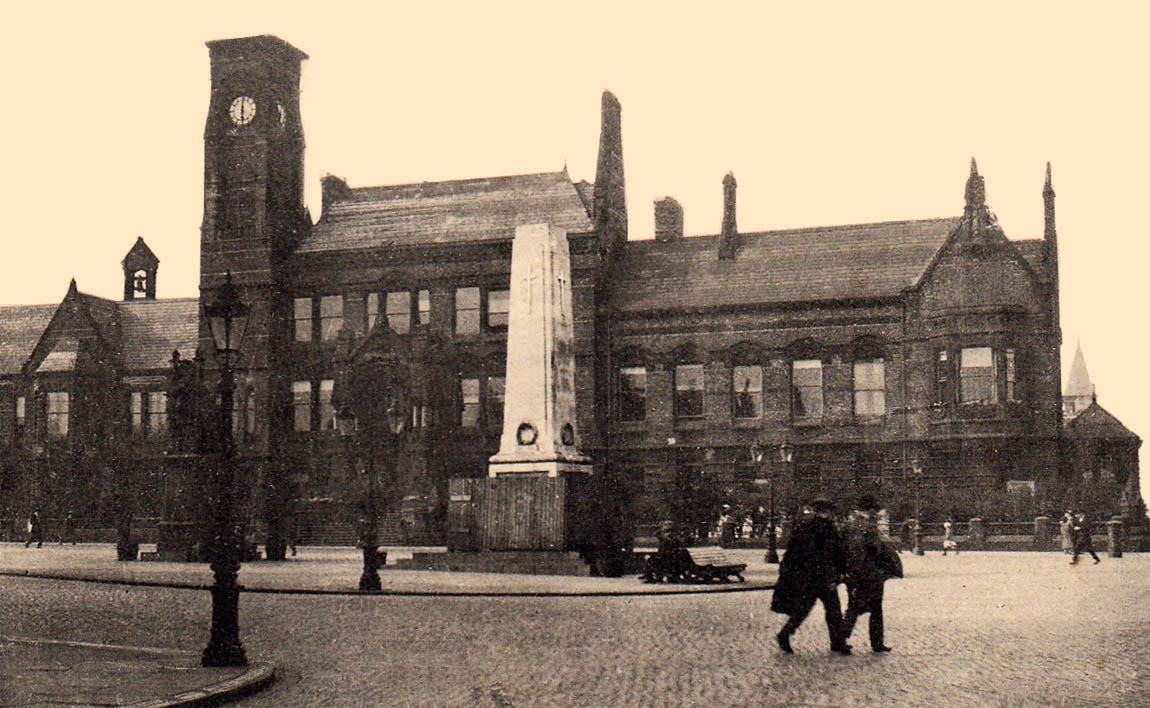 The St Helens Reporter on the 5th described the results of the recent council elections. There was always a big attendance when the Mayor declared the results from the Town Hall steps and the victors and losers gave their speeches, although bad weather had reduced the turnout to between 200 and 300 persons.
These were mainly Labour Party supporters who interrupted many candidates' speeches and occasionally snatches of the Red Flag anthem could be heard. They were celebrating taking another seat, which allowed Labour to extend its control of St Helens Council.
The Reporter described how Lawrence Hilliard had in St Helens Police Court declared: "I will be tried at Liverpool. There is no fair justice here." The 38-year-old labourer of no fixed abode had been charged with stealing four shirts from Corrin's pawnbroker's shop in Higher Parr Street.
Superintendent Dunn, wondering why the man was so reluctant to be tried in St Helens in front of magistrates, said: "Have you ever been charged with any offence before?" Hilliard replied that he had not and so Supt Dunn then said: "Then why not be tried now? Even if convicted, you will not get a severe fine."
But the defendant was adamant and he said he wanted fair play, which he thought he would only receive by taking his case to Liverpool for a jury trial. It was thought that Hilliard might be tried there in a few days time but for the time being he was told he would have to remain in custody in St Helens.
However, the next Liverpool Assizes came too soon for Lawrence Hilliard and he instead had to be tried at the Preston Quarter Sessions on December 2nd where a jury found him guilty. But he was not fined, as he was told he would have been if the magistrates in St Helens had declared him guilty. Instead after his jury trial at Preston, Lawrence Hilliard was sentenced to 3 months hard labour!
Allegations of police brutality were often made in St Helens Police Court. But the word of a violent drunk carried little weight with the magistrates. There were currently 50 Liverpool police stationed in St Helens to deal with any disorder caused by the miners strike. They included PCs Hall and White who in court on the 5th gave evidence against Richard Barrett.
The latter was reported to have been a powerful-looking man who had two black eyes and a bruised face. PC White explained how his attention had been attracted to a crowd in Sherdley Road that were cheering and shouting and they found a drunken Barrett fighting with an unknown man. The constable said in arresting Barrett, PC Hall was struck a violent blow in his chest and the two constables ended up rolling about in the mud with the man.
PC White said it was not until two mounted police officers arrived that Barrett could be subdued and handcuffed. The constable added that it was the worst rough and tumble he had been in. To that comment the Chairman of the Bench quipped: "Perhaps you have not been in St Helens long?"
A constable needed to assist Richard Barrett to his feet while in the dock and the defendant complained bitterly about his treatment by the police, saying: "I am practically a cripple with what the three of them did to me." And so PC White was recalled and said the fight had commenced when the man had refused to walk with the constables to the police station.
There was also a struggle before they reached the Town Hall and, as Barrett had already been fighting before the arrival of the police, he said those were probably the means as to how he had received his injuries. Upon being asked by the Chairman of the Bench whether he had hit or kicked Barrett, the constable said: "We did not touch him." Richard Barrett was fined 5 shillings for being drunk and disorderly, 10 shillings for assaulting PC White and 10 shillings for assaulting PC Hall.
During the war Guy Fawkes Night had to be cancelled but the celebration was enthusiastically embraced afterwards. In 1926 because of the miners strike and the shortage of coal, the emergency regulations had banned the unnecessary burning of wood, as it was needed as a coal substitute. And so there were no bonfires on November 5th this year but it was reported that there were still great queues outside shops selling fireworks.
The shortage of coal meant wood was being nicked from all sorts of places. Some weeks ago a full-size telegraph pole had been cut down at Sutton Moss and made into logs. And on the 6th, George Smith from Arthur Street appeared in court to plead guilty to stealing a 27 feet high wooden wireless aerial pole.
A constable had seen the man at midnight carrying the pole out of Waterloo Street into an entry at the rear of Arthur Street. The man admitted stealing it from a plasterer's yard, claimed he had had a mad fit and was fined 10 shillings.
St Helens Reporter courtesy St Helens Archive Service at Eccleston Library
Next Week's stories will include the consecration of the new Parish Church, the Armistice Day service, the electric fires for rent, the revenge on Alderman Henry Bates and the boys who broke into a house through a cellar grid
We begin with an extraordinary domino effect accident that took place this week in Cowley Hill Lane in St Helens involving three cyclists and a car. Postman William Alsop of Hillside Avenue in Windlehurst had been cycling down the lane when another cyclist came out of Cooper Street and collided with John Campbell. He was the coal controller for the borough in charge of supervising rationing.
The second unnamed rider rebounded onto William Alsop, who was thrown onto the road and into the path of an approaching car. The postman received serious injuries and was taken to Providence Hospital and Mr Campbell also suffered cuts to his face. Mr Alsop had endured some extremely bad luck this year with his mother, sister and his father all having died.
On the 3rd the Liverpool Echo described how the building of new council houses at Thatto Heath was disturbing the rats and other vermin "which have for years had their runs on the land surrounding the St. Helens golf links." The occupant of a new house claimed to have found a rat in her bedroom and poultry and pigeon keepers in the Thatto Heath district were said to have frequently suffered heavy losses from rat attacks.
On the 4th Reginald Lewis appeared in St Helens Police Court to face what the newspapers referred to as "allegations" that had been made against him by two little girls. It was very much the case that child molestation cases lacked any specifics when reported by newspapers and the reader had to figure out for themself what was alleged to have occurred. Lewis lived in Wigan and was an assistant commissioner for the War Savings Association.
The man had visited Rivington Road Council School – as it was then called – to inspect their books, as they were involved with his association. The two schoolgirls, aged 7 and 8, complained to their mothers about Lewis's behaviour towards them and the matter was reported to the St Helens Secretary for Education and a prosecution was brought.
Lewis made a statement to the police and was reported to have denied most emphatically that he did anything of an improper nature and with no corroboration of the little girls' claims, the charge against him was dismissed.
On the 5th Dr Frank Hauxwell, the St Helens Medical Officer of Health, released his annual report on the health of the borough. One positive was that the infant mortality rate per 1,000 births had declined from 138 in 1924 to 100 in 1925. Good news, of course, but that still meant that one in 10 babies did not live very long. The bad news was that no headway was being made to the chronic housing shortage.
Since the start of the war, the number of new houses built by St Helens Corporation (which came to be known as council houses) and by the private sector had not kept up with the increasing population, never mind address the huge demand for homes that already existed. As a result, Dr Hauxwell said there was massive overcrowding and 1,214 houses in Greenbank, Russell Street and Peasley Cross were in an old, dilapidated and insanitary condition.
There were many other such homes in other parts of the town and under normal circumstances they would have been certified as unfit for human habitation and be demolished. But with the existing shortage of new homes, Dr Hauxwell explained how it was impossible to close them up, as it was better for people to have a bad house than no house.
Commenting on the problem, the Medical Officer said: "The amount of overcrowding that exists to-day is appalling, and if allowed to continue will be the cause of much ill-health in later years."
These were mainly Labour Party supporters who interrupted many candidates' speeches and occasionally snatches of the Red Flag anthem could be heard. They were celebrating taking another seat, which allowed Labour to extend its control of St Helens Council.
The Reporter described how Lawrence Hilliard had in St Helens Police Court declared: "I will be tried at Liverpool. There is no fair justice here." The 38-year-old labourer of no fixed abode had been charged with stealing four shirts from Corrin's pawnbroker's shop in Higher Parr Street.
Superintendent Dunn, wondering why the man was so reluctant to be tried in St Helens in front of magistrates, said: "Have you ever been charged with any offence before?" Hilliard replied that he had not and so Supt Dunn then said: "Then why not be tried now? Even if convicted, you will not get a severe fine."
But the defendant was adamant and he said he wanted fair play, which he thought he would only receive by taking his case to Liverpool for a jury trial. It was thought that Hilliard might be tried there in a few days time but for the time being he was told he would have to remain in custody in St Helens.
However, the next Liverpool Assizes came too soon for Lawrence Hilliard and he instead had to be tried at the Preston Quarter Sessions on December 2nd where a jury found him guilty. But he was not fined, as he was told he would have been if the magistrates in St Helens had declared him guilty. Instead after his jury trial at Preston, Lawrence Hilliard was sentenced to 3 months hard labour!
Allegations of police brutality were often made in St Helens Police Court. But the word of a violent drunk carried little weight with the magistrates. There were currently 50 Liverpool police stationed in St Helens to deal with any disorder caused by the miners strike. They included PCs Hall and White who in court on the 5th gave evidence against Richard Barrett.
The latter was reported to have been a powerful-looking man who had two black eyes and a bruised face. PC White explained how his attention had been attracted to a crowd in Sherdley Road that were cheering and shouting and they found a drunken Barrett fighting with an unknown man. The constable said in arresting Barrett, PC Hall was struck a violent blow in his chest and the two constables ended up rolling about in the mud with the man.
PC White said it was not until two mounted police officers arrived that Barrett could be subdued and handcuffed. The constable added that it was the worst rough and tumble he had been in. To that comment the Chairman of the Bench quipped: "Perhaps you have not been in St Helens long?"
A constable needed to assist Richard Barrett to his feet while in the dock and the defendant complained bitterly about his treatment by the police, saying: "I am practically a cripple with what the three of them did to me." And so PC White was recalled and said the fight had commenced when the man had refused to walk with the constables to the police station.
There was also a struggle before they reached the Town Hall and, as Barrett had already been fighting before the arrival of the police, he said those were probably the means as to how he had received his injuries. Upon being asked by the Chairman of the Bench whether he had hit or kicked Barrett, the constable said: "We did not touch him." Richard Barrett was fined 5 shillings for being drunk and disorderly, 10 shillings for assaulting PC White and 10 shillings for assaulting PC Hall.
During the war Guy Fawkes Night had to be cancelled but the celebration was enthusiastically embraced afterwards. In 1926 because of the miners strike and the shortage of coal, the emergency regulations had banned the unnecessary burning of wood, as it was needed as a coal substitute. And so there were no bonfires on November 5th this year but it was reported that there were still great queues outside shops selling fireworks.
The shortage of coal meant wood was being nicked from all sorts of places. Some weeks ago a full-size telegraph pole had been cut down at Sutton Moss and made into logs. And on the 6th, George Smith from Arthur Street appeared in court to plead guilty to stealing a 27 feet high wooden wireless aerial pole.
A constable had seen the man at midnight carrying the pole out of Waterloo Street into an entry at the rear of Arthur Street. The man admitted stealing it from a plasterer's yard, claimed he had had a mad fit and was fined 10 shillings.
St Helens Reporter courtesy St Helens Archive Service at Eccleston Library
Next Week's stories will include the consecration of the new Parish Church, the Armistice Day service, the electric fires for rent, the revenge on Alderman Henry Bates and the boys who broke into a house through a cellar grid
This week's many stories include the curious Cowley Hill accident, the little girls at Rivington Road School that made allegations against a visiting inspector, the worsening housing situation in St Helens, the man who stole an aerial pole for firewood, the thief who said he would not get justice in St Helens and the man who claimed that police brutality in Sherdley Road had practically made him a cripple.
We begin with an extraordinary domino effect accident that took place this week in Cowley Hill Lane in St Helens involving three cyclists and a car.
Postman William Alsop of Hillside Avenue in Windlehurst had been cycling down the lane when another cyclist came out of Cooper Street and collided with John Campbell.
He was the coal controller for the borough in charge of supervising rationing.
The second unnamed rider rebounded onto William Alsop, who was thrown onto the road and into the path of an approaching car.
The postman received serious injuries and was taken to Providence Hospital and Mr Campbell also suffered cuts to his face.
Mr Alsop had endured some extremely bad luck this year with his mother, sister and his father all having died.
On the 3rd the Liverpool Echo described how the building of new council houses at Thatto Heath was disturbing the rats and other vermin "which have for years had their runs on the land surrounding the St. Helens golf links."
The occupant of a new house claimed to have found a rat in her bedroom and poultry and pigeon keepers in the Thatto Heath district were said to have frequently suffered heavy losses from rat attacks.
On the 4th Reginald Lewis appeared in St Helens Police Court to face what the newspapers referred to as "allegations" that had been made against him by two little girls.
It was very much the case that child molestation cases lacked any specifics when reported by newspapers and the reader had to figure out for themself what was alleged to have occurred.
Lewis lived in Wigan and was an assistant commissioner for the War Savings Association.
The man had visited Rivington Road Council School – as it was then called – to inspect their books, as they were involved with his association.
The two schoolgirls, aged 7 and 8, complained to their mothers about Lewis's behaviour towards them and the matter was reported to the St Helens Secretary for Education and a prosecution was brought.
Lewis made a statement to the police and was reported to have denied most emphatically that he did anything of an improper nature and with no corroboration of the little girls' claims, the charge against him was dismissed.
On the 5th Dr Frank Hauxwell, the St Helens Medical Officer of Health, released his annual report on the health of the borough.
One positive was that the infant mortality rate per 1,000 births had declined from 138 in 1924 to 100 in 1925.
Good news, of course, but that still meant that one in 10 babies did not live very long.
The bad news was that no headway was being made to the chronic housing shortage.
Since the start of the war, the number of new houses built by St Helens Corporation (which came to be known as council houses) and by the private sector had not kept up with the increasing population, never mind address the huge demand for homes that already existed.
As a result, Dr Hauxwell said there was massive overcrowding and 1,214 houses in Greenbank, Russell Street and Peasley Cross were in an old, dilapidated and insanitary condition.
There were many other such homes in other parts of the town and under normal circumstances they would have been certified as unfit for human habitation and be demolished.
But with the existing shortage of new homes, Dr Hauxwell explained how it was impossible to close them up, as it was better for people to have a bad house than no house.
Commenting on the problem, the Medical Officer said:
"The amount of overcrowding that exists to-day is appalling, and if allowed to continue will be the cause of much ill-health in later years."
The St Helens Reporter on the 5th described the results of the recent council elections.
There was always a big attendance when the Mayor declared the results from the Town Hall steps and the victors and losers gave their speeches, although bad weather had reduced the turnout to between 200 and 300 persons.
These were mainly Labour Party supporters who interrupted many candidates' speeches and occasionally snatches of the Red Flag anthem could be heard.
They were celebrating taking another seat, which allowed Labour to extend its control of St Helens Council.
The Reporter described how Lawrence Hilliard had in St Helens Police Court declared:
"I will be tried at Liverpool. There is no fair justice here."
The 38-year-old labourer of no fixed abode had been charged with stealing four shirts from Corrin's pawnbroker's shop in Higher Parr Street.
Superintendent Dunn, wondering why the man was so reluctant to be tried in St Helens in front of magistrates, said: "Have you ever been charged with any offence before?"
Hilliard replied that he had not and so Supt Dunn then said:
"Then why not be tried now? Even if convicted, you will not get a severe fine."
But the defendant was adamant and he said he wanted fair play, which he thought he would only receive by taking his case to Liverpool for a jury trial.
It was thought that Hilliard might be tried there in a few days time but for the time being he was told he would have to remain in custody in St Helens.
However, the next Liverpool Assizes came too soon for Lawrence Hilliard and he instead had to be tried at the Preston Quarter Sessions on December 2nd where a jury found him guilty.
But he was not fined, as he was told he would have been if the magistrates in St Helens had declared him guilty.
Instead after his jury trial at Preston, Lawrence Hilliard was sentenced to 3 months hard labour!
Allegations of police brutality were often made in St Helens Police Court.
But the word of a violent drunk carried little weight with the magistrates.
There were currently 50 Liverpool police stationed in St Helens to deal with any disorder caused by the miners strike.
They included PCs Hall and White who in court on the 5th gave evidence against Richard Barrett.
The latter was reported to have been a powerful-looking man who had two black eyes and a bruised face.
PC White explained how his attention had been attracted to a crowd in Sherdley Road that were cheering and shouting and they found a drunken Barrett fighting with an unknown man.
The constable said in arresting Barrett, PC Hall was struck a violent blow in his chest and the two constables ended up rolling about in the mud with the man.
PC White said it was not until two mounted police officers arrived that Barrett could be subdued and handcuffed.
The constable added that it was the worst rough and tumble he had been in.
To that comment the Chairman of the Bench quipped: "Perhaps you have not been in St Helens long?"
A constable needed to assist Richard Barrett to his feet while in the dock and the defendant complained bitterly about his treatment by the police, saying:
"I am practically a cripple with what the three of them did to me."
And so PC White was recalled and said the fight had commenced when the man had refused to walk with the constables to the police station.
There was also a struggle before they reached the Town Hall and, as Barrett had already been fighting before the arrival of the police, he said those were probably the means as to how he had received his injuries.
Upon being asked by the Chairman of the Bench whether he had hit or kicked Barrett, the constable said: "We did not touch him."
Richard Barrett was fined 5 shillings for being drunk and disorderly, 10 shillings for assaulting PC White and 10 shillings for assaulting PC Hall.
During the war Guy Fawkes Night had to be cancelled but the celebration was enthusiastically embraced afterwards.
In 1926 because of the miners strike and the shortage of coal, the emergency regulations had banned the unnecessary burning of wood, as it was needed as a coal substitute.
And so there were no bonfires on November 5th this year but it was reported that there were still great queues outside shops selling fireworks.
The shortage of coal meant wood was being nicked from all sorts of places.
Some weeks ago a full-size telegraph pole had been cut down at Sutton Moss and made into logs.
And on the 6th, George Smith from Arthur Street appeared in court to plead guilty to stealing a 27 feet high wooden wireless aerial pole.
A constable had seen the man at midnight carrying the pole out of Waterloo Street into an entry at the rear of Arthur Street.
The man admitted stealing it from a plasterer's yard, claimed he had had a mad fit and was fined 10 shillings.
St Helens Reporter courtesy St Helens Archive Service at Eccleston Library
Next Week's stories will include the consecration of the new Parish Church, the Armistice Day service, the electric fires for rent, the revenge on Alderman Henry Bates and the boys who broke into a house through a cellar grid.
We begin with an extraordinary domino effect accident that took place this week in Cowley Hill Lane in St Helens involving three cyclists and a car.
Postman William Alsop of Hillside Avenue in Windlehurst had been cycling down the lane when another cyclist came out of Cooper Street and collided with John Campbell.
He was the coal controller for the borough in charge of supervising rationing.
The second unnamed rider rebounded onto William Alsop, who was thrown onto the road and into the path of an approaching car.
The postman received serious injuries and was taken to Providence Hospital and Mr Campbell also suffered cuts to his face.
Mr Alsop had endured some extremely bad luck this year with his mother, sister and his father all having died.
On the 3rd the Liverpool Echo described how the building of new council houses at Thatto Heath was disturbing the rats and other vermin "which have for years had their runs on the land surrounding the St. Helens golf links."
The occupant of a new house claimed to have found a rat in her bedroom and poultry and pigeon keepers in the Thatto Heath district were said to have frequently suffered heavy losses from rat attacks.
On the 4th Reginald Lewis appeared in St Helens Police Court to face what the newspapers referred to as "allegations" that had been made against him by two little girls.
It was very much the case that child molestation cases lacked any specifics when reported by newspapers and the reader had to figure out for themself what was alleged to have occurred.
Lewis lived in Wigan and was an assistant commissioner for the War Savings Association.
The man had visited Rivington Road Council School – as it was then called – to inspect their books, as they were involved with his association.
The two schoolgirls, aged 7 and 8, complained to their mothers about Lewis's behaviour towards them and the matter was reported to the St Helens Secretary for Education and a prosecution was brought.
Lewis made a statement to the police and was reported to have denied most emphatically that he did anything of an improper nature and with no corroboration of the little girls' claims, the charge against him was dismissed.
On the 5th Dr Frank Hauxwell, the St Helens Medical Officer of Health, released his annual report on the health of the borough.
One positive was that the infant mortality rate per 1,000 births had declined from 138 in 1924 to 100 in 1925.
Good news, of course, but that still meant that one in 10 babies did not live very long.
The bad news was that no headway was being made to the chronic housing shortage.
Since the start of the war, the number of new houses built by St Helens Corporation (which came to be known as council houses) and by the private sector had not kept up with the increasing population, never mind address the huge demand for homes that already existed.
As a result, Dr Hauxwell said there was massive overcrowding and 1,214 houses in Greenbank, Russell Street and Peasley Cross were in an old, dilapidated and insanitary condition.
There were many other such homes in other parts of the town and under normal circumstances they would have been certified as unfit for human habitation and be demolished.
But with the existing shortage of new homes, Dr Hauxwell explained how it was impossible to close them up, as it was better for people to have a bad house than no house.
Commenting on the problem, the Medical Officer said:
"The amount of overcrowding that exists to-day is appalling, and if allowed to continue will be the cause of much ill-health in later years."
The St Helens Reporter on the 5th described the results of the recent council elections.
These were mainly Labour Party supporters who interrupted many candidates' speeches and occasionally snatches of the Red Flag anthem could be heard.
They were celebrating taking another seat, which allowed Labour to extend its control of St Helens Council.
The Reporter described how Lawrence Hilliard had in St Helens Police Court declared:
"I will be tried at Liverpool. There is no fair justice here."
The 38-year-old labourer of no fixed abode had been charged with stealing four shirts from Corrin's pawnbroker's shop in Higher Parr Street.
Superintendent Dunn, wondering why the man was so reluctant to be tried in St Helens in front of magistrates, said: "Have you ever been charged with any offence before?"
Hilliard replied that he had not and so Supt Dunn then said:
"Then why not be tried now? Even if convicted, you will not get a severe fine."
But the defendant was adamant and he said he wanted fair play, which he thought he would only receive by taking his case to Liverpool for a jury trial.
It was thought that Hilliard might be tried there in a few days time but for the time being he was told he would have to remain in custody in St Helens.
However, the next Liverpool Assizes came too soon for Lawrence Hilliard and he instead had to be tried at the Preston Quarter Sessions on December 2nd where a jury found him guilty.
But he was not fined, as he was told he would have been if the magistrates in St Helens had declared him guilty.
Instead after his jury trial at Preston, Lawrence Hilliard was sentenced to 3 months hard labour!
Allegations of police brutality were often made in St Helens Police Court.
But the word of a violent drunk carried little weight with the magistrates.
There were currently 50 Liverpool police stationed in St Helens to deal with any disorder caused by the miners strike.
They included PCs Hall and White who in court on the 5th gave evidence against Richard Barrett.
The latter was reported to have been a powerful-looking man who had two black eyes and a bruised face.
PC White explained how his attention had been attracted to a crowd in Sherdley Road that were cheering and shouting and they found a drunken Barrett fighting with an unknown man.
The constable said in arresting Barrett, PC Hall was struck a violent blow in his chest and the two constables ended up rolling about in the mud with the man.
PC White said it was not until two mounted police officers arrived that Barrett could be subdued and handcuffed.
The constable added that it was the worst rough and tumble he had been in.
To that comment the Chairman of the Bench quipped: "Perhaps you have not been in St Helens long?"
A constable needed to assist Richard Barrett to his feet while in the dock and the defendant complained bitterly about his treatment by the police, saying:
"I am practically a cripple with what the three of them did to me."
And so PC White was recalled and said the fight had commenced when the man had refused to walk with the constables to the police station.
There was also a struggle before they reached the Town Hall and, as Barrett had already been fighting before the arrival of the police, he said those were probably the means as to how he had received his injuries.
Upon being asked by the Chairman of the Bench whether he had hit or kicked Barrett, the constable said: "We did not touch him."
Richard Barrett was fined 5 shillings for being drunk and disorderly, 10 shillings for assaulting PC White and 10 shillings for assaulting PC Hall.
During the war Guy Fawkes Night had to be cancelled but the celebration was enthusiastically embraced afterwards.
In 1926 because of the miners strike and the shortage of coal, the emergency regulations had banned the unnecessary burning of wood, as it was needed as a coal substitute.
And so there were no bonfires on November 5th this year but it was reported that there were still great queues outside shops selling fireworks.
The shortage of coal meant wood was being nicked from all sorts of places.
Some weeks ago a full-size telegraph pole had been cut down at Sutton Moss and made into logs.
And on the 6th, George Smith from Arthur Street appeared in court to plead guilty to stealing a 27 feet high wooden wireless aerial pole.
A constable had seen the man at midnight carrying the pole out of Waterloo Street into an entry at the rear of Arthur Street.
The man admitted stealing it from a plasterer's yard, claimed he had had a mad fit and was fined 10 shillings.
St Helens Reporter courtesy St Helens Archive Service at Eccleston Library
Next Week's stories will include the consecration of the new Parish Church, the Armistice Day service, the electric fires for rent, the revenge on Alderman Henry Bates and the boys who broke into a house through a cellar grid.