
IOO YEARS AGO THIS WEEK 9 - 15 NOVEMBER 1926
This week's many stories include the consecration of the new Parish Church, the annual Armistice Day service, the boys who broke into a house through a cellar grid, the political revenge on Alderman Henry Bates, the electric fires for rent and the Prescot Road blackmail case returns to court.
The first council meeting since the recent local elections took place on the 9th and it was a stormy affair. Labour had increased its majority and at the meeting left-wing activist Richard Waring was appointed Mayor of St Helens. There was fury that Conservative Alderman Henry Bates – who to this day still holds the record of having been elected mayor on four occasions – was replaced as an alderman, seemingly, as an act of revenge.
Bates had given 30 years of service to the town but had annoyed left-wingers during the General Strike by reporting to the government the unions' threat to close down power stations in St Helens. Consequently, both the town's electricity plant and gas works were placed under government control, the only such case in the country.
At a Town Council meeting in June, Alderman Bates had told the Labour contingent that he was forced to take such action as, "Your town was in the hands practically of a Soviet, an imitation of the Russian terror".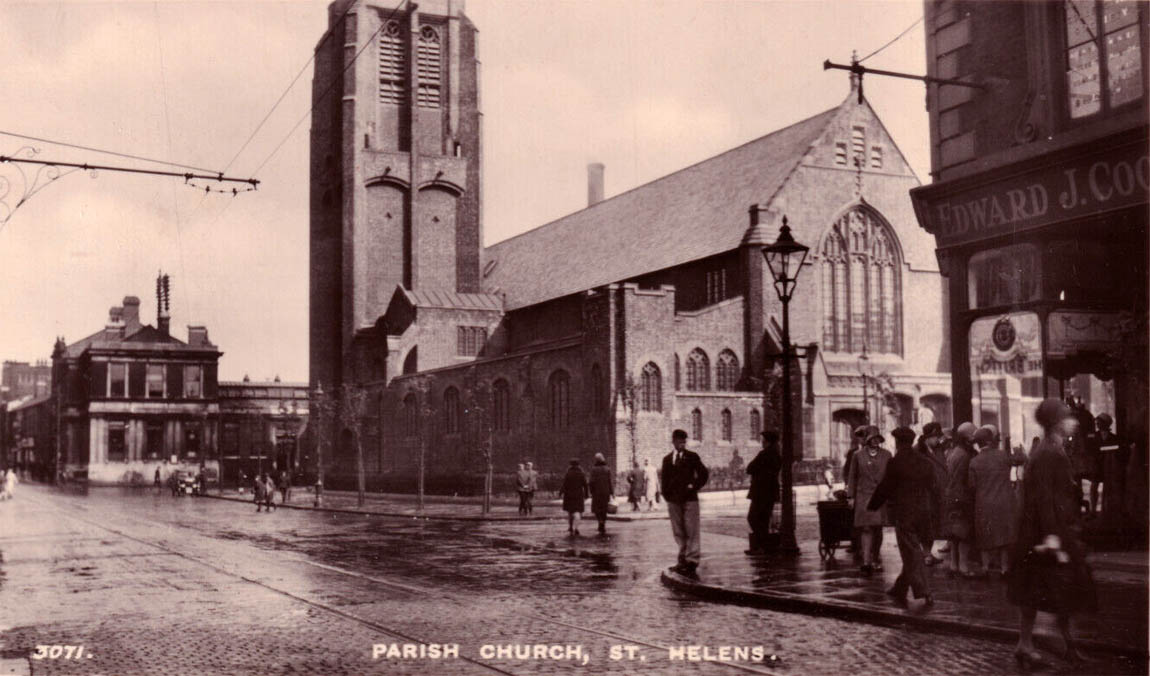 On the 10th the new St Helens Parish Church (pictured above) was consecrated. The building was a replacement for the old church that had suffered a serious fire in December 1916, with services since then having taken place in the assembly room of the Town Hall. Three cottages at the rear of the old building had been demolished so that the new church could be set further back from Church Street, allowing St Helens Corporation to widen the road at that point.
The consecration ceremony began with a procession to the new building led by Dr David, the Bishop of Liverpool, along with the bishops of Warrington and Peterborough. The Mayor, Alderman Richard Waring, local magistrates and council members were also present.
In his sermon the Bishop of Liverpool said the building would impress all who entered it, adding: "Church people in outside parishes had watched St Helens, and they rejoiced that the sorrow of losing their wonderful old church had been turned into joy."
During the evening of the 10th, Peter Helsby from Raglan Street and William Wilkins of Chapel Street died in St Helens Hospital. The pair worked at Pilkington's Glass Works at Cowley Hill and they had been found unconscious after being gassed while undertaking brickwork at a gas furnace.
At St Helens Police Court on the 11th, 18–year-old Michael Ballinger from Phythian Street and 16–year-old Thomas Murtagh of Glover Street were charged, along with a young boy named Ledwith, with breaking into the house of Stephen Bush. The threesome had entered the property in Manning Street, off Borough Road, through a cellar grid in the pavement, which was mainly used for the delivery of coal.
The Bush family was away at the cinema at the time and money and articles of jewellery to the value of £15 were stolen. DS Maddocks told the court that some of the stolen articles had been hidden in the oven at Ballinger's home and other items were located behind the dog kennel.
One of the boys also admitted hiding a purse behind the flue at his home but when the officer went to collect it, he found the purse had dropped down behind the fireplace and a bricklayer needed to be hired to retrieve it. Murtagh and Ledwith were ordered to find sureties to be of good behaviour but Ballinger was committed for trial with a view to being sent to a Borstal institution.
It was Armistice Day on the 11th and after a short service attended by a huge crowd in Victoria Square, a large number of wreaths were placed on the Cenotaph. The Mayor, Alderman Waring, then gave a lengthy address in support of the League of Nations. He said:
"No one is prouder than myself of the brave lads who fought and died for us, but I hope that in the near future people will have proper command of their own government to see that war will be made impossible."
The St Helens Reporter on the 12th printed a Stop Press news item. It stated that the rumour that had circulated through the town late during the previous night that the coal strike had been called off was untrue. However, the miners' unions – who were now in a weak bargaining position as so many men had returned to work – were expected to settle with their employers very soon.
"For Health Reasons Buy Wrapped Bread!", said an advert in the Reporter for Morton's. They were the owners of the Victoria Bakery in North Road and the Edinburgh Cafe in Church Street and claimed to be the only bakers in St Helens who distributed their bread in "sealed waxed wrappers".
Morton's had first announced that they were pioneering hygienically wrapped bread in the town in 1924 but it would not be until 1930 that sliced bread would be available in St Helens. "If you eat sausages, eat Burchall's, 24, Westfield-st., Telephone 48", said another advert.
By 1926 an increasing number of St Helens' households were being connected to the electricity grid – although the overall rate of connection was still low and probably had not yet broken the 10% of homes mark. But most people who had electricity installed were only using it to light their homes.
Although there were not that many electrical appliances then available, there were some, although their initial cost acted as a deterrent. St Helens then generated and distributed its own electricity and, of course, in the long run would earn far more from its customers the more appliances that they had connected.
And so in this week's Reporter, St Helens Corporation's Electricity Department was advertising a new rental scheme. The Sunblaze Electric Fire was being offered for just 3s 9d per quarter. The advert said: "No preparation. No dirt or smoky rooms. No grate to clean; no ashes to clear. Clean healthy heat at the touch of a switch and regulated entirely as you desire." Their Bridge Street showrooms would not open for six more years and so enquirers were directed to their offices in Carlton Street, off Croppers Hill.
But St Helens Corporation also operated the gas network in the town and its Gas Department based at Warrington New Road (Radiant House did not open until 1939) competed with its electricity dept. They had a large ad in the Reporter headlined "Making The Ideal Home", which said: "Gas and gas coke are clean smokeless fuels that ensure home comfort without drudgery. Gas can do everything that coal can do."
A couple of weeks ago I described how the police had secretly recorded an alleged blackmail conspiracy in Prescot Road. An officer, along with a shorthand writer, had been hidden in a room to transcribe what was said to Violet Swift. I speculated that the men might have been hiding behind a sofa but it turns out they were concealed behind a piano.
The three defendants in the case were George Johnson, his wife Alice and a man called William Corson – and the trio returned to court this week. It was originally reported that £40 had been obtained from Violet Swift, who was a single woman and there were suggestions she might have been pregnant or had a baby. And the defendants had threatened to telephone her relatives if she did not hand over the money.
But at the adjourned hearing it was revealed that hundreds of pounds had actually been taken from Miss Swift, who had been persuaded to get involved with a married man called Alexander Smith of Longtons Lane. Violet Swift fell in love with Smith but he had had second thoughts, returned most of the money and he became a witness for the prosecution.
The case was quite complex but it appears that the victim had never been pregnant but she certainly had been gullible. Miss Swift told the hearing, "I am a simple country girl and did not know the world." The upshot was the charge of false pretences had to be dropped but, at the beginning of December, the threesome was found guilty at Manchester Assizes of attempting to blackmail Violet Swift by threatening to tell her relatives that she was pregnant.
George Johnson – who for 30 years had run a toolmaking business in Rainhill – and William Corson from Liverpool were both sentenced to 12 months imprisonment and Alice Johnson to six months, all sentences to be served in the second division. That means the prisoners had special privileges, such as being able to wear their own clothes and receive extra visits.
St Helens Reporter courtesy St Helens Archive Service at Eccleston Library
Next Week's stories will include the helpful coal thieves in Gartons Lane, St Helens Health Week takes place, the permits being issued for coal rationing and the Communist accused of whipping up disaffection outside the Horse Shoe Hotel in Parr.
The first council meeting since the recent local elections took place on the 9th and it was a stormy affair. Labour had increased its majority and at the meeting left-wing activist Richard Waring was appointed Mayor of St Helens. There was fury that Conservative Alderman Henry Bates – who to this day still holds the record of having been elected mayor on four occasions – was replaced as an alderman, seemingly, as an act of revenge.
Bates had given 30 years of service to the town but had annoyed left-wingers during the General Strike by reporting to the government the unions' threat to close down power stations in St Helens. Consequently, both the town's electricity plant and gas works were placed under government control, the only such case in the country.
At a Town Council meeting in June, Alderman Bates had told the Labour contingent that he was forced to take such action as, "Your town was in the hands practically of a Soviet, an imitation of the Russian terror".
The consecration ceremony began with a procession to the new building led by Dr David, the Bishop of Liverpool, along with the bishops of Warrington and Peterborough. The Mayor, Alderman Richard Waring, local magistrates and council members were also present.
In his sermon the Bishop of Liverpool said the building would impress all who entered it, adding: "Church people in outside parishes had watched St Helens, and they rejoiced that the sorrow of losing their wonderful old church had been turned into joy."
During the evening of the 10th, Peter Helsby from Raglan Street and William Wilkins of Chapel Street died in St Helens Hospital. The pair worked at Pilkington's Glass Works at Cowley Hill and they had been found unconscious after being gassed while undertaking brickwork at a gas furnace.
At St Helens Police Court on the 11th, 18–year-old Michael Ballinger from Phythian Street and 16–year-old Thomas Murtagh of Glover Street were charged, along with a young boy named Ledwith, with breaking into the house of Stephen Bush. The threesome had entered the property in Manning Street, off Borough Road, through a cellar grid in the pavement, which was mainly used for the delivery of coal.
The Bush family was away at the cinema at the time and money and articles of jewellery to the value of £15 were stolen. DS Maddocks told the court that some of the stolen articles had been hidden in the oven at Ballinger's home and other items were located behind the dog kennel.
One of the boys also admitted hiding a purse behind the flue at his home but when the officer went to collect it, he found the purse had dropped down behind the fireplace and a bricklayer needed to be hired to retrieve it. Murtagh and Ledwith were ordered to find sureties to be of good behaviour but Ballinger was committed for trial with a view to being sent to a Borstal institution.
It was Armistice Day on the 11th and after a short service attended by a huge crowd in Victoria Square, a large number of wreaths were placed on the Cenotaph. The Mayor, Alderman Waring, then gave a lengthy address in support of the League of Nations. He said:
"No one is prouder than myself of the brave lads who fought and died for us, but I hope that in the near future people will have proper command of their own government to see that war will be made impossible."
The St Helens Reporter on the 12th printed a Stop Press news item. It stated that the rumour that had circulated through the town late during the previous night that the coal strike had been called off was untrue. However, the miners' unions – who were now in a weak bargaining position as so many men had returned to work – were expected to settle with their employers very soon.
"For Health Reasons Buy Wrapped Bread!", said an advert in the Reporter for Morton's. They were the owners of the Victoria Bakery in North Road and the Edinburgh Cafe in Church Street and claimed to be the only bakers in St Helens who distributed their bread in "sealed waxed wrappers".
Morton's had first announced that they were pioneering hygienically wrapped bread in the town in 1924 but it would not be until 1930 that sliced bread would be available in St Helens. "If you eat sausages, eat Burchall's, 24, Westfield-st., Telephone 48", said another advert.
By 1926 an increasing number of St Helens' households were being connected to the electricity grid – although the overall rate of connection was still low and probably had not yet broken the 10% of homes mark. But most people who had electricity installed were only using it to light their homes.
Although there were not that many electrical appliances then available, there were some, although their initial cost acted as a deterrent. St Helens then generated and distributed its own electricity and, of course, in the long run would earn far more from its customers the more appliances that they had connected.
And so in this week's Reporter, St Helens Corporation's Electricity Department was advertising a new rental scheme. The Sunblaze Electric Fire was being offered for just 3s 9d per quarter. The advert said: "No preparation. No dirt or smoky rooms. No grate to clean; no ashes to clear. Clean healthy heat at the touch of a switch and regulated entirely as you desire." Their Bridge Street showrooms would not open for six more years and so enquirers were directed to their offices in Carlton Street, off Croppers Hill.
But St Helens Corporation also operated the gas network in the town and its Gas Department based at Warrington New Road (Radiant House did not open until 1939) competed with its electricity dept. They had a large ad in the Reporter headlined "Making The Ideal Home", which said: "Gas and gas coke are clean smokeless fuels that ensure home comfort without drudgery. Gas can do everything that coal can do."
A couple of weeks ago I described how the police had secretly recorded an alleged blackmail conspiracy in Prescot Road. An officer, along with a shorthand writer, had been hidden in a room to transcribe what was said to Violet Swift. I speculated that the men might have been hiding behind a sofa but it turns out they were concealed behind a piano.
The three defendants in the case were George Johnson, his wife Alice and a man called William Corson – and the trio returned to court this week. It was originally reported that £40 had been obtained from Violet Swift, who was a single woman and there were suggestions she might have been pregnant or had a baby. And the defendants had threatened to telephone her relatives if she did not hand over the money.
But at the adjourned hearing it was revealed that hundreds of pounds had actually been taken from Miss Swift, who had been persuaded to get involved with a married man called Alexander Smith of Longtons Lane. Violet Swift fell in love with Smith but he had had second thoughts, returned most of the money and he became a witness for the prosecution.
The case was quite complex but it appears that the victim had never been pregnant but she certainly had been gullible. Miss Swift told the hearing, "I am a simple country girl and did not know the world." The upshot was the charge of false pretences had to be dropped but, at the beginning of December, the threesome was found guilty at Manchester Assizes of attempting to blackmail Violet Swift by threatening to tell her relatives that she was pregnant.
George Johnson – who for 30 years had run a toolmaking business in Rainhill – and William Corson from Liverpool were both sentenced to 12 months imprisonment and Alice Johnson to six months, all sentences to be served in the second division. That means the prisoners had special privileges, such as being able to wear their own clothes and receive extra visits.
St Helens Reporter courtesy St Helens Archive Service at Eccleston Library
Next Week's stories will include the helpful coal thieves in Gartons Lane, St Helens Health Week takes place, the permits being issued for coal rationing and the Communist accused of whipping up disaffection outside the Horse Shoe Hotel in Parr.
This week's many stories include the consecration of the new Parish Church, the annual Armistice Day service, the boys who broke into a house through a cellar grid, the political revenge on Alderman Henry Bates, the electric fires for rent and the Prescot Road blackmail case returns to court.
The first council meeting since the recent local elections took place on the 9th and it was a stormy affair.
Labour had increased its majority and at the meeting left-wing activist Richard Waring was appointed Mayor of St Helens.
There was fury that Conservative Alderman Henry Bates – who to this day still holds the record of having been elected mayor on four occasions – was replaced as an alderman, seemingly, as an act of revenge.
Bates had given 30 years of service to the town but had annoyed left-wingers during the General Strike by reporting to the government the unions' threat to close down power stations in St Helens.
Consequently, both the town's electricity plant and gas works were placed under government control, the only such case in the country.
At a Town Council meeting in June, Alderman Bates had told the Labour contingent that he was forced to take such action as, "Your town was in the hands practically of a Soviet, an imitation of the Russian terror".
On the 10th the new St Helens Parish Church was consecrated.
The building was a replacement for the old church that had suffered a serious fire in December 1916, with services since then having taken place in the assembly room of the Town Hall.
Three cottages at the rear of the old building had been demolished so that the new church could be set further back from Church Street, allowing St Helens Corporation to widen the road at that point.
The consecration ceremony began with a procession to the new building led by Dr David, the Bishop of Liverpool, along with the bishops of Warrington and Peterborough.
The Mayor, Alderman Richard Waring, local magistrates and council members were also present.
In his sermon the Bishop of Liverpool said the building would impress all who entered it, adding:
"Church people in outside parishes had watched St Helens, and they rejoiced that the sorrow of losing their wonderful old church had been turned into joy."
During the evening of the 10th, Peter Helsby from Raglan Street and William Wilkins of Chapel Street died in St Helens Hospital.
The pair worked at Pilkington's Glass Works at Cowley Hill and they had been found unconscious after being gassed while undertaking brickwork at a gas furnace.
At St Helens Police Court on the 11th, 18–year-old Michael Ballinger from Phythian Street and 16–year-old Thomas Murtagh of Glover Street were charged, along with a young boy named Ledwith, with breaking into the house of Stephen Bush.
The threesome had entered the property in Manning Street, off Borough Road, through a cellar grid in the pavement, which was mainly used for the delivery of coal.
The Bush family was away at the cinema at the time and money and articles of jewellery to the value of £15 were stolen.
DS Maddocks told the court that some of the stolen articles had been hidden in the oven at Ballinger's home and other items were located behind the dog kennel.
One of the boys also admitted hiding a purse behind the flue at his home but when the officer went to collect it, he found the purse had dropped down behind the fireplace and a bricklayer needed to be hired to retrieve it.
Murtagh and Ledwith were ordered to find sureties to be of good behaviour but Ballinger was committed for trial with a view to being sent to a Borstal institution.
It was Armistice Day on the 11th and after a short service attended by a huge crowd in Victoria Square, a large number of wreaths were placed on the Cenotaph.
The Mayor, Alderman Waring, then gave a lengthy address in support of the League of Nations. He said:
"No one is prouder than myself of the brave lads who fought and died for us, but I hope that in the near future people will have proper command of their own government to see that war will be made impossible."
The St Helens Reporter on the 12th printed a Stop Press news item. It stated that the rumour that had circulated through the town late during the previous night that the coal strike had been called off was untrue.
However, the miners' unions – who were now in a weak bargaining position as so many men had returned to work – were expected to settle with their employers very soon.
"For Health Reasons Buy Wrapped Bread!", said an advert in the Reporter for Morton's.
They were the owners of the Victoria Bakery in North Road and the Edinburgh Cafe in Church Street and claimed to be the only bakers in St Helens who distributed their bread in "sealed waxed wrappers".
Morton's had first announced that they were pioneering hygienically wrapped bread in the town in 1924 but it would not be until 1930 that sliced bread would be available in St Helens.
"If you eat sausages, eat Burchall's, 24, Westfield-st., Telephone 48", said another advert.
By 1926 an increasing number of St Helens' households were being connected to the electricity grid – although the overall rate of connection was still low and probably had not yet broken the 10% of homes mark.
But most people who had electricity installed were only using it to light their homes.
Although there were not that many electrical appliances then available, there were some, although their initial cost acted as a deterrent.
St Helens then generated and distributed its own electricity and, of course, in the long run would earn far more from its customers the more appliances that they had connected.
And so in this week's Reporter, St Helens Corporation's Electricity Department was advertising a new rental scheme.
The Sunblaze Electric Fire was being offered for just 3s 9d per quarter. The advert said:
"No preparation. No dirt or smoky rooms. No grate to clean; no ashes to clear. Clean healthy heat at the touch of a switch and regulated entirely as you desire."
Their Bridge Street showrooms would not open for six more years and so enquirers were directed to their offices in Carlton Street, off Croppers Hill.
But St Helens Corporation also operated the gas network in the town and its Gas Department based at Warrington New Road (Radiant House did not open until 1939) competed with its electricity dept.
They had a large ad in the Reporter headlined "Making The Ideal Home", which said:
"Gas and gas coke are clean smokeless fuels that ensure home comfort without drudgery. Gas can do everything that coal can do."
A couple of weeks ago I described how the police had secretly recorded an alleged blackmail conspiracy in Prescot Road.
An officer, along with a shorthand writer, had been hidden in a room to transcribe what was said to Violet Swift.
I speculated that the men might have been hiding behind a sofa but it turns out they were concealed behind a piano.
The three defendants in the case were George Johnson, his wife Alice and a man called William Corson – and the trio returned to court this week.
It was originally reported that £40 had been obtained from Violet Swift, who was a single woman and there were suggestions she might have been pregnant or had a baby.
And the defendants had threatened to telephone her relatives if she did not hand over the money.
But at the adjourned hearing it was revealed that hundreds of pounds had actually been taken from Miss Swift, who had been persuaded to get involved with a married man called Alexander Smith of Longtons Lane.
Violet Swift fell in love with Smith but he had had second thoughts, returned most of the money and he became a witness for the prosecution.
The case was quite complex but it appears that the victim had never been pregnant but she certainly had been gullible.
Miss Swift told the hearing, "I am a simple country girl and did not know the world."
The upshot was the charge of false pretences had to be dropped but, at the beginning of December, the threesome was found guilty at Manchester Assizes of attempting to blackmail Violet Swift by threatening to tell her relatives that she was pregnant.
George Johnson – who for 30 years had run a toolmaking business in Rainhill – and William Corson from Liverpool were both sentenced to 12 months imprisonment and Alice Johnson to six months, all sentences to be served in the second division.
That means the prisoners had special privileges, such as being able to wear their own clothes and receive extra visits.
St Helens Reporter courtesy St Helens Archive Service at Eccleston Library
Next Week's stories will include the helpful coal thieves in Gartons Lane, St Helens Health Week takes place, the permits being issued for coal rationing and the Communist accused of whipping up disaffection outside the Horse Shoe Hotel in Parr.
The first council meeting since the recent local elections took place on the 9th and it was a stormy affair.
Labour had increased its majority and at the meeting left-wing activist Richard Waring was appointed Mayor of St Helens.
There was fury that Conservative Alderman Henry Bates – who to this day still holds the record of having been elected mayor on four occasions – was replaced as an alderman, seemingly, as an act of revenge.
Bates had given 30 years of service to the town but had annoyed left-wingers during the General Strike by reporting to the government the unions' threat to close down power stations in St Helens.
Consequently, both the town's electricity plant and gas works were placed under government control, the only such case in the country.
At a Town Council meeting in June, Alderman Bates had told the Labour contingent that he was forced to take such action as, "Your town was in the hands practically of a Soviet, an imitation of the Russian terror".
The building was a replacement for the old church that had suffered a serious fire in December 1916, with services since then having taken place in the assembly room of the Town Hall.
Three cottages at the rear of the old building had been demolished so that the new church could be set further back from Church Street, allowing St Helens Corporation to widen the road at that point.
The consecration ceremony began with a procession to the new building led by Dr David, the Bishop of Liverpool, along with the bishops of Warrington and Peterborough.
The Mayor, Alderman Richard Waring, local magistrates and council members were also present.
In his sermon the Bishop of Liverpool said the building would impress all who entered it, adding:
"Church people in outside parishes had watched St Helens, and they rejoiced that the sorrow of losing their wonderful old church had been turned into joy."
During the evening of the 10th, Peter Helsby from Raglan Street and William Wilkins of Chapel Street died in St Helens Hospital.
The pair worked at Pilkington's Glass Works at Cowley Hill and they had been found unconscious after being gassed while undertaking brickwork at a gas furnace.
At St Helens Police Court on the 11th, 18–year-old Michael Ballinger from Phythian Street and 16–year-old Thomas Murtagh of Glover Street were charged, along with a young boy named Ledwith, with breaking into the house of Stephen Bush.
The threesome had entered the property in Manning Street, off Borough Road, through a cellar grid in the pavement, which was mainly used for the delivery of coal.
The Bush family was away at the cinema at the time and money and articles of jewellery to the value of £15 were stolen.
DS Maddocks told the court that some of the stolen articles had been hidden in the oven at Ballinger's home and other items were located behind the dog kennel.
One of the boys also admitted hiding a purse behind the flue at his home but when the officer went to collect it, he found the purse had dropped down behind the fireplace and a bricklayer needed to be hired to retrieve it.
Murtagh and Ledwith were ordered to find sureties to be of good behaviour but Ballinger was committed for trial with a view to being sent to a Borstal institution.
It was Armistice Day on the 11th and after a short service attended by a huge crowd in Victoria Square, a large number of wreaths were placed on the Cenotaph.
The Mayor, Alderman Waring, then gave a lengthy address in support of the League of Nations. He said:
"No one is prouder than myself of the brave lads who fought and died for us, but I hope that in the near future people will have proper command of their own government to see that war will be made impossible."
The St Helens Reporter on the 12th printed a Stop Press news item. It stated that the rumour that had circulated through the town late during the previous night that the coal strike had been called off was untrue.
However, the miners' unions – who were now in a weak bargaining position as so many men had returned to work – were expected to settle with their employers very soon.
"For Health Reasons Buy Wrapped Bread!", said an advert in the Reporter for Morton's.
They were the owners of the Victoria Bakery in North Road and the Edinburgh Cafe in Church Street and claimed to be the only bakers in St Helens who distributed their bread in "sealed waxed wrappers".
Morton's had first announced that they were pioneering hygienically wrapped bread in the town in 1924 but it would not be until 1930 that sliced bread would be available in St Helens.
"If you eat sausages, eat Burchall's, 24, Westfield-st., Telephone 48", said another advert.
By 1926 an increasing number of St Helens' households were being connected to the electricity grid – although the overall rate of connection was still low and probably had not yet broken the 10% of homes mark.
But most people who had electricity installed were only using it to light their homes.
Although there were not that many electrical appliances then available, there were some, although their initial cost acted as a deterrent.
St Helens then generated and distributed its own electricity and, of course, in the long run would earn far more from its customers the more appliances that they had connected.
And so in this week's Reporter, St Helens Corporation's Electricity Department was advertising a new rental scheme.
The Sunblaze Electric Fire was being offered for just 3s 9d per quarter. The advert said:
"No preparation. No dirt or smoky rooms. No grate to clean; no ashes to clear. Clean healthy heat at the touch of a switch and regulated entirely as you desire."
Their Bridge Street showrooms would not open for six more years and so enquirers were directed to their offices in Carlton Street, off Croppers Hill.
But St Helens Corporation also operated the gas network in the town and its Gas Department based at Warrington New Road (Radiant House did not open until 1939) competed with its electricity dept.
They had a large ad in the Reporter headlined "Making The Ideal Home", which said:
"Gas and gas coke are clean smokeless fuels that ensure home comfort without drudgery. Gas can do everything that coal can do."
A couple of weeks ago I described how the police had secretly recorded an alleged blackmail conspiracy in Prescot Road.
An officer, along with a shorthand writer, had been hidden in a room to transcribe what was said to Violet Swift.
I speculated that the men might have been hiding behind a sofa but it turns out they were concealed behind a piano.
The three defendants in the case were George Johnson, his wife Alice and a man called William Corson – and the trio returned to court this week.
It was originally reported that £40 had been obtained from Violet Swift, who was a single woman and there were suggestions she might have been pregnant or had a baby.
And the defendants had threatened to telephone her relatives if she did not hand over the money.
But at the adjourned hearing it was revealed that hundreds of pounds had actually been taken from Miss Swift, who had been persuaded to get involved with a married man called Alexander Smith of Longtons Lane.
Violet Swift fell in love with Smith but he had had second thoughts, returned most of the money and he became a witness for the prosecution.
The case was quite complex but it appears that the victim had never been pregnant but she certainly had been gullible.
Miss Swift told the hearing, "I am a simple country girl and did not know the world."
The upshot was the charge of false pretences had to be dropped but, at the beginning of December, the threesome was found guilty at Manchester Assizes of attempting to blackmail Violet Swift by threatening to tell her relatives that she was pregnant.
George Johnson – who for 30 years had run a toolmaking business in Rainhill – and William Corson from Liverpool were both sentenced to 12 months imprisonment and Alice Johnson to six months, all sentences to be served in the second division.
That means the prisoners had special privileges, such as being able to wear their own clothes and receive extra visits.
St Helens Reporter courtesy St Helens Archive Service at Eccleston Library
Next Week's stories will include the helpful coal thieves in Gartons Lane, St Helens Health Week takes place, the permits being issued for coal rationing and the Communist accused of whipping up disaffection outside the Horse Shoe Hotel in Parr.