
IOO YEARS AGO THIS WEEK 26 OCT - 1 NOV 1926
This week's many stories include the extraordinary Prescot Road blackmail case, the chocolate stealing boy thieves, the woman who threw a stone in Scholes Lane that struck a policeman's horse, the boy's brave canal rescue, the Tory claim of a Labour reign of terror in St Helens and the New Zealand All Blacks rugby team play St Helens Recs on a full stomach.
We begin on the 26th when seven boys aged between 11 and 15 were charged at St Helens Juvenile Court with stealing 360 bars of chocolate valued at £3. The lads had stolen them after entering the car of a company traveller named Frank Owen via a side window. The magistrates gave the boys a warning and bound them over. Whether the chocolate had made them sick was not reported!
Every now and then on the Bench at St Helens Police Court there would be a potential conflict of interest. A magistrate might say they would not be adjudicating on a certain case as they knew the defendant – or because the offence had been connected with the firm they had an interest in.
The Pilkington family supplied many a magistrate over the years and occasionally they would stand down voluntarily or at the request of the defence. But I have never before heard of the prosecution in a case calling for a magistrate to vacate his seat on the Bench. However, that occurred on the 29th when Alderman Richard Waring was asked by the prosecutor to stand down.
"Dicky" Waring was the mayor-elect but was considered by some to be a left-wing agitator. During the General Strike, he had led the TUC's Council of Action in St Helens and was a strong supporter of the striking miners. But Waring was infuriated by the suggestion that his adjudication of a case, in which some people had been charged with intimidation and breach of the peace, would not be impartial and he refused to leave the Bench.
With an increasing number of miners now returning to their jobs, there was very bad feeling within mining communities with those still on strike calling the workers scabs and traitors. But Sabina Deacle of Elephant Lane was accused of going further than just using bad language.
The police, who were attempting to protect the working miners, routinely found themselves in the firing line. It was alleged that Mrs Deacle had in Scholes Lane been among an angry crowd that had thrown a stone that struck a mounted policeman's horse, causing it to jump about.
The woman was then said to have run away and entered a draper's shop but the assistants had turned her out and so she ran off down an entry. However, in court Mrs Deacle denied throwing the stone and called several witnesses on her behalf.
The Bench said although they were not satisfied that she had thrown the stone, they convicted Sabrina Deacle for booing and shouting which they said was likely to cause a disturbance. She was bound over for six months, herself in £2 and two further sureties of £1 each.
I don't know whether the magistrates knew of Sabina's criminal background but if they had, I expect they would have found her guilty of throwing the stone at the police horse. I've previously reported that in 1922 the woman had been accused of throwing a brick, a large bottle and a hot cup of tea at her next-door neighbours. Then during the following year, Sabina Deacle was sent to prison for three months with hard labour for abusing her stepchild.
Thirteen-year-old Margaret had been repeatedly beaten and kicked over a long period leaving the child with many scars and cuts on her body. The girl told the court that her stepmother had hit her on the head several times with a poker and cut her behind the ear with a knife. Mrs Deacle was described as "fiendishly brutal" by an NSPCC inspector and her husband was considered fearful of his own wife and under her thumb.
There was a very powerful Conservative advert in the St Helens Reporter on the 29th which attacked the left-wing members of the Labour Party who wielded political power in the borough. They did not mention any names but were clearly thinking of the aforementioned Richard Waring, as well as Thomas Boscow of Sutton. This is part of what was written, with the local elections only days away:
"There exists in St. Helens to-day a state of things so serious, so full of menace to the elementary rights of British Citizenship, that, if it were permitted to develop as it has developed during the past five months, there will be neither liberty of action nor freedom of thought for anyone unless they ally themselves with those whose tyranny has brought about the present Reign of Terror.
"For that is what exists in many parts of St. Helens to-day. It is a Reign of Terror in which people are denied the right to speak, the right to express their own opinions, the right to think or do anything which is contrary to the policy of those who have gained a certain amount of power, which they are prostituting to selfish and class-distinctive ends. It is an attack on Citizenship and Freedom for the sake of political ends."
The Labour Party might well have responded by saying that some of the police actions in recent weeks against striking miners in which brutality was alleged were undermining rights of freedom to assemble. And they could have added that the prosecutions in St Helens of speakers for allegedly causing disaffection were undermining freedom of speech.
There was a nice story in the Reporter about a 12-year-old boy who had been presented with a bravery award. At the Borough Police Court this week, Inspector Anders had told the magistrates how John Cottom of Twyford Street had saved John Jackson from drowning in the canal. He said the five-year-old from Pitt Street had been trying to catch fish with other lads when the little boy slipped and fell into the water.
By good fortune John Cottom had been walking past at that moment and he jumped into the canal and caught the drowning boy. Then with some assistance, he was able to bring him to the bank. When the rescued child had been taken to his home, his young rescuer was offered some money but would not accept it, as the 12-year-old said he was simply doing his duty.
The Chairman of the Bench told John that it gave him great pleasure to thank him for his brave action and handed him a medal and certificate from the Liverpool Shipwreck and Humane Society.
"Remember Remember! Ye 5th of November" was the headline to an advert in the paper from Ben Brooks of Duke Street who said he had a large variety of fireworks for sale.
The New Zealand All Blacks rugby team were touring the country and on the 30th they came to St Helens. They played a match at City Road against St Helens Recs with the latter side hoping to perform better than they did against the Australian tourists three years ago when they were well beaten.
The team was given a civic reception upon arrival in St Helens and the mayor, Ald Thomas Hamblett, reminded them that they had come to the place where New Zealand's first prime minister, Richard Seddon, had been born. It seems a curious thing to have done, but before playing their match against the Recs, the All Blacks were taken to the Fleece Hotel in Church Street and entertained to dinner.
That's the ticket. Stuff your opponents up with food before playing them at rugby league! I'd like to think that it was a cunning plan by the Recs but, of course, 100 years ago the importance of the right kind of nutrition in sport that is consumed at the right time was not understood.
That said, one of the Liverpool papers in October 1926 asked a doctor in the city for medical advice when playing golf. He advised male golfers not to do two things. Not to play a round after a heavy meal and not to play golf with your wife, as she would irritate you!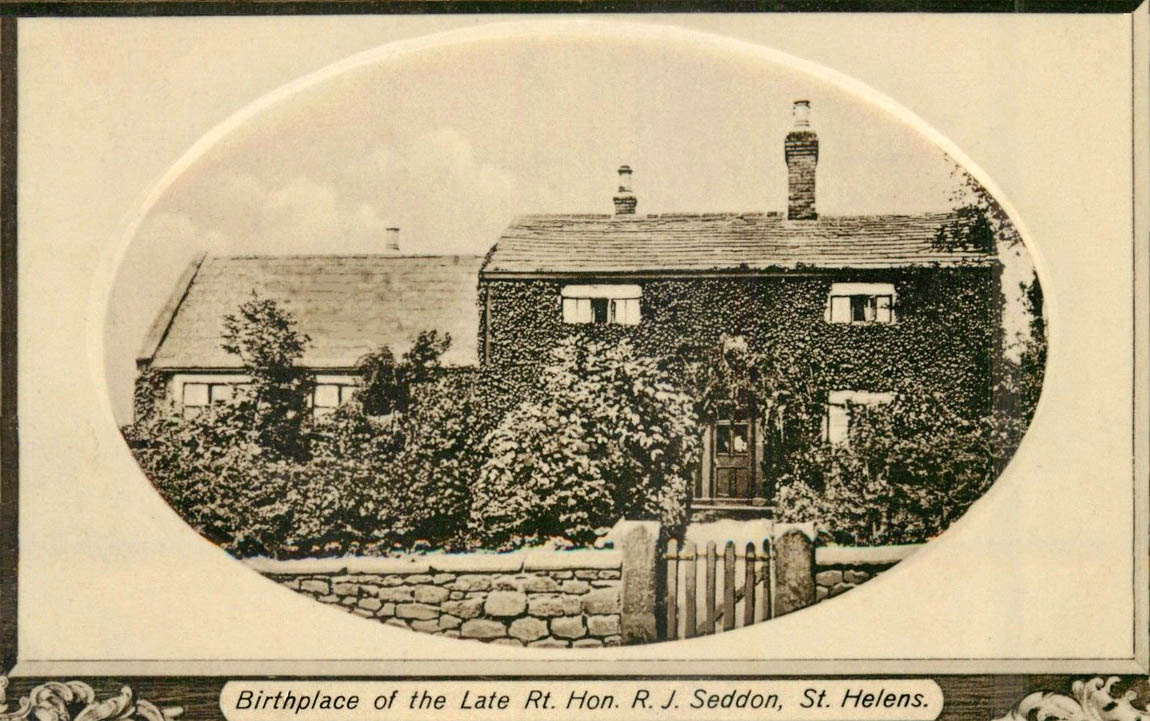 The St Helens Recs won the game 28 - 14. Pilkingtons also presented each member of the team and their accompanying officials with a souvenir in the form of a glass ashtray. On it was embossed the New Zealand kiwi crest and the inscription "All Blacks New Zealand v. St. Helens Recs., Oct. 30, 1926." Later they were taken to see Richard Seddon's birthplace in Prescot Road (pictured above).
A century ago if the police wanted to secretly record a conversation, they needed a short-hand writer to hide in a room, along with a bobby, to transcribe what was said. Just where they were secreted within the home of Violet Swift of Dean Villa in Prescot Road in St Helens when they recorded a case of blackmail, I can't be sure – but I expect they were hiding behind the sofa hoping not to have a coughing fit!
In St Helens Police Court on November 1st, the magistrates were told that George Johnson, who for 30 years had run a toolmaking business in Rainhill, along with his wife and a man called William Corson, had obtained £40 from Violet Swift. The latter was a single woman and it was claimed that she had secretly had a baby and the defendants had threatened to inform her relatives if she did not hand over the money.
The £40 was paid near to the telephone box at Lewis's in Liverpool but later Miss Swift decided to go to the police. And so Inspector Anders and a short-hand writer had hid in a room in her Prescot Road home to listen to a conversation between the woman and the Johnsons in which the £40 was admitted as having been paid.
The court was told that the police were still making enquiries into the case and an officer was presently in Liverpool interviewing witnesses. And so the hearing was adjourned but Mr and Mrs Johnson would only be granted bail if they each found £100 and two separate sureties of £50, with bail for Corson being refused.
St Helens Reporter courtesy St Helens Archive Service at Eccleston Library
Next Week's stories will include the curious Cowley Hill Lane accident, the worsening housing situation within St Helens and the little girl pupils at Rivington Road Council School that made serious allegations against a visiting inspector.
We begin on the 26th when seven boys aged between 11 and 15 were charged at St Helens Juvenile Court with stealing 360 bars of chocolate valued at £3. The lads had stolen them after entering the car of a company traveller named Frank Owen via a side window. The magistrates gave the boys a warning and bound them over. Whether the chocolate had made them sick was not reported!
Every now and then on the Bench at St Helens Police Court there would be a potential conflict of interest. A magistrate might say they would not be adjudicating on a certain case as they knew the defendant – or because the offence had been connected with the firm they had an interest in.
The Pilkington family supplied many a magistrate over the years and occasionally they would stand down voluntarily or at the request of the defence. But I have never before heard of the prosecution in a case calling for a magistrate to vacate his seat on the Bench. However, that occurred on the 29th when Alderman Richard Waring was asked by the prosecutor to stand down.
"Dicky" Waring was the mayor-elect but was considered by some to be a left-wing agitator. During the General Strike, he had led the TUC's Council of Action in St Helens and was a strong supporter of the striking miners. But Waring was infuriated by the suggestion that his adjudication of a case, in which some people had been charged with intimidation and breach of the peace, would not be impartial and he refused to leave the Bench.
With an increasing number of miners now returning to their jobs, there was very bad feeling within mining communities with those still on strike calling the workers scabs and traitors. But Sabina Deacle of Elephant Lane was accused of going further than just using bad language.
The police, who were attempting to protect the working miners, routinely found themselves in the firing line. It was alleged that Mrs Deacle had in Scholes Lane been among an angry crowd that had thrown a stone that struck a mounted policeman's horse, causing it to jump about.
The woman was then said to have run away and entered a draper's shop but the assistants had turned her out and so she ran off down an entry. However, in court Mrs Deacle denied throwing the stone and called several witnesses on her behalf.
The Bench said although they were not satisfied that she had thrown the stone, they convicted Sabrina Deacle for booing and shouting which they said was likely to cause a disturbance. She was bound over for six months, herself in £2 and two further sureties of £1 each.
I don't know whether the magistrates knew of Sabina's criminal background but if they had, I expect they would have found her guilty of throwing the stone at the police horse. I've previously reported that in 1922 the woman had been accused of throwing a brick, a large bottle and a hot cup of tea at her next-door neighbours. Then during the following year, Sabina Deacle was sent to prison for three months with hard labour for abusing her stepchild.
Thirteen-year-old Margaret had been repeatedly beaten and kicked over a long period leaving the child with many scars and cuts on her body. The girl told the court that her stepmother had hit her on the head several times with a poker and cut her behind the ear with a knife. Mrs Deacle was described as "fiendishly brutal" by an NSPCC inspector and her husband was considered fearful of his own wife and under her thumb.
There was a very powerful Conservative advert in the St Helens Reporter on the 29th which attacked the left-wing members of the Labour Party who wielded political power in the borough. They did not mention any names but were clearly thinking of the aforementioned Richard Waring, as well as Thomas Boscow of Sutton. This is part of what was written, with the local elections only days away:
"There exists in St. Helens to-day a state of things so serious, so full of menace to the elementary rights of British Citizenship, that, if it were permitted to develop as it has developed during the past five months, there will be neither liberty of action nor freedom of thought for anyone unless they ally themselves with those whose tyranny has brought about the present Reign of Terror.
"For that is what exists in many parts of St. Helens to-day. It is a Reign of Terror in which people are denied the right to speak, the right to express their own opinions, the right to think or do anything which is contrary to the policy of those who have gained a certain amount of power, which they are prostituting to selfish and class-distinctive ends. It is an attack on Citizenship and Freedom for the sake of political ends."
The Labour Party might well have responded by saying that some of the police actions in recent weeks against striking miners in which brutality was alleged were undermining rights of freedom to assemble. And they could have added that the prosecutions in St Helens of speakers for allegedly causing disaffection were undermining freedom of speech.
There was a nice story in the Reporter about a 12-year-old boy who had been presented with a bravery award. At the Borough Police Court this week, Inspector Anders had told the magistrates how John Cottom of Twyford Street had saved John Jackson from drowning in the canal. He said the five-year-old from Pitt Street had been trying to catch fish with other lads when the little boy slipped and fell into the water.
By good fortune John Cottom had been walking past at that moment and he jumped into the canal and caught the drowning boy. Then with some assistance, he was able to bring him to the bank. When the rescued child had been taken to his home, his young rescuer was offered some money but would not accept it, as the 12-year-old said he was simply doing his duty.
The Chairman of the Bench told John that it gave him great pleasure to thank him for his brave action and handed him a medal and certificate from the Liverpool Shipwreck and Humane Society.
"Remember Remember! Ye 5th of November" was the headline to an advert in the paper from Ben Brooks of Duke Street who said he had a large variety of fireworks for sale.
The New Zealand All Blacks rugby team were touring the country and on the 30th they came to St Helens. They played a match at City Road against St Helens Recs with the latter side hoping to perform better than they did against the Australian tourists three years ago when they were well beaten.
The team was given a civic reception upon arrival in St Helens and the mayor, Ald Thomas Hamblett, reminded them that they had come to the place where New Zealand's first prime minister, Richard Seddon, had been born. It seems a curious thing to have done, but before playing their match against the Recs, the All Blacks were taken to the Fleece Hotel in Church Street and entertained to dinner.
That's the ticket. Stuff your opponents up with food before playing them at rugby league! I'd like to think that it was a cunning plan by the Recs but, of course, 100 years ago the importance of the right kind of nutrition in sport that is consumed at the right time was not understood.
That said, one of the Liverpool papers in October 1926 asked a doctor in the city for medical advice when playing golf. He advised male golfers not to do two things. Not to play a round after a heavy meal and not to play golf with your wife, as she would irritate you!
A century ago if the police wanted to secretly record a conversation, they needed a short-hand writer to hide in a room, along with a bobby, to transcribe what was said. Just where they were secreted within the home of Violet Swift of Dean Villa in Prescot Road in St Helens when they recorded a case of blackmail, I can't be sure – but I expect they were hiding behind the sofa hoping not to have a coughing fit!
In St Helens Police Court on November 1st, the magistrates were told that George Johnson, who for 30 years had run a toolmaking business in Rainhill, along with his wife and a man called William Corson, had obtained £40 from Violet Swift. The latter was a single woman and it was claimed that she had secretly had a baby and the defendants had threatened to inform her relatives if she did not hand over the money.
The £40 was paid near to the telephone box at Lewis's in Liverpool but later Miss Swift decided to go to the police. And so Inspector Anders and a short-hand writer had hid in a room in her Prescot Road home to listen to a conversation between the woman and the Johnsons in which the £40 was admitted as having been paid.
The court was told that the police were still making enquiries into the case and an officer was presently in Liverpool interviewing witnesses. And so the hearing was adjourned but Mr and Mrs Johnson would only be granted bail if they each found £100 and two separate sureties of £50, with bail for Corson being refused.
St Helens Reporter courtesy St Helens Archive Service at Eccleston Library
Next Week's stories will include the curious Cowley Hill Lane accident, the worsening housing situation within St Helens and the little girl pupils at Rivington Road Council School that made serious allegations against a visiting inspector.
This week's many stories include the extraordinary Prescot Road blackmail case, the chocolate stealing boy thieves, the woman who threw a stone in Scholes Lane that struck a policeman's horse, the boy's brave canal rescue, the Tory claim of a Labour reign of terror in St Helens and the New Zealand All Blacks rugby team play St Helens Recs on a full stomach.
We begin on the 26th when seven boys aged between 11 and 15 were charged at St Helens Juvenile Court with stealing 360 bars of chocolate valued at £3.
The lads had stolen them after entering the car of a company traveller named Frank Owen via a side window.
The magistrates gave the boys a warning and bound them over. Whether the chocolate had made them sick was not reported!
Every now and then on the Bench at St Helens Police Court there would be a potential conflict of interest.
A magistrate might say they would not be adjudicating on a certain case as they knew the defendant – or because the offence had been connected with the firm they had an interest in.
The Pilkington family supplied many a magistrate over the years and occasionally they would stand down voluntarily or at the request of the defence.
But I have never before heard of the prosecution in a case calling for a magistrate to vacate his seat on the Bench.
However, that occurred on the 29th when Alderman Richard Waring was asked by the prosecutor to stand down.
"Dicky" Waring was the mayor-elect but was considered by some to be a left-wing agitator.
During the General Strike, he had led the TUC's Council of Action in St Helens and was a strong supporter of the striking miners.
But Waring was infuriated by the suggestion that his adjudication of a case, in which some people had been charged with intimidation and breach of the peace, would not be impartial and he refused to leave the Bench.
With an increasing number of miners now returning to their jobs, there was very bad feeling within mining communities with those still on strike calling the workers scabs and traitors.
But Sabina Deacle of Elephant Lane was accused of going further than just using bad language.
The police, who were attempting to protect the working miners, routinely found themselves in the firing line.
It was alleged that Mrs Deacle had in Scholes Lane been among an angry crowd that had thrown a stone that struck a mounted policeman's horse, causing it to jump about.
The woman was then said to have run away and entered a draper's shop but the assistants had turned her out and so she ran off down an entry.
However, in court Mrs Deacle denied throwing the stone and called several witnesses on her behalf.
The Bench said although they were not satisfied that she had thrown the stone, they convicted Sabrina Deacle for booing and shouting which they said was likely to cause a disturbance.
She was bound over for six months, herself in £2 and two further sureties of £1 each.
I don't know whether the magistrates knew of Sabina's criminal background but if they had, I expect they would have found her guilty of throwing the stone at the police horse.
I've previously reported that in 1922 the woman had been accused of throwing a brick, a large bottle and a hot cup of tea at her next-door neighbours.
Then during the following year, Sabina Deacle was sent to prison for three months with hard labour for abusing her stepchild.
Thirteen-year-old Margaret had been repeatedly beaten and kicked over a long period leaving the child with many scars and cuts on her body.
The girl told the court that her stepmother had hit her on the head several times with a poker and cut her behind the ear with a knife.
Mrs Deacle was described as "fiendishly brutal" by an NSPCC inspector and her husband was considered fearful of his own wife and under her thumb.
There was a very powerful Conservative advert in the St Helens Reporter on the 29th which attacked the left-wing members of the Labour Party who wielded political power in the borough.
They did not mention any names but were clearly thinking of the aforementioned Richard Waring, as well as Thomas Boscow of Sutton.
This is part of what was written, with the local elections only days away:
"There exists in St. Helens to-day a state of things so serious, so full of menace to the elementary rights of British Citizenship, that, if it were permitted to develop as it has developed during the past five months, there will be neither liberty of action nor freedom of thought for anyone unless they ally themselves with those whose tyranny has brought about the present Reign of Terror.
"For that is what exists in many parts of St. Helens to-day.
"It is a Reign of Terror in which people are denied the right to speak, the right to express their own opinions, the right to think or do anything which is contrary to the policy of those who have gained a certain amount of power, which they are prostituting to selfish and class-distinctive ends.
"It is an attack on Citizenship and Freedom for the sake of political ends."
The Labour Party might well have responded by saying that some of the police actions in recent weeks against striking miners in which brutality was alleged were undermining rights of freedom to assemble.
And they could have added that the prosecutions in St Helens of speakers for allegedly causing disaffection were undermining freedom of speech.
There was a nice story in the Reporter about a 12-year-old boy who had been presented with a bravery award.
At the Borough Police Court this week, Inspector Anders had told the magistrates how John Cottom of Twyford Street had saved John Jackson from drowning in the canal.
He said the five-year-old from Pitt Street had been trying to catch fish with other lads when the little boy slipped and fell into the water.
By good fortune John Cottom had been walking past at that moment and he jumped into the canal and caught the drowning boy.
Then with some assistance, he was able to bring him to the bank.
When the rescued child had been taken to his home, his young rescuer was offered some money but would not accept it, as the 12-year-old said he was simply doing his duty.
The Chairman of the Bench told John that it gave him great pleasure to thank him for his brave action and handed him a medal and certificate from the Liverpool Shipwreck and Humane Society.
"Remember Remember! Ye 5th of November" was the headline to an advert in the paper from Ben Brooks of Duke Street who said he had a large variety of fireworks for sale.
The New Zealand All Blacks rugby team were touring the country and on the 30th they came to St Helens.
They played a match at City Road against St Helens Recs with the latter side hoping to perform better than they did against the Australian tourists three years ago when they were well beaten.
The team was given a civic reception upon arrival in St Helens and the mayor, Ald Thomas Hamblett, reminded them that they had come to the place where New Zealand's first prime minister, Richard Seddon, had been born.
It seems a curious thing to have done, but before playing their match against the Recs, the All Blacks were taken to the Fleece Hotel in Church Street and entertained to dinner.
That's the ticket. Stuff your opponents up with food before playing them at rugby league!
I'd like to think that it was a cunning plan by the Recs but, of course, 100 years ago the importance of the right kind of nutrition in sport that is consumed at the right time was not understood.
That said, one of the Liverpool papers in October 1926 asked a doctor in the city for medical advice when playing golf.
He advised male golfers not to do two things. Not to play a round after a heavy meal and not to play golf with your wife, as she would irritate you!
The St Helens Recs won the game 28 - 14. Pilkingtons also presented each member of the team and their accompanying officials with a souvenir in the form of a glass ashtray.
On it was embossed the New Zealand kiwi crest and the inscription "All Blacks New Zealand v. St. Helens Recs., Oct. 30, 1926."
Later they were taken to see Richard Seddon's birthplace in Prescot Road.
A century ago if the police wanted to secretly record a conversation, they needed a short-hand writer to hide in a room, along with a bobby, to transcribe what was said.
Just where they were secreted within the home of Violet Swift of Dean Villa in Prescot Road in St Helens when they recorded a case of blackmail, I can't be sure – but I expect they were hiding behind the sofa hoping not to have a coughing fit!
In St Helens Police Court on November 1st, the magistrates were told that George Johnson, who for 30 years had run a toolmaking business in Rainhill, along with his wife and a man called William Corson, had obtained £40 from Violet Swift.
The latter was a single woman and it was claimed that she had secretly had a baby and the defendants had threatened to inform her relatives if she did not hand over the money.
The £40 was paid near to the telephone box at Lewis's in Liverpool but later Miss Swift decided to go to the police.
And so Inspector Anders and a short-hand writer had hid in a room in her Prescot Road home to listen to a conversation between the woman and the Johnsons in which the £40 was admitted as having been paid.
The court was told that the police were still making enquiries into the case and an officer was presently in Liverpool interviewing witnesses.
And so the hearing was adjourned but Mr and Mrs Johnson would only be granted bail if they each found £100 and two separate sureties of £50, with bail for Corson being refused.
St Helens Reporter courtesy St Helens Archive Service at Eccleston Library
Next Week's stories will include the curious Cowley Hill Lane accident, the worsening housing situation within St Helens and the little girl pupils at Rivington Road Council School that made serious allegations against a visiting inspector.
We begin on the 26th when seven boys aged between 11 and 15 were charged at St Helens Juvenile Court with stealing 360 bars of chocolate valued at £3.
The lads had stolen them after entering the car of a company traveller named Frank Owen via a side window.
The magistrates gave the boys a warning and bound them over. Whether the chocolate had made them sick was not reported!
Every now and then on the Bench at St Helens Police Court there would be a potential conflict of interest.
A magistrate might say they would not be adjudicating on a certain case as they knew the defendant – or because the offence had been connected with the firm they had an interest in.
The Pilkington family supplied many a magistrate over the years and occasionally they would stand down voluntarily or at the request of the defence.
But I have never before heard of the prosecution in a case calling for a magistrate to vacate his seat on the Bench.
However, that occurred on the 29th when Alderman Richard Waring was asked by the prosecutor to stand down.
"Dicky" Waring was the mayor-elect but was considered by some to be a left-wing agitator.
During the General Strike, he had led the TUC's Council of Action in St Helens and was a strong supporter of the striking miners.
But Waring was infuriated by the suggestion that his adjudication of a case, in which some people had been charged with intimidation and breach of the peace, would not be impartial and he refused to leave the Bench.
With an increasing number of miners now returning to their jobs, there was very bad feeling within mining communities with those still on strike calling the workers scabs and traitors.
But Sabina Deacle of Elephant Lane was accused of going further than just using bad language.
The police, who were attempting to protect the working miners, routinely found themselves in the firing line.
It was alleged that Mrs Deacle had in Scholes Lane been among an angry crowd that had thrown a stone that struck a mounted policeman's horse, causing it to jump about.
The woman was then said to have run away and entered a draper's shop but the assistants had turned her out and so she ran off down an entry.
However, in court Mrs Deacle denied throwing the stone and called several witnesses on her behalf.
The Bench said although they were not satisfied that she had thrown the stone, they convicted Sabrina Deacle for booing and shouting which they said was likely to cause a disturbance.
She was bound over for six months, herself in £2 and two further sureties of £1 each.
I don't know whether the magistrates knew of Sabina's criminal background but if they had, I expect they would have found her guilty of throwing the stone at the police horse.
I've previously reported that in 1922 the woman had been accused of throwing a brick, a large bottle and a hot cup of tea at her next-door neighbours.
Then during the following year, Sabina Deacle was sent to prison for three months with hard labour for abusing her stepchild.
Thirteen-year-old Margaret had been repeatedly beaten and kicked over a long period leaving the child with many scars and cuts on her body.
The girl told the court that her stepmother had hit her on the head several times with a poker and cut her behind the ear with a knife.
Mrs Deacle was described as "fiendishly brutal" by an NSPCC inspector and her husband was considered fearful of his own wife and under her thumb.
There was a very powerful Conservative advert in the St Helens Reporter on the 29th which attacked the left-wing members of the Labour Party who wielded political power in the borough.
They did not mention any names but were clearly thinking of the aforementioned Richard Waring, as well as Thomas Boscow of Sutton.
This is part of what was written, with the local elections only days away:
"There exists in St. Helens to-day a state of things so serious, so full of menace to the elementary rights of British Citizenship, that, if it were permitted to develop as it has developed during the past five months, there will be neither liberty of action nor freedom of thought for anyone unless they ally themselves with those whose tyranny has brought about the present Reign of Terror.
"For that is what exists in many parts of St. Helens to-day.
"It is a Reign of Terror in which people are denied the right to speak, the right to express their own opinions, the right to think or do anything which is contrary to the policy of those who have gained a certain amount of power, which they are prostituting to selfish and class-distinctive ends.
"It is an attack on Citizenship and Freedom for the sake of political ends."
The Labour Party might well have responded by saying that some of the police actions in recent weeks against striking miners in which brutality was alleged were undermining rights of freedom to assemble.
And they could have added that the prosecutions in St Helens of speakers for allegedly causing disaffection were undermining freedom of speech.
There was a nice story in the Reporter about a 12-year-old boy who had been presented with a bravery award.
At the Borough Police Court this week, Inspector Anders had told the magistrates how John Cottom of Twyford Street had saved John Jackson from drowning in the canal.
He said the five-year-old from Pitt Street had been trying to catch fish with other lads when the little boy slipped and fell into the water.
By good fortune John Cottom had been walking past at that moment and he jumped into the canal and caught the drowning boy.
Then with some assistance, he was able to bring him to the bank.
When the rescued child had been taken to his home, his young rescuer was offered some money but would not accept it, as the 12-year-old said he was simply doing his duty.
The Chairman of the Bench told John that it gave him great pleasure to thank him for his brave action and handed him a medal and certificate from the Liverpool Shipwreck and Humane Society.
"Remember Remember! Ye 5th of November" was the headline to an advert in the paper from Ben Brooks of Duke Street who said he had a large variety of fireworks for sale.
The New Zealand All Blacks rugby team were touring the country and on the 30th they came to St Helens.
They played a match at City Road against St Helens Recs with the latter side hoping to perform better than they did against the Australian tourists three years ago when they were well beaten.
The team was given a civic reception upon arrival in St Helens and the mayor, Ald Thomas Hamblett, reminded them that they had come to the place where New Zealand's first prime minister, Richard Seddon, had been born.
It seems a curious thing to have done, but before playing their match against the Recs, the All Blacks were taken to the Fleece Hotel in Church Street and entertained to dinner.
That's the ticket. Stuff your opponents up with food before playing them at rugby league!
I'd like to think that it was a cunning plan by the Recs but, of course, 100 years ago the importance of the right kind of nutrition in sport that is consumed at the right time was not understood.
That said, one of the Liverpool papers in October 1926 asked a doctor in the city for medical advice when playing golf.
He advised male golfers not to do two things. Not to play a round after a heavy meal and not to play golf with your wife, as she would irritate you!
The St Helens Recs won the game 28 - 14. Pilkingtons also presented each member of the team and their accompanying officials with a souvenir in the form of a glass ashtray.
On it was embossed the New Zealand kiwi crest and the inscription "All Blacks New Zealand v. St. Helens Recs., Oct. 30, 1926."
A century ago if the police wanted to secretly record a conversation, they needed a short-hand writer to hide in a room, along with a bobby, to transcribe what was said.
Just where they were secreted within the home of Violet Swift of Dean Villa in Prescot Road in St Helens when they recorded a case of blackmail, I can't be sure – but I expect they were hiding behind the sofa hoping not to have a coughing fit!
In St Helens Police Court on November 1st, the magistrates were told that George Johnson, who for 30 years had run a toolmaking business in Rainhill, along with his wife and a man called William Corson, had obtained £40 from Violet Swift.
The latter was a single woman and it was claimed that she had secretly had a baby and the defendants had threatened to inform her relatives if she did not hand over the money.
The £40 was paid near to the telephone box at Lewis's in Liverpool but later Miss Swift decided to go to the police.
And so Inspector Anders and a short-hand writer had hid in a room in her Prescot Road home to listen to a conversation between the woman and the Johnsons in which the £40 was admitted as having been paid.
The court was told that the police were still making enquiries into the case and an officer was presently in Liverpool interviewing witnesses.
And so the hearing was adjourned but Mr and Mrs Johnson would only be granted bail if they each found £100 and two separate sureties of £50, with bail for Corson being refused.
St Helens Reporter courtesy St Helens Archive Service at Eccleston Library
Next Week's stories will include the curious Cowley Hill Lane accident, the worsening housing situation within St Helens and the little girl pupils at Rivington Road Council School that made serious allegations against a visiting inspector.