
FIFTY YEARS AGO THIS WEEK 26 JAN - 1 FEB 1976
This week's many stories include the pram-pushing mothers who barricaded Merton Bank Road, the new Bold diving bell and compression chamber, the proposed ban on a children's game and why families in the Blackbrook area were boycotting their local surgery.
We begin on the 26th when Barbara Whittingham from Sutton Manor became the first woman Chief Inspector within the St Helens Division to be put in charge of policemen, as well as policewomen. Before the Sex Discrimination Act of 1975, Barbara was only allowed to have authority over other policewomen. Originally from Garstang, Barbara joined the police in 1964 and became the Chief Inspector of St Helens policewomen in 1974. She said: "It is an entirely new task for me to supervise men but I am looking forward to it."
Greenall Whitley released their annual report this week in which the company's Chairman, Christopher Hatton, said: "Thanks to a wonderful Summer, profits for the year are an all-time record." Hot weather during July and August of 1975 had boosted beer sales and, of course, 1976 would prove to be an even warmer year.
On the 28th pram-pushing mothers barricaded Merton Bank Road in St Helens in a protest over dangerous traffic conditions. For over a year the street had been the subject of controversy between the council and the mothers of children that attended Merton Bank Junior and Infant School and on two occasions last summer they had blocked the road.
Traffic signs warning motorists of schoolchildren crossing the road had been installed and regular police patrols were now taking place in the area. However, the mothers wanted the council to go further. They were demanding a zebra crossing be installed on Merton Bank Road leading to the estate where most of the children who attended the school lived. Lily Stanley of O’Keefe Street, who organised this week's blockade, said:
"We have tried desperately to have a crossing in Merton Bank Road. Do we have to have the death of a child before something is done about it? The road is very busy, not only with cars but with heavy, articulated lorries. Motorists also park in Roper Street which also borders the school. We would like the council to ensure that parking outside the school gates is stopped because this causes a serious obstruction for the children when they leave school."
However, the council explained that what was being asked of them was not within their power. They did not have the authority to lay down double-yellow lines, with such powers being the responsibility of Merseyside County. A spokesman for St Helens Council said they had applied to the County Police for double-yellows to be installed and were waiting for a response. They had previously applied for a school crossing patrol on Merton Bank Road but the County authorities had turned their request down.
Also on the 28th, three deep-sea divers "surfaced" in the middle of an engineering works in Bold. The trio had been testing the Capper Neill Group's latest technical breakthrough – an all-British diving bell and compression chamber – at the same pressures that would be experienced 1,000 feet below the waves.
The divers had spent 14 days in the cigar-shaped chamber, although they had not gone short of food, as hotel manager Richard Grey of the Royal Raven in Church Street had supplied them with a total of 126 hot meals. Capper Neill's subsidiary Aqua Logistics had built the diving system over 10 months and it would allow diving teams to live up to 30 days at a constant pressure, instead of having to undergo frequent pressure changes.
On the 28th the Newton and Earlestown Guardian wrote: "Newton, reluctant child of St. Helens, is about to be dragged screaming and kicking into Merseyside. At least that is the impression one got at last Tuesday's meeting of St. Helens Council's Planning and Development Committee, which discussed re-development plans for Newton, and particularly Earlestown town centre.
"While Councillor Bill Paton conceded that: “We never wanted to come into Merseyside, and the vast majority of the people are of the opinion that we should not belong to it,” he warned that, “our task now is to convince Newton people that they are part of St. Helens whether they like it or not.”"
On the 29th the Ormskirk Advertiser had a photo of farmer William Raw standing outside his partly demolished outer wall in Rookery Lane in Rainford. The picture was intended to illustrate a discussion that had taken place at Rainford Parish Council concerning considerable damage that had been done to walls in both Higher Lane and Rookery Lane.
Although vandalism was blamed for much of the problem, it was suggested that some stones had been deliberately removed, perhaps for garden rockeries. Mr Raws' field is now in the throes of becoming a huge housing estate.
The St Helens Reporter described on the 30th how the Board of Directors at Haydock Park were considering allowing the general public to attend events other than race meetings. Currently 27 races were held there each year but in order to boost funds, the directors were considering utilising the course more fully by hosting other events, something that is now, of course, very common at Haydock Park.
The Reporter also stated that families in the Blackbrook area were boycotting their local surgery because there was no chemist's shop nearby. For some years the residents on the Chain Lane estate had needed to travel into the town centre if they wished to see a doctor. But last August a medical practice had been set up but since then out of a total of 8,000 people on the estate, only 350 had registered with them.
It was stated that the main reason for a lack of patients was a feeling that it was pointless to change to a nearer doctor when they still had to travel a considerable distance to have their prescriptions made up. The Family Practitioner Committee had decided against establishing a chemist's on the estate but now the Community Health Council had asked them to reconsider.
The Reporter said that St Helens Police had set up a special patrol to capture a "Peeping Tom" who had escaped after being caught in the act. John Rainford of Houghton's Lane Farm in Eccleston had grabbed the prowler after he had been looking through a bedroom window at his farm but in the struggle the man had got away.
The Reporter also stated that the St Helens Public Safety Officer, Derek Jamieson, was to recommend that heads of schools ban a new game before it turned into a dangerous craze among schoolchildren. Mr Jamieson said the idea of the game – which consisted of a small rugby-type ball on two waxed strings – was for two people to "send the ball streaking along the strings to each other, by holding the lines taut and apart.
"The hidden danger lies in a playground where children could run into the taut strings as they dash about." He added that the game could be as much of a menace as the "click clack craze" of 1974, which had resulted in many schoolchildren bruising or breaking their wrists with two heavy plastic balls.
That game was first described by the Reporter in 1971 when it was called a clackers craze. Although there was a safety concern, the report also said that the racket that the pair of plastic spheres made drove schoolteachers up the wall! One St Helens headmaster had said the noise was like a "burst of machine gun fire".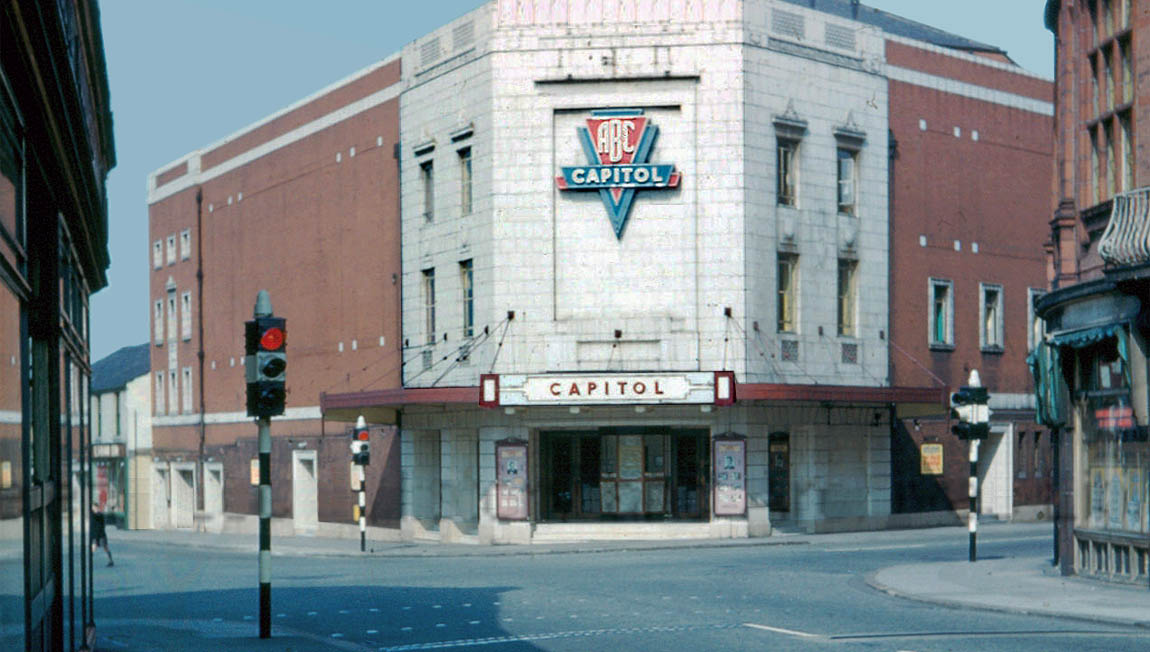 And finally, at the Capitol Cinema for 7 days from February 1st 'Rollerball' starring James Caan replaced 'Race With The Devil' starring Peter Fonda. Rollerball's advert in the Reporter bore the strapline: "In the not too distant future wars will no longer exist – but there will be Rollerball." Meanwhile at the ABC Savoy, 'Jaws' entered its sixth week of screening.
St Helens Reporter courtesy St Helens Archive Service at Eccleston Library
Next Week's stories will include the death of a St Helens boxer, Cowley Girls are allowed to wear slacks, the Triplex plan to boost job security, the Golden Lion Gun Club lose their appeal and criticism of the fire service's response to call outs.
We begin on the 26th when Barbara Whittingham from Sutton Manor became the first woman Chief Inspector within the St Helens Division to be put in charge of policemen, as well as policewomen. Before the Sex Discrimination Act of 1975, Barbara was only allowed to have authority over other policewomen. Originally from Garstang, Barbara joined the police in 1964 and became the Chief Inspector of St Helens policewomen in 1974. She said: "It is an entirely new task for me to supervise men but I am looking forward to it."
Greenall Whitley released their annual report this week in which the company's Chairman, Christopher Hatton, said: "Thanks to a wonderful Summer, profits for the year are an all-time record." Hot weather during July and August of 1975 had boosted beer sales and, of course, 1976 would prove to be an even warmer year.
On the 28th pram-pushing mothers barricaded Merton Bank Road in St Helens in a protest over dangerous traffic conditions. For over a year the street had been the subject of controversy between the council and the mothers of children that attended Merton Bank Junior and Infant School and on two occasions last summer they had blocked the road.
Traffic signs warning motorists of schoolchildren crossing the road had been installed and regular police patrols were now taking place in the area. However, the mothers wanted the council to go further. They were demanding a zebra crossing be installed on Merton Bank Road leading to the estate where most of the children who attended the school lived. Lily Stanley of O’Keefe Street, who organised this week's blockade, said:
"We have tried desperately to have a crossing in Merton Bank Road. Do we have to have the death of a child before something is done about it? The road is very busy, not only with cars but with heavy, articulated lorries. Motorists also park in Roper Street which also borders the school. We would like the council to ensure that parking outside the school gates is stopped because this causes a serious obstruction for the children when they leave school."
However, the council explained that what was being asked of them was not within their power. They did not have the authority to lay down double-yellow lines, with such powers being the responsibility of Merseyside County. A spokesman for St Helens Council said they had applied to the County Police for double-yellows to be installed and were waiting for a response. They had previously applied for a school crossing patrol on Merton Bank Road but the County authorities had turned their request down.
Also on the 28th, three deep-sea divers "surfaced" in the middle of an engineering works in Bold. The trio had been testing the Capper Neill Group's latest technical breakthrough – an all-British diving bell and compression chamber – at the same pressures that would be experienced 1,000 feet below the waves.
The divers had spent 14 days in the cigar-shaped chamber, although they had not gone short of food, as hotel manager Richard Grey of the Royal Raven in Church Street had supplied them with a total of 126 hot meals. Capper Neill's subsidiary Aqua Logistics had built the diving system over 10 months and it would allow diving teams to live up to 30 days at a constant pressure, instead of having to undergo frequent pressure changes.
On the 28th the Newton and Earlestown Guardian wrote: "Newton, reluctant child of St. Helens, is about to be dragged screaming and kicking into Merseyside. At least that is the impression one got at last Tuesday's meeting of St. Helens Council's Planning and Development Committee, which discussed re-development plans for Newton, and particularly Earlestown town centre.
"While Councillor Bill Paton conceded that: “We never wanted to come into Merseyside, and the vast majority of the people are of the opinion that we should not belong to it,” he warned that, “our task now is to convince Newton people that they are part of St. Helens whether they like it or not.”"
On the 29th the Ormskirk Advertiser had a photo of farmer William Raw standing outside his partly demolished outer wall in Rookery Lane in Rainford. The picture was intended to illustrate a discussion that had taken place at Rainford Parish Council concerning considerable damage that had been done to walls in both Higher Lane and Rookery Lane.
Although vandalism was blamed for much of the problem, it was suggested that some stones had been deliberately removed, perhaps for garden rockeries. Mr Raws' field is now in the throes of becoming a huge housing estate.
The St Helens Reporter described on the 30th how the Board of Directors at Haydock Park were considering allowing the general public to attend events other than race meetings. Currently 27 races were held there each year but in order to boost funds, the directors were considering utilising the course more fully by hosting other events, something that is now, of course, very common at Haydock Park.
The Reporter also stated that families in the Blackbrook area were boycotting their local surgery because there was no chemist's shop nearby. For some years the residents on the Chain Lane estate had needed to travel into the town centre if they wished to see a doctor. But last August a medical practice had been set up but since then out of a total of 8,000 people on the estate, only 350 had registered with them.
It was stated that the main reason for a lack of patients was a feeling that it was pointless to change to a nearer doctor when they still had to travel a considerable distance to have their prescriptions made up. The Family Practitioner Committee had decided against establishing a chemist's on the estate but now the Community Health Council had asked them to reconsider.
The Reporter said that St Helens Police had set up a special patrol to capture a "Peeping Tom" who had escaped after being caught in the act. John Rainford of Houghton's Lane Farm in Eccleston had grabbed the prowler after he had been looking through a bedroom window at his farm but in the struggle the man had got away.
The Reporter also stated that the St Helens Public Safety Officer, Derek Jamieson, was to recommend that heads of schools ban a new game before it turned into a dangerous craze among schoolchildren. Mr Jamieson said the idea of the game – which consisted of a small rugby-type ball on two waxed strings – was for two people to "send the ball streaking along the strings to each other, by holding the lines taut and apart.
"The hidden danger lies in a playground where children could run into the taut strings as they dash about." He added that the game could be as much of a menace as the "click clack craze" of 1974, which had resulted in many schoolchildren bruising or breaking their wrists with two heavy plastic balls.
That game was first described by the Reporter in 1971 when it was called a clackers craze. Although there was a safety concern, the report also said that the racket that the pair of plastic spheres made drove schoolteachers up the wall! One St Helens headmaster had said the noise was like a "burst of machine gun fire".
St Helens Reporter courtesy St Helens Archive Service at Eccleston Library
Next Week's stories will include the death of a St Helens boxer, Cowley Girls are allowed to wear slacks, the Triplex plan to boost job security, the Golden Lion Gun Club lose their appeal and criticism of the fire service's response to call outs.
This week's many stories include the pram-pushing mothers who barricaded Merton Bank Road, the new Bold diving bell and compression chamber, the proposed ban on a children's game and why families in the Blackbrook area were boycotting their local surgery.
We begin on the 26th when Barbara Whittingham from Sutton Manor became the first woman Chief Inspector within the St Helens Division to be put in charge of policemen, as well as policewomen.
Before the Sex Discrimination Act of 1975, Barbara was only allowed to have authority over other policewomen.
Originally from Garstang, Barbara joined the police in 1964 and became the Chief Inspector of St Helens policewomen in 1974.
She said: "It is an entirely new task for me to supervise men but I am looking forward to it."
Greenall Whitley released their annual report this week in which the company's Chairman, Christopher Hatton, said:
"Thanks to a wonderful Summer, profits for the year are an all-time record."
Hot weather during July and August of 1975 had boosted beer sales and, of course, 1976 would prove to be an even warmer year.
On the 28th pram-pushing mothers barricaded Merton Bank Road in St Helens in a protest over dangerous traffic conditions.
For over a year the street had been the subject of controversy between the council and the mothers of children that attended Merton Bank Junior and Infant School and on two occasions last summer they had blocked the road.
Traffic signs warning motorists of schoolchildren crossing the road had been installed and regular police patrols were now taking place in the area. However, the mothers wanted the council to go further.
They were demanding a zebra crossing be installed on Merton Bank Road leading to the estate where most of the children who attended the school lived.
Lily Stanley of O’Keefe Street, who organised this week's blockade, said:
"We have tried desperately to have a crossing in Merton Bank Road. Do we have to have the death of a child before something is done about it? The road is very busy, not only with cars but with heavy, articulated lorries. Motorists also park in Roper Street which also borders the school.
"We would like the council to ensure that parking outside the school gates is stopped because this causes a serious obstruction for the children when they leave school."
However, the council explained that what was being asked of them was not within their power.
They did not have the authority to lay down double-yellow lines, with such powers being the responsibility of Merseyside County.
A spokesman for St Helens Council said they had applied to the County Police for double-yellows to be installed and were waiting for a response.
They had previously applied for a school crossing patrol on Merton Bank Road but the County authorities had turned their request down.
Also on the 28th, three deep-sea divers "surfaced" in the middle of an engineering works in Bold.
The trio had been testing the Capper Neill Group's latest technical breakthrough – an all-British diving bell and compression chamber – at the same pressures that would be experienced 1,000 feet below the waves.
The divers had spent 14 days in the cigar-shaped chamber, although they had not gone short of food, as hotel manager Richard Grey of the Royal Raven in Church Street had supplied them with a total of 126 hot meals.
Capper Neill's subsidiary Aqua Logistics had built the diving system over 10 months and it would allow diving teams to live up to 30 days at a constant pressure, instead of having to undergo frequent pressure changes.
On the 28th the Newton and Earlestown Guardian wrote:
"Newton, reluctant child of St. Helens, is about to be dragged screaming and kicking into Merseyside. At least that is the impression one got at last Tuesday's meeting of St. Helens Council's Planning and Development Committee, which discussed re-development plans for Newton, and particularly Earlestown town centre.
"While Councillor Bill Paton conceded that: “We never wanted to come into Merseyside, and the vast majority of the people are of the opinion that we should not belong to it,” he warned that, “our task now is to convince Newton people that they are part of St. Helens whether they like it or not.”"
On the 29th the Ormskirk Advertiser had a photo of farmer William Raw standing outside his partly demolished outer wall in Rookery Lane in Rainford.
The picture was intended to illustrate a discussion that had taken place at Rainford Parish Council concerning considerable damage that had been done to walls in both Higher Lane and Rookery Lane.
Although vandalism was blamed for much of the problem, it was suggested that some stones had been deliberately removed, perhaps for garden rockeries. Mr Raws' field is now in the throes of becoming a huge housing estate.
The St Helens Reporter described on the 30th how the Board of Directors at Haydock Park were considering allowing the general public to attend events other than race meetings.
Currently 27 races were held there each year but in order to boost funds, the directors were considering utilising the course more fully by hosting other events, something that is now, of course, very common at Haydock Park.
The Reporter also stated that families in the Blackbrook area were boycotting their local surgery because there was no chemist's shop nearby.
For some years the residents on the Chain Lane estate had needed to travel into the town centre if they wished to see a doctor.
But last August a medical practice had been set up but since then out of a total of 8,000 people on the estate, only 350 had registered with them.
It was stated that the main reason for a lack of patients was a feeling that it was pointless to change to a nearer doctor when they still had to travel a considerable distance to have their prescriptions made up.
The Family Practitioner Committee had decided against establishing a chemist's on the estate but now the Community Health Council had asked them to reconsider.
The Reporter said that St Helens Police had set up a special patrol to capture a "Peeping Tom" who had escaped after being caught in the act.
John Rainford of Houghton's Lane Farm in Eccleston had grabbed the prowler after he had been looking through a bedroom window at his farm but in the struggle the man had got away.
The Reporter also stated that the St Helens Public Safety Officer, Derek Jamieson, was to recommend that heads of schools ban a new game before it turned into a dangerous craze among schoolchildren.
Mr Jamieson said the idea of the game – which consisted of a small rugby-type ball on two waxed strings – was for two people to "send the ball streaking along the strings to each other, by holding the lines taut and apart.
"The hidden danger lies in a playground where children could run into the taut strings as they dash about."
He added that the game could be as much of a menace as the "click clack craze" of 1974, which had resulted in many schoolchildren bruising or breaking their wrists with two heavy plastic balls.
That game was first described by the Reporter in 1971 when it was called a clackers craze.
Although there was a safety concern, the report also said that the racket that the pair of plastic spheres made drove schoolteachers up the wall!
One St Helens headmaster had said the noise was like a "burst of machine gun fire".
And finally, at the Capitol Cinema for 7 days from February 1st 'Rollerball' starring James Caan replaced 'Race With The Devil' starring Peter Fonda.
Rollerball's advert in the Reporter bore the strapline: "In the not too distant future wars will no longer exist – but there will be Rollerball."
Meanwhile at the ABC Savoy, 'Jaws' entered its sixth week of screening.
St Helens Reporter courtesy St Helens Archive Service at Eccleston Library
Next Week's stories will include the death of a St Helens boxer, Cowley Girls are allowed to wear slacks, the Triplex plan to boost job security, the Golden Lion Gun Club lose their appeal and criticism of the fire service's response to call outs.
We begin on the 26th when Barbara Whittingham from Sutton Manor became the first woman Chief Inspector within the St Helens Division to be put in charge of policemen, as well as policewomen.
Before the Sex Discrimination Act of 1975, Barbara was only allowed to have authority over other policewomen.
Originally from Garstang, Barbara joined the police in 1964 and became the Chief Inspector of St Helens policewomen in 1974.
She said: "It is an entirely new task for me to supervise men but I am looking forward to it."
Greenall Whitley released their annual report this week in which the company's Chairman, Christopher Hatton, said:
"Thanks to a wonderful Summer, profits for the year are an all-time record."
Hot weather during July and August of 1975 had boosted beer sales and, of course, 1976 would prove to be an even warmer year.
On the 28th pram-pushing mothers barricaded Merton Bank Road in St Helens in a protest over dangerous traffic conditions.
For over a year the street had been the subject of controversy between the council and the mothers of children that attended Merton Bank Junior and Infant School and on two occasions last summer they had blocked the road.
Traffic signs warning motorists of schoolchildren crossing the road had been installed and regular police patrols were now taking place in the area. However, the mothers wanted the council to go further.
They were demanding a zebra crossing be installed on Merton Bank Road leading to the estate where most of the children who attended the school lived.
Lily Stanley of O’Keefe Street, who organised this week's blockade, said:
"We have tried desperately to have a crossing in Merton Bank Road. Do we have to have the death of a child before something is done about it? The road is very busy, not only with cars but with heavy, articulated lorries. Motorists also park in Roper Street which also borders the school.
"We would like the council to ensure that parking outside the school gates is stopped because this causes a serious obstruction for the children when they leave school."
However, the council explained that what was being asked of them was not within their power.
They did not have the authority to lay down double-yellow lines, with such powers being the responsibility of Merseyside County.
A spokesman for St Helens Council said they had applied to the County Police for double-yellows to be installed and were waiting for a response.
They had previously applied for a school crossing patrol on Merton Bank Road but the County authorities had turned their request down.
Also on the 28th, three deep-sea divers "surfaced" in the middle of an engineering works in Bold.
The trio had been testing the Capper Neill Group's latest technical breakthrough – an all-British diving bell and compression chamber – at the same pressures that would be experienced 1,000 feet below the waves.
The divers had spent 14 days in the cigar-shaped chamber, although they had not gone short of food, as hotel manager Richard Grey of the Royal Raven in Church Street had supplied them with a total of 126 hot meals.
Capper Neill's subsidiary Aqua Logistics had built the diving system over 10 months and it would allow diving teams to live up to 30 days at a constant pressure, instead of having to undergo frequent pressure changes.
On the 28th the Newton and Earlestown Guardian wrote:
"Newton, reluctant child of St. Helens, is about to be dragged screaming and kicking into Merseyside. At least that is the impression one got at last Tuesday's meeting of St. Helens Council's Planning and Development Committee, which discussed re-development plans for Newton, and particularly Earlestown town centre.
"While Councillor Bill Paton conceded that: “We never wanted to come into Merseyside, and the vast majority of the people are of the opinion that we should not belong to it,” he warned that, “our task now is to convince Newton people that they are part of St. Helens whether they like it or not.”"
On the 29th the Ormskirk Advertiser had a photo of farmer William Raw standing outside his partly demolished outer wall in Rookery Lane in Rainford.
The picture was intended to illustrate a discussion that had taken place at Rainford Parish Council concerning considerable damage that had been done to walls in both Higher Lane and Rookery Lane.
Although vandalism was blamed for much of the problem, it was suggested that some stones had been deliberately removed, perhaps for garden rockeries. Mr Raws' field is now in the throes of becoming a huge housing estate.
The St Helens Reporter described on the 30th how the Board of Directors at Haydock Park were considering allowing the general public to attend events other than race meetings.
Currently 27 races were held there each year but in order to boost funds, the directors were considering utilising the course more fully by hosting other events, something that is now, of course, very common at Haydock Park.
The Reporter also stated that families in the Blackbrook area were boycotting their local surgery because there was no chemist's shop nearby.
For some years the residents on the Chain Lane estate had needed to travel into the town centre if they wished to see a doctor.
But last August a medical practice had been set up but since then out of a total of 8,000 people on the estate, only 350 had registered with them.
It was stated that the main reason for a lack of patients was a feeling that it was pointless to change to a nearer doctor when they still had to travel a considerable distance to have their prescriptions made up.
The Family Practitioner Committee had decided against establishing a chemist's on the estate but now the Community Health Council had asked them to reconsider.
The Reporter said that St Helens Police had set up a special patrol to capture a "Peeping Tom" who had escaped after being caught in the act.
John Rainford of Houghton's Lane Farm in Eccleston had grabbed the prowler after he had been looking through a bedroom window at his farm but in the struggle the man had got away.
The Reporter also stated that the St Helens Public Safety Officer, Derek Jamieson, was to recommend that heads of schools ban a new game before it turned into a dangerous craze among schoolchildren.
Mr Jamieson said the idea of the game – which consisted of a small rugby-type ball on two waxed strings – was for two people to "send the ball streaking along the strings to each other, by holding the lines taut and apart.
"The hidden danger lies in a playground where children could run into the taut strings as they dash about."
He added that the game could be as much of a menace as the "click clack craze" of 1974, which had resulted in many schoolchildren bruising or breaking their wrists with two heavy plastic balls.
That game was first described by the Reporter in 1971 when it was called a clackers craze.
Although there was a safety concern, the report also said that the racket that the pair of plastic spheres made drove schoolteachers up the wall!
One St Helens headmaster had said the noise was like a "burst of machine gun fire".
Rollerball's advert in the Reporter bore the strapline: "In the not too distant future wars will no longer exist – but there will be Rollerball."
Meanwhile at the ABC Savoy, 'Jaws' entered its sixth week of screening.
St Helens Reporter courtesy St Helens Archive Service at Eccleston Library
Next Week's stories will include the death of a St Helens boxer, Cowley Girls are allowed to wear slacks, the Triplex plan to boost job security, the Golden Lion Gun Club lose their appeal and criticism of the fire service's response to call outs.