
FIFTY YEARS AGO THIS WEEK 2 - 8 FEBRUARY 1976
This week's many stories include the death of a St Helens boxer, Cowley girls are allowed to wear slacks, the Triplex plan to boost job security, the Golden Lion Gun Club lose their appeal over eviction and there's criticism of the fire service's response to call outs.
We begin on the 2nd when the Park Hotel in North Road was granted permission by the Licensing Magistrates in St Helens to revamp their premises. Boddington's said they would enlarge the pub's lounge, provide improved living accommodation and improve the car park.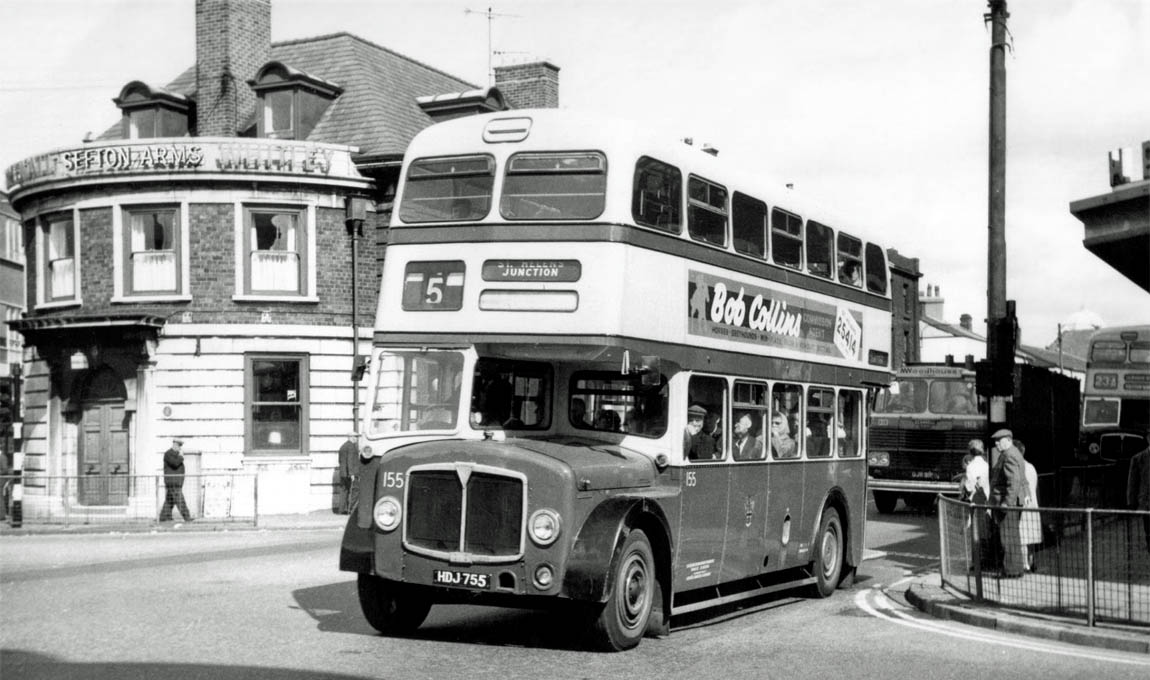 Also on the 2nd, the members of Eccleston Parish Council were told that new figures had revealed that during the past twenty years, the number of bus passenger journeys in St Helens had halved. In 1955 one million passenger journeys were being made every week but by April 1975 the figure had reduced to half a million. And at the end of January 1976, only 420,000 weekly journeys were being made.
Cllr Reg Foster blamed the public, saying: "More and more people have cars and have become too lazy to walk to the bus stop." However, Councillor Ray Crosby said: "The bus service we get now is far worse than the service over 20 years ago."
Also on the 2nd, a man who at one time was a sparring partner of former world heavyweight boxing champion Jack Dempsey died at his home in Knowsley Road in St Helens aged 74. Born in Ireland, John Burke spent his early school days in New York and came to St Helens at the age of 10 where he attended West Park Grammar School before returning to the States.
In America he lived with his cousin, Johnny Kilbane, the world featherweight champion. After taking up boxing himself, John shared the same training camp as Jack Dempsey, who was world heavyweight champion for 7 years between 1919 and 1926. John later chose to return to St Helens and had his last fight in 1929.
The Liverpool Daily Post on the 3rd described how Pilkington's were offering the 1,400 staff at their Triplex plant in Eccleston a new deal. The makers of safety glass for the unpredictable car industry in which strikes were becoming commonplace had often had to make their own layoffs. But a new proposed policy promised no compulsory redundancies up to March 1977 except in special circumstances, such as natural disasters or prolonged customer or supplier disputes.
There would also be no further layoff days during the remainder of the current financial year, ending in April. Thirdly, a determined effort would be made by the company to involve all employees in the running of the factory, so appropriate information would be shared. The intention was to provide greater job security and communicate better with the workforce and talks with unions on the proposals were expected to start at the weekend.
On the 4th folk duo Miki and Griff appeared at the Theatre Royal in St Helens with the Magic of Gilbert and Sullivan performed on the 5th.
In September 1974 the St Helens Reporter described how Rainford Parish Council wanted the twenty members of the Golden Lion Gun Club banned from their St Helens Road site after complaints from residents about the noise. A letter was being sent to the St Helens Planning Department calling for the club to be given their marching orders.
The only dissenting voice on the council was Bob Rose, whose son Robert was chairman of the clay pigeon gun club. He told the meeting: "These lads have hunted all over the place for a decent site. Surely they could be allowed to keep this one – after all they only shoot once a month." Tony Huyton was a member of the gun club and told the Reporter: "It seems a bit ridiculous to me. If people come from the town to live in the country they should expect to live by country rules."
In this week's Reporter that was published on the 6th, it was confirmed that St Helens Council had followed the parish council's recommendation and ordered the club to leave. But they had appealed to the Department of the Environment, who, after the usual lengthy delay, had now upheld the council's decision.
Having been previously evicted from a site at Rainford Junction, the gun club were beginning to think they might have to fold. But a riding stables at Aughton Chase, near Ormskirk, had offered them a field away from any houses and the club were considering the offer.
The Reporter also described how St Helens Council had come up with a means to address people's complaints and prevent misunderstandings from developing. They had had a load of notepads printed, which had been handed out to councillors so they could officially record complaints from the public. And these would then be channelled to senior officers who hoped to be able to deal with queries and gripes more efficiently. The Reporter said the simple idea had been the "brainchild" of the council's Public Relations Department who felt such notepads were necessary to sort out misunderstandings.
The paper also described how a new initiative at Cowley Girls School was keeping many of their 660 pupils warm during the winter. Their School Council, with support from headmistress Dorothy Cheesley, had come up with an alternative school uniform in which their skirts had been swapped for green trousers and polo neck jumpers.
Mrs Cheesley said: "The girls started wearing the slacks and polo necks in the autumn, and can wear them through the whole of Easter. I appreciate the fact that it's warmer for them, for certain areas of the school are quite cold."
The trousers were regulation Cowley green but the polo necks could be either light blue, light green, yellow or grey. "The different colours make a nice contrast," added the headmistress. "It's just sensible. We are moving with the times." And first-year schoolgirl Julia Adamson was a fan, telling the Reporter: "I think it's a great idea. Our outfit is not only warm, but also fashionable."
At a meeting of St Helens Council's Public Safety Sub-Committee this week, Councillor Gordon Shuttleworth criticised what he claimed were delays in the fire service's response to calls. In 1974 as part of reorganisation, telephone calls reporting fires in St Helens began to be relayed through Kirkby and recently calls for ambulances started being channelled through Liverpool.
Cllr Shuttleworth believed the changes could be causing delays and, as an example, claimed how recently one engine had taken 15 minutes to get to a fire at Ross Street, almost next door to the main fire station in Parr Stocks Road. As a result of the concern, a report was now going to be prepared on how calls were being handled by both emergency services.
However, when the Reporter spoke to St Helens fire brigade they were told that on the night of the Ross Street blaze they had been busy dealing with some drums that were exploding on a rubbish tip in Southport Street. And they said they had arrived only three minutes after the call had been made. They also had a call to Whiston Hospital and, in total, six machines were out at various fires.
So a fire engine had to be sent from the Millfields station in Eccleston and another from Newton to deal with the Ross Street blaze. But the spokesman insisted that it had not taken a quarter of an hour for the brigade to arrive as Cllr Shuttleworth had claimed. He said they had arrived at Ross Street in nine minutes.
The Reporter also quoted the comments of William Barrow, the administrator of the Family Practitioner Committee, who criticised patients who called out their GP for unnecessary visits. He said: "In some parts of the St. Helens and Knowsley area, the problem is particularly bad. It is up to the doctor to assess the need for a visit.
"Often the call is made by a friend or neighbour who cannot give the symptoms and therefore it is impossible for the doctor to decide whether a visit is necessary or not." Mr Barrow explained that a doctor might receive two calls during the night, one of which might be serious but the other completely unnecessary but the GP had no way of telling until he arrived.
And finally, the Reporter described how a petition containing the names of 250 residents had been presented to St Helens Council complaining about the poor state of street lighting, which they believed was responsible for burglaries, assaults and minor road accidents.
Only two residents from the four streets involved – Albion Street, Pigot Street, Bruce Street and St Paul Street – had not signed the petition. But their campaign had worked, as the council was now promising that temporary street lighting would be installed in these places within the next three weeks.
St Helens Reporter courtesy St Helens Archive Service at Eccleston Library
Next Week's stories will include the flu virus that was sweeping the town, the Valentine's Day events, the lad that rescued his brother from drowning and the Pickavance drivers who claimed they'd been sacked for refusing to break the law.
We begin on the 2nd when the Park Hotel in North Road was granted permission by the Licensing Magistrates in St Helens to revamp their premises. Boddington's said they would enlarge the pub's lounge, provide improved living accommodation and improve the car park.
Cllr Reg Foster blamed the public, saying: "More and more people have cars and have become too lazy to walk to the bus stop." However, Councillor Ray Crosby said: "The bus service we get now is far worse than the service over 20 years ago."
Also on the 2nd, a man who at one time was a sparring partner of former world heavyweight boxing champion Jack Dempsey died at his home in Knowsley Road in St Helens aged 74. Born in Ireland, John Burke spent his early school days in New York and came to St Helens at the age of 10 where he attended West Park Grammar School before returning to the States.
In America he lived with his cousin, Johnny Kilbane, the world featherweight champion. After taking up boxing himself, John shared the same training camp as Jack Dempsey, who was world heavyweight champion for 7 years between 1919 and 1926. John later chose to return to St Helens and had his last fight in 1929.
The Liverpool Daily Post on the 3rd described how Pilkington's were offering the 1,400 staff at their Triplex plant in Eccleston a new deal. The makers of safety glass for the unpredictable car industry in which strikes were becoming commonplace had often had to make their own layoffs. But a new proposed policy promised no compulsory redundancies up to March 1977 except in special circumstances, such as natural disasters or prolonged customer or supplier disputes.
There would also be no further layoff days during the remainder of the current financial year, ending in April. Thirdly, a determined effort would be made by the company to involve all employees in the running of the factory, so appropriate information would be shared. The intention was to provide greater job security and communicate better with the workforce and talks with unions on the proposals were expected to start at the weekend.
On the 4th folk duo Miki and Griff appeared at the Theatre Royal in St Helens with the Magic of Gilbert and Sullivan performed on the 5th.
In September 1974 the St Helens Reporter described how Rainford Parish Council wanted the twenty members of the Golden Lion Gun Club banned from their St Helens Road site after complaints from residents about the noise. A letter was being sent to the St Helens Planning Department calling for the club to be given their marching orders.
The only dissenting voice on the council was Bob Rose, whose son Robert was chairman of the clay pigeon gun club. He told the meeting: "These lads have hunted all over the place for a decent site. Surely they could be allowed to keep this one – after all they only shoot once a month." Tony Huyton was a member of the gun club and told the Reporter: "It seems a bit ridiculous to me. If people come from the town to live in the country they should expect to live by country rules."
In this week's Reporter that was published on the 6th, it was confirmed that St Helens Council had followed the parish council's recommendation and ordered the club to leave. But they had appealed to the Department of the Environment, who, after the usual lengthy delay, had now upheld the council's decision.
Having been previously evicted from a site at Rainford Junction, the gun club were beginning to think they might have to fold. But a riding stables at Aughton Chase, near Ormskirk, had offered them a field away from any houses and the club were considering the offer.
The Reporter also described how St Helens Council had come up with a means to address people's complaints and prevent misunderstandings from developing. They had had a load of notepads printed, which had been handed out to councillors so they could officially record complaints from the public. And these would then be channelled to senior officers who hoped to be able to deal with queries and gripes more efficiently. The Reporter said the simple idea had been the "brainchild" of the council's Public Relations Department who felt such notepads were necessary to sort out misunderstandings.
The paper also described how a new initiative at Cowley Girls School was keeping many of their 660 pupils warm during the winter. Their School Council, with support from headmistress Dorothy Cheesley, had come up with an alternative school uniform in which their skirts had been swapped for green trousers and polo neck jumpers.
Mrs Cheesley said: "The girls started wearing the slacks and polo necks in the autumn, and can wear them through the whole of Easter. I appreciate the fact that it's warmer for them, for certain areas of the school are quite cold."
The trousers were regulation Cowley green but the polo necks could be either light blue, light green, yellow or grey. "The different colours make a nice contrast," added the headmistress. "It's just sensible. We are moving with the times." And first-year schoolgirl Julia Adamson was a fan, telling the Reporter: "I think it's a great idea. Our outfit is not only warm, but also fashionable."
At a meeting of St Helens Council's Public Safety Sub-Committee this week, Councillor Gordon Shuttleworth criticised what he claimed were delays in the fire service's response to calls. In 1974 as part of reorganisation, telephone calls reporting fires in St Helens began to be relayed through Kirkby and recently calls for ambulances started being channelled through Liverpool.
Cllr Shuttleworth believed the changes could be causing delays and, as an example, claimed how recently one engine had taken 15 minutes to get to a fire at Ross Street, almost next door to the main fire station in Parr Stocks Road. As a result of the concern, a report was now going to be prepared on how calls were being handled by both emergency services.
However, when the Reporter spoke to St Helens fire brigade they were told that on the night of the Ross Street blaze they had been busy dealing with some drums that were exploding on a rubbish tip in Southport Street. And they said they had arrived only three minutes after the call had been made. They also had a call to Whiston Hospital and, in total, six machines were out at various fires.
So a fire engine had to be sent from the Millfields station in Eccleston and another from Newton to deal with the Ross Street blaze. But the spokesman insisted that it had not taken a quarter of an hour for the brigade to arrive as Cllr Shuttleworth had claimed. He said they had arrived at Ross Street in nine minutes.
The Reporter also quoted the comments of William Barrow, the administrator of the Family Practitioner Committee, who criticised patients who called out their GP for unnecessary visits. He said: "In some parts of the St. Helens and Knowsley area, the problem is particularly bad. It is up to the doctor to assess the need for a visit.
"Often the call is made by a friend or neighbour who cannot give the symptoms and therefore it is impossible for the doctor to decide whether a visit is necessary or not." Mr Barrow explained that a doctor might receive two calls during the night, one of which might be serious but the other completely unnecessary but the GP had no way of telling until he arrived.
And finally, the Reporter described how a petition containing the names of 250 residents had been presented to St Helens Council complaining about the poor state of street lighting, which they believed was responsible for burglaries, assaults and minor road accidents.
Only two residents from the four streets involved – Albion Street, Pigot Street, Bruce Street and St Paul Street – had not signed the petition. But their campaign had worked, as the council was now promising that temporary street lighting would be installed in these places within the next three weeks.
St Helens Reporter courtesy St Helens Archive Service at Eccleston Library
Next Week's stories will include the flu virus that was sweeping the town, the Valentine's Day events, the lad that rescued his brother from drowning and the Pickavance drivers who claimed they'd been sacked for refusing to break the law.
This week's many stories include the death of a St Helens boxer, Cowley girls are allowed to wear slacks, the Triplex plan to boost job security, the Golden Lion Gun Club lose their appeal over eviction and there's criticism of the fire service's response to call outs.
We begin on the 2nd when the Park Hotel in North Road was granted permission by the Licensing Magistrates in St Helens to revamp their premises.
Boddington's said they would enlarge the pub's lounge, provide improved living accommodation and improve the car park.
Also on the 2nd, the members of Eccleston Parish Council were told that new figures had revealed that during the past twenty years, the number of bus passenger journeys in St Helens had halved.
In 1955 one million passenger journeys were being made every week but by April 1975 the figure had reduced to half a million.
And at the end of January 1976, only 420,000 weekly journeys were being made. Cllr Reg Foster blamed the public, saying:
"More and more people have cars and have become too lazy to walk to the bus stop."
However, Councillor Ray Crosby said: "The bus service we get now is far worse than the service over 20 years ago."
Also on the 2nd, a man who at one time was a sparring partner of former world heavyweight boxing champion Jack Dempsey died at his home in Knowsley Road in St Helens aged 74.
Born in Ireland, John Burke spent his early school days in New York and came to St Helens at the age of 10 where he attended West Park Grammar School before returning to the States.
In America he lived with his cousin, Johnny Kilbane, the world featherweight champion.
After taking up boxing himself, John shared the same training camp as Jack Dempsey, who was world heavyweight champion for 7 years between 1919 and 1926. John later chose to return to St Helens and had his last fight in 1929.
The Liverpool Daily Post on the 3rd described how Pilkington's were offering the 1,400 staff at their Triplex plant in Eccleston a new deal.
The makers of safety glass for the unpredictable car industry in which strikes were becoming commonplace had often had to make their own layoffs.
But a new proposed policy promised no compulsory redundancies up to March 1977 except in special circumstances, such as natural disasters or prolonged customer or supplier disputes.
There would also be no further layoff days during the remainder of the current financial year, ending in April.
Thirdly, a determined effort would be made by the company to involve all employees in the running of the factory, so appropriate information would be shared.
The intention was to provide greater job security and communicate better with the workforce and talks with unions on the proposals were expected to start at the weekend.
On the 4th folk duo Miki and Griff appeared at the Theatre Royal in St Helens with the Magic of Gilbert and Sullivan performed on the 5th.
In September 1974 the St Helens Reporter described how Rainford Parish Council wanted the twenty members of the Golden Lion Gun Club banned from their St Helens Road site after complaints from residents about the noise.
A letter was being sent to the St Helens Planning Department calling for the club to be given their marching orders.
The only dissenting voice on the council was Bob Rose, whose son Robert was chairman of the clay pigeon gun club. He told the meeting:
"These lads have hunted all over the place for a decent site. Surely they could be allowed to keep this one – after all they only shoot once a month."
Tony Huyton was a member of the gun club and told the Reporter: "It seems a bit ridiculous to me. If people come from the town to live in the country they should expect to live by country rules."
In this week's Reporter that was published on the 6th, it was confirmed that St Helens Council had followed the parish council's recommendation and ordered the club to leave.
But they had appealed to the Department of the Environment, who, after the usual lengthy delay, had now upheld the council's decision.
Having been previously evicted from a site at Rainford Junction, the gun club were beginning to think they might have to fold.
But a riding stables at Aughton Chase, near Ormskirk, had offered them a field away from any houses and the club were considering the offer.
The Reporter also described how St Helens Council had come up with a means to address people's complaints and prevent misunderstandings from developing.
They had had a load of notepads printed, which had been handed out to councillors so they could officially record complaints from the public.
And these would then be channelled to senior officers who hoped to be able to deal with queries and gripes more efficiently.
The Reporter said the simple idea had been the "brainchild" of the council's Public Relations Department who felt such notepads were necessary to sort out misunderstandings.
The paper also described how a new initiative at Cowley Girls School was keeping many of their 660 pupils warm during the winter.
Their School Council, with support from headmistress Dorothy Cheesley, had come up with an alternative school uniform in which their skirts had been swapped for green trousers and polo neck jumpers.
Mrs Cheesley said: "The girls started wearing the slacks and polo necks in the autumn, and can wear them through the whole of Easter. I appreciate the fact that it's warmer for them, for certain areas of the school are quite cold."
The trousers were regulation Cowley green but the polo necks could be either light blue, light green, yellow or grey.
"The different colours make a nice contrast," added the headmistress. "It's just sensible. We are moving with the times."
And first-year schoolgirl Julia Adamson was a fan, telling the Reporter: "I think it's a great idea. Our outfit is not only warm, but also fashionable."
At a meeting of St Helens Council's Public Safety Sub-Committee this week, Councillor Gordon Shuttleworth criticised what he claimed were delays in the fire service's response to calls.
In 1974 as part of reorganisation, telephone calls reporting fires in St Helens began to be relayed through Kirkby and recently calls for ambulances started being channelled through Liverpool.
Cllr Shuttleworth believed the changes could be causing delays and, as an example, claimed how recently one engine had taken 15 minutes to get to a fire at Ross Street, almost next door to the main fire station in Parr Stocks Road.
As a result of the concern, a report was now going to be prepared on how calls were being handled by both emergency services.
However, when the Reporter spoke to St Helens fire brigade they were told that on the night of the Ross Street blaze they had been busy dealing with some drums that were exploding on a rubbish tip in Southport Street.
And they said they had arrived only three minutes after the call had been made.
They also had a call to Whiston Hospital and, in total, six machines were out at various fires.
So a fire engine had to be sent from the Millfields station in Eccleston and another from Newton to deal with the Ross Street blaze.
But the spokesman insisted that it had not taken a quarter of an hour for the brigade to arrive as Cllr Shuttleworth had claimed. He said they had arrived at Ross Street in nine minutes.
The Reporter also quoted the comments of William Barrow, the administrator of the Family Practitioner Committee, who criticised patients who called out their GP for unnecessary visits.
He said: "In some parts of the St. Helens and Knowsley area, the problem is particularly bad. It is up to the doctor to assess the need for a visit.
"Often the call is made by a friend or neighbour who cannot give the symptoms and therefore it is impossible for the doctor to decide whether a visit is necessary or not."
Mr Barrow explained that a doctor might receive two calls during the night, one of which might be serious but the other completely unnecessary but the GP had no way of telling until he arrived.
And finally, the Reporter described how a petition containing the names of 250 residents had been presented to St Helens Council complaining about the poor state of street lighting, which they believed was responsible for burglaries, assaults and minor road accidents.
Only two residents from the four streets involved – Albion Street, Pigot Street, Bruce Street and St Paul Street – had not signed the petition.
But their campaign had worked, as the council was now promising that temporary street lighting would be installed in these places within the next three weeks.
St Helens Reporter courtesy St Helens Archive Service at Eccleston Library
Next Week's stories will include the flu virus that was sweeping the town, the Valentine's Day events, the lad that rescued his brother from drowning and the Pickavance drivers who claimed they'd been sacked for refusing to break the law.
We begin on the 2nd when the Park Hotel in North Road was granted permission by the Licensing Magistrates in St Helens to revamp their premises.
Boddington's said they would enlarge the pub's lounge, provide improved living accommodation and improve the car park.
In 1955 one million passenger journeys were being made every week but by April 1975 the figure had reduced to half a million.
And at the end of January 1976, only 420,000 weekly journeys were being made. Cllr Reg Foster blamed the public, saying:
"More and more people have cars and have become too lazy to walk to the bus stop."
However, Councillor Ray Crosby said: "The bus service we get now is far worse than the service over 20 years ago."
Also on the 2nd, a man who at one time was a sparring partner of former world heavyweight boxing champion Jack Dempsey died at his home in Knowsley Road in St Helens aged 74.
Born in Ireland, John Burke spent his early school days in New York and came to St Helens at the age of 10 where he attended West Park Grammar School before returning to the States.
In America he lived with his cousin, Johnny Kilbane, the world featherweight champion.
After taking up boxing himself, John shared the same training camp as Jack Dempsey, who was world heavyweight champion for 7 years between 1919 and 1926. John later chose to return to St Helens and had his last fight in 1929.
The Liverpool Daily Post on the 3rd described how Pilkington's were offering the 1,400 staff at their Triplex plant in Eccleston a new deal.
The makers of safety glass for the unpredictable car industry in which strikes were becoming commonplace had often had to make their own layoffs.
But a new proposed policy promised no compulsory redundancies up to March 1977 except in special circumstances, such as natural disasters or prolonged customer or supplier disputes.
There would also be no further layoff days during the remainder of the current financial year, ending in April.
Thirdly, a determined effort would be made by the company to involve all employees in the running of the factory, so appropriate information would be shared.
The intention was to provide greater job security and communicate better with the workforce and talks with unions on the proposals were expected to start at the weekend.
On the 4th folk duo Miki and Griff appeared at the Theatre Royal in St Helens with the Magic of Gilbert and Sullivan performed on the 5th.
In September 1974 the St Helens Reporter described how Rainford Parish Council wanted the twenty members of the Golden Lion Gun Club banned from their St Helens Road site after complaints from residents about the noise.
A letter was being sent to the St Helens Planning Department calling for the club to be given their marching orders.
The only dissenting voice on the council was Bob Rose, whose son Robert was chairman of the clay pigeon gun club. He told the meeting:
"These lads have hunted all over the place for a decent site. Surely they could be allowed to keep this one – after all they only shoot once a month."
Tony Huyton was a member of the gun club and told the Reporter: "It seems a bit ridiculous to me. If people come from the town to live in the country they should expect to live by country rules."
In this week's Reporter that was published on the 6th, it was confirmed that St Helens Council had followed the parish council's recommendation and ordered the club to leave.
But they had appealed to the Department of the Environment, who, after the usual lengthy delay, had now upheld the council's decision.
Having been previously evicted from a site at Rainford Junction, the gun club were beginning to think they might have to fold.
But a riding stables at Aughton Chase, near Ormskirk, had offered them a field away from any houses and the club were considering the offer.
The Reporter also described how St Helens Council had come up with a means to address people's complaints and prevent misunderstandings from developing.
They had had a load of notepads printed, which had been handed out to councillors so they could officially record complaints from the public.
And these would then be channelled to senior officers who hoped to be able to deal with queries and gripes more efficiently.
The Reporter said the simple idea had been the "brainchild" of the council's Public Relations Department who felt such notepads were necessary to sort out misunderstandings.
The paper also described how a new initiative at Cowley Girls School was keeping many of their 660 pupils warm during the winter.
Their School Council, with support from headmistress Dorothy Cheesley, had come up with an alternative school uniform in which their skirts had been swapped for green trousers and polo neck jumpers.
Mrs Cheesley said: "The girls started wearing the slacks and polo necks in the autumn, and can wear them through the whole of Easter. I appreciate the fact that it's warmer for them, for certain areas of the school are quite cold."
The trousers were regulation Cowley green but the polo necks could be either light blue, light green, yellow or grey.
"The different colours make a nice contrast," added the headmistress. "It's just sensible. We are moving with the times."
And first-year schoolgirl Julia Adamson was a fan, telling the Reporter: "I think it's a great idea. Our outfit is not only warm, but also fashionable."
At a meeting of St Helens Council's Public Safety Sub-Committee this week, Councillor Gordon Shuttleworth criticised what he claimed were delays in the fire service's response to calls.
In 1974 as part of reorganisation, telephone calls reporting fires in St Helens began to be relayed through Kirkby and recently calls for ambulances started being channelled through Liverpool.
Cllr Shuttleworth believed the changes could be causing delays and, as an example, claimed how recently one engine had taken 15 minutes to get to a fire at Ross Street, almost next door to the main fire station in Parr Stocks Road.
As a result of the concern, a report was now going to be prepared on how calls were being handled by both emergency services.
However, when the Reporter spoke to St Helens fire brigade they were told that on the night of the Ross Street blaze they had been busy dealing with some drums that were exploding on a rubbish tip in Southport Street.
And they said they had arrived only three minutes after the call had been made.
They also had a call to Whiston Hospital and, in total, six machines were out at various fires.
So a fire engine had to be sent from the Millfields station in Eccleston and another from Newton to deal with the Ross Street blaze.
But the spokesman insisted that it had not taken a quarter of an hour for the brigade to arrive as Cllr Shuttleworth had claimed. He said they had arrived at Ross Street in nine minutes.
The Reporter also quoted the comments of William Barrow, the administrator of the Family Practitioner Committee, who criticised patients who called out their GP for unnecessary visits.
He said: "In some parts of the St. Helens and Knowsley area, the problem is particularly bad. It is up to the doctor to assess the need for a visit.
"Often the call is made by a friend or neighbour who cannot give the symptoms and therefore it is impossible for the doctor to decide whether a visit is necessary or not."
Mr Barrow explained that a doctor might receive two calls during the night, one of which might be serious but the other completely unnecessary but the GP had no way of telling until he arrived.
And finally, the Reporter described how a petition containing the names of 250 residents had been presented to St Helens Council complaining about the poor state of street lighting, which they believed was responsible for burglaries, assaults and minor road accidents.
Only two residents from the four streets involved – Albion Street, Pigot Street, Bruce Street and St Paul Street – had not signed the petition.
But their campaign had worked, as the council was now promising that temporary street lighting would be installed in these places within the next three weeks.
St Helens Reporter courtesy St Helens Archive Service at Eccleston Library
Next Week's stories will include the flu virus that was sweeping the town, the Valentine's Day events, the lad that rescued his brother from drowning and the Pickavance drivers who claimed they'd been sacked for refusing to break the law.