
150 YEARS AGO THIS WEEK 27 OCT - 2 NOV 1875
This week's many stories include the complexity of a Waterloo Street nuisance, the fatal accident at Sutton Heath Colliery, the St Thomas Church bazaar, the solicitors' court bust-up and the vicious revenge attack at Earlestown.
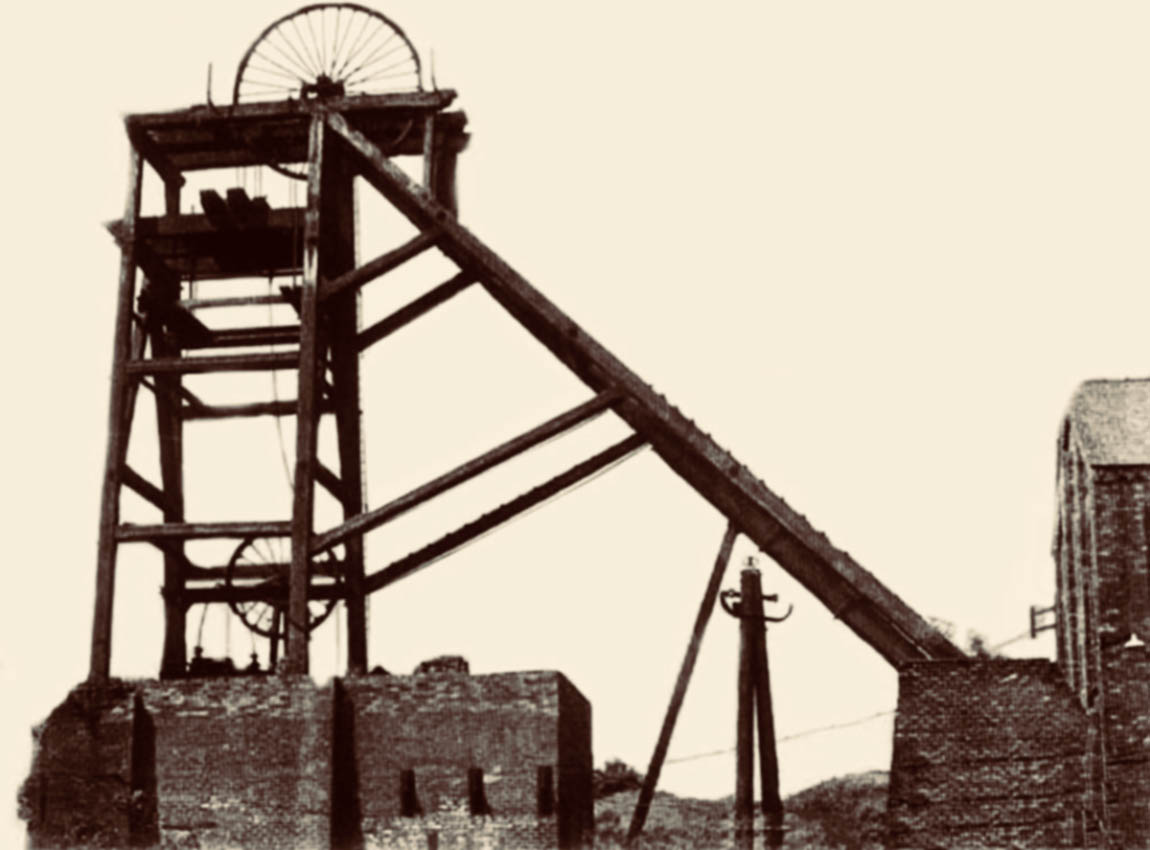 We begin on the 27th with the death of David Appleton at Ravenhead Hall Cottages where he lived. It was common for miners badly injured at work to die at home some days later. David had been struck down by a fall of stone and metal at Sutton Heath Colliery (pictured above) on October 14th.
His leg had been almost severed below the knee and after being taken home, Dr Gaskell had successfully amputated the limb. But it was another case of "the operation was successful but the patient died", as the shock to the miner's body was too great and after 13 days David passed away. The news of yet another mining fatality came at the same time as it was reported that the owner of Sutton Heath Colliery, James Radley, would become the town's mayor for a third year.
St Helens' churches had an ongoing problem finding the money to build or extend their schools and places of worship to cope with the ever-expanding population. The general rule was that their congregation would raise a proportion of the required amount prior to the building opening and then spend several more years raising more cash to pay off the debt.
Then, when that was achieved, more building work would be needed to enlarge their schools and improve or extend their churches. That meant more cash had to be raised to pay for it, creating a never-ending saga, a bit like the painting of the Forth Bridge!
Bazaars were a common and profitable means of raising funds. Their primary purpose was the sale of work, often involving creations of one kind or another that had been gifted by parishioners. The Newspaper wrote that St Thomas Church had recently held such a bazaar "in aid of liquidating the debt" on both the church and its schools.
The event was held in the church's Lyon Street schoolroom, which the paper said had been "…most tastefully decorated for the occasion by the ladies of the congregation, and others. "At the various stalls articles of every description, no less useful than ornamental, were offered for sale."
Musicians and singers entertained the large numbers of visitors and the bazaar held over several days was deemed a great success. On the following Monday a grand amateur concert was also held to raise more money for the church.
Thomas Swift, as I have often written, was an extremely clever solicitor but also very outspoken and at times in the courtroom he was very rude. The Newspaper wrote how in one recent case, he and another solicitor called Paine had come to verbal blows. It was a case in which Sarah Boyd had summoned Maria Campbell for using defamatory language and the latter had cross-summoned Sarah for using threatening language.
The Newspaper said the case had been of a "disgusting and distressing character, the two learned advocates, Mr Swift and Mr Paine, managed to get up a very exciting little scene, the former charging the latter with telling lies, which came from that bottomless abyss understood to be the winter residence of his Satanic Majesty."
That's one way of describing hell! Paine even invited Swift to go into the Market Square and have a fight but the magistrates intervened and said the case between the ladies was a pitiful one but it had become so painful between the solicitors that they had to dismiss it.
It is hardly a wonder that there was so much disease in St Helens in the 19th century, with matters of sewage and waste disposal in many places in a shocking state. To be fair to the council, they did try and deal with what were generally known as nuisances. But, like today, things are often more complicated than they might seem, particularly as all property then was privately owned with council housing five decades away.
There was a good example of the problem in St Helens Petty Sessions this week when a well-known auctioneer called William Birchall was summoned for not abating a nuisance on premises that he owned. The Corporation's Inspector of Nuisances, Henry Turner, told the court that the defendant owned property at the junction of Cross Street and Waterloo Street with eight houses sharing a single backyard.
The latter had been flagged but was now in a bad state of repair and the residents were in the habit of throwing all their slops of waste and other refuse matter into it, creating a nuisance deemed injurious to health. Upon receiving instructions from the Health Committee, Henry Turner said he had issued a notice to Mr Birchall to abate the nuisance within a certain period. But, he said, his letters had been disregarded, leading to the present proceedings having to be taken.
But Birchall's solicitor stated that there were also piggeries and pigeon houses in the same yard, to which the Nuisances Inspector agreed but explained that he had also served improvement notices on their owners. However, Mr Turner added that he thought the state of the yard was the main problem and Dr McNichol, the town's Medical Officer of Health, corroborated the inspector's remarks but also agreed that the pigsties were a contributory factor.
Birchall's solicitor then contended that his client was not the actual owner of the premises but only the agent for the mortgagee and insisted the proceedings had been taken out against the wrong person. You can see what I mean about the complexity of such cases!
But the magistrates decided to cut through the red tape and ordered Birchall to abate the nuisance within a month, insisting that he was the responsible person as he had the power to give his tenants notice. If Birchall failed to comply, he would be brought back to court with the ultimate penalty being one of prison.
Often revenge was sought on landlords and their staff when they refused to serve drunken customers that entered their pub. These included being punched, the windows of their house being smashed or waylaying them upon leaving. It was the latter retaliation that William Mains, John Mains, James Cartwright and Henry Shuker chose.
The quartet had entered the Victoria pub on Wargrave Moss in Earlestown and as they were drunk, the landlord refused to supply them with drink and ordered them to leave. However, the young men instead went into another part of the house where William Clarke was working as a waiter.
Acting upon instructions from the landlord, Clarke put the men out but was threatened as to what they would do to him upon his going home. Before leaving the pub Clarke was joined by his wife, Ellen, and, concerned for their safety, a policeman was asked to accompany them part of the way home. That he did but upon seeing no sign of the four men, Clarke told the policeman to go back. But that was a mistake, as close to their house the couple were pounced on by the quartet and seriously assaulted.
Ellen in particular was badly injured and when the case came to court at Newton Petty Sessions on the 30th, which was one week after the attack, Mrs Clarke was still too ill to give evidence. And so the hearing was adjourned for eight days. The case against William Mains would eventually be dismissed but John Mains, James Cartwright and Henry Shuker would be given 3 months hard labour.
St Helens Newspaper courtesy St Helens Archive Service at Eccleston Library
Next Week's stories will include the start of the hospital penny-a-week scheme, the burning of a child in Parr, a Greenbank corner man appears in court and the wife that bashed a constable in Bridge Street with one of her husband's clogs.
His leg had been almost severed below the knee and after being taken home, Dr Gaskell had successfully amputated the limb. But it was another case of "the operation was successful but the patient died", as the shock to the miner's body was too great and after 13 days David passed away. The news of yet another mining fatality came at the same time as it was reported that the owner of Sutton Heath Colliery, James Radley, would become the town's mayor for a third year.
St Helens' churches had an ongoing problem finding the money to build or extend their schools and places of worship to cope with the ever-expanding population. The general rule was that their congregation would raise a proportion of the required amount prior to the building opening and then spend several more years raising more cash to pay off the debt.
Then, when that was achieved, more building work would be needed to enlarge their schools and improve or extend their churches. That meant more cash had to be raised to pay for it, creating a never-ending saga, a bit like the painting of the Forth Bridge!
Bazaars were a common and profitable means of raising funds. Their primary purpose was the sale of work, often involving creations of one kind or another that had been gifted by parishioners. The Newspaper wrote that St Thomas Church had recently held such a bazaar "in aid of liquidating the debt" on both the church and its schools.
The event was held in the church's Lyon Street schoolroom, which the paper said had been "…most tastefully decorated for the occasion by the ladies of the congregation, and others. "At the various stalls articles of every description, no less useful than ornamental, were offered for sale."
Musicians and singers entertained the large numbers of visitors and the bazaar held over several days was deemed a great success. On the following Monday a grand amateur concert was also held to raise more money for the church.
Thomas Swift, as I have often written, was an extremely clever solicitor but also very outspoken and at times in the courtroom he was very rude. The Newspaper wrote how in one recent case, he and another solicitor called Paine had come to verbal blows. It was a case in which Sarah Boyd had summoned Maria Campbell for using defamatory language and the latter had cross-summoned Sarah for using threatening language.
The Newspaper said the case had been of a "disgusting and distressing character, the two learned advocates, Mr Swift and Mr Paine, managed to get up a very exciting little scene, the former charging the latter with telling lies, which came from that bottomless abyss understood to be the winter residence of his Satanic Majesty."
That's one way of describing hell! Paine even invited Swift to go into the Market Square and have a fight but the magistrates intervened and said the case between the ladies was a pitiful one but it had become so painful between the solicitors that they had to dismiss it.
It is hardly a wonder that there was so much disease in St Helens in the 19th century, with matters of sewage and waste disposal in many places in a shocking state. To be fair to the council, they did try and deal with what were generally known as nuisances. But, like today, things are often more complicated than they might seem, particularly as all property then was privately owned with council housing five decades away.
There was a good example of the problem in St Helens Petty Sessions this week when a well-known auctioneer called William Birchall was summoned for not abating a nuisance on premises that he owned. The Corporation's Inspector of Nuisances, Henry Turner, told the court that the defendant owned property at the junction of Cross Street and Waterloo Street with eight houses sharing a single backyard.
The latter had been flagged but was now in a bad state of repair and the residents were in the habit of throwing all their slops of waste and other refuse matter into it, creating a nuisance deemed injurious to health. Upon receiving instructions from the Health Committee, Henry Turner said he had issued a notice to Mr Birchall to abate the nuisance within a certain period. But, he said, his letters had been disregarded, leading to the present proceedings having to be taken.
But Birchall's solicitor stated that there were also piggeries and pigeon houses in the same yard, to which the Nuisances Inspector agreed but explained that he had also served improvement notices on their owners. However, Mr Turner added that he thought the state of the yard was the main problem and Dr McNichol, the town's Medical Officer of Health, corroborated the inspector's remarks but also agreed that the pigsties were a contributory factor.
Birchall's solicitor then contended that his client was not the actual owner of the premises but only the agent for the mortgagee and insisted the proceedings had been taken out against the wrong person. You can see what I mean about the complexity of such cases!
But the magistrates decided to cut through the red tape and ordered Birchall to abate the nuisance within a month, insisting that he was the responsible person as he had the power to give his tenants notice. If Birchall failed to comply, he would be brought back to court with the ultimate penalty being one of prison.
Often revenge was sought on landlords and their staff when they refused to serve drunken customers that entered their pub. These included being punched, the windows of their house being smashed or waylaying them upon leaving. It was the latter retaliation that William Mains, John Mains, James Cartwright and Henry Shuker chose.
The quartet had entered the Victoria pub on Wargrave Moss in Earlestown and as they were drunk, the landlord refused to supply them with drink and ordered them to leave. However, the young men instead went into another part of the house where William Clarke was working as a waiter.
Acting upon instructions from the landlord, Clarke put the men out but was threatened as to what they would do to him upon his going home. Before leaving the pub Clarke was joined by his wife, Ellen, and, concerned for their safety, a policeman was asked to accompany them part of the way home. That he did but upon seeing no sign of the four men, Clarke told the policeman to go back. But that was a mistake, as close to their house the couple were pounced on by the quartet and seriously assaulted.
Ellen in particular was badly injured and when the case came to court at Newton Petty Sessions on the 30th, which was one week after the attack, Mrs Clarke was still too ill to give evidence. And so the hearing was adjourned for eight days. The case against William Mains would eventually be dismissed but John Mains, James Cartwright and Henry Shuker would be given 3 months hard labour.
St Helens Newspaper courtesy St Helens Archive Service at Eccleston Library
Next Week's stories will include the start of the hospital penny-a-week scheme, the burning of a child in Parr, a Greenbank corner man appears in court and the wife that bashed a constable in Bridge Street with one of her husband's clogs.
This week's many stories include the complexity of a Waterloo Street nuisance, the fatal accident at Sutton Heath Colliery, the St Thomas Church bazaar, the solicitors' court bust-up and the vicious revenge attack at Earlestown.
We begin on the 27th with the death of David Appleton at Ravenhead Hall Cottages where he lived.
It was common for miners badly injured at work to die at home some days later. David had been struck down by a fall of stone and metal at Sutton Heath Colliery (pictured above) on October 14th.
His leg had been almost severed below the knee and after being taken home, Dr Gaskell had successfully amputated the limb.
But it was another case of "the operation was successful but the patient died", as the shock to the miner's body was too great and after 13 days David passed away.
The news of yet another mining fatality came at the same time as it was reported that the owner of Sutton Heath Colliery, James Radley, would become the town's mayor for a third year.
St Helens' churches had an ongoing problem finding the money to build or extend their schools and places of worship to cope with the ever-expanding population.
The general rule was that their congregation would raise a proportion of the required amount prior to the building opening and then spend several more years raising more cash to pay off the debt.
Then, when that was achieved, more building work would be needed to enlarge their schools and improve or extend their churches. That meant more cash had to be raised to pay for it, creating a never-ending saga, a bit like the painting of the Forth Bridge!
Bazaars were a common and profitable means of raising funds. Their primary purpose was the sale of work, often involving creations of one kind or another that had been gifted by parishioners.
The Newspaper wrote that St Thomas Church had recently held such a bazaar "in aid of liquidating the debt" on both the church and its schools.
The event was held in the church's Lyon Street schoolroom, which the paper said had been "…most tastefully decorated for the occasion by the ladies of the congregation, and others.
"At the various stalls articles of every description, no less useful than ornamental, were offered for sale."
Musicians and singers entertained the large numbers of visitors and the bazaar held over several days was deemed a great success.
On the following Monday a grand amateur concert was also held to raise more money for the church.
Thomas Swift, as I have often written, was an extremely clever solicitor but also very outspoken and at times in the courtroom he was very rude.
The Newspaper wrote how in one recent case, he and another solicitor called Paine had come to verbal blows.
It was a case in which Sarah Boyd had summoned Maria Campbell for using defamatory language and the latter had cross-summoned Sarah for using threatening language.
The Newspaper said the case had been of a "disgusting and distressing character, the two learned advocates, Mr Swift and Mr Paine, managed to get up a very exciting little scene, the former charging the latter with telling lies, which came from that bottomless abyss understood to be the winter residence of his Satanic Majesty."
That's one way of describing hell! Paine even invited Swift to go into the Market Square and have a fight but the magistrates intervened and said the case between the ladies was a pitiful one but it had become so painful between the solicitors that they had to dismiss it.
It is hardly a wonder that there was so much disease in St Helens in the 19th century, with matters of sewage and waste disposal in many places in a shocking state.
To be fair to the council, they did try and deal with what were generally known as nuisances.
But, like today, things are often more complicated than they might seem, particularly as all property then was privately owned with council housing five decades away.
There was a good example of the problem in St Helens Petty Sessions this week when a well-known auctioneer called William Birchall was summoned for not abating a nuisance on premises that he owned.
The Corporation's Inspector of Nuisances, Henry Turner, told the court that the defendant owned property at the junction of Cross Street and Waterloo Street with eight houses sharing a single backyard.
The latter had been flagged but was now in a bad state of repair and the residents were in the habit of throwing all their slops of waste and other refuse matter into it, creating a nuisance deemed injurious to health.
Upon receiving instructions from the Health Committee, Henry Turner said he had issued a notice to Mr Birchall to abate the nuisance within a certain period.
But, he said, his letters had been disregarded, leading to the present proceedings having to be taken.
But Birchall's solicitor stated that there were also piggeries and pigeon houses in the same yard, to which the Nuisances Inspector agreed but explained that he had also served improvement notices on their owners.
However, Mr Turner added that he thought the state of the yard was the main problem and Dr McNichol, the town's Medical Officer of Health, corroborated the inspector's remarks but also agreed that the pigsties were a contributory factor.
Birchall's solicitor then contended that his client was not the actual owner of the premises but only the agent for the mortgagee and insisted the proceedings had been taken out against the wrong person.
You can see what I mean about the complexity of such cases!
But the magistrates decided to cut through the red tape and ordered Birchall to abate the nuisance within a month, insisting that he was the responsible person as he had the power to give his tenants notice.
If Birchall failed to comply, he would be brought back to court with the ultimate penalty being one of prison.
Often revenge was sought on landlords and their staff when they refused to serve drunken customers that entered their pub.
These included being punched, the windows of their house being smashed or waylaying them upon leaving.
It was the latter retaliation that William Mains, John Mains, James Cartwright and Henry Shuker chose.
The quartet had entered the Victoria pub on Wargrave Moss in Earlestown and as they were drunk, the landlord refused to supply them with drink and ordered them to leave.
However, the young men instead went into another part of the house where William Clarke was working as a waiter.
Acting upon instructions from the landlord, Clarke put the men out but was threatened as to what they would do to him upon his going home.
Before leaving the pub Clarke was joined by his wife, Ellen, and, concerned for their safety, a policeman was asked to accompany them part of the way home.
That he did but upon seeing no sign of the four men, Clarke told the policeman to go back. But that was a mistake, as close to their house the couple were pounced on by the quartet and seriously assaulted.
Ellen in particular was badly injured and when the case came to court at Newton Petty Sessions on the 30th, which was one week after the attack, Mrs Clarke was still too ill to give evidence.
And so the hearing was adjourned for eight days. The case against William Mains would eventually be dismissed but John Mains, James Cartwright and Henry Shuker would be given 3 months hard labour.
St Helens Newspaper courtesy St Helens Archive Service at Eccleston Library
Next Week's stories will include the start of the hospital penny-a-week scheme, the burning of a child in Parr, a Greenbank corner man appears in court and the wife that bashed a constable in Bridge Street with one of her husband's clogs.
We begin on the 27th with the death of David Appleton at Ravenhead Hall Cottages where he lived.
His leg had been almost severed below the knee and after being taken home, Dr Gaskell had successfully amputated the limb.
But it was another case of "the operation was successful but the patient died", as the shock to the miner's body was too great and after 13 days David passed away.
The news of yet another mining fatality came at the same time as it was reported that the owner of Sutton Heath Colliery, James Radley, would become the town's mayor for a third year.
St Helens' churches had an ongoing problem finding the money to build or extend their schools and places of worship to cope with the ever-expanding population.
The general rule was that their congregation would raise a proportion of the required amount prior to the building opening and then spend several more years raising more cash to pay off the debt.
Then, when that was achieved, more building work would be needed to enlarge their schools and improve or extend their churches. That meant more cash had to be raised to pay for it, creating a never-ending saga, a bit like the painting of the Forth Bridge!
Bazaars were a common and profitable means of raising funds. Their primary purpose was the sale of work, often involving creations of one kind or another that had been gifted by parishioners.
The Newspaper wrote that St Thomas Church had recently held such a bazaar "in aid of liquidating the debt" on both the church and its schools.
The event was held in the church's Lyon Street schoolroom, which the paper said had been "…most tastefully decorated for the occasion by the ladies of the congregation, and others.
"At the various stalls articles of every description, no less useful than ornamental, were offered for sale."
Musicians and singers entertained the large numbers of visitors and the bazaar held over several days was deemed a great success.
On the following Monday a grand amateur concert was also held to raise more money for the church.
Thomas Swift, as I have often written, was an extremely clever solicitor but also very outspoken and at times in the courtroom he was very rude.
The Newspaper wrote how in one recent case, he and another solicitor called Paine had come to verbal blows.
It was a case in which Sarah Boyd had summoned Maria Campbell for using defamatory language and the latter had cross-summoned Sarah for using threatening language.
The Newspaper said the case had been of a "disgusting and distressing character, the two learned advocates, Mr Swift and Mr Paine, managed to get up a very exciting little scene, the former charging the latter with telling lies, which came from that bottomless abyss understood to be the winter residence of his Satanic Majesty."
That's one way of describing hell! Paine even invited Swift to go into the Market Square and have a fight but the magistrates intervened and said the case between the ladies was a pitiful one but it had become so painful between the solicitors that they had to dismiss it.
It is hardly a wonder that there was so much disease in St Helens in the 19th century, with matters of sewage and waste disposal in many places in a shocking state.
To be fair to the council, they did try and deal with what were generally known as nuisances.
But, like today, things are often more complicated than they might seem, particularly as all property then was privately owned with council housing five decades away.
There was a good example of the problem in St Helens Petty Sessions this week when a well-known auctioneer called William Birchall was summoned for not abating a nuisance on premises that he owned.
The Corporation's Inspector of Nuisances, Henry Turner, told the court that the defendant owned property at the junction of Cross Street and Waterloo Street with eight houses sharing a single backyard.
The latter had been flagged but was now in a bad state of repair and the residents were in the habit of throwing all their slops of waste and other refuse matter into it, creating a nuisance deemed injurious to health.
Upon receiving instructions from the Health Committee, Henry Turner said he had issued a notice to Mr Birchall to abate the nuisance within a certain period.
But, he said, his letters had been disregarded, leading to the present proceedings having to be taken.
But Birchall's solicitor stated that there were also piggeries and pigeon houses in the same yard, to which the Nuisances Inspector agreed but explained that he had also served improvement notices on their owners.
However, Mr Turner added that he thought the state of the yard was the main problem and Dr McNichol, the town's Medical Officer of Health, corroborated the inspector's remarks but also agreed that the pigsties were a contributory factor.
Birchall's solicitor then contended that his client was not the actual owner of the premises but only the agent for the mortgagee and insisted the proceedings had been taken out against the wrong person.
You can see what I mean about the complexity of such cases!
But the magistrates decided to cut through the red tape and ordered Birchall to abate the nuisance within a month, insisting that he was the responsible person as he had the power to give his tenants notice.
If Birchall failed to comply, he would be brought back to court with the ultimate penalty being one of prison.
Often revenge was sought on landlords and their staff when they refused to serve drunken customers that entered their pub.
These included being punched, the windows of their house being smashed or waylaying them upon leaving.
It was the latter retaliation that William Mains, John Mains, James Cartwright and Henry Shuker chose.
The quartet had entered the Victoria pub on Wargrave Moss in Earlestown and as they were drunk, the landlord refused to supply them with drink and ordered them to leave.
However, the young men instead went into another part of the house where William Clarke was working as a waiter.
Acting upon instructions from the landlord, Clarke put the men out but was threatened as to what they would do to him upon his going home.
Before leaving the pub Clarke was joined by his wife, Ellen, and, concerned for their safety, a policeman was asked to accompany them part of the way home.
That he did but upon seeing no sign of the four men, Clarke told the policeman to go back. But that was a mistake, as close to their house the couple were pounced on by the quartet and seriously assaulted.
Ellen in particular was badly injured and when the case came to court at Newton Petty Sessions on the 30th, which was one week after the attack, Mrs Clarke was still too ill to give evidence.
And so the hearing was adjourned for eight days. The case against William Mains would eventually be dismissed but John Mains, James Cartwright and Henry Shuker would be given 3 months hard labour.
St Helens Newspaper courtesy St Helens Archive Service at Eccleston Library
Next Week's stories will include the start of the hospital penny-a-week scheme, the burning of a child in Parr, a Greenbank corner man appears in court and the wife that bashed a constable in Bridge Street with one of her husband's clogs.