
150 YEARS AGO THIS WEEK 20 - 26 OCTOBER 1875
This week's many stories include the overwinding accident at Nutgrove Colliery, the violence in a College Street beerhouse over a card game, the straw stack fire at Bold, the plans to create the Mersey Tunnel and the reopening of the Theatre Royal.
What were known as over-winding accidents were becoming all too common in St Helens' coalmines. These occurred when the engine man charged with taking men and materials up and down the pit shaft made a mistake. It was not the most difficult of jobs but it needed concentration and many men died or were seriously injured when winders overwound the pit cage. That left it stranded high among the mine's headgears, causing some miners to jump for their lives or fall out.
On the 20th such an incident occurred at Nutgrove Colliery. However, it involved two pit sinkers, men that were engaged in sinking the shaft of the number 2 pit. Sinkers normally used an iron bucket called a hoppet to go up and down the shaft that they were sinking or elongating.
John Eden and James Daniels were brothers-in-law and they had travelled down the shaft to the depth of about 60 yards inside a hoppet to install a piece of piping. But finding that the length they had with them did not fit, they called to be wound up again by giving the usual knocking signal. However, the engine winder, forgetting that the men were only partly down the shaft instead of being at its bottom, wound them in the hoppet back up at full speed, which inadvertently landed it high over the headgears.
Eden fell out of the hoppet and was severely injured about his spine, as well as other parts of his body and Daniels managed to hang on for a while until he was thrown out. Both injured men were conveyed to their homes; Daniels to Portico and Eden to Thatto Heath and they were treated by Dr Gaskell. Daniels was less seriously injured than Eden, who was not expected to survive.
The St Helens Newspaper was published on the 23rd and featured this article: "THE MERSEY TUNNEL SCHEME – There is now some prospect of this scheme being brought to a practical issue. Arrangements are being made for holding a public meeting on the subject in Liverpool, at which Mr. Gladstone has given a conditional promise to be present, for the furtherance of the project.
"The scheme as at present promulgated is for the sinking of an iron subway in a groove to be cut in the bed of the Mersey of sufficient diameter to admit railway carriages, the object being not merely to facilitate local traffic between Liverpool and the Cheshire side of the river, but to open more direct railway communication with North Wales."
Playing a harmless game in a beerhouse sometimes caused harm through the participants accusing each other of cheating or of not following the rules. On a recent Saturday night around 9pm, John Thompson and James Twist had been playing a card game called All Fours in Thomas Frodsham's beerhouse in College Street that was known as the Greyhound Inn. This is how the Newspaper described what occurred:
"Some dispute arose between them concerning the game, and Twist gave Thompson “one for his knabs,” knocked him down, and then jumped upon him. Some persons in the company then interfered and Twist came out into the street, followed by Thompson, who was challenged by Twist to fight, but declining to do so, thinking probably he had little chance with a man of Twist's prowess, he instead picked up a brick, and let Twist have it full in the face, which so “twisted” Twist's nasal organ as to require a large quantity of sticking plaster to restore it to its normal condition. By way of a check on Mr. Thompson's future demonstrative displays, the magistrates fined him 15s and costs, amounting to £2 1s 6d altogether."
The Newspaper also described how at a meeting of the council's Health Committee, Alderman Gamble had asked the Medical Officer what was being done in Windle City to combat typhoid fever. He said that he had heard that in one row of 16 houses there had been no less than 12 cases of typhoid and that three of those people were still ill.
The Medical Officer replied that he had attended to the matter but admitted that he did not know the full prevalence of fever within that district. It would not be until 1889 that contagious diseases became legally notifiable to the authorities and the doctor said it was only when persons died that he was made aware of such cases. Another councillor added that he had been told that one doctor's practice alone was attending to 30 cases of fever in the district of Windle.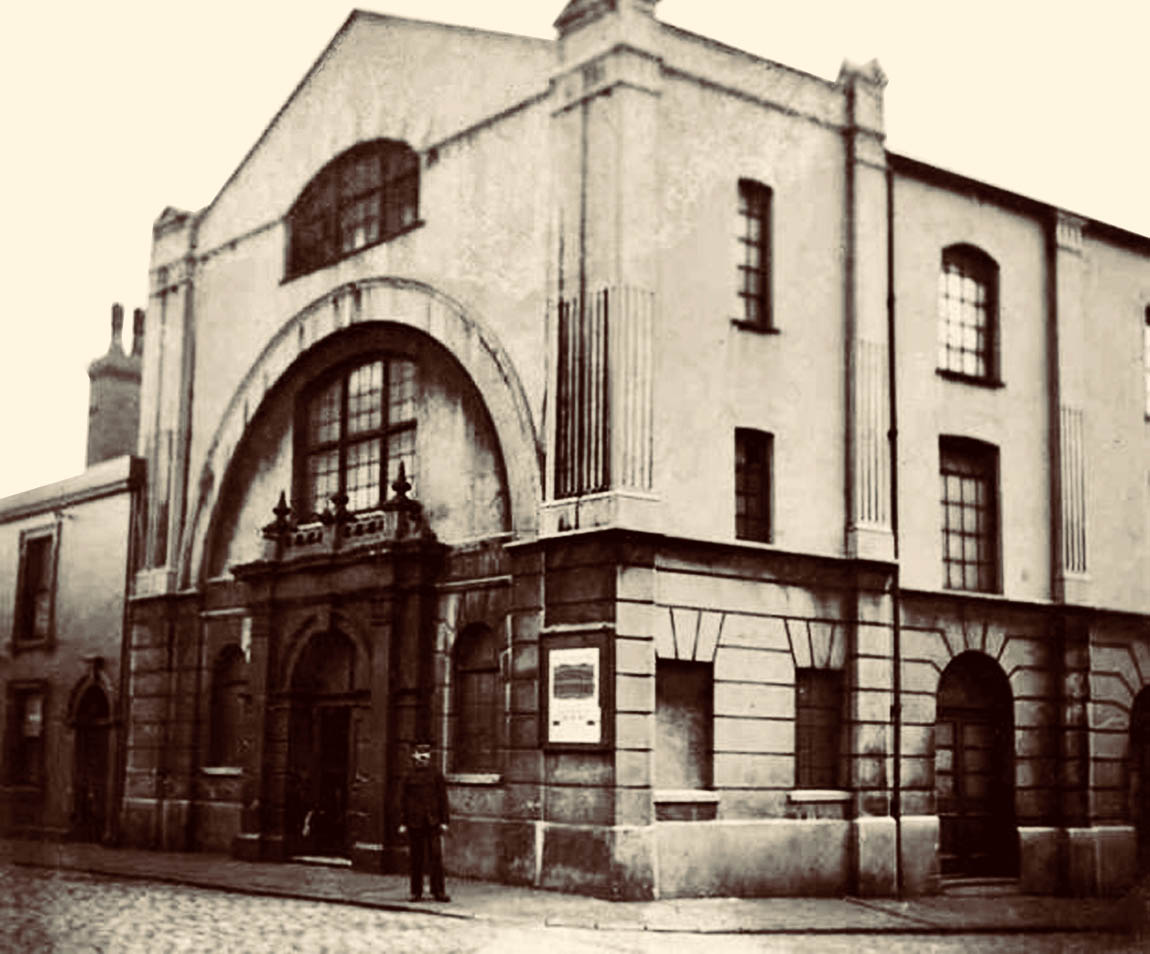 The Theatre Royal was then in the building we know as the Citadel and it had a notice placed in the Newspaper saying that they had now reopened for the winter season, "redecorated and beautified". The theatre was reopening with a performance of the "Gypsy King, of the Perilous Pass of the Cataract". Doors opened at 7 to commence at 7:30pm with prices of admission being: Gallery 4d, Pit 8d, Side Boxes 1 shilling and Centre Boxes 2 shillings.
Stack fires involving large bales of hay or straw were quite common within the St Helens district, particularly during the summer. It only needed a spark from a passing railway or carelessly disposed of cigarette for the stack to be ignited and, perhaps, set in chain a domino effect with adjacent stacks.
What made matters worse was that many of these farms or stackyards were on the outskirts of the town and with no telephone and motorised transport available, it could take quite some time for the fire brigade to arrive. Usually, a farm worker would get on his horse to alert the authorities of the outbreak. And then when the fire brigade did arrive, they might have problems sourcing a water supply, unless there was a nearby brook or pond.
What had caused the outbreak at Samuel Whalley's stackyard in Old Lane in Bold was not known. But on the morning of the 24th at about 8:30 am he discovered that his straw stack was ablaze. Warrington was considered the nearest town to summon assistance but it took an hour for the fire engine to arrive.
However, there was a colliery pond about 30 yards away where they were able to source water from and the firemen were reported as having "played vigorously upon the flames". Straw costing £30 was lost but Mr Whalley had sensibly been covered by insurance.
Moss House Colliery was a small coalmine in Rainford, which appears to have ceased mining operations in the 1890s. Robert Briers worked at Moss House but was also a part-time watcher paid to keep a look out for poachers on Sir Robert Gerard's land. He told St Helens Petty Sessions on the 25th that on the previous Sunday morning he had been returning from his work and when passing Reeds Brow saw two dogs chasing a hare.
Upon him shouting at the dogs, they gave up the chase and ran directly to Peter Brown and Bernard Riley who were standing in the road. Both men then walked away but Robert Briers said he went after Brown, who set the dogs on him, one seizing the watcher by his leg. Brown eventually gave the man a false name but he was traced and a summons served upon him.
The case against Bernard Riley was dismissed but Peter Brown, foolishly, did not appear in court. That denied him the opportunity to put his own case and if found guilty, as he was, his non-appearance meant he would likely receive a more stringent sentence. Brown in his absence was fined 40 shillings and costs or would have to go to prison to serve two months hard labour.
St Helens Newspaper courtesy St Helens Archive Service at Eccleston Library
Next Week's stories will include the complexity of a Waterloo Street nuisance, the fatal accident at Sutton Heath Colliery, the St Thomas Church bazaar, the solicitors' bust-up in court and the vicious revenge attack at Earlestown.
What were known as over-winding accidents were becoming all too common in St Helens' coalmines. These occurred when the engine man charged with taking men and materials up and down the pit shaft made a mistake. It was not the most difficult of jobs but it needed concentration and many men died or were seriously injured when winders overwound the pit cage. That left it stranded high among the mine's headgears, causing some miners to jump for their lives or fall out.
On the 20th such an incident occurred at Nutgrove Colliery. However, it involved two pit sinkers, men that were engaged in sinking the shaft of the number 2 pit. Sinkers normally used an iron bucket called a hoppet to go up and down the shaft that they were sinking or elongating.
John Eden and James Daniels were brothers-in-law and they had travelled down the shaft to the depth of about 60 yards inside a hoppet to install a piece of piping. But finding that the length they had with them did not fit, they called to be wound up again by giving the usual knocking signal. However, the engine winder, forgetting that the men were only partly down the shaft instead of being at its bottom, wound them in the hoppet back up at full speed, which inadvertently landed it high over the headgears.
Eden fell out of the hoppet and was severely injured about his spine, as well as other parts of his body and Daniels managed to hang on for a while until he was thrown out. Both injured men were conveyed to their homes; Daniels to Portico and Eden to Thatto Heath and they were treated by Dr Gaskell. Daniels was less seriously injured than Eden, who was not expected to survive.
The St Helens Newspaper was published on the 23rd and featured this article: "THE MERSEY TUNNEL SCHEME – There is now some prospect of this scheme being brought to a practical issue. Arrangements are being made for holding a public meeting on the subject in Liverpool, at which Mr. Gladstone has given a conditional promise to be present, for the furtherance of the project.
"The scheme as at present promulgated is for the sinking of an iron subway in a groove to be cut in the bed of the Mersey of sufficient diameter to admit railway carriages, the object being not merely to facilitate local traffic between Liverpool and the Cheshire side of the river, but to open more direct railway communication with North Wales."
Playing a harmless game in a beerhouse sometimes caused harm through the participants accusing each other of cheating or of not following the rules. On a recent Saturday night around 9pm, John Thompson and James Twist had been playing a card game called All Fours in Thomas Frodsham's beerhouse in College Street that was known as the Greyhound Inn. This is how the Newspaper described what occurred:
"Some dispute arose between them concerning the game, and Twist gave Thompson “one for his knabs,” knocked him down, and then jumped upon him. Some persons in the company then interfered and Twist came out into the street, followed by Thompson, who was challenged by Twist to fight, but declining to do so, thinking probably he had little chance with a man of Twist's prowess, he instead picked up a brick, and let Twist have it full in the face, which so “twisted” Twist's nasal organ as to require a large quantity of sticking plaster to restore it to its normal condition. By way of a check on Mr. Thompson's future demonstrative displays, the magistrates fined him 15s and costs, amounting to £2 1s 6d altogether."
The Newspaper also described how at a meeting of the council's Health Committee, Alderman Gamble had asked the Medical Officer what was being done in Windle City to combat typhoid fever. He said that he had heard that in one row of 16 houses there had been no less than 12 cases of typhoid and that three of those people were still ill.
The Medical Officer replied that he had attended to the matter but admitted that he did not know the full prevalence of fever within that district. It would not be until 1889 that contagious diseases became legally notifiable to the authorities and the doctor said it was only when persons died that he was made aware of such cases. Another councillor added that he had been told that one doctor's practice alone was attending to 30 cases of fever in the district of Windle.
Stack fires involving large bales of hay or straw were quite common within the St Helens district, particularly during the summer. It only needed a spark from a passing railway or carelessly disposed of cigarette for the stack to be ignited and, perhaps, set in chain a domino effect with adjacent stacks.
What made matters worse was that many of these farms or stackyards were on the outskirts of the town and with no telephone and motorised transport available, it could take quite some time for the fire brigade to arrive. Usually, a farm worker would get on his horse to alert the authorities of the outbreak. And then when the fire brigade did arrive, they might have problems sourcing a water supply, unless there was a nearby brook or pond.
What had caused the outbreak at Samuel Whalley's stackyard in Old Lane in Bold was not known. But on the morning of the 24th at about 8:30 am he discovered that his straw stack was ablaze. Warrington was considered the nearest town to summon assistance but it took an hour for the fire engine to arrive.
However, there was a colliery pond about 30 yards away where they were able to source water from and the firemen were reported as having "played vigorously upon the flames". Straw costing £30 was lost but Mr Whalley had sensibly been covered by insurance.
Moss House Colliery was a small coalmine in Rainford, which appears to have ceased mining operations in the 1890s. Robert Briers worked at Moss House but was also a part-time watcher paid to keep a look out for poachers on Sir Robert Gerard's land. He told St Helens Petty Sessions on the 25th that on the previous Sunday morning he had been returning from his work and when passing Reeds Brow saw two dogs chasing a hare.
Upon him shouting at the dogs, they gave up the chase and ran directly to Peter Brown and Bernard Riley who were standing in the road. Both men then walked away but Robert Briers said he went after Brown, who set the dogs on him, one seizing the watcher by his leg. Brown eventually gave the man a false name but he was traced and a summons served upon him.
The case against Bernard Riley was dismissed but Peter Brown, foolishly, did not appear in court. That denied him the opportunity to put his own case and if found guilty, as he was, his non-appearance meant he would likely receive a more stringent sentence. Brown in his absence was fined 40 shillings and costs or would have to go to prison to serve two months hard labour.
St Helens Newspaper courtesy St Helens Archive Service at Eccleston Library
Next Week's stories will include the complexity of a Waterloo Street nuisance, the fatal accident at Sutton Heath Colliery, the St Thomas Church bazaar, the solicitors' bust-up in court and the vicious revenge attack at Earlestown.
This week's many stories include the overwinding accident at Nutgrove Colliery, the violence in a College Street beerhouse over a card game, the straw stack fire at Bold, the plans to create the Mersey Tunnel and the reopening of the Theatre Royal.
What were known as over-winding accidents were becoming all too common in St Helens' coalmines.
These occurred when the engine man charged with taking men and materials up and down the pit shaft made a mistake.
It was not the most difficult of jobs but it needed concentration and many men died or were seriously injured when winders overwound the pit cage.
That left it stranded high among the mine's headgears, causing some miners to jump for their lives or fall out.
On the 20th such an incident occurred at Nutgrove Colliery. However, it involved two pit sinkers, men that were engaged in sinking the shaft of the number 2 pit.
Sinkers normally used an iron bucket called a hoppet to go up and down the shaft that they were sinking or elongating.
John Eden and James Daniels were brothers-in-law and they had travelled down the shaft to the depth of about 60 yards inside a hoppet to install a piece of piping.
But finding that the length they had with them did not fit, they called to be wound up again by giving the usual knocking signal.
However, the engine winder, forgetting that the men were only partly down the shaft instead of being at its bottom, wound them in the hoppet back up at full speed, which inadvertently landed it high over the headgears.
Eden fell out of the hoppet and was severely injured about his spine, as well as other parts of his body and Daniels managed to hang on for a while until he was thrown out.
Both injured men were conveyed to their homes; Daniels to Portico and Eden to Thatto Heath and they were treated by Dr Gaskell. Daniels was less seriously injured than Eden, who was not expected to survive.
The St Helens Newspaper was published on the 23rd and featured this article:
"THE MERSEY TUNNEL SCHEME – There is now some prospect of this scheme being brought to a practical issue. Arrangements are being made for holding a public meeting on the subject in Liverpool, at which Mr. Gladstone has given a conditional promise to be present, for the furtherance of the project.
"The scheme as at present promulgated is for the sinking of an iron subway in a groove to be cut in the bed of the Mersey of sufficient diameter to admit railway carriages, the object being not merely to facilitate local traffic between Liverpool and the Cheshire side of the river, but to open more direct railway communication with North Wales."
Playing a harmless game in a beerhouse sometimes caused harm through the participants accusing each other of cheating or of not following the rules.
On a recent Saturday night around 9pm, John Thompson and James Twist had been playing a card game called All Fours in Thomas Frodsham's beerhouse in College Street that was known as the Greyhound Inn. This is how the Newspaper described what occurred:
"Some dispute arose between them concerning the game, and Twist gave Thompson “one for his knabs,” knocked him down, and then jumped upon him.
"Some persons in the company then interfered and Twist came out into the street, followed by Thompson, who was challenged by Twist to fight, but declining to do so, thinking probably he had little chance with a man of Twist's prowess, he instead picked up a brick, and let Twist have it full in the face, which so “twisted” Twist's nasal organ as to require a large quantity of sticking plaster to restore it to its normal condition.
"By way of a check on Mr. Thompson's future demonstrative displays, the magistrates fined him 15s and costs, amounting to £2 1s 6d altogether."
The Newspaper also described how at a meeting of the council's Health Committee, Alderman Gamble had asked the Medical Officer what was being done in Windle City to combat typhoid fever.
He said that he had heard that in one row of 16 houses there had been no less than 12 cases of typhoid and that three of those people were still ill.
The Medical Officer replied that he had attended to the matter but admitted that he did not know the full prevalence of fever in that district.
It would not be until 1889 that contagious diseases became legally notifiable to the authorities and the doctor said it was only when persons died that he was made aware of such cases.
Another councillor added that he had been told that one doctor's practice alone was attending to 30 cases of fever in the district of Windle.
The Theatre Royal was then in the building we know as the Citadel and it had a notice placed in the Newspaper saying that they had now reopened for the winter season, "redecorated and beautified".
The theatre was reopening with a performance of the "Gypsy King, of the Perilous Pass of the Cataract".
Doors opened at 7 to commence at 7:30pm with prices of admission being: Gallery 4d, Pit 8d, Side Boxes 1 shilling and Centre Boxes 2 shillings.
Stack fires involving large bales of hay or straw were quite common within the St Helens district, particularly during the summer.
It only needed a spark from a passing railway or carelessly disposed of cigarette for the stack to be ignited and, perhaps, set in chain a domino effect with adjacent stacks.
What made matters worse was that many of these farms or stackyards were on the outskirts of the town and with no telephone and motorised transport available, it could take quite some time for the fire brigade to arrive.
Usually, a farm worker would get on his horse to alert the authorities of the outbreak. And then when the fire brigade did arrive, they might have problems sourcing a water supply, unless there was a nearby brook or pond.
What had caused the outbreak at Samuel Whalley's stackyard in Old Lane in Bold was not known.
But on the morning of the 24th at about 8:30 am he discovered that his straw stack was ablaze.
Warrington was considered the nearest town to summon assistance but it took an hour for the fire engine to arrive.
However, there was a colliery pond about 30 yards away where they were able to source water from and the firemen were reported as having "played vigorously upon the flames".
Straw costing £30 was lost but Mr Whalley had sensibly been covered by insurance.
Moss House Colliery was a small coalmine in Rainford, which appears to have ceased mining operations in the 1890s.
Robert Briers worked at Moss House but was also a part-time watcher paid to keep a look out for poachers on Sir Robert Gerard's land.
He told St Helens Petty Sessions on the 25th that on the previous Sunday morning he had been returning from his work and when passing Reeds Brow saw two dogs chasing a hare.
Upon him shouting at the dogs, they gave up the chase and ran directly to Peter Brown and Bernard Riley who were standing in the road.
Both men then walked away but Robert Briers said he went after Brown, who set the dogs on him, one seizing the watcher by his leg. Brown eventually gave the man a false name but he was traced and a summons served upon him.
The case against Bernard Riley was dismissed but Peter Brown, foolishly, did not appear in court.
That denied him the opportunity to put his own case and if found guilty, as he was, his non-appearance meant he would likely receive a more stringent sentence.
Brown in his absence was fined 40 shillings and costs or would have to go to prison to serve two months hard labour.
St Helens Newspaper courtesy St Helens Archive Service at Eccleston Library
Next Week's stories will include the complexity of a Waterloo Street nuisance, the fatal accident at Sutton Heath Colliery, the St Thomas Church bazaar, the solicitors' bust-up in court and the vicious revenge attack at Earlestown.
What were known as over-winding accidents were becoming all too common in St Helens' coalmines.
These occurred when the engine man charged with taking men and materials up and down the pit shaft made a mistake.
It was not the most difficult of jobs but it needed concentration and many men died or were seriously injured when winders overwound the pit cage.
That left it stranded high among the mine's headgears, causing some miners to jump for their lives or fall out.
On the 20th such an incident occurred at Nutgrove Colliery. However, it involved two pit sinkers, men that were engaged in sinking the shaft of the number 2 pit.
Sinkers normally used an iron bucket called a hoppet to go up and down the shaft that they were sinking or elongating.
John Eden and James Daniels were brothers-in-law and they had travelled down the shaft to the depth of about 60 yards inside a hoppet to install a piece of piping.
But finding that the length they had with them did not fit, they called to be wound up again by giving the usual knocking signal.
However, the engine winder, forgetting that the men were only partly down the shaft instead of being at its bottom, wound them in the hoppet back up at full speed, which inadvertently landed it high over the headgears.
Eden fell out of the hoppet and was severely injured about his spine, as well as other parts of his body and Daniels managed to hang on for a while until he was thrown out.
Both injured men were conveyed to their homes; Daniels to Portico and Eden to Thatto Heath and they were treated by Dr Gaskell. Daniels was less seriously injured than Eden, who was not expected to survive.
The St Helens Newspaper was published on the 23rd and featured this article:
"THE MERSEY TUNNEL SCHEME – There is now some prospect of this scheme being brought to a practical issue. Arrangements are being made for holding a public meeting on the subject in Liverpool, at which Mr. Gladstone has given a conditional promise to be present, for the furtherance of the project.
"The scheme as at present promulgated is for the sinking of an iron subway in a groove to be cut in the bed of the Mersey of sufficient diameter to admit railway carriages, the object being not merely to facilitate local traffic between Liverpool and the Cheshire side of the river, but to open more direct railway communication with North Wales."
Playing a harmless game in a beerhouse sometimes caused harm through the participants accusing each other of cheating or of not following the rules.
On a recent Saturday night around 9pm, John Thompson and James Twist had been playing a card game called All Fours in Thomas Frodsham's beerhouse in College Street that was known as the Greyhound Inn. This is how the Newspaper described what occurred:
"Some dispute arose between them concerning the game, and Twist gave Thompson “one for his knabs,” knocked him down, and then jumped upon him.
"Some persons in the company then interfered and Twist came out into the street, followed by Thompson, who was challenged by Twist to fight, but declining to do so, thinking probably he had little chance with a man of Twist's prowess, he instead picked up a brick, and let Twist have it full in the face, which so “twisted” Twist's nasal organ as to require a large quantity of sticking plaster to restore it to its normal condition.
"By way of a check on Mr. Thompson's future demonstrative displays, the magistrates fined him 15s and costs, amounting to £2 1s 6d altogether."
The Newspaper also described how at a meeting of the council's Health Committee, Alderman Gamble had asked the Medical Officer what was being done in Windle City to combat typhoid fever.
He said that he had heard that in one row of 16 houses there had been no less than 12 cases of typhoid and that three of those people were still ill.
The Medical Officer replied that he had attended to the matter but admitted that he did not know the full prevalence of fever in that district.
It would not be until 1889 that contagious diseases became legally notifiable to the authorities and the doctor said it was only when persons died that he was made aware of such cases.
Another councillor added that he had been told that one doctor's practice alone was attending to 30 cases of fever in the district of Windle.
The theatre was reopening with a performance of the "Gypsy King, of the Perilous Pass of the Cataract".
Doors opened at 7 to commence at 7:30pm with prices of admission being: Gallery 4d, Pit 8d, Side Boxes 1 shilling and Centre Boxes 2 shillings.
Stack fires involving large bales of hay or straw were quite common within the St Helens district, particularly during the summer.
It only needed a spark from a passing railway or carelessly disposed of cigarette for the stack to be ignited and, perhaps, set in chain a domino effect with adjacent stacks.
What made matters worse was that many of these farms or stackyards were on the outskirts of the town and with no telephone and motorised transport available, it could take quite some time for the fire brigade to arrive.
Usually, a farm worker would get on his horse to alert the authorities of the outbreak. And then when the fire brigade did arrive, they might have problems sourcing a water supply, unless there was a nearby brook or pond.
What had caused the outbreak at Samuel Whalley's stackyard in Old Lane in Bold was not known.
But on the morning of the 24th at about 8:30 am he discovered that his straw stack was ablaze.
Warrington was considered the nearest town to summon assistance but it took an hour for the fire engine to arrive.
However, there was a colliery pond about 30 yards away where they were able to source water from and the firemen were reported as having "played vigorously upon the flames".
Straw costing £30 was lost but Mr Whalley had sensibly been covered by insurance.
Moss House Colliery was a small coalmine in Rainford, which appears to have ceased mining operations in the 1890s.
Robert Briers worked at Moss House but was also a part-time watcher paid to keep a look out for poachers on Sir Robert Gerard's land.
He told St Helens Petty Sessions on the 25th that on the previous Sunday morning he had been returning from his work and when passing Reeds Brow saw two dogs chasing a hare.
Upon him shouting at the dogs, they gave up the chase and ran directly to Peter Brown and Bernard Riley who were standing in the road.
Both men then walked away but Robert Briers said he went after Brown, who set the dogs on him, one seizing the watcher by his leg. Brown eventually gave the man a false name but he was traced and a summons served upon him.
The case against Bernard Riley was dismissed but Peter Brown, foolishly, did not appear in court.
That denied him the opportunity to put his own case and if found guilty, as he was, his non-appearance meant he would likely receive a more stringent sentence.
Brown in his absence was fined 40 shillings and costs or would have to go to prison to serve two months hard labour.
St Helens Newspaper courtesy St Helens Archive Service at Eccleston Library
Next Week's stories will include the complexity of a Waterloo Street nuisance, the fatal accident at Sutton Heath Colliery, the St Thomas Church bazaar, the solicitors' bust-up in court and the vicious revenge attack at Earlestown.