
150 YEARS AGO THIS WEEK 23 - 29 MARCH 1876
This week's many stories include the visit to St Helens by the American temperance champion Mother Stewart, there's another death at Ashton's Green Colliery, the judge confused by the word chump, the saga of the stolen Greenall's spade and the man whose fanciful excuse for not having a train ticket turned out to be true.
The Rainford Local Board administered the affairs of the village and in their meeting this week in Alpine House in what became Church Road, the minutes of a meeting of their General Purposes Committee were considered. They had decided to improve the length of the footpath between the Golden Lion and the Derby Arms with new kerbs and they also discussed the dirty state of Rainford Brook, near to Pasture Lane bridge.
The residents of the cottages near the bridge were accused of throwing ashes and refuse into the water, which had caused the brook to get into a bad state. The meeting heard that the prosecution of offenders was being considered.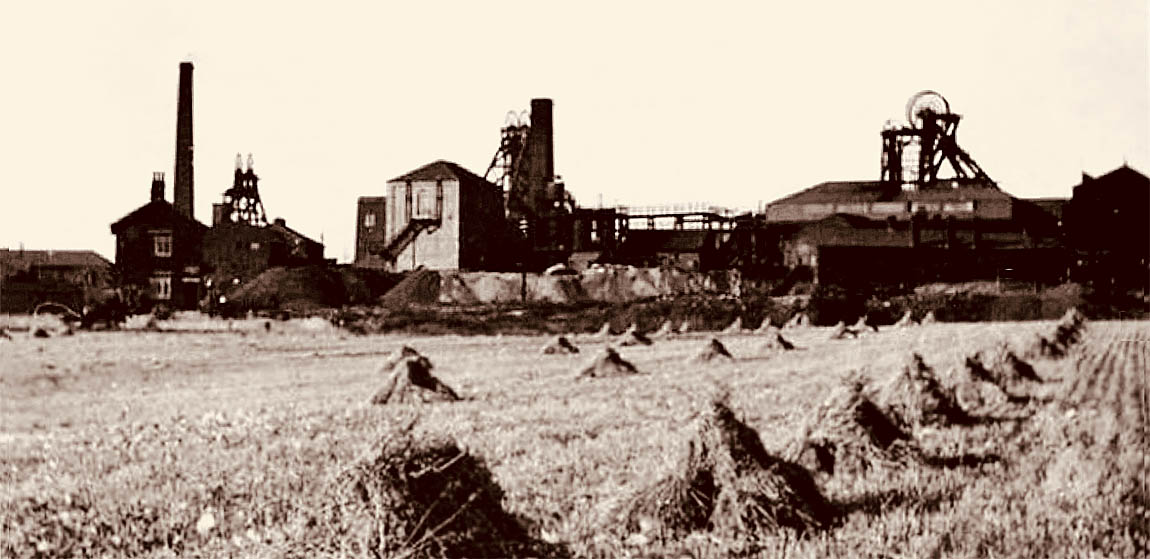 On the 23rd a verdict of accidental death was returned at an inquest held on Robert Taylor at the Railway Inn in Worsley Brow. The 26-year-old from Watery Lane had been killed at Ashton's Green Colliery in Parr (pictured above) after being buried under a collapse of earth from the underground pit roof. Taylor had been extricated within ten minutes but was found to be dead and his body taken to his home in advance of an inquest.
Putting gas explosions that tended to kill multiple persons to one side, stone or earth falls on unsuspecting miners was easily the number one killer down coalmines. Over the years such roof falls probably accounted for several thousand mining deaths within the St Helens district.
On the 23rd at Liverpool Assizes, there was an action for slander involving two St Helens publicans. I've not been able to discern exactly which pubs they both ran. However, defendant John Marsh was the landlord of either the Bird in th’ Hand or the Sefton Arms. His protagonist was Eli Pearce, who was simply described as a St Helens innkeeper.
Eli claimed that Marsh had been spreading gossip that he owed people money and did not pay his bills. And so Eli went to see John Marsh to have it out with him but that only made matters worse. He claimed Marsh had repeated his claims in the presence of a number of people, had called him a thief and offered to bet £5 that what he said was true.
A witness claimed that Marsh had also called Eli Pearce a "chump", as well as a thief. At that point the judge intervened, asking, "What is a chump. Does it mean a man who loses a bet and does not pay it. I certainly have not the slightest idea what a chump is. I never heard the word before."
The judge added that he did not think that there was a case for slander, as what was said seemed more like abuse. But nonetheless his jury was asked to consider the action. However, they agreed with the judge and sided with the defendant.
Over the previous few years several temperance movements had taken off in St Helens, with church leaders in the driving seat. But similar movements were taking place nationally and even internationally. In the United States a woman from Ohio dubbed Mother Stewart had been instrumental in launching a campaign against drink and in 1876 she came to Britain to help organise the British Women's Temperance Association.
This week Eliza Daniel Stewart visited St Helens and spoke at the Independent Chapel in Ormskirk Street on her experiences in a room that was described as "packed to the doors". The 60-year-old took a different approach to other temperance lecturers by saying drinkers were making brewery bosses rich. Mother Stewart also sprinkled what she said with humour and received much laughter as she spoke. This is a sample:
"I find that it's been estimated that in St Helens every 30 or 40 men in the town support one drinking establishment, or public house, or as they call them in America, drinking saloons, for they like to give nice names there even to bad things. I ask the working men of the town to think how foolish they are, working day after day, in and out of doors, always living poor, and having none of the comforts of life.
"As I pass through the country I continually have fine mansions pointed out to me, and I find many of them belong to brewers and distillers and you can see these people riding past every day in their carriages whilst working men are content to foot it. They cannot afford new dresses for their wives when they want them but they would readily give the money to these liquor men to buy fine dresses for their wives, silk dresses of course, and as they walked along they could hear the sound of the dress, saying as plain as possible – “Whisk, whisk, whisky”."
Thomas Waterworth was the agent for Singer sewing machines in St Helens with premises opposite the Raven Hotel. In the St Helens Newspaper on the 25th he was advertising treadle-powered machines for £6 10 shillings, which was an awful lot of money for most people.
There were many prosecutions during the 1870s for travelling on the railway without a ticket. And sometimes, dramatic chases by station staff took place as the ticketless passenger took to his heels. All kinds of excuses were told to the ticket collectors but in a case heard in St Helens Petty Sessions this week, it was revealed that Thomas O’Hara's strange tale was true.
And from the newspaper report into his hearing, I have learned that the St Helens railway station had three separate waiting rooms for each class of passenger. I suppose those travelling first-class would not want to mix with the hobbledehoys in third-class, even while waiting for a train!
The report revealed that Thomas O’Hara had been found sleeping in the third-class waiting room just before 11 o’clock on the previous Saturday night. Upon being awakened by station porters, O’Hara claimed that he had travelled down from Furness Abbey but on the train had lost his ticket to Lime Street Station, along with his tobacco box and two half-sovereigns.
He said that once he had missed those items, he had decided to get off the train at St Helens, instead of going onto Liverpool. Of course, the railway staff had heard the "I've lost my ticket" excuse a thousand times and simply handed the man over to a policeman. Upon being questioned in court, O’Hara admitted having some drink with two other men while on the train. He said he had fallen asleep and when he woke found his ticket and money had gone.
However, O’Hara insisted that the stationmaster at Furness if contacted would corroborate his statement in so far as he had bought the ticket from him and asked that the case be adjourned. This was agreed and two days later the magistrates were told that the stationmaster at St Helens had telegraphed his colleague at Furness Abbey station who had confirmed O'Hara's story and so the case against him was dismissed.
James Marsh appeared in court charged with the violent beating of a pony. PC Sewell said he had seen the defendant at Eccleston Colliery with a pony and cart. Marsh placed 25 cwt of coal on to the cart and because his pony was unable to pull it, he had struck the animal violently with the butt end of his whip about 20 or 30 times. However, the cruel coal carter was only fined five shillings and costs.
The case of a missing spade from the yard at Greenall's brewery in Hall Street also made the courts this week. John Kelly was a bricklayer's labourer and he had found his spade being used by a man called Porter who was working on the same job. Porter told him that John McMahon had sold him the spade but in court the latter denied stealing it. McMahon instead claimed that he had bought the spade off a man in the street. The magistrates did not believe that tale and sentenced him to serve a week in prison for the theft.
St Helens Newspaper courtesy St Helens Archive Service at Eccleston Library
Next Week's stories will include the attempted rape of a child, the fire that took place in Shaw Street, the hard times ahead for paupers living in the community and the world-famous vocal illusionist that played St Helens.
The Rainford Local Board administered the affairs of the village and in their meeting this week in Alpine House in what became Church Road, the minutes of a meeting of their General Purposes Committee were considered. They had decided to improve the length of the footpath between the Golden Lion and the Derby Arms with new kerbs and they also discussed the dirty state of Rainford Brook, near to Pasture Lane bridge.
The residents of the cottages near the bridge were accused of throwing ashes and refuse into the water, which had caused the brook to get into a bad state. The meeting heard that the prosecution of offenders was being considered.
Putting gas explosions that tended to kill multiple persons to one side, stone or earth falls on unsuspecting miners was easily the number one killer down coalmines. Over the years such roof falls probably accounted for several thousand mining deaths within the St Helens district.
On the 23rd at Liverpool Assizes, there was an action for slander involving two St Helens publicans. I've not been able to discern exactly which pubs they both ran. However, defendant John Marsh was the landlord of either the Bird in th’ Hand or the Sefton Arms. His protagonist was Eli Pearce, who was simply described as a St Helens innkeeper.
Eli claimed that Marsh had been spreading gossip that he owed people money and did not pay his bills. And so Eli went to see John Marsh to have it out with him but that only made matters worse. He claimed Marsh had repeated his claims in the presence of a number of people, had called him a thief and offered to bet £5 that what he said was true.
A witness claimed that Marsh had also called Eli Pearce a "chump", as well as a thief. At that point the judge intervened, asking, "What is a chump. Does it mean a man who loses a bet and does not pay it. I certainly have not the slightest idea what a chump is. I never heard the word before."
The judge added that he did not think that there was a case for slander, as what was said seemed more like abuse. But nonetheless his jury was asked to consider the action. However, they agreed with the judge and sided with the defendant.
Over the previous few years several temperance movements had taken off in St Helens, with church leaders in the driving seat. But similar movements were taking place nationally and even internationally. In the United States a woman from Ohio dubbed Mother Stewart had been instrumental in launching a campaign against drink and in 1876 she came to Britain to help organise the British Women's Temperance Association.
This week Eliza Daniel Stewart visited St Helens and spoke at the Independent Chapel in Ormskirk Street on her experiences in a room that was described as "packed to the doors". The 60-year-old took a different approach to other temperance lecturers by saying drinkers were making brewery bosses rich. Mother Stewart also sprinkled what she said with humour and received much laughter as she spoke. This is a sample:
"I find that it's been estimated that in St Helens every 30 or 40 men in the town support one drinking establishment, or public house, or as they call them in America, drinking saloons, for they like to give nice names there even to bad things. I ask the working men of the town to think how foolish they are, working day after day, in and out of doors, always living poor, and having none of the comforts of life.
"As I pass through the country I continually have fine mansions pointed out to me, and I find many of them belong to brewers and distillers and you can see these people riding past every day in their carriages whilst working men are content to foot it. They cannot afford new dresses for their wives when they want them but they would readily give the money to these liquor men to buy fine dresses for their wives, silk dresses of course, and as they walked along they could hear the sound of the dress, saying as plain as possible – “Whisk, whisk, whisky”."
Thomas Waterworth was the agent for Singer sewing machines in St Helens with premises opposite the Raven Hotel. In the St Helens Newspaper on the 25th he was advertising treadle-powered machines for £6 10 shillings, which was an awful lot of money for most people.
There were many prosecutions during the 1870s for travelling on the railway without a ticket. And sometimes, dramatic chases by station staff took place as the ticketless passenger took to his heels. All kinds of excuses were told to the ticket collectors but in a case heard in St Helens Petty Sessions this week, it was revealed that Thomas O’Hara's strange tale was true.
And from the newspaper report into his hearing, I have learned that the St Helens railway station had three separate waiting rooms for each class of passenger. I suppose those travelling first-class would not want to mix with the hobbledehoys in third-class, even while waiting for a train!
The report revealed that Thomas O’Hara had been found sleeping in the third-class waiting room just before 11 o’clock on the previous Saturday night. Upon being awakened by station porters, O’Hara claimed that he had travelled down from Furness Abbey but on the train had lost his ticket to Lime Street Station, along with his tobacco box and two half-sovereigns.
He said that once he had missed those items, he had decided to get off the train at St Helens, instead of going onto Liverpool. Of course, the railway staff had heard the "I've lost my ticket" excuse a thousand times and simply handed the man over to a policeman. Upon being questioned in court, O’Hara admitted having some drink with two other men while on the train. He said he had fallen asleep and when he woke found his ticket and money had gone.
However, O’Hara insisted that the stationmaster at Furness if contacted would corroborate his statement in so far as he had bought the ticket from him and asked that the case be adjourned. This was agreed and two days later the magistrates were told that the stationmaster at St Helens had telegraphed his colleague at Furness Abbey station who had confirmed O'Hara's story and so the case against him was dismissed.
James Marsh appeared in court charged with the violent beating of a pony. PC Sewell said he had seen the defendant at Eccleston Colliery with a pony and cart. Marsh placed 25 cwt of coal on to the cart and because his pony was unable to pull it, he had struck the animal violently with the butt end of his whip about 20 or 30 times. However, the cruel coal carter was only fined five shillings and costs.
The case of a missing spade from the yard at Greenall's brewery in Hall Street also made the courts this week. John Kelly was a bricklayer's labourer and he had found his spade being used by a man called Porter who was working on the same job. Porter told him that John McMahon had sold him the spade but in court the latter denied stealing it. McMahon instead claimed that he had bought the spade off a man in the street. The magistrates did not believe that tale and sentenced him to serve a week in prison for the theft.
St Helens Newspaper courtesy St Helens Archive Service at Eccleston Library
Next Week's stories will include the attempted rape of a child, the fire that took place in Shaw Street, the hard times ahead for paupers living in the community and the world-famous vocal illusionist that played St Helens.
This week's many stories include the visit to St Helens by the American temperance champion Mother Stewart, there's another death at Ashton's Green Colliery, the judge confused by the word chump, the saga of the stolen Greenall's spade and the man whose fanciful excuse for not having a train ticket turned out to be true.
The Rainford Local Board administered the affairs of the village and in their meeting this week in Alpine House in what became Church Road, the minutes of a meeting of their General Purposes Committee were considered.
They had decided to improve the length of the footpath between the Golden Lion and the Derby Arms with new kerbs and they also discussed the dirty state of Rainford Brook, near to Pasture Lane bridge.
The residents of the cottages near the bridge were accused of throwing ashes and refuse into the water, which had caused the brook to get into a bad state. The meeting heard that the prosecution of offenders was being considered.
On the 23rd a verdict of accidental death was returned at an inquest held on Robert Taylor at the Railway Inn in Worsley Brow.
The 26-year-old from Watery Lane had been killed at Ashton's Green Colliery in Parr (pictured above) after being buried under a collapse of earth from the underground pit roof.
Taylor had been extricated within ten minutes but was found to be dead and his body taken to his home in advance of an inquest.
Putting gas explosions that tended to kill multiple persons to one side, stone or earth falls on unsuspecting miners was easily the number one killer down coalmines.
Over the years such roof falls probably accounted for several thousand mining deaths within the St Helens district.
On the 23rd at Liverpool Assizes, there was an action for slander involving two St Helens publicans.
I've not been able to discern exactly which pubs they both ran. However, defendant John Marsh was the landlord of either the Bird in th’ Hand or the Sefton Arms.
His protagonist was Eli Pearce, who was simply described as a St Helens innkeeper.
Eli claimed that Marsh had been spreading gossip that he owed people money and did not pay his bills.
And so Eli went to see John Marsh to have it out with him but that only made matters worse.
He claimed Marsh had repeated his claims in the presence of a number of people, had called him a thief and offered to bet £5 that what he said was true.
A witness claimed that Marsh had also called Eli Pearce a "chump", as well as a thief.
At that point the judge intervened, asking, "What is a chump. Does it mean a man who loses a bet and does not pay it. I certainly have not the slightest idea what a chump is. I never heard the word before."
The judge added that he did not think that there was a case for slander, as what was said seemed more like abuse. But nonetheless his jury was asked to consider the action. However, they agreed with the judge and sided with the defendant.
Over the previous few years several temperance movements had taken off in St Helens, with church leaders in the driving seat.
But similar movements were taking place nationally and even internationally.
In the United States a woman from Ohio dubbed Mother Stewart had been instrumental in launching a campaign against drink and in 1876 she came to Britain to help organise the British Women's Temperance Association.
This week Eliza Daniel Stewart visited St Helens and spoke at the Independent Chapel in Ormskirk Street on her experiences in a room that was described as "packed to the doors".
The 60-year-old took a different approach to other temperance lecturers by saying drinkers were making brewery bosses rich.
Mother Stewart also sprinkled what she said with humour and received much laughter as she spoke. This is a sample:
"I find that it's been estimated that in St Helens every 30 or 40 men in the town support one drinking establishment, or public house, or as they call them in America, drinking saloons, for they like to give nice names there even to bad things.
"I ask the working men of the town to think how foolish they are, working day after day, in and out of doors, always living poor, and having none of the comforts of life.
"As I pass through the country I continually have fine mansions pointed out to me, and I find many of them belong to brewers and distillers and you can see these people riding past every day in their carriages whilst working men are content to foot it.
"They cannot afford new dresses for their wives when they want them but they would readily give the money to these liquor men to buy fine dresses for their wives, silk dresses of course, and as they walked along they could hear the sound of the dress, saying as plain as possible – “Whisk, whisk, whisky”."
Thomas Waterworth was the agent for Singer sewing machines in St Helens with premises opposite the Raven Hotel.
In the St Helens Newspaper on the 25th he was advertising treadle-powered machines for £6 10 shillings, which was an awful lot of money for most people.
There were many prosecutions during the 1870s for travelling on the railway without a ticket.
And sometimes, dramatic chases by station staff took place as the ticketless passenger took to his heels.
All kinds of excuses were told to the ticket collectors but in a case heard in St Helens Petty Sessions this week, it was revealed that Thomas O’Hara's strange tale was true.
And from the newspaper report into his hearing, I have learned that the St Helens railway station had three separate waiting rooms for each class of passenger.
I suppose those travelling first-class would not want to mix with the hobbledehoys in third-class, even while waiting for a train!
The report revealed that Thomas O’Hara had been found sleeping in the third-class waiting room just before 11 o’clock on the previous Saturday night.
Upon being awakened by station porters, O’Hara claimed that he had travelled down from Furness Abbey but on the train had lost his ticket to Lime Street Station, along with his tobacco box and two half-sovereigns.
He said that once he had missed those items, he had decided to get off the train at St Helens, instead of going onto Liverpool.
Of course, the railway staff had heard the "I've lost my ticket" excuse a thousand times and simply handed the man over to a policeman.
Upon being questioned in court, O’Hara admitted having some drink with two other men while on the train. He said he had fallen asleep and when he woke found his ticket and money had gone.
However, O’Hara insisted that the stationmaster at Furness if contacted would corroborate his statement in so far as he had bought the ticket from him and asked that the case be adjourned.
This was agreed and two days later the magistrates were told that the stationmaster at St Helens had telegraphed his colleague at Furness Abbey station who had confirmed O'Hara's story and so the case against him was dismissed.
James Marsh appeared in court charged with the violent beating of a pony.
PC Sewell said he had seen the defendant at Eccleston Colliery with a pony and cart.
Marsh placed 25 cwt of coal on to the cart and because his pony was unable to pull it, he had struck the animal violently with the butt end of his whip about 20 or 30 times.
However, the cruel coal carter was only fined five shillings and costs.
The case of a missing spade from the yard at Greenall's brewery in Hall Street also made the courts this week.
John Kelly was a bricklayer's labourer and he had found his spade being used by a man called Porter who was working on the same job.
Porter told him that John McMahon had sold him the spade but in court the latter denied stealing it. McMahon instead claimed that he had bought the spade off a man in the street.
The magistrates did not believe that tale and sentenced him to serve a week in prison for the theft.
St Helens Newspaper courtesy St Helens Archive Service at Eccleston Library
Next Week's stories will include the attempted rape of a child, the fire that took place in Shaw Street, the hard times ahead for paupers living in the community and the world-famous vocal illusionist that played St Helens.
The Rainford Local Board administered the affairs of the village and in their meeting this week in Alpine House in what became Church Road, the minutes of a meeting of their General Purposes Committee were considered.
They had decided to improve the length of the footpath between the Golden Lion and the Derby Arms with new kerbs and they also discussed the dirty state of Rainford Brook, near to Pasture Lane bridge.
The residents of the cottages near the bridge were accused of throwing ashes and refuse into the water, which had caused the brook to get into a bad state. The meeting heard that the prosecution of offenders was being considered.
On the 23rd a verdict of accidental death was returned at an inquest held on Robert Taylor at the Railway Inn in Worsley Brow.
Taylor had been extricated within ten minutes but was found to be dead and his body taken to his home in advance of an inquest.
Putting gas explosions that tended to kill multiple persons to one side, stone or earth falls on unsuspecting miners was easily the number one killer down coalmines.
Over the years such roof falls probably accounted for several thousand mining deaths within the St Helens district.
On the 23rd at Liverpool Assizes, there was an action for slander involving two St Helens publicans.
I've not been able to discern exactly which pubs they both ran. However, defendant John Marsh was the landlord of either the Bird in th’ Hand or the Sefton Arms.
His protagonist was Eli Pearce, who was simply described as a St Helens innkeeper.
Eli claimed that Marsh had been spreading gossip that he owed people money and did not pay his bills.
And so Eli went to see John Marsh to have it out with him but that only made matters worse.
He claimed Marsh had repeated his claims in the presence of a number of people, had called him a thief and offered to bet £5 that what he said was true.
A witness claimed that Marsh had also called Eli Pearce a "chump", as well as a thief.
At that point the judge intervened, asking, "What is a chump. Does it mean a man who loses a bet and does not pay it. I certainly have not the slightest idea what a chump is. I never heard the word before."
The judge added that he did not think that there was a case for slander, as what was said seemed more like abuse. But nonetheless his jury was asked to consider the action. However, they agreed with the judge and sided with the defendant.
Over the previous few years several temperance movements had taken off in St Helens, with church leaders in the driving seat.
But similar movements were taking place nationally and even internationally.
In the United States a woman from Ohio dubbed Mother Stewart had been instrumental in launching a campaign against drink and in 1876 she came to Britain to help organise the British Women's Temperance Association.
This week Eliza Daniel Stewart visited St Helens and spoke at the Independent Chapel in Ormskirk Street on her experiences in a room that was described as "packed to the doors".
The 60-year-old took a different approach to other temperance lecturers by saying drinkers were making brewery bosses rich.
Mother Stewart also sprinkled what she said with humour and received much laughter as she spoke. This is a sample:
"I find that it's been estimated that in St Helens every 30 or 40 men in the town support one drinking establishment, or public house, or as they call them in America, drinking saloons, for they like to give nice names there even to bad things.
"I ask the working men of the town to think how foolish they are, working day after day, in and out of doors, always living poor, and having none of the comforts of life.
"As I pass through the country I continually have fine mansions pointed out to me, and I find many of them belong to brewers and distillers and you can see these people riding past every day in their carriages whilst working men are content to foot it.
"They cannot afford new dresses for their wives when they want them but they would readily give the money to these liquor men to buy fine dresses for their wives, silk dresses of course, and as they walked along they could hear the sound of the dress, saying as plain as possible – “Whisk, whisk, whisky”."
Thomas Waterworth was the agent for Singer sewing machines in St Helens with premises opposite the Raven Hotel.
In the St Helens Newspaper on the 25th he was advertising treadle-powered machines for £6 10 shillings, which was an awful lot of money for most people.
There were many prosecutions during the 1870s for travelling on the railway without a ticket.
And sometimes, dramatic chases by station staff took place as the ticketless passenger took to his heels.
All kinds of excuses were told to the ticket collectors but in a case heard in St Helens Petty Sessions this week, it was revealed that Thomas O’Hara's strange tale was true.
And from the newspaper report into his hearing, I have learned that the St Helens railway station had three separate waiting rooms for each class of passenger.
I suppose those travelling first-class would not want to mix with the hobbledehoys in third-class, even while waiting for a train!
The report revealed that Thomas O’Hara had been found sleeping in the third-class waiting room just before 11 o’clock on the previous Saturday night.
Upon being awakened by station porters, O’Hara claimed that he had travelled down from Furness Abbey but on the train had lost his ticket to Lime Street Station, along with his tobacco box and two half-sovereigns.
He said that once he had missed those items, he had decided to get off the train at St Helens, instead of going onto Liverpool.
Of course, the railway staff had heard the "I've lost my ticket" excuse a thousand times and simply handed the man over to a policeman.
Upon being questioned in court, O’Hara admitted having some drink with two other men while on the train. He said he had fallen asleep and when he woke found his ticket and money had gone.
However, O’Hara insisted that the stationmaster at Furness if contacted would corroborate his statement in so far as he had bought the ticket from him and asked that the case be adjourned.
This was agreed and two days later the magistrates were told that the stationmaster at St Helens had telegraphed his colleague at Furness Abbey station who had confirmed O'Hara's story and so the case against him was dismissed.
James Marsh appeared in court charged with the violent beating of a pony.
PC Sewell said he had seen the defendant at Eccleston Colliery with a pony and cart.
Marsh placed 25 cwt of coal on to the cart and because his pony was unable to pull it, he had struck the animal violently with the butt end of his whip about 20 or 30 times.
However, the cruel coal carter was only fined five shillings and costs.
The case of a missing spade from the yard at Greenall's brewery in Hall Street also made the courts this week.
John Kelly was a bricklayer's labourer and he had found his spade being used by a man called Porter who was working on the same job.
Porter told him that John McMahon had sold him the spade but in court the latter denied stealing it. McMahon instead claimed that he had bought the spade off a man in the street.
The magistrates did not believe that tale and sentenced him to serve a week in prison for the theft.
St Helens Newspaper courtesy St Helens Archive Service at Eccleston Library
Next Week's stories will include the attempted rape of a child, the fire that took place in Shaw Street, the hard times ahead for paupers living in the community and the world-famous vocal illusionist that played St Helens.