
150 YEARS AGO THIS WEEK 16 - 22 MARCH 1876
This week's many stories include the popularity of guinea cat in St Helens, the theft from the Theatre Royal, the men prosecuted for not going to work, the husband described as an idle and dissolute fellow that lived off his wife and the Gerard's Bridge daughter who stole her mother's clothes.
We begin on the 17th when a St Patrick's Day celebration took place in the Volunteer Hall in St Helens. The advert for the event offered: "Grand musical entertainment and pantomimic tableaux entitled ‘The Triumph over St. Patrick over Satan, brilliantly illuminated with coloured fire’."
A very popular pastime for young people in the 1870s was the playing of guinea cat, of which a variation was later called "piggy". A piece of wood, such as an old axe handle, was used to club a projectile, such as a stone, as near as possible to the designated "cat". Not only was it dangerous to the boy acting as the target but also to others who might inadvertently get in the way. And so many persons were prosecuted if caught playing the game.
This week John Edwards of Eccleston and Samuel David from Parr were fined 2s 6d and 1 shilling, respectively, plus costs for playing guinea cat in the public streets. And in a separate case, eight-year-old John Glover had been caught playing the game in Lowe Street but was only fined sixpence, plus costs.
Being found sleeping inside a St Helens works, usually some outbuilding, led to an inevitable prison sentence. I do wonder if the homeless person was actually pleased to be sent to Kirkdale Gaol, as for a while they would have a roof over their head and be fed. As long as they weren't given a sentence that included the backbreaking hard labour, prison probably suited them, particularly in winter.
And so I imagine Patrick Murray did not object too much when this week he was sent to prison for 21 days. That was after the man described in the Newspaper as having no residence had been found sleeping in a chemical works at Pocket Nook.
Walking across a farmer's field, usually as a shortcut to work, often led to a prosecution if the persons responsible could be identified. However, the damage supposedly caused by the trespassing was clearly a made-up figure. This week James Gornall, Thomas Bradbury, John Woodward, John Dingsdale and Joseph Anders were summoned to St Helens Petty Sessions for wilfully damaging a herbage field.
That was owned by the Ravenhead Colliery Company and, presumably, rented out to a farmer. The latter reckoned that their tramping across his field had caused a pennyworth of damage, obviously a notional amount. The men all pleaded guilty and were fined a shilling each, plus the penny damages, plus court costs.
It sounds like Ann Mather might have been at the end of her tether with her daughter Sarah. This week the mother prosecuted Sarah for stealing some of her property, knowing full well that the inevitable penalty for theft was prison. The pair lived in Union Street in Gerards Bridge and Ann reckoned that Sarah had stolen two of her woollen shawls, a skirt and other items worth a total of 18 shillings.
PC Doig found the girl wearing some of the clothing but one of the shawls had been taken to a pawnshop in St Helens marketplace. Sarah had nothing to say in her defence and was committed for trial at the next assizes hearing in April where she was sentenced to 12 months in prison. It was the usual policy of the judges at the assizes to award longer sentences each time a defendant appeared before them. And court records show that the 19-year-old Sarah had two prior convictions for stealing boots and shawls, for which she had received sentences of a month and six months in prison.
There were quite a few men in court this week charged with neglecting their work. That simply meant taking a day or two off and their employer sought damages from them on the basis that their absence had cost them money. However, I suspect the prosecution was more about serving as a deterrent to other employees thinking of doing the same.
William Gallagher was employed at Leather's chemical works and offered to the magistrates what appears to have been a plausible excuse for his absence. Gallagher said there had been what he described as a row at his house and he had told his foreman that he needed to take time off to sort things out.
He claimed that he had also got another man to take his place at the furnace but in court the company said they "never took cognisance of strange men sent in place of their own." Gallagher had been sued for 28 shillings and he was ordered to pay the company the full amount, plus costs.
There was also a string of cases of persons charged with having arrears on their maintenance payments. Such cases mainly concerned men who had been ordered to pay for their relatives' keep, which included their parents. However, Ralph Taylor would not have to pay any more money to maintain his mother, as she was now dead.
But while she had been living, 6 shillings had been paid to her by the Prescot Union, as parish or out-relief to the very poor living in the community. The relieving officer, James Fowler, told the Bench that it had been the third time he had had to summon Taylor to court for this small amount and asked the magistrates to issue an immediate order demanding payment. The order was signed and if Taylor ignored it, ultimately his penalty could be prison.
The Prescot Union had also been looking after Peter Roughley's wife and child. Fowler described him as "an idle, dissolute fellow" who had been kept by his wife for upwards of two years. But because she would not keep giving him pocket money out of her own earnings, Roughley had continually abused her, which had led to the woman being admitted to the workhouse hospital. Peter Roughley was ordered to pay 7 shillings a week to the Prescot Union as long as his wife and child were in Whiston Workhouse.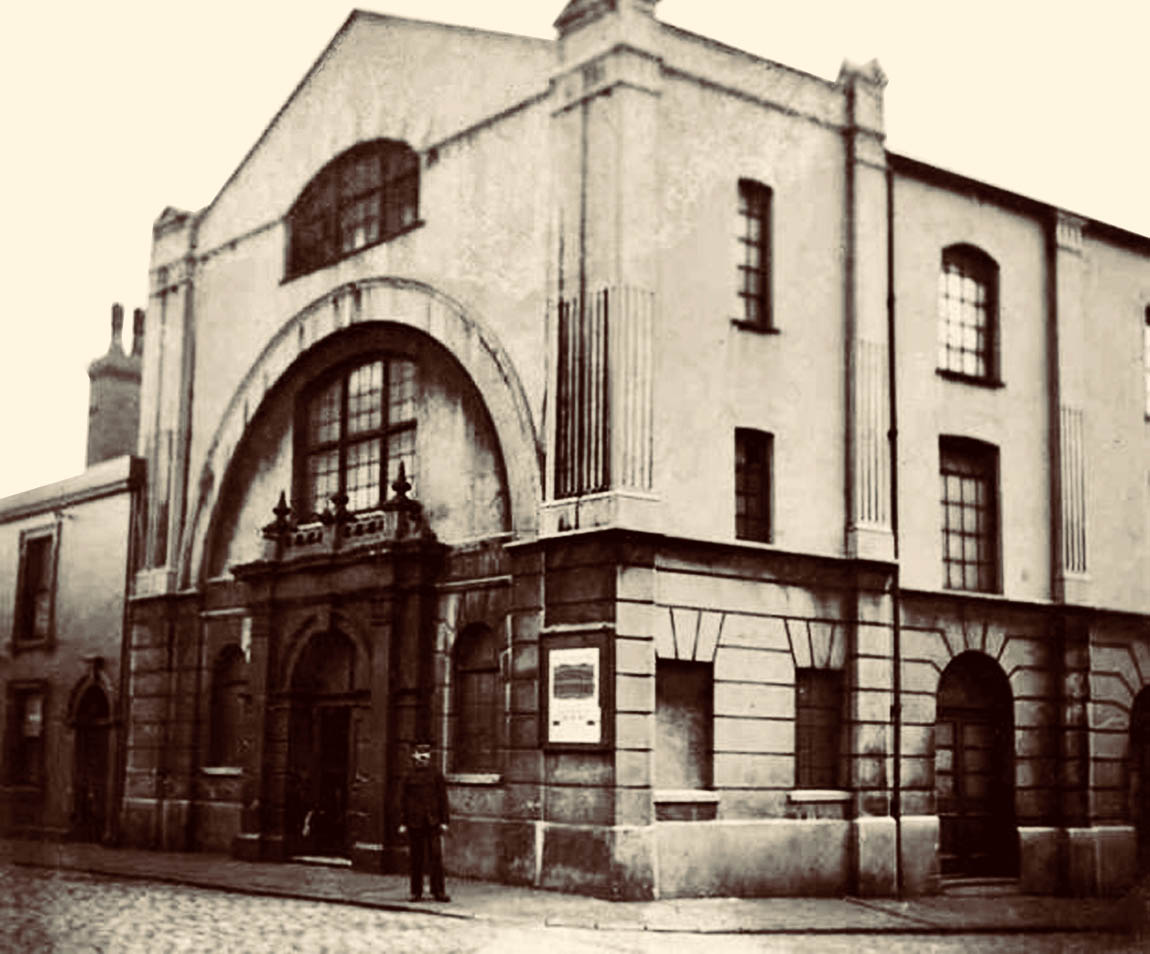 Thomas Barrow was in court charged with stealing items of clothing from Arthur Wyndham. The latter was appearing at the St Helens Theatre Royal in the building we know as the Citadel (pictured above) and was described as the "celebrated London comedian vocalist and character impersonator".
After finishing his turn on one night at the theatre, Wyndham had left props and some clothes locked in a basket and box which were stored in the manager's private room. Then on the following day he found the locks had been broken and a pair of trousers, a black vest and what was described as a quantity of gold sleeve links etc., that were valued at £8 in total, were missing.
Thomas Barrow was suspected but denied the offence and was committed to take his trial at the next assizes hearing. In April the 20-year-old was found guilty and sentenced to 6 months in prison.
I recently reported how a spelling bee had taken place in the Mission Hall in Waterloo Street in which fifty competitors had taken part. On the 21st the Newton-le-Willows Cricket and Bowling Club held their own spelling bee in Newton Town Hall. But unlike the event held in St Helens, which mainly offered books as prizes, the Newton bee awarded money for good spelling, with £2 as the first prize, £1 as the second and ten shillings as the third prize.
And finally, the council's Paving, Highways and Sewering Committee met on the 22nd and discussed the road in front of the new Town Hall between Birchley Street and Hardshaw Street. The committee decided to make up the road with cube setts, with the Town Hall itself set to open in June. The councillors also approved plans for the building of many new houses, with eighteen going up in Robins Lane for workers at Sutton Glass Works and twenty near St Helens Junction for railway staff.
St Helens Newspaper courtesy St Helens Archive Service at Eccleston Library
Next Week's stories will include a visit by the American temperance champion Mother Stewart, there's a death at Ashton's Green Colliery, the saga of the stolen spade at Greenalls and why a St Helens publican was officially not a chump.
We begin on the 17th when a St Patrick's Day celebration took place in the Volunteer Hall in St Helens. The advert for the event offered: "Grand musical entertainment and pantomimic tableaux entitled ‘The Triumph over St. Patrick over Satan, brilliantly illuminated with coloured fire’."
A very popular pastime for young people in the 1870s was the playing of guinea cat, of which a variation was later called "piggy". A piece of wood, such as an old axe handle, was used to club a projectile, such as a stone, as near as possible to the designated "cat". Not only was it dangerous to the boy acting as the target but also to others who might inadvertently get in the way. And so many persons were prosecuted if caught playing the game.
This week John Edwards of Eccleston and Samuel David from Parr were fined 2s 6d and 1 shilling, respectively, plus costs for playing guinea cat in the public streets. And in a separate case, eight-year-old John Glover had been caught playing the game in Lowe Street but was only fined sixpence, plus costs.
Being found sleeping inside a St Helens works, usually some outbuilding, led to an inevitable prison sentence. I do wonder if the homeless person was actually pleased to be sent to Kirkdale Gaol, as for a while they would have a roof over their head and be fed. As long as they weren't given a sentence that included the backbreaking hard labour, prison probably suited them, particularly in winter.
And so I imagine Patrick Murray did not object too much when this week he was sent to prison for 21 days. That was after the man described in the Newspaper as having no residence had been found sleeping in a chemical works at Pocket Nook.
Walking across a farmer's field, usually as a shortcut to work, often led to a prosecution if the persons responsible could be identified. However, the damage supposedly caused by the trespassing was clearly a made-up figure. This week James Gornall, Thomas Bradbury, John Woodward, John Dingsdale and Joseph Anders were summoned to St Helens Petty Sessions for wilfully damaging a herbage field.
That was owned by the Ravenhead Colliery Company and, presumably, rented out to a farmer. The latter reckoned that their tramping across his field had caused a pennyworth of damage, obviously a notional amount. The men all pleaded guilty and were fined a shilling each, plus the penny damages, plus court costs.
It sounds like Ann Mather might have been at the end of her tether with her daughter Sarah. This week the mother prosecuted Sarah for stealing some of her property, knowing full well that the inevitable penalty for theft was prison. The pair lived in Union Street in Gerards Bridge and Ann reckoned that Sarah had stolen two of her woollen shawls, a skirt and other items worth a total of 18 shillings.
PC Doig found the girl wearing some of the clothing but one of the shawls had been taken to a pawnshop in St Helens marketplace. Sarah had nothing to say in her defence and was committed for trial at the next assizes hearing in April where she was sentenced to 12 months in prison. It was the usual policy of the judges at the assizes to award longer sentences each time a defendant appeared before them. And court records show that the 19-year-old Sarah had two prior convictions for stealing boots and shawls, for which she had received sentences of a month and six months in prison.
There were quite a few men in court this week charged with neglecting their work. That simply meant taking a day or two off and their employer sought damages from them on the basis that their absence had cost them money. However, I suspect the prosecution was more about serving as a deterrent to other employees thinking of doing the same.
William Gallagher was employed at Leather's chemical works and offered to the magistrates what appears to have been a plausible excuse for his absence. Gallagher said there had been what he described as a row at his house and he had told his foreman that he needed to take time off to sort things out.
He claimed that he had also got another man to take his place at the furnace but in court the company said they "never took cognisance of strange men sent in place of their own." Gallagher had been sued for 28 shillings and he was ordered to pay the company the full amount, plus costs.
There was also a string of cases of persons charged with having arrears on their maintenance payments. Such cases mainly concerned men who had been ordered to pay for their relatives' keep, which included their parents. However, Ralph Taylor would not have to pay any more money to maintain his mother, as she was now dead.
But while she had been living, 6 shillings had been paid to her by the Prescot Union, as parish or out-relief to the very poor living in the community. The relieving officer, James Fowler, told the Bench that it had been the third time he had had to summon Taylor to court for this small amount and asked the magistrates to issue an immediate order demanding payment. The order was signed and if Taylor ignored it, ultimately his penalty could be prison.
The Prescot Union had also been looking after Peter Roughley's wife and child. Fowler described him as "an idle, dissolute fellow" who had been kept by his wife for upwards of two years. But because she would not keep giving him pocket money out of her own earnings, Roughley had continually abused her, which had led to the woman being admitted to the workhouse hospital. Peter Roughley was ordered to pay 7 shillings a week to the Prescot Union as long as his wife and child were in Whiston Workhouse.
After finishing his turn on one night at the theatre, Wyndham had left props and some clothes locked in a basket and box which were stored in the manager's private room. Then on the following day he found the locks had been broken and a pair of trousers, a black vest and what was described as a quantity of gold sleeve links etc., that were valued at £8 in total, were missing.
Thomas Barrow was suspected but denied the offence and was committed to take his trial at the next assizes hearing. In April the 20-year-old was found guilty and sentenced to 6 months in prison.
I recently reported how a spelling bee had taken place in the Mission Hall in Waterloo Street in which fifty competitors had taken part. On the 21st the Newton-le-Willows Cricket and Bowling Club held their own spelling bee in Newton Town Hall. But unlike the event held in St Helens, which mainly offered books as prizes, the Newton bee awarded money for good spelling, with £2 as the first prize, £1 as the second and ten shillings as the third prize.
And finally, the council's Paving, Highways and Sewering Committee met on the 22nd and discussed the road in front of the new Town Hall between Birchley Street and Hardshaw Street. The committee decided to make up the road with cube setts, with the Town Hall itself set to open in June. The councillors also approved plans for the building of many new houses, with eighteen going up in Robins Lane for workers at Sutton Glass Works and twenty near St Helens Junction for railway staff.
St Helens Newspaper courtesy St Helens Archive Service at Eccleston Library
Next Week's stories will include a visit by the American temperance champion Mother Stewart, there's a death at Ashton's Green Colliery, the saga of the stolen spade at Greenalls and why a St Helens publican was officially not a chump.
This week's many stories include the popularity of guinea cat in St Helens, the theft from the Theatre Royal, the men prosecuted for not going to work, the husband described as an idle and dissolute fellow that lived off his wife and the Gerard's Bridge daughter who stole her mother's clothes.
We begin on the 17th when a St Patrick's Day celebration took place in the Volunteer Hall in St Helens. The advert for the event offered:
"Grand musical entertainment and pantomimic tableaux entitled ‘The Triumph over St. Patrick over Satan, brilliantly illuminated with coloured fire’."
A very popular pastime for young people in the 1870s was the playing of guinea cat, of which a variation was later called "piggy".
A piece of wood, such as an old axe handle, was used to club a projectile, such as a stone, as near as possible to the designated "cat".
Not only was it dangerous to the boy acting as the target but also to others who might inadvertently get in the way. And so many persons were prosecuted if caught playing the game.
This week John Edwards of Eccleston and Samuel David from Parr were fined 2s 6d and 1 shilling, respectively, plus costs for playing guinea cat in the public streets.
And in a separate case, eight-year-old John Glover had been caught playing the game in Lowe Street but was only fined sixpence, plus costs.
Being found sleeping inside a St Helens works, usually some outbuilding, led to an inevitable prison sentence.
I do wonder if the homeless person was actually pleased to be sent to Kirkdale Gaol, as for a while they would have a roof over their head and be fed.
As long as they weren't given a sentence that included the backbreaking hard labour, prison probably suited them, particularly in winter.
And so I imagine Patrick Murray did not object too much when this week he was sent to prison for 21 days.
That was after the man described in the Newspaper as having no residence had been found sleeping in a chemical works at Pocket Nook.
Walking across a farmer's field, usually as a shortcut to work, often led to a prosecution if the persons responsible could be identified.
However, the damage supposedly caused by the trespassing was clearly a made-up figure.
This week James Gornall, Thomas Bradbury, John Woodward, John Dingsdale and Joseph Anders were summoned to St Helens Petty Sessions for wilfully damaging a herbage field.
That was owned by the Ravenhead Colliery Company and, presumably, rented out to a farmer.
The latter reckoned that their tramping across his field had caused a pennyworth of damage, obviously a notional amount.
The men all pleaded guilty and were fined a shilling each, plus the penny damages, plus court costs.
It sounds like Ann Mather might have been at the end of her tether with her daughter Sarah.
This week the mother prosecuted Sarah for stealing some of her property, knowing full well that the inevitable penalty for theft was prison.
The pair lived in Union Street in Gerards Bridge and Ann reckoned that Sarah had stolen two of her woollen shawls, a skirt and other items worth a total of 18 shillings.
PC Doig found the girl wearing some of the clothing but one of the shawls had been taken to a pawnshop in St Helens marketplace.
Sarah had nothing to say in her defence and was committed for trial at the next assizes hearing in April where she was sentenced to 12 months in prison.
It was the usual policy of the judges at the assizes to award longer sentences each time a defendant appeared before them.
And court records show that the 19-year-old Sarah had two prior convictions for stealing boots and shawls, for which she had received sentences of a month and six months in prison.
There were quite a few men in court this week charged with neglecting their work.
That simply meant taking a day or two off and their employer sought damages from them on the basis that their absence had cost them money.
However, I suspect the prosecution was more about serving as a deterrent to other employees thinking of doing the same.
William Gallagher was employed at Leather's chemical works and offered to the magistrates what appears to have been a plausible excuse for his absence.
Gallagher said there had been what he described as a row at his house and he had told his foreman that he needed to take time off to sort things out.
He claimed that he had also got another man to take his place at the furnace but in court the company said they "never took cognisance of strange men sent in place of their own."
Gallagher had been sued for 28 shillings and he was ordered to pay the company the full amount, plus costs.
There was also a string of cases of persons charged with having arrears on their maintenance payments.
Such cases mainly concerned men who had been ordered to pay for their relatives' keep, which included their parents.
However, Ralph Taylor would not have to pay any more money to maintain his mother, as she was now dead.
But while she had been living, 6 shillings had been paid to her by the Prescot Union, as parish or out-relief to the very poor living in the community.
The relieving officer, James Fowler, told the Bench that it had been the third time he had had to summon Taylor to court for this small amount and asked the magistrates to issue an immediate order demanding payment.
The order was signed and if Taylor ignored it, ultimately his penalty could be prison.
The Prescot Union had also been looking after Peter Roughley's wife and child.
Fowler described him as "an idle, dissolute fellow" who had been kept by his wife for upwards of two years.
But because she would not keep giving him pocket money out of her own earnings, Roughley had continually abused her, which had led to the woman being admitted to the workhouse hospital.
Peter Roughley was ordered to pay 7 shillings a week to the Prescot Union as long as his wife and child were in Whiston Workhouse.
Thomas Barrow was in court charged with stealing items of clothing from Arthur Wyndham.
The latter was appearing at the St Helens Theatre Royal in the building we know as the Citadel (pictured above) and was described as the "celebrated London comedian vocalist and character impersonator".
After finishing his turn on one night at the theatre, Wyndham had left props and some clothes locked in a basket and box which were stored in the manager's private room.
Then on the following day he found the locks had been broken and a pair of trousers, a black vest and what was described as a quantity of gold sleeve links etc., that were valued at £8 in total, were missing.
Thomas Barrow was suspected but denied the offence and was committed to take his trial at the next assizes hearing.
In April the 20-year-old was found guilty and sentenced to 6 months in prison.
I recently reported how a spelling bee had taken place in the Mission Hall in Waterloo Street in which fifty competitors had taken part.
On the 21st the Newton-le-Willows Cricket and Bowling Club held their own spelling bee in Newton Town Hall.
But unlike the event held in St Helens, which mainly offered books as prizes, the Newton bee awarded money for good spelling, with £2 as the first prize, £1 as the second and ten shillings as the third prize.
And finally, the council's Paving, Highways and Sewering Committee met on the 22nd and discussed the road in front of the new Town Hall between Birchley Street and Hardshaw Street.
The committee decided to make up the road with cube setts, with the Town Hall itself set to open in June.
The councillors also approved plans for the building of many new houses, with eighteen going up in Robins Lane for workers at Sutton Glass Works and twenty near St Helens Junction for railway staff.
St Helens Newspaper courtesy St Helens Archive Service at Eccleston Library
Next Week's stories will include a visit by the American temperance champion Mother Stewart, there's a death at Ashton's Green Colliery, the saga of the stolen spade at Greenalls and why a St Helens publican was officially not a chump.
We begin on the 17th when a St Patrick's Day celebration took place in the Volunteer Hall in St Helens. The advert for the event offered:
"Grand musical entertainment and pantomimic tableaux entitled ‘The Triumph over St. Patrick over Satan, brilliantly illuminated with coloured fire’."
A very popular pastime for young people in the 1870s was the playing of guinea cat, of which a variation was later called "piggy".
A piece of wood, such as an old axe handle, was used to club a projectile, such as a stone, as near as possible to the designated "cat".
Not only was it dangerous to the boy acting as the target but also to others who might inadvertently get in the way. And so many persons were prosecuted if caught playing the game.
This week John Edwards of Eccleston and Samuel David from Parr were fined 2s 6d and 1 shilling, respectively, plus costs for playing guinea cat in the public streets.
And in a separate case, eight-year-old John Glover had been caught playing the game in Lowe Street but was only fined sixpence, plus costs.
Being found sleeping inside a St Helens works, usually some outbuilding, led to an inevitable prison sentence.
I do wonder if the homeless person was actually pleased to be sent to Kirkdale Gaol, as for a while they would have a roof over their head and be fed.
As long as they weren't given a sentence that included the backbreaking hard labour, prison probably suited them, particularly in winter.
And so I imagine Patrick Murray did not object too much when this week he was sent to prison for 21 days.
That was after the man described in the Newspaper as having no residence had been found sleeping in a chemical works at Pocket Nook.
Walking across a farmer's field, usually as a shortcut to work, often led to a prosecution if the persons responsible could be identified.
However, the damage supposedly caused by the trespassing was clearly a made-up figure.
This week James Gornall, Thomas Bradbury, John Woodward, John Dingsdale and Joseph Anders were summoned to St Helens Petty Sessions for wilfully damaging a herbage field.
That was owned by the Ravenhead Colliery Company and, presumably, rented out to a farmer.
The latter reckoned that their tramping across his field had caused a pennyworth of damage, obviously a notional amount.
The men all pleaded guilty and were fined a shilling each, plus the penny damages, plus court costs.
It sounds like Ann Mather might have been at the end of her tether with her daughter Sarah.
This week the mother prosecuted Sarah for stealing some of her property, knowing full well that the inevitable penalty for theft was prison.
The pair lived in Union Street in Gerards Bridge and Ann reckoned that Sarah had stolen two of her woollen shawls, a skirt and other items worth a total of 18 shillings.
PC Doig found the girl wearing some of the clothing but one of the shawls had been taken to a pawnshop in St Helens marketplace.
Sarah had nothing to say in her defence and was committed for trial at the next assizes hearing in April where she was sentenced to 12 months in prison.
It was the usual policy of the judges at the assizes to award longer sentences each time a defendant appeared before them.
And court records show that the 19-year-old Sarah had two prior convictions for stealing boots and shawls, for which she had received sentences of a month and six months in prison.
There were quite a few men in court this week charged with neglecting their work.
That simply meant taking a day or two off and their employer sought damages from them on the basis that their absence had cost them money.
However, I suspect the prosecution was more about serving as a deterrent to other employees thinking of doing the same.
William Gallagher was employed at Leather's chemical works and offered to the magistrates what appears to have been a plausible excuse for his absence.
Gallagher said there had been what he described as a row at his house and he had told his foreman that he needed to take time off to sort things out.
He claimed that he had also got another man to take his place at the furnace but in court the company said they "never took cognisance of strange men sent in place of their own."
Gallagher had been sued for 28 shillings and he was ordered to pay the company the full amount, plus costs.
There was also a string of cases of persons charged with having arrears on their maintenance payments.
Such cases mainly concerned men who had been ordered to pay for their relatives' keep, which included their parents.
However, Ralph Taylor would not have to pay any more money to maintain his mother, as she was now dead.
But while she had been living, 6 shillings had been paid to her by the Prescot Union, as parish or out-relief to the very poor living in the community.
The relieving officer, James Fowler, told the Bench that it had been the third time he had had to summon Taylor to court for this small amount and asked the magistrates to issue an immediate order demanding payment.
The order was signed and if Taylor ignored it, ultimately his penalty could be prison.
The Prescot Union had also been looking after Peter Roughley's wife and child.
Fowler described him as "an idle, dissolute fellow" who had been kept by his wife for upwards of two years.
But because she would not keep giving him pocket money out of her own earnings, Roughley had continually abused her, which had led to the woman being admitted to the workhouse hospital.
Peter Roughley was ordered to pay 7 shillings a week to the Prescot Union as long as his wife and child were in Whiston Workhouse.
Thomas Barrow was in court charged with stealing items of clothing from Arthur Wyndham.
After finishing his turn on one night at the theatre, Wyndham had left props and some clothes locked in a basket and box which were stored in the manager's private room.
Then on the following day he found the locks had been broken and a pair of trousers, a black vest and what was described as a quantity of gold sleeve links etc., that were valued at £8 in total, were missing.
Thomas Barrow was suspected but denied the offence and was committed to take his trial at the next assizes hearing.
In April the 20-year-old was found guilty and sentenced to 6 months in prison.
I recently reported how a spelling bee had taken place in the Mission Hall in Waterloo Street in which fifty competitors had taken part.
On the 21st the Newton-le-Willows Cricket and Bowling Club held their own spelling bee in Newton Town Hall.
But unlike the event held in St Helens, which mainly offered books as prizes, the Newton bee awarded money for good spelling, with £2 as the first prize, £1 as the second and ten shillings as the third prize.
And finally, the council's Paving, Highways and Sewering Committee met on the 22nd and discussed the road in front of the new Town Hall between Birchley Street and Hardshaw Street.
The committee decided to make up the road with cube setts, with the Town Hall itself set to open in June.
The councillors also approved plans for the building of many new houses, with eighteen going up in Robins Lane for workers at Sutton Glass Works and twenty near St Helens Junction for railway staff.
St Helens Newspaper courtesy St Helens Archive Service at Eccleston Library
Next Week's stories will include a visit by the American temperance champion Mother Stewart, there's a death at Ashton's Green Colliery, the saga of the stolen spade at Greenalls and why a St Helens publican was officially not a chump.