
FIFTY YEARS AGO THIS WEEK 25 - 31 MAY 1976
This week's many stories include the protest meeting over plans to close St Helens Hospital's A&E at night, the campaign against powerboats on Carr Mill Dam, St Helens is described as a town of despair and hardship, the row over a telephone box at Rainford Junction and St Helens Police celebrate their increasing crime detection rate.
The Reporter had recently described how a "storm of protest" was gathering over "shock proposals" to close St Helens Hospital's A&E department at night. That was through low patient numbers with no attendances at all on some nights between midnight and 8 am. Miners were particularly concerned about the closure move in case of accidents occurring.
As well as that issue, the Area Health Authority were considering closing Haydock Cottage Hospital. A report presented to the members of the authority had revealed that it was costing £14 a week more to treat patients at Haydock rather than at Whiston, with the former considered too small to provide services at a reasonable cost.
But closing a hospital or overnight emergency facility for financial reasons was a red rag to a bull for NHS workers and their supporters and on the 25th at a meeting held at St Helens Town Hall much anger was ventilated. The packed audience of nurses, miners, patients, doctors and councillors heard the chairman of the Community Health Council criticise the proposals calling them vital services that were going to be removed.
One Sutton speaker said that more than half of those who worked at places like United Glass or British Sidac undertook shift work and wondered if the St Helens Hospital overnight closure went ahead, what would happen if an incident like the Flixborough disaster occurred. The chemical plant explosion in Lincolnshire had in 1974 killed 28 people and seriously injured 36 others.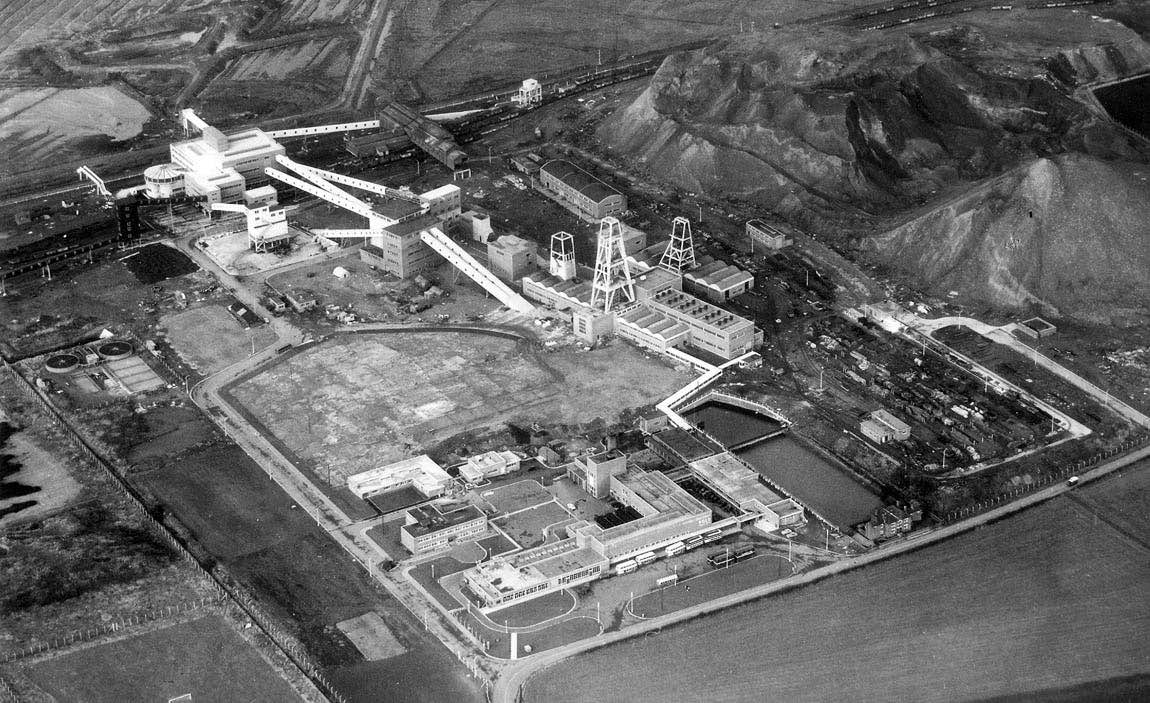 And Miners Union secretary Jim Dowd from Bold Colliery (pictured above) said: "We feel that if you take this service away you're penalising our people. In the event of being injured they've got to go further afield and that also affects their next of kin." And as to the proposed closure of Haydock Hospital, the Rev Arthur Huyton said: "Its closure would be a dreadful mistake and a betrayal of the people who subscribed to build and maintain it."
On the morning of the 26th what was described as a "giant plastic pressure vessel", that was believed to be the heaviest in the world, took to the road. Escorted by the police, the 20-ton vessel, 30 feet long and 13 feet wide, was taken from Plastics Designs and Engineers on the Parr Industrial Estate to a Runcorn chemical firm. The vessel had taken 8 to 10 weeks to build and was designed to hold chemicals.
Later that day Tom Harvey was elected as the new mayor of St Helens. Tom from Moss Bank was also a magistrate and a former commercial traveller. The leader of the council, Len Williams, said Councillor Harvey richly deserved the mayoralty for all his hard work. Speedboats had been allowed to use Carr Mill Dam since 1930 but they were becoming more powerful and local residents were getting sick of the din. In 1973 the Reporter had described how an action committee was being set up to organise a mass petition with the aim of getting powerboats banned. Wally Wainwright of Hawes Avenue overlooking the dam said at the time:
"Boats are being raced every weekend and practically every day during the week. Engines are being revved up at six o’clock in the morning and we can hear them into the night. They even use arc lamps and race round the dam at top speeds so that the noise is deafening. I'm a shift worker and getting to sleep is impossible. I also use the dam to fish and the anglers are getting no peace at all." In response the Lancashire Power Boats Association said the complainants were exaggerating the noise levels.
On the 28th of this week the Reporter described how St Helens Council's Public Health Inspector had attended a power boat meeting last weekend and disqualified some entrants from a national event for being too noisy on practice runs. Five of the fourteen boats had not been allowed to compete on Carr Mill Dam after exceeding the 85-decibel limit.
Cllr Pat Ashton was a long time critic of the boats who had been leading a campaign to ban them from Carr Mill and he told the Reporter: "The people from that area need protection. They even have to close their windows to listen to the television. The power boats have driven away all wild life from the Dam, and now there are no swans, and fishing has been ruined. I want the Noise Abatement Act brought to Carr Mill Dam, and until then the Labour Party at Moss Bank will continue to agitate."
The Reporter also described how the number of women with drink problems in St Helens had soared to four times what it had been ten years before. Bill Kenyon, director of Merseyside Council on Alcoholism, said it was now more socially acceptable for women to go into pubs and drink. He said many pubs had also been smartened up and had gone away from the old sawdust and spittoon image and with women now receiving more wages through equal pay legislation, they had more money to spend on drink.
The influential National Council For Civil Liberties had earlier in the year made some extremely controversial proposals for changes to Britain's sex laws. They included lowering the age of consent generally to 14 and as low as 10 when both partners were under 14. The Reporter described how Women's Institute leaders in St Helens had attacked the moves and next week would travel to London for the annual meeting of the National Federation of Women's Institute.
There, they would back a motion urging the government to reject the proposals. A local spokesman for the WI told the Reporter: "Although a significant minority of young people are involved in sexual activity, and even though there is a reluctance to enforce the law in all cases, there are some people who feel the age of consent should be retained at 16 to protect the majority of young girls."
David Lawrenson began an article in the Reporter with these words: "A town of despair and hardship – that is the face of St. Helens in 1976. The economic depression has hit the town hard, and in its wake has left a whole host of social problems."
And among those trying to help those in despair were the Samaritans who were appealing for more volunteers to join their ranks. A spokesman said: "We are being flooded with calls from people in St. Helens and we just don't have the staff to cope." High unemployment with the resulting mountains of bills was blamed for many of the issues.
I wonder what the crime detection rate is in St Helens now? One thing's for certain, it won't be anything like 42%, which was the level it was in 1976. Chief Superintendent Jack Watson proudly announced that figure to the Reporter and said the town now had the third highest crime-solving rate on Merseyside. The amount of detection had increased by nearly 10% over the previous year, which Chief Superintendent Watson said had been largely down to an increase in manpower, with 34 officers now working in CID.
However, St Helens' top policeman was not so happy with traders' burglar alarms that were directly linked to the police station, as he said 97% of such silent alarm calls turned out to be "wild goose chases". As a result the chief superintendent revealed that the police might have to consider cutting burglar alarm connections to the station if time-consuming false alarms continued.
The 1970s was, of course, a time when many people did not have phones in their own homes and public telephone boxes were widely used instead. The Reporter described how Rainford Parish Councillor Pat Manchester had taken up the cudgels for a number of pensioners at Rainford Junction who were upset at losing their telephone lifeline.
Upon visiting a relative in Bushey Lane, Pat described how she had been bombarded with complaints from residents about the GPO re-siting a telephone box away from the street. It had been moved half-a-mile to the outside of the new post office and the councillor was now battling for its return, after residents expressed concerns about the possibility of delays if an emergency arose.
Throughout this week 200 employees at the Sperryn gas appliance factory in Delta Road in St Helens had been out on strike. The workers had downed tools after management had proposed carrying out random transfers of some assembly staff into the firm's machine and press shops to fill vacancies.
And finally, on the 30th the ABC Savoy cinema replaced 'The Likely Lads' with Disney's 'Jungle Book'. I wonder how many times that has been screened in St Helens? And the Capitol was showing 'Jaws' for the first time after its record-breaking run earlier in the year at the Savoy.
St Helens Reporter courtesy St Helens Archive Service at Eccleston Library
Next Week's stories will include the fire at Everson's in Westfield Street, the clogs being worn at United Glass, the vandalism on new build housing estates, Pimblett's no smoking bonus for their employees and an update on one-man buses.
The Reporter had recently described how a "storm of protest" was gathering over "shock proposals" to close St Helens Hospital's A&E department at night. That was through low patient numbers with no attendances at all on some nights between midnight and 8 am. Miners were particularly concerned about the closure move in case of accidents occurring.
As well as that issue, the Area Health Authority were considering closing Haydock Cottage Hospital. A report presented to the members of the authority had revealed that it was costing £14 a week more to treat patients at Haydock rather than at Whiston, with the former considered too small to provide services at a reasonable cost.
But closing a hospital or overnight emergency facility for financial reasons was a red rag to a bull for NHS workers and their supporters and on the 25th at a meeting held at St Helens Town Hall much anger was ventilated. The packed audience of nurses, miners, patients, doctors and councillors heard the chairman of the Community Health Council criticise the proposals calling them vital services that were going to be removed.
One Sutton speaker said that more than half of those who worked at places like United Glass or British Sidac undertook shift work and wondered if the St Helens Hospital overnight closure went ahead, what would happen if an incident like the Flixborough disaster occurred. The chemical plant explosion in Lincolnshire had in 1974 killed 28 people and seriously injured 36 others.
On the morning of the 26th what was described as a "giant plastic pressure vessel", that was believed to be the heaviest in the world, took to the road. Escorted by the police, the 20-ton vessel, 30 feet long and 13 feet wide, was taken from Plastics Designs and Engineers on the Parr Industrial Estate to a Runcorn chemical firm. The vessel had taken 8 to 10 weeks to build and was designed to hold chemicals.
Later that day Tom Harvey was elected as the new mayor of St Helens. Tom from Moss Bank was also a magistrate and a former commercial traveller. The leader of the council, Len Williams, said Councillor Harvey richly deserved the mayoralty for all his hard work.
"Boats are being raced every weekend and practically every day during the week. Engines are being revved up at six o’clock in the morning and we can hear them into the night. They even use arc lamps and race round the dam at top speeds so that the noise is deafening. I'm a shift worker and getting to sleep is impossible. I also use the dam to fish and the anglers are getting no peace at all." In response the Lancashire Power Boats Association said the complainants were exaggerating the noise levels.
On the 28th of this week the Reporter described how St Helens Council's Public Health Inspector had attended a power boat meeting last weekend and disqualified some entrants from a national event for being too noisy on practice runs. Five of the fourteen boats had not been allowed to compete on Carr Mill Dam after exceeding the 85-decibel limit.
Cllr Pat Ashton was a long time critic of the boats who had been leading a campaign to ban them from Carr Mill and he told the Reporter: "The people from that area need protection. They even have to close their windows to listen to the television. The power boats have driven away all wild life from the Dam, and now there are no swans, and fishing has been ruined. I want the Noise Abatement Act brought to Carr Mill Dam, and until then the Labour Party at Moss Bank will continue to agitate."
The Reporter also described how the number of women with drink problems in St Helens had soared to four times what it had been ten years before. Bill Kenyon, director of Merseyside Council on Alcoholism, said it was now more socially acceptable for women to go into pubs and drink. He said many pubs had also been smartened up and had gone away from the old sawdust and spittoon image and with women now receiving more wages through equal pay legislation, they had more money to spend on drink.
The influential National Council For Civil Liberties had earlier in the year made some extremely controversial proposals for changes to Britain's sex laws. They included lowering the age of consent generally to 14 and as low as 10 when both partners were under 14. The Reporter described how Women's Institute leaders in St Helens had attacked the moves and next week would travel to London for the annual meeting of the National Federation of Women's Institute.
There, they would back a motion urging the government to reject the proposals. A local spokesman for the WI told the Reporter: "Although a significant minority of young people are involved in sexual activity, and even though there is a reluctance to enforce the law in all cases, there are some people who feel the age of consent should be retained at 16 to protect the majority of young girls."
David Lawrenson began an article in the Reporter with these words: "A town of despair and hardship – that is the face of St. Helens in 1976. The economic depression has hit the town hard, and in its wake has left a whole host of social problems."
And among those trying to help those in despair were the Samaritans who were appealing for more volunteers to join their ranks. A spokesman said: "We are being flooded with calls from people in St. Helens and we just don't have the staff to cope." High unemployment with the resulting mountains of bills was blamed for many of the issues.
I wonder what the crime detection rate is in St Helens now? One thing's for certain, it won't be anything like 42%, which was the level it was in 1976. Chief Superintendent Jack Watson proudly announced that figure to the Reporter and said the town now had the third highest crime-solving rate on Merseyside. The amount of detection had increased by nearly 10% over the previous year, which Chief Superintendent Watson said had been largely down to an increase in manpower, with 34 officers now working in CID.
However, St Helens' top policeman was not so happy with traders' burglar alarms that were directly linked to the police station, as he said 97% of such silent alarm calls turned out to be "wild goose chases". As a result the chief superintendent revealed that the police might have to consider cutting burglar alarm connections to the station if time-consuming false alarms continued.
The 1970s was, of course, a time when many people did not have phones in their own homes and public telephone boxes were widely used instead. The Reporter described how Rainford Parish Councillor Pat Manchester had taken up the cudgels for a number of pensioners at Rainford Junction who were upset at losing their telephone lifeline.
Upon visiting a relative in Bushey Lane, Pat described how she had been bombarded with complaints from residents about the GPO re-siting a telephone box away from the street. It had been moved half-a-mile to the outside of the new post office and the councillor was now battling for its return, after residents expressed concerns about the possibility of delays if an emergency arose.
Throughout this week 200 employees at the Sperryn gas appliance factory in Delta Road in St Helens had been out on strike. The workers had downed tools after management had proposed carrying out random transfers of some assembly staff into the firm's machine and press shops to fill vacancies.
And finally, on the 30th the ABC Savoy cinema replaced 'The Likely Lads' with Disney's 'Jungle Book'. I wonder how many times that has been screened in St Helens? And the Capitol was showing 'Jaws' for the first time after its record-breaking run earlier in the year at the Savoy.
St Helens Reporter courtesy St Helens Archive Service at Eccleston Library
Next Week's stories will include the fire at Everson's in Westfield Street, the clogs being worn at United Glass, the vandalism on new build housing estates, Pimblett's no smoking bonus for their employees and an update on one-man buses.
This week's many stories include the protest meeting over plans to close St Helens Hospital's A&E at night, the campaign against powerboats on Carr Mill Dam, St Helens is described as a town of despair and hardship, the row over a telephone box at Rainford Junction and St Helens Police celebrate their increasing crime detection rate.
The Reporter had recently described how a "storm of protest" was gathering over "shock proposals" to close St Helens Hospital's A&E department at night.
That was through low patient numbers with no attendances at all on some nights between midnight and 8 am.
Miners were particularly concerned about the closure move in case of accidents occurring.
As well as that issue, the Area Health Authority were considering closing Haydock Cottage Hospital.
A report presented to the members of the authority had revealed that it was costing £14 a week more to treat patients at Haydock rather than at Whiston, with the former considered too small to provide services at a reasonable cost.
But closing a hospital or overnight emergency facility for financial reasons was a red rag to a bull for NHS workers and their supporters and on the 25th at a meeting held at St Helens Town Hall much anger was ventilated.
The packed audience of nurses, miners, patients, doctors and councillors heard the chairman of the Community Health Council criticise the proposals calling them vital services that were going to be removed.
One Sutton speaker said that more than half of those who worked at places like United Glass or British Sidac undertook shift work and wondered if the St Helens Hospital overnight closure went ahead, what would happen if an incident like the Flixborough disaster occurred.
The chemical plant explosion in Lincolnshire had in 1974 killed 28 people and seriously injured 36 others.
And Miners Union secretary Jim Dowd from Bold Colliery (pictured above) said:
"We feel that if you take this service away you're penalising our people. In the event of being injured they've got to go further afield and that also affects their next of kin."
And as to the proposed closure of Haydock Hospital, the Rev Arthur Huyton said:
"Its closure would be a dreadful mistake and a betrayal of the people who subscribed to build and maintain it."
On the morning of the 26th what was described as a "giant plastic pressure vessel", that was believed to be the heaviest in the world, took to the road.
Escorted by the police, the 20-ton vessel, 30 feet long and 13 feet wide, was taken from Plastics Designs and Engineers on the Parr Industrial Estate to a Runcorn chemical firm.
The vessel had taken 8 to 10 weeks to build and was designed to hold chemicals.
Later that day Tom Harvey was elected as the new mayor of St Helens. Tom from Moss Bank was also a magistrate and a former commercial traveller.
The leader of the council, Len Williams, said Councillor Harvey richly deserved the mayoralty for all his hard work.
Speedboats had been allowed to use Carr Mill Dam since 1930 but they were becoming more powerful and local residents were getting sick of the din.
In 1973 the Reporter had described how an action committee was being set up to organise a mass petition with the aim of getting powerboats banned.
Wally Wainwright of Hawes Avenue overlooking the dam said at the time:
"Boats are being raced every weekend and practically every day during the week. Engines are being revved up at six o’clock in the morning and we can hear them into the night.
"They even use arc lamps and race round the dam at top speeds so that the noise is deafening. I'm a shift worker and getting to sleep is impossible. I also use the dam to fish and the anglers are getting no peace at all."
In response the Lancashire Power Boats Association said the complainants were exaggerating the noise levels.
On the 28th of this week the Reporter described how St Helens Council's Public Health Inspector had attended a power boat meeting last weekend and disqualified some entrants from a national event for being too noisy on practice runs.
Five of the fourteen boats had not been allowed to compete on Carr Mill Dam after exceeding the 85-decibel limit.
Cllr Pat Ashton was a long time critic of the boats who had been leading a campaign to ban them from Carr Mill and he told the Reporter:
"The people from that area need protection. They even have to close their windows to listen to the television.
"The power boats have driven away all wild life from the Dam, and now there are no swans, and fishing has been ruined.
"I want the Noise Abatement Act brought to Carr Mill Dam, and until then the Labour Party at Moss Bank will continue to agitate."
The Reporter also described how the number of women with drink problems in St Helens had soared to four times what it had been ten years before.
Bill Kenyon, director of Merseyside Council on Alcoholism, said it was now more socially acceptable for women to go into pubs and drink.
He said many pubs had also been smartened up and had gone away from the old sawdust and spittoon image and with women now receiving more wages through equal pay legislation, they had more money to spend on drink.
The influential National Council For Civil Liberties had earlier in the year made some extremely controversial proposals for changes to Britain's sex laws.
They included lowering the age of consent generally to 14 and as low as 10 when both partners were under 14.
The Reporter described how Women's Institute leaders in St Helens had attacked the moves and next week would travel to London for the annual meeting of the National Federation of Women's Institute.
There, they would back a motion urging the government to reject the proposals. A local spokesman for the WI told the Reporter:
"Although a significant minority of young people are involved in sexual activity, and even though there is a reluctance to enforce the law in all cases, there are some people who feel the age of consent should be retained at 16 to protect the majority of young girls."
David Lawrenson began an article in the Reporter with these words:
"A town of despair and hardship – that is the face of St. Helens in 1976. The economic depression has hit the town hard, and in its wake has left a whole host of social problems."
And among those trying to help those in despair were the Samaritans who were appealing for more volunteers to join their ranks.
A spokesman said: "We are being flooded with calls from people in St. Helens and we just don't have the staff to cope."
High unemployment with the resulting mountains of bills was blamed for many of the issues.
I wonder what the crime detection rate is in St Helens now? One thing's for certain, it won't be anything like 42%, which was the level it was in 1976.
Chief Superintendent Jack Watson proudly announced that figure to the Reporter and said the town now had the third highest crime-solving rate on Merseyside.
The amount of detection had increased by nearly 10% over the previous year, which Chief Superintendent Watson said had been largely down to an increase in manpower, with 34 officers now working in CID.
However, St Helens' top policeman was not so happy with traders' burglar alarms that were directly linked to the police station, as he said 97% of such silent alarm calls turned out to be "wild goose chases".
As a result the chief superintendent revealed that the police might have to consider cutting burglar alarm connections to the station if time-consuming false alarms continued.
The 1970s was, of course, a time when many people did not have phones in their own homes and public telephone boxes were widely used instead.
The Reporter described how Rainford Parish Councillor Pat Manchester had taken up the cudgels for a number of pensioners at Rainford Junction who were upset at losing their telephone lifeline.
Upon visiting a relative in Bushey Lane, Pat described how she had been bombarded with complaints from residents about the GPO re-siting a telephone box away from the street.
It had been moved half-a-mile to the outside of the new post office and the councillor was now battling for its return, after residents expressed concerns about the possibility of delays if an emergency arose.
Throughout this week 200 employees at the Sperryn gas appliance factory in Delta Road in St Helens had been out on strike.
The workers had downed tools after management had proposed carrying out random transfers of some assembly staff into the firm's machine and press shops to fill vacancies.
And finally, on the 30th the ABC Savoy cinema replaced 'The Likely Lads' with Disney's 'Jungle Book'. I wonder how many times that has been screened in St Helens?
And the Capitol was showing 'Jaws' for the first time after its record-breaking run earlier in the year at the Savoy.
St Helens Reporter courtesy St Helens Archive Service at Eccleston Library
Next Week's stories will include the fire at Everson's in Westfield Street, the clogs being worn at United Glass, the vandalism on new build housing estates, Pimblett's no smoking bonus for their employees and an update on one-man buses.
The Reporter had recently described how a "storm of protest" was gathering over "shock proposals" to close St Helens Hospital's A&E department at night.
That was through low patient numbers with no attendances at all on some nights between midnight and 8 am.
Miners were particularly concerned about the closure move in case of accidents occurring.
As well as that issue, the Area Health Authority were considering closing Haydock Cottage Hospital.
A report presented to the members of the authority had revealed that it was costing £14 a week more to treat patients at Haydock rather than at Whiston, with the former considered too small to provide services at a reasonable cost.
But closing a hospital or overnight emergency facility for financial reasons was a red rag to a bull for NHS workers and their supporters and on the 25th at a meeting held at St Helens Town Hall much anger was ventilated.
The packed audience of nurses, miners, patients, doctors and councillors heard the chairman of the Community Health Council criticise the proposals calling them vital services that were going to be removed.
One Sutton speaker said that more than half of those who worked at places like United Glass or British Sidac undertook shift work and wondered if the St Helens Hospital overnight closure went ahead, what would happen if an incident like the Flixborough disaster occurred.
The chemical plant explosion in Lincolnshire had in 1974 killed 28 people and seriously injured 36 others.
"We feel that if you take this service away you're penalising our people. In the event of being injured they've got to go further afield and that also affects their next of kin."
And as to the proposed closure of Haydock Hospital, the Rev Arthur Huyton said:
"Its closure would be a dreadful mistake and a betrayal of the people who subscribed to build and maintain it."
On the morning of the 26th what was described as a "giant plastic pressure vessel", that was believed to be the heaviest in the world, took to the road.
Escorted by the police, the 20-ton vessel, 30 feet long and 13 feet wide, was taken from Plastics Designs and Engineers on the Parr Industrial Estate to a Runcorn chemical firm.
The vessel had taken 8 to 10 weeks to build and was designed to hold chemicals.
Later that day Tom Harvey was elected as the new mayor of St Helens. Tom from Moss Bank was also a magistrate and a former commercial traveller.
The leader of the council, Len Williams, said Councillor Harvey richly deserved the mayoralty for all his hard work.
In 1973 the Reporter had described how an action committee was being set up to organise a mass petition with the aim of getting powerboats banned.
Wally Wainwright of Hawes Avenue overlooking the dam said at the time:
"Boats are being raced every weekend and practically every day during the week. Engines are being revved up at six o’clock in the morning and we can hear them into the night.
"They even use arc lamps and race round the dam at top speeds so that the noise is deafening. I'm a shift worker and getting to sleep is impossible. I also use the dam to fish and the anglers are getting no peace at all."
In response the Lancashire Power Boats Association said the complainants were exaggerating the noise levels.
On the 28th of this week the Reporter described how St Helens Council's Public Health Inspector had attended a power boat meeting last weekend and disqualified some entrants from a national event for being too noisy on practice runs.
Five of the fourteen boats had not been allowed to compete on Carr Mill Dam after exceeding the 85-decibel limit.
Cllr Pat Ashton was a long time critic of the boats who had been leading a campaign to ban them from Carr Mill and he told the Reporter:
"The people from that area need protection. They even have to close their windows to listen to the television.
"The power boats have driven away all wild life from the Dam, and now there are no swans, and fishing has been ruined.
"I want the Noise Abatement Act brought to Carr Mill Dam, and until then the Labour Party at Moss Bank will continue to agitate."
The Reporter also described how the number of women with drink problems in St Helens had soared to four times what it had been ten years before.
Bill Kenyon, director of Merseyside Council on Alcoholism, said it was now more socially acceptable for women to go into pubs and drink.
He said many pubs had also been smartened up and had gone away from the old sawdust and spittoon image and with women now receiving more wages through equal pay legislation, they had more money to spend on drink.
The influential National Council For Civil Liberties had earlier in the year made some extremely controversial proposals for changes to Britain's sex laws.
They included lowering the age of consent generally to 14 and as low as 10 when both partners were under 14.
The Reporter described how Women's Institute leaders in St Helens had attacked the moves and next week would travel to London for the annual meeting of the National Federation of Women's Institute.
There, they would back a motion urging the government to reject the proposals. A local spokesman for the WI told the Reporter:
"Although a significant minority of young people are involved in sexual activity, and even though there is a reluctance to enforce the law in all cases, there are some people who feel the age of consent should be retained at 16 to protect the majority of young girls."
David Lawrenson began an article in the Reporter with these words:
"A town of despair and hardship – that is the face of St. Helens in 1976. The economic depression has hit the town hard, and in its wake has left a whole host of social problems."
And among those trying to help those in despair were the Samaritans who were appealing for more volunteers to join their ranks.
A spokesman said: "We are being flooded with calls from people in St. Helens and we just don't have the staff to cope."
High unemployment with the resulting mountains of bills was blamed for many of the issues.
I wonder what the crime detection rate is in St Helens now? One thing's for certain, it won't be anything like 42%, which was the level it was in 1976.
Chief Superintendent Jack Watson proudly announced that figure to the Reporter and said the town now had the third highest crime-solving rate on Merseyside.
The amount of detection had increased by nearly 10% over the previous year, which Chief Superintendent Watson said had been largely down to an increase in manpower, with 34 officers now working in CID.
However, St Helens' top policeman was not so happy with traders' burglar alarms that were directly linked to the police station, as he said 97% of such silent alarm calls turned out to be "wild goose chases".
As a result the chief superintendent revealed that the police might have to consider cutting burglar alarm connections to the station if time-consuming false alarms continued.
The 1970s was, of course, a time when many people did not have phones in their own homes and public telephone boxes were widely used instead.
The Reporter described how Rainford Parish Councillor Pat Manchester had taken up the cudgels for a number of pensioners at Rainford Junction who were upset at losing their telephone lifeline.
Upon visiting a relative in Bushey Lane, Pat described how she had been bombarded with complaints from residents about the GPO re-siting a telephone box away from the street.
It had been moved half-a-mile to the outside of the new post office and the councillor was now battling for its return, after residents expressed concerns about the possibility of delays if an emergency arose.
Throughout this week 200 employees at the Sperryn gas appliance factory in Delta Road in St Helens had been out on strike.
The workers had downed tools after management had proposed carrying out random transfers of some assembly staff into the firm's machine and press shops to fill vacancies.
And finally, on the 30th the ABC Savoy cinema replaced 'The Likely Lads' with Disney's 'Jungle Book'. I wonder how many times that has been screened in St Helens?
And the Capitol was showing 'Jaws' for the first time after its record-breaking run earlier in the year at the Savoy.
St Helens Reporter courtesy St Helens Archive Service at Eccleston Library
Next Week's stories will include the fire at Everson's in Westfield Street, the clogs being worn at United Glass, the vandalism on new build housing estates, Pimblett's no smoking bonus for their employees and an update on one-man buses.