
150 YEARS AGO THIS WEEK 16 - 22 NOVEMBER 1876
This week's many stories include the Sutton man's dreadful death from rabies, the crackdown on milk adulteration, the improvidence of the lower classes, Holy Cross Church's day of sermons and Lowe House Church's negro entertainments.
We begin with the major news story of the week – the death of Peter Milrees Cross from hydrophobia, aka rabies. The dreadful disease could have a very lengthy incubation period and the 47-year-old from Sutton had been bitten on the leg by a little dog some nine or ten months before. Peter immediately had his wound treated and in a short while it had healed up.
But in October he began to complain of pains in his head. These increased in intensity and about ten days before his death, he could no longer go to his work. Peter was also unable to eat much in the way of food and the mention of water was said to throw him into convulsions. Drs Twyford and Martin attended him and diagnosed hydrophobia but could do little to ease his suffering.
This was the second death from rabies in 1876, as 5-year-old Charles Stubbs was bitten by a rabid dog in February while on a visit to his uncle in Hardshaw Street and died in April. The St Helens Newspaper wrote at the time: "…his suffering being very intense and most heartrendering to witness".
On the 16th the latest meeting of the Prescot Guardians was held. These were the men who oversaw Whiston Workhouse and supervised the payments to paupers living in the community that was known as outdoor relief. A conference that had been held in Manchester in October had produced a number of rules that applied to such payments.
A guardian called Edward Birch was in favour of them being adopted in St Helens and Prescot and said that it must have been evident to those that had drawn up the rules that there was a great deal of improvidence among the lower classes. In other words, people did not put money aside for a rainy day or insure themselves.
Mr Birch said: "Directly a few days sickness or want of employment occurred, they were destitute. In consequence, therefore, of the guardians being suspicious, through having so many cases of imposition, they sometimes treated cases in a manner which was considered harsh and cruel." He appeared to be saying that as many people were trying it on when claiming the meagre relief payments, genuine claimants could be treated badly.
This week a meeting of the Rainford Local Board took place. The men who administered the township's affairs heard they were embroiled in two legal battles. Victoria Colliery in Old Lane was accused of causing land subsidence at Cheapside which had broken pipes and damaged drains – but the firm was denying responsibility. That was the usual default position of coal mine owners in the 19th century.
Taking court action against the firm might not fix the problem in the short term as an appeal could be made and the process dragged out. And so the Board decided to give them 14 days notice to repair the road and if they failed to do it, the Board would put it right themselves and send Victoria Colliery an invoice for the cost. If they still disputed responsibility then a court battle could begin.
In the second case Thomas Millett had claimed compensation for damage sustained to his horse and conveyance whilst driving in Mossborough Lane in Rainford through what was described as the negligence of the Board's servants. Their Law Clerk had unusually advised that the claim be settled at a cost of £31 10 shillings.
The meeting's Chairman said the amount was large but at the same time he could not see how they could get off paying. One member commented how for that amount a horse and trap could be bought but the meeting decided to let the Law Clerk settle the case.
In the early 20th century checks on the quality of milk in St Helens were regularly performed, with the producers at farms and dairies being the ones that were mainly targeted. But what appears to have been the start of the first ever crackdown on milk adulteration in the town was reported this week with retailers the ones held to account.
In St Helens Petty Sessions the head of the town's police force, Supt James Ludlam, explained to the magistrates that they had received several complaints as to the bad quality of milk. And so at the end of October, he had made his first ever spot checks. The police chief was also in charge of weights and measures and described how his first port of call had been to visit the premises of Martha Halsall.
She was a milk dealer in Traverse Street in Parr and the superintendent explained how the pint he had obtained had been sent for analysis to Dr Campbell Brown, the public analyst for Liverpool. He had certified that the sample contained 14 parts of water to every 100 parts of milk. Martha Halsall told the court that if there was any water in the milk it must have been put in before it was sent to her, as she had not interfered with it.
That was almost certainly true, as she had notified the farmer of what had happened and she said the quality of milk had since improved. The Chairman of the Bench pointed out to Mrs Halsall that although it was possible the milk had been adulterated before being sent to her, she was still the responsible party and had rendered herself liable to a penalty of £20.
But as they understood she was not in very good circumstances, they would make allowances and deal leniently with her. She was fined £1 together with 12 shillings costs. Margaret Burgess of Cotham Street was next in the dock. The public analyst had found that the milk sample taken from her premises contained 17 parts of water. She insisted that she sold the milk in the same condition that she received it and Mrs Burgess was also fined £1.
Last week I reported how the Catholic Association for the Suppression of Drunkenness had presented a concert by The Amateur Minstrel and Concert Union in the Volunteer Hall. The troupe was new to me and I wondered if they were a blackface group but decided not to speculate.
However, any doubt was erased this week by an advert in the St Helens Newspaper for the annual Lowe House Catholic Tea Party. This raised funds for the church's boys and girls' schools. Usually the tea party was coupled with a dance but this year after the nosh up, The Amateur Minstrel and Concert Union would be performing a Grand Promenade Concert.
And this is how they were advertised, with a bit of censorship from myself: "Negro Entertainments. Consisting of a selection of Songs (comic and sentimental), N***er Dialogues, Jokes, Dances, Stump Orations, Burlesques, &c." And they had some musicians from Liverpool to back them, including two men called Tipping and Ellison who would be playing the bones. The latter would in those days have been real animal bones used to create a rhythmic percussion sound.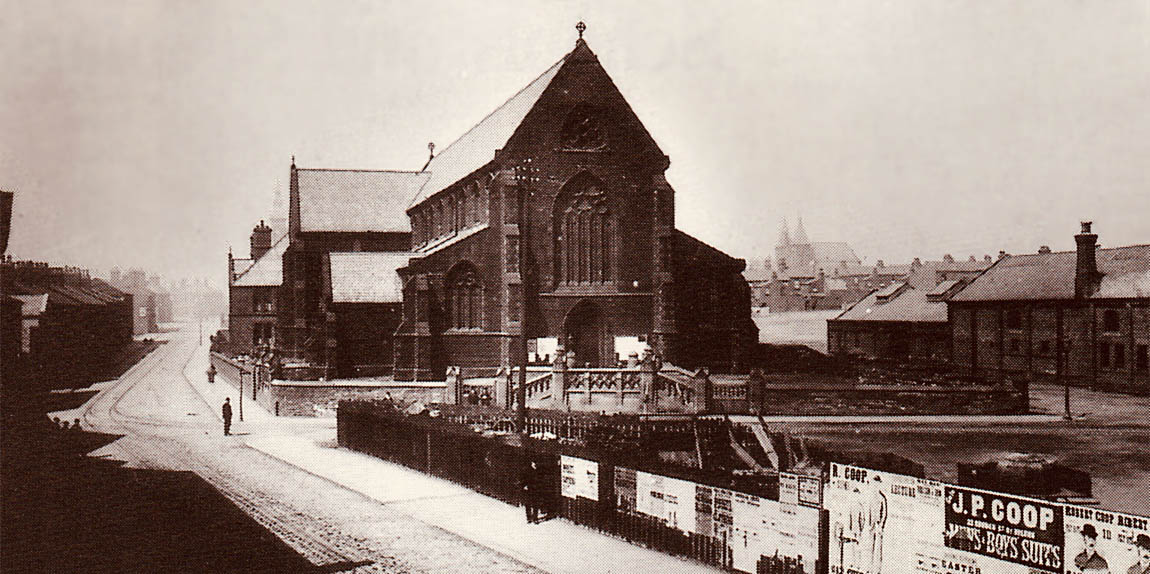 On the 19th the annual sermons in connection with the choir at Holy Cross Church (pictured above) were held. These services raised funds for the choir's outing etc. In the morning High Mass was sung by one of the German Fathers that was at present stationed at the Catholic chapel at Portico.
In 1871 the Prussian Chancellor Otto von Bismarck had announced the formation of the German Empire and began a programme of religious discrimination. As a result many German Catholics chose – or felt forced – to leave the country and some settled in Ditton.
St Helens Newspaper courtesy St Helens Archive Service at Eccleston Library
Next Week's stories will include the fire at the Greenbank Alkali Company, the fireworks that were thrown into a beerhouse, the drunken coal dealer in Liverpool Road and the Sefton Arms and White Hart both suffer window smashing.
We begin with the major news story of the week – the death of Peter Milrees Cross from hydrophobia, aka rabies. The dreadful disease could have a very lengthy incubation period and the 47-year-old from Sutton had been bitten on the leg by a little dog some nine or ten months before. Peter immediately had his wound treated and in a short while it had healed up.
But in October he began to complain of pains in his head. These increased in intensity and about ten days before his death, he could no longer go to his work. Peter was also unable to eat much in the way of food and the mention of water was said to throw him into convulsions. Drs Twyford and Martin attended him and diagnosed hydrophobia but could do little to ease his suffering.
This was the second death from rabies in 1876, as 5-year-old Charles Stubbs was bitten by a rabid dog in February while on a visit to his uncle in Hardshaw Street and died in April. The St Helens Newspaper wrote at the time: "…his suffering being very intense and most heartrendering to witness".
On the 16th the latest meeting of the Prescot Guardians was held. These were the men who oversaw Whiston Workhouse and supervised the payments to paupers living in the community that was known as outdoor relief. A conference that had been held in Manchester in October had produced a number of rules that applied to such payments.
A guardian called Edward Birch was in favour of them being adopted in St Helens and Prescot and said that it must have been evident to those that had drawn up the rules that there was a great deal of improvidence among the lower classes. In other words, people did not put money aside for a rainy day or insure themselves.
Mr Birch said: "Directly a few days sickness or want of employment occurred, they were destitute. In consequence, therefore, of the guardians being suspicious, through having so many cases of imposition, they sometimes treated cases in a manner which was considered harsh and cruel." He appeared to be saying that as many people were trying it on when claiming the meagre relief payments, genuine claimants could be treated badly.
This week a meeting of the Rainford Local Board took place. The men who administered the township's affairs heard they were embroiled in two legal battles. Victoria Colliery in Old Lane was accused of causing land subsidence at Cheapside which had broken pipes and damaged drains – but the firm was denying responsibility. That was the usual default position of coal mine owners in the 19th century.
Taking court action against the firm might not fix the problem in the short term as an appeal could be made and the process dragged out. And so the Board decided to give them 14 days notice to repair the road and if they failed to do it, the Board would put it right themselves and send Victoria Colliery an invoice for the cost. If they still disputed responsibility then a court battle could begin.
In the second case Thomas Millett had claimed compensation for damage sustained to his horse and conveyance whilst driving in Mossborough Lane in Rainford through what was described as the negligence of the Board's servants. Their Law Clerk had unusually advised that the claim be settled at a cost of £31 10 shillings.
The meeting's Chairman said the amount was large but at the same time he could not see how they could get off paying. One member commented how for that amount a horse and trap could be bought but the meeting decided to let the Law Clerk settle the case.
In the early 20th century checks on the quality of milk in St Helens were regularly performed, with the producers at farms and dairies being the ones that were mainly targeted. But what appears to have been the start of the first ever crackdown on milk adulteration in the town was reported this week with retailers the ones held to account.
In St Helens Petty Sessions the head of the town's police force, Supt James Ludlam, explained to the magistrates that they had received several complaints as to the bad quality of milk. And so at the end of October, he had made his first ever spot checks. The police chief was also in charge of weights and measures and described how his first port of call had been to visit the premises of Martha Halsall.
She was a milk dealer in Traverse Street in Parr and the superintendent explained how the pint he had obtained had been sent for analysis to Dr Campbell Brown, the public analyst for Liverpool. He had certified that the sample contained 14 parts of water to every 100 parts of milk. Martha Halsall told the court that if there was any water in the milk it must have been put in before it was sent to her, as she had not interfered with it.
That was almost certainly true, as she had notified the farmer of what had happened and she said the quality of milk had since improved. The Chairman of the Bench pointed out to Mrs Halsall that although it was possible the milk had been adulterated before being sent to her, she was still the responsible party and had rendered herself liable to a penalty of £20.
But as they understood she was not in very good circumstances, they would make allowances and deal leniently with her. She was fined £1 together with 12 shillings costs. Margaret Burgess of Cotham Street was next in the dock. The public analyst had found that the milk sample taken from her premises contained 17 parts of water. She insisted that she sold the milk in the same condition that she received it and Mrs Burgess was also fined £1.
Last week I reported how the Catholic Association for the Suppression of Drunkenness had presented a concert by The Amateur Minstrel and Concert Union in the Volunteer Hall. The troupe was new to me and I wondered if they were a blackface group but decided not to speculate.
However, any doubt was erased this week by an advert in the St Helens Newspaper for the annual Lowe House Catholic Tea Party. This raised funds for the church's boys and girls' schools. Usually the tea party was coupled with a dance but this year after the nosh up, The Amateur Minstrel and Concert Union would be performing a Grand Promenade Concert.
And this is how they were advertised, with a bit of censorship from myself: "Negro Entertainments. Consisting of a selection of Songs (comic and sentimental), N***er Dialogues, Jokes, Dances, Stump Orations, Burlesques, &c." And they had some musicians from Liverpool to back them, including two men called Tipping and Ellison who would be playing the bones. The latter would in those days have been real animal bones used to create a rhythmic percussion sound.
In 1871 the Prussian Chancellor Otto von Bismarck had announced the formation of the German Empire and began a programme of religious discrimination. As a result many German Catholics chose – or felt forced – to leave the country and some settled in Ditton.
St Helens Newspaper courtesy St Helens Archive Service at Eccleston Library
Next Week's stories will include the fire at the Greenbank Alkali Company, the fireworks that were thrown into a beerhouse, the drunken coal dealer in Liverpool Road and the Sefton Arms and White Hart both suffer window smashing.
This week's many stories include the Sutton man's dreadful death from rabies, the crackdown on milk adulteration, the improvidence of the lower classes, Holy Cross Church's day of sermons and Lowe House Church's negro entertainments.
We begin with the major news story of the week – the death of Peter Milrees Cross from hydrophobia, aka rabies.
The dreadful disease could have a very lengthy incubation period and the 47-year-old from Sutton had been bitten on the leg by a little dog some nine or ten months before.
Peter immediately had his wound treated and in a short while it had healed up.
But in October he began to complain of pains in his head. These increased in intensity and about ten days before his death, he could no longer go to his work.
Peter was also unable to eat much in the way of food and the mention of water was said to throw him into convulsions.
Drs Twyford and Martin attended him and diagnosed hydrophobia but could do little to ease his suffering.
This was the second death from rabies in 1876, as 5-year-old Charles Stubbs was bitten by a rabid dog in February while on a visit to his uncle in Hardshaw Street and died in April.
The St Helens Newspaper wrote at the time: "…his suffering being very intense and most heartrendering to witness".
On the 16th the latest meeting of the Prescot Guardians was held. These were the men who oversaw Whiston Workhouse and supervised the payments to paupers living in the community that was known as outdoor relief.
A conference that had been held in Manchester in October had produced a number of rules that applied to such payments.
A guardian called Edward Birch was in favour of them being adopted in St Helens and Prescot and said that it must have been evident to those that had drawn up the rules that there was a great deal of improvidence among the lower classes.
In other words, people did not put money aside for a rainy day or insure themselves.
Mr Birch said: "Directly a few days sickness or want of employment occurred, they were destitute. In consequence, therefore, of the guardians being suspicious, through having so many cases of imposition, they sometimes treated cases in a manner which was considered harsh and cruel."
He appeared to be saying that as many people were trying it on when claiming the meagre relief payments, genuine claimants could be treated badly.
This week a meeting of the Rainford Local Board took place.
The men who administered the township's affairs heard they were embroiled in two legal battles.
Victoria Colliery in Old Lane was accused of causing land subsidence at Cheapside which had broken pipes and damaged drains – but the firm was denying responsibility.
That was the usual default position of coal mine owners in the 19th century.
Taking court action against the firm might not fix the problem in the short term as an appeal could be made and the process dragged out.
And so the Board decided to give them 14 days notice to repair the road and if they failed to do it, the Board would put it right themselves and send Victoria Colliery an invoice for the cost.
If they still disputed responsibility then a court battle could begin.
In the second case Thomas Millett had claimed compensation for damage sustained to his horse and conveyance whilst driving in Mossborough Lane in Rainford through what was described as the negligence of the Board's servants.
Their Law Clerk had unusually advised that the claim be settled at a cost of £31 10 shillings.
The meeting's Chairman said the amount was large but at the same time he could not see how they could get off paying.
One member commented how for that amount a horse and trap could be bought but the meeting decided to let the Law Clerk settle the case.
In the early 20th century checks on the quality of milk in St Helens were regularly performed, with the producers at farms and dairies being the ones that were mainly targeted.
But what appears to have been the start of the first ever crackdown on milk adulteration in the town was reported this week with retailers the ones held to account.
In St Helens Petty Sessions the head of the town's police force, Supt James Ludlam, explained to the magistrates that they had received several complaints as to the bad quality of milk.
And so at the end of October, he had made his first ever spot checks.
The police chief was also in charge of weights and measures and described how his first port of call had been to visit the premises of Martha Halsall.
She was a milk dealer in Traverse Street in Parr and the superintendent explained how the pint he had obtained had been sent for analysis to Dr Campbell Brown, the public analyst for Liverpool.
He had certified that the sample contained 14 parts of water to every 100 parts of milk.
Martha Halsall told the court that if there was any water in the milk it must have been put in before it was sent to her, as she had not interfered with it.
That was almost certainly true, as she had notified the farmer of what had happened and she said the quality of milk had since improved.
The Chairman of the Bench pointed out to Mrs Halsall that although it was possible the milk had been adulterated before being sent to her, she was still the responsible party and had rendered herself liable to a penalty of £20.
But as they understood she was not in very good circumstances, they would make allowances and deal leniently with her. She was fined £1 together with 12 shillings costs.
Margaret Burgess of Cotham Street was next in the dock. The public analyst had found that the milk sample taken from her premises contained 17 parts of water.
She insisted that she sold the milk in the same condition that she received it and Mrs Burgess was also fined £1.
Last week I reported how the Catholic Association for the Suppression of Drunkenness had presented a concert by The Amateur Minstrel and Concert Union in the Volunteer Hall.
The troupe was new to me and I wondered if they were a blackface group but decided not to speculate.
However, any doubt was erased this week by an advert in the St Helens Newspaper for the annual Lowe House Catholic Tea Party. This raised funds for the church's boys and girls' schools.
Usually the tea party was coupled with a dance but this year after the nosh up, The Amateur Minstrel and Concert Union would be performing a Grand Promenade Concert.
And this is how they were advertised, with a bit of censorship from myself:
"Negro Entertainments. Consisting of a selection of Songs (comic and sentimental), N***er Dialogues, Jokes, Dances, Stump Orations, Burlesques, &c."
And they had some musicians from Liverpool to back them, including two men called Tipping and Ellison who would be playing the bones.
The latter would in those days have been real animal bones used to create a rhythmic percussion sound.
On the 19th the annual sermons in connection with the choir at Holy Cross Church (pictured above) were held. These services raised funds for the choir's outing etc.
In the morning High Mass was sung by one of the German Fathers that was at present stationed at the Catholic chapel at Portico.
In 1871 the Prussian Chancellor Otto von Bismarck had announced the formation of the German Empire and began a programme of religious discrimination.
As a result many German Catholics chose – or felt forced – to leave the country and some settled in Ditton.
St Helens Newspaper courtesy St Helens Archive Service at Eccleston Library
Next Week's stories will include the fire at the Greenbank Alkali Company, the fireworks that were thrown into a beerhouse, the drunken coal dealer in Liverpool Road and the Sefton Arms and White Hart both suffer window smashing.
We begin with the major news story of the week – the death of Peter Milrees Cross from hydrophobia, aka rabies.
The dreadful disease could have a very lengthy incubation period and the 47-year-old from Sutton had been bitten on the leg by a little dog some nine or ten months before.
Peter immediately had his wound treated and in a short while it had healed up.
But in October he began to complain of pains in his head. These increased in intensity and about ten days before his death, he could no longer go to his work.
Peter was also unable to eat much in the way of food and the mention of water was said to throw him into convulsions.
Drs Twyford and Martin attended him and diagnosed hydrophobia but could do little to ease his suffering.
This was the second death from rabies in 1876, as 5-year-old Charles Stubbs was bitten by a rabid dog in February while on a visit to his uncle in Hardshaw Street and died in April.
The St Helens Newspaper wrote at the time: "…his suffering being very intense and most heartrendering to witness".
On the 16th the latest meeting of the Prescot Guardians was held. These were the men who oversaw Whiston Workhouse and supervised the payments to paupers living in the community that was known as outdoor relief.
A conference that had been held in Manchester in October had produced a number of rules that applied to such payments.
A guardian called Edward Birch was in favour of them being adopted in St Helens and Prescot and said that it must have been evident to those that had drawn up the rules that there was a great deal of improvidence among the lower classes.
In other words, people did not put money aside for a rainy day or insure themselves.
Mr Birch said: "Directly a few days sickness or want of employment occurred, they were destitute. In consequence, therefore, of the guardians being suspicious, through having so many cases of imposition, they sometimes treated cases in a manner which was considered harsh and cruel."
He appeared to be saying that as many people were trying it on when claiming the meagre relief payments, genuine claimants could be treated badly.
This week a meeting of the Rainford Local Board took place.
The men who administered the township's affairs heard they were embroiled in two legal battles.
Victoria Colliery in Old Lane was accused of causing land subsidence at Cheapside which had broken pipes and damaged drains – but the firm was denying responsibility.
That was the usual default position of coal mine owners in the 19th century.
Taking court action against the firm might not fix the problem in the short term as an appeal could be made and the process dragged out.
And so the Board decided to give them 14 days notice to repair the road and if they failed to do it, the Board would put it right themselves and send Victoria Colliery an invoice for the cost.
If they still disputed responsibility then a court battle could begin.
In the second case Thomas Millett had claimed compensation for damage sustained to his horse and conveyance whilst driving in Mossborough Lane in Rainford through what was described as the negligence of the Board's servants.
Their Law Clerk had unusually advised that the claim be settled at a cost of £31 10 shillings.
The meeting's Chairman said the amount was large but at the same time he could not see how they could get off paying.
One member commented how for that amount a horse and trap could be bought but the meeting decided to let the Law Clerk settle the case.
In the early 20th century checks on the quality of milk in St Helens were regularly performed, with the producers at farms and dairies being the ones that were mainly targeted.
But what appears to have been the start of the first ever crackdown on milk adulteration in the town was reported this week with retailers the ones held to account.
In St Helens Petty Sessions the head of the town's police force, Supt James Ludlam, explained to the magistrates that they had received several complaints as to the bad quality of milk.
And so at the end of October, he had made his first ever spot checks.
The police chief was also in charge of weights and measures and described how his first port of call had been to visit the premises of Martha Halsall.
She was a milk dealer in Traverse Street in Parr and the superintendent explained how the pint he had obtained had been sent for analysis to Dr Campbell Brown, the public analyst for Liverpool.
He had certified that the sample contained 14 parts of water to every 100 parts of milk.
Martha Halsall told the court that if there was any water in the milk it must have been put in before it was sent to her, as she had not interfered with it.
That was almost certainly true, as she had notified the farmer of what had happened and she said the quality of milk had since improved.
The Chairman of the Bench pointed out to Mrs Halsall that although it was possible the milk had been adulterated before being sent to her, she was still the responsible party and had rendered herself liable to a penalty of £20.
But as they understood she was not in very good circumstances, they would make allowances and deal leniently with her. She was fined £1 together with 12 shillings costs.
Margaret Burgess of Cotham Street was next in the dock. The public analyst had found that the milk sample taken from her premises contained 17 parts of water.
She insisted that she sold the milk in the same condition that she received it and Mrs Burgess was also fined £1.
Last week I reported how the Catholic Association for the Suppression of Drunkenness had presented a concert by The Amateur Minstrel and Concert Union in the Volunteer Hall.
The troupe was new to me and I wondered if they were a blackface group but decided not to speculate.
However, any doubt was erased this week by an advert in the St Helens Newspaper for the annual Lowe House Catholic Tea Party. This raised funds for the church's boys and girls' schools.
Usually the tea party was coupled with a dance but this year after the nosh up, The Amateur Minstrel and Concert Union would be performing a Grand Promenade Concert.
And this is how they were advertised, with a bit of censorship from myself:
"Negro Entertainments. Consisting of a selection of Songs (comic and sentimental), N***er Dialogues, Jokes, Dances, Stump Orations, Burlesques, &c."
And they had some musicians from Liverpool to back them, including two men called Tipping and Ellison who would be playing the bones.
The latter would in those days have been real animal bones used to create a rhythmic percussion sound.
In the morning High Mass was sung by one of the German Fathers that was at present stationed at the Catholic chapel at Portico.
In 1871 the Prussian Chancellor Otto von Bismarck had announced the formation of the German Empire and began a programme of religious discrimination.
As a result many German Catholics chose – or felt forced – to leave the country and some settled in Ditton.
St Helens Newspaper courtesy St Helens Archive Service at Eccleston Library
Next Week's stories will include the fire at the Greenbank Alkali Company, the fireworks that were thrown into a beerhouse, the drunken coal dealer in Liverpool Road and the Sefton Arms and White Hart both suffer window smashing.