
150 YEARS AGO THIS WEEK 6 - 12 APRIL 1876
This week's many stories include the sad case of the child that died of rabies, the plans to enlarge Rainford National School, the need for more policemen in St Helens, the proposals to celebrate the opening of the new Town Hall, the start of summer band concerts in St Helens and the councillors that laughed at their medical officer for suggesting that infectious diseases came in cycles.
Last October Marcus Naylor of the Lorne Hotel had complained to St Helens Council of the insufficient number of police on the town's streets. The landlord of the pub on the corner of Fraser Street and Smithy Brow had suffered nine breakages of windows over the previous two years, mainly through stone throwing, and his insurance company had stopped covering him. What the landlord had sent to the council was known as a memorial – a form of petition in which 38 others that were owners of property or burgesses (i.e. had voting rights) in the Parr Street area had also signed.
Councillor Jackson told the meeting that Mr Naylor kept a respectable house but his pub was located in a "low neighbourhood" and the "malicious acts" that had been committed were on account of him being severe on the "idle and drunken vagabonds of the neighbourhood whom he would not supply with drink."
The councillor also claimed that the police had told him that if any serious disturbance took place near the pub, it would be "perfect madness for them to go into it, because they were sure to get murdered." The head of St Helens police was Supt James Ludlam and it was stated that he'd said he was powerless to do anything about the situation with the small number of police officers at his disposal.
In total there was then 54 officers in St Helens police force, with not much more than 20 likely to be on duty at any one time to cover the whole of the sprawling town. In the six months since that discussion had taken place, nothing had happened. And so this week Marcus Naylor decided to have another crack at the council by submitting a second memorial stating that over the last two years it had cost him £31 to replace glass.
Naylor again complained of the inadequate police presence in the district of Parr Street. Other councillors pointed out that vandalism was regularly occurring in other parts of the town, seemingly with impunity for the offenders.
Some of Holy Cross Church's windows had recently been smashed and currently there was a reward being offered to find the culprit responsible for breaking windows in the Volunteer Hall. The Town Council then had no control over St Helens police, as they were part of the Lancashire County force under Chief Constable Robert Bruce in Preston. The Town Clerk said he had written to the Chief Constable requesting an increase in police numbers and was hopeful of a positive outcome.
Alderman Johnson called for St Helens to have its own police force, complaining that while they had to depend upon people living in another part of Lancashire, nothing would ever get done. It was finally decided to pass the petition onto the local magistrates. However, that was exactly what they had done last October to no avail.
In the 1870s there was much ignorance over diseases and how a lack of immunity could lead to epidemics being of a cyclical nature. The councillors roared with laughter when their Medical Officer of Health tried to explain how the latest measles epidemic in the town was "just about due" as they had not had one for about five years.
Dr McNichol added: "It is just having its natural course, as a number of children have been born since then, and so it makes its periodical visit about every five years to seek for fresh victims." To that comment and the renewed laughter that it evoked from the councillors, Cllr Thomason said to the doctor:
"You are not going to propagate such an opinion before a body like this that all children born are to have measles?" Dr McNichol replied: "No; but it's very likely they will." To that riposte the subject dropped like a stone, with the councillors probably shaking their heads and wondering what sort of a quack they'd got in charge of their health department!
For much of the 20th century, the council organised summer band concerts in the town's parks. However, in 1876 there were no parks, unless you count the St Helens Cemetery, which with all its greenery did serve as a quiet leisure facility of sorts, as well as a place to respect the dead. But that certainly wasn't the place for bands to perform. However, the new Town Hall with some open space in front that would eventually be expanded and called Victoria Square was ideal.
And so Major Rothwell, who was in charge of the 2nd Lancashire Engineer Volunteers, this week applied to the council for permission for his regimental band to play in front of the new Town Hall. The concerts would take place every Tuesday evening during the summer months commencing from May, and as far as I can tell these were the start of such regular band concerts.
At the end of February the St Helens Newspaper had written that earlier that week the inhabitants of St Helens had been startled by the "alarming sight of a mad and infuriated dog rushing through the streets, and seizing everything that came in its way." The dog was first seen in Parr Street where it bit a young lad and then it ran into Hardshaw Street where the animal seized a large sheep dog. And 5-year-old Charles Stubbs of North Road, who was on a visit to his uncle in Hardshaw Street and standing by the front door, was severely bitten on a leg.
This week the Newspaper described how the boy had seemingly recovered from his injury with the wound having healed. But hydrophobia, aka rabies, could have a lengthy incubation period and last Monday Charles had complained of feeling ill with his leg very painful. On Tuesday the boy's condition rapidly worsened and symptoms of rabies presented themselves, "his suffering being very intense and most heartrendering to witness," wrote the Newspaper.
The paper also described how the "poor little fellow" had been conscious until his death on Thursday evening, the 6th. During the lapses in his convulsions and attacks, the child was said to have frequently spoken of approaching his end and his desire to be in heaven. Chloroform was eventually administered to alleviate his great suffering just before his death.
The paper also called for action to be taken "before any further evil arises from such melancholy circumstances". They wanted dogs to be prevented from straying about the streets in the way they were allowed to at present, which they said was not permitted elsewhere.
In an editorial on the 8th, the Newspaper wrote that the new Town Hall was approaching completion with its architect reporting that it could be ready for a public opening during Whit week. At a recent council meeting it had been suggested that a committee be formed to decide on the necessary arrangements for the opening ceremony and the idea of a procession involving schoolchildren and trade societies had been proposed.
The Newspaper fully supported the idea and wrote that never since the marriage of the Prince and Princess of Wales in 1863 had there been a public procession "in which all classes of the community could take a part". The paper said that such a celebration would have the advantage of being able to demonstrate to those living in neighbouring towns that St Helens was not always the "dull, smoky spot outsiders are in the habit of picturing it."
However, the building of the grand new Town Hall had not pleased everyone with some ratepayers objecting to the high cost. And so the paper predicted that these people would not take kindly to such a celebration but said "as wise men, we should know better than sit in the mumps", which I've discovered means to sulk. However, in the piece the newspaper could not resist having another dig at the new borough coat of arms and motto, which it described as "foolish things". The large old building on the corner of Cross Pit Lane and Ormskirk Road in Rainford, which is now apartments, had served as the village school for around 150 years. A battered plaque on the exterior of the building (pictured above) states that Lord Derby had donated the land in 1825 for the creation of a day and Sunday school. However, fifty years later what was then called Rainford National School – but known locally as "bottom school" – was not quite the building that exists today.
A report on a meeting of ratepayers that was held at the Derby Arms in Rainford on the 12th suggests that it was then considerably shorter. The meeting had taken place as the result of government school inspectors demanding improvements. The school's nickname of "bottom school" was because there was a small "top school" in Higher Lane, that was also known as Rosbothams (pictured below) but which appears to have been largely a Sunday school. That was so named because in 1847 shoemaker Daniel Rosbotham had given the Congregational Church the land to build their school.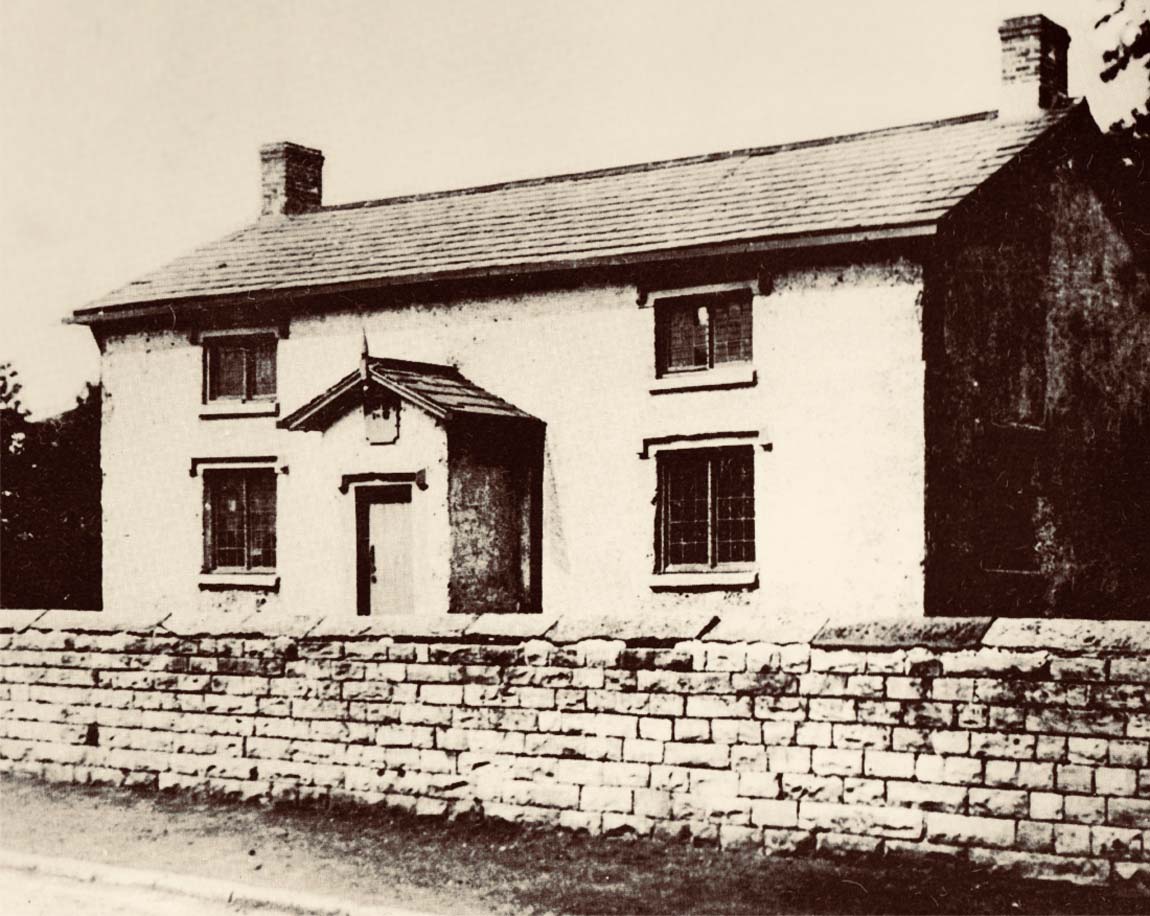 The Rainford Colliery Company was also establishing a small school that would eventually become Bushey Lane School. But overall education provision was patchy and insufficient. And so the meeting decided to approve plans to expand the bottom National School by raising its lower storey and adding another above it. The bottom storey would be for the teaching of girls and infants and the upper storey for boys.
St Helens Newspaper courtesy St Helens Archive Service at Eccleston Library
Next Week's stories will include the man who claimed the police had beaten him black and blue, the landlord of the Lamb is charged with serving out of hours and the Parr Stocks boy who was slapped for stealing from a pigeon house.
Last October Marcus Naylor of the Lorne Hotel had complained to St Helens Council of the insufficient number of police on the town's streets. The landlord of the pub on the corner of Fraser Street and Smithy Brow had suffered nine breakages of windows over the previous two years, mainly through stone throwing, and his insurance company had stopped covering him. What the landlord had sent to the council was known as a memorial – a form of petition in which 38 others that were owners of property or burgesses (i.e. had voting rights) in the Parr Street area had also signed.
Councillor Jackson told the meeting that Mr Naylor kept a respectable house but his pub was located in a "low neighbourhood" and the "malicious acts" that had been committed were on account of him being severe on the "idle and drunken vagabonds of the neighbourhood whom he would not supply with drink."
The councillor also claimed that the police had told him that if any serious disturbance took place near the pub, it would be "perfect madness for them to go into it, because they were sure to get murdered." The head of St Helens police was Supt James Ludlam and it was stated that he'd said he was powerless to do anything about the situation with the small number of police officers at his disposal.
In total there was then 54 officers in St Helens police force, with not much more than 20 likely to be on duty at any one time to cover the whole of the sprawling town. In the six months since that discussion had taken place, nothing had happened. And so this week Marcus Naylor decided to have another crack at the council by submitting a second memorial stating that over the last two years it had cost him £31 to replace glass.
Naylor again complained of the inadequate police presence in the district of Parr Street. Other councillors pointed out that vandalism was regularly occurring in other parts of the town, seemingly with impunity for the offenders.
Some of Holy Cross Church's windows had recently been smashed and currently there was a reward being offered to find the culprit responsible for breaking windows in the Volunteer Hall. The Town Council then had no control over St Helens police, as they were part of the Lancashire County force under Chief Constable Robert Bruce in Preston. The Town Clerk said he had written to the Chief Constable requesting an increase in police numbers and was hopeful of a positive outcome.
Alderman Johnson called for St Helens to have its own police force, complaining that while they had to depend upon people living in another part of Lancashire, nothing would ever get done. It was finally decided to pass the petition onto the local magistrates. However, that was exactly what they had done last October to no avail.
In the 1870s there was much ignorance over diseases and how a lack of immunity could lead to epidemics being of a cyclical nature. The councillors roared with laughter when their Medical Officer of Health tried to explain how the latest measles epidemic in the town was "just about due" as they had not had one for about five years.
Dr McNichol added: "It is just having its natural course, as a number of children have been born since then, and so it makes its periodical visit about every five years to seek for fresh victims." To that comment and the renewed laughter that it evoked from the councillors, Cllr Thomason said to the doctor:
"You are not going to propagate such an opinion before a body like this that all children born are to have measles?" Dr McNichol replied: "No; but it's very likely they will." To that riposte the subject dropped like a stone, with the councillors probably shaking their heads and wondering what sort of a quack they'd got in charge of their health department!
For much of the 20th century, the council organised summer band concerts in the town's parks. However, in 1876 there were no parks, unless you count the St Helens Cemetery, which with all its greenery did serve as a quiet leisure facility of sorts, as well as a place to respect the dead. But that certainly wasn't the place for bands to perform. However, the new Town Hall with some open space in front that would eventually be expanded and called Victoria Square was ideal.
And so Major Rothwell, who was in charge of the 2nd Lancashire Engineer Volunteers, this week applied to the council for permission for his regimental band to play in front of the new Town Hall. The concerts would take place every Tuesday evening during the summer months commencing from May, and as far as I can tell these were the start of such regular band concerts.
At the end of February the St Helens Newspaper had written that earlier that week the inhabitants of St Helens had been startled by the "alarming sight of a mad and infuriated dog rushing through the streets, and seizing everything that came in its way." The dog was first seen in Parr Street where it bit a young lad and then it ran into Hardshaw Street where the animal seized a large sheep dog. And 5-year-old Charles Stubbs of North Road, who was on a visit to his uncle in Hardshaw Street and standing by the front door, was severely bitten on a leg.
This week the Newspaper described how the boy had seemingly recovered from his injury with the wound having healed. But hydrophobia, aka rabies, could have a lengthy incubation period and last Monday Charles had complained of feeling ill with his leg very painful. On Tuesday the boy's condition rapidly worsened and symptoms of rabies presented themselves, "his suffering being very intense and most heartrendering to witness," wrote the Newspaper.
The paper also described how the "poor little fellow" had been conscious until his death on Thursday evening, the 6th. During the lapses in his convulsions and attacks, the child was said to have frequently spoken of approaching his end and his desire to be in heaven. Chloroform was eventually administered to alleviate his great suffering just before his death.
The paper also called for action to be taken "before any further evil arises from such melancholy circumstances". They wanted dogs to be prevented from straying about the streets in the way they were allowed to at present, which they said was not permitted elsewhere.
In an editorial on the 8th, the Newspaper wrote that the new Town Hall was approaching completion with its architect reporting that it could be ready for a public opening during Whit week. At a recent council meeting it had been suggested that a committee be formed to decide on the necessary arrangements for the opening ceremony and the idea of a procession involving schoolchildren and trade societies had been proposed.
The Newspaper fully supported the idea and wrote that never since the marriage of the Prince and Princess of Wales in 1863 had there been a public procession "in which all classes of the community could take a part". The paper said that such a celebration would have the advantage of being able to demonstrate to those living in neighbouring towns that St Helens was not always the "dull, smoky spot outsiders are in the habit of picturing it."
However, the building of the grand new Town Hall had not pleased everyone with some ratepayers objecting to the high cost. And so the paper predicted that these people would not take kindly to such a celebration but said "as wise men, we should know better than sit in the mumps", which I've discovered means to sulk. However, in the piece the newspaper could not resist having another dig at the new borough coat of arms and motto, which it described as "foolish things".
A report on a meeting of ratepayers that was held at the Derby Arms in Rainford on the 12th suggests that it was then considerably shorter. The meeting had taken place as the result of government school inspectors demanding improvements. The school's nickname of "bottom school" was because there was a small "top school" in Higher Lane, that was also known as Rosbothams (pictured below) but which appears to have been largely a Sunday school. That was so named because in 1847 shoemaker Daniel Rosbotham had given the Congregational Church the land to build their school.
St Helens Newspaper courtesy St Helens Archive Service at Eccleston Library
Next Week's stories will include the man who claimed the police had beaten him black and blue, the landlord of the Lamb is charged with serving out of hours and the Parr Stocks boy who was slapped for stealing from a pigeon house.
This week's many stories include the sad case of the child that died of rabies, the plans to enlarge Rainford National School, the need for more policemen in St Helens, the proposals to celebrate the opening of the new Town Hall, the start of summer band concerts in St Helens and the councillors that laughed at their medical officer for suggesting that infectious diseases came in cycles.
Last October Marcus Naylor of the Lorne Hotel had complained to St Helens Council of the insufficient number of police on the town's streets.
The landlord of the pub on the corner of Fraser Street and Smithy Brow had suffered nine breakages of windows over the previous two years, mainly through stone throwing, and his insurance company had stopped covering him.
What the landlord had sent to the council was known as a memorial – a form of petition in which 38 others that were owners of property or burgesses (i.e. had voting rights) in the Parr Street area had also signed.
Councillor Jackson told the meeting that Mr Naylor kept a respectable house but his pub was located in a "low neighbourhood" and the "malicious acts" that had been committed were on account of him being severe on the "idle and drunken vagabonds of the neighbourhood whom he would not supply with drink."
The councillor also claimed that the police had told him that if any serious disturbance took place near the pub, it would be "perfect madness for them to go into it, because they were sure to get murdered."
The head of St Helens police was Supt James Ludlam and it was stated that he'd said he was powerless to do anything about the situation with the small number of police officers at his disposal.
In total there was then 54 officers in St Helens police force, with not much more than 20 likely to be on duty at any one time to cover the whole of the sprawling town.
In the six months since that discussion had taken place, nothing had happened.
And so this week Marcus Naylor decided to have another crack at the council by submitting a second memorial stating that over the last two years it had cost him £31 to replace glass.
Naylor again complained of the inadequate police presence in the district of Parr Street.
Other councillors pointed out that vandalism was regularly occurring in other parts of the town, seemingly with impunity for the offenders.
Some of Holy Cross Church's windows had recently been smashed and currently there was a reward being offered to find the culprit responsible for breaking windows in the Volunteer Hall.
The Town Council then had no control over St Helens police, as they were part of the Lancashire County force under Chief Constable Robert Bruce in Preston.
The Town Clerk said he had written to the Chief Constable requesting an increase in police numbers and was hopeful of a positive outcome.
Alderman Johnson called for St Helens to have its own police force, complaining that while they had to depend upon people living in another part of Lancashire, nothing would ever get done.
It was finally decided to pass the petition onto the local magistrates. However, that was exactly what they had done last October to no avail.
In the 1870s there was much ignorance over diseases and how a lack of immunity could lead to epidemics being of a cyclical nature.
The councillors roared with laughter when their Medical Officer of Health tried to explain how the latest measles epidemic in the town was "just about due" as they had not had one for about five years.
Dr McNichol added: "It is just having its natural course, as a number of children have been born since then, and so it makes its periodical visit about every five years to seek for fresh victims."
To that comment and the renewed laughter that it evoked from the councillors, Cllr Thomason said to the doctor:
"You are not going to propagate such an opinion before a body like this that all children born are to have measles?"
Dr McNichol replied: "No; but it's very likely they will."
To that riposte the subject dropped like a stone, with the councillors probably shaking their heads and wondering what sort of a quack they'd got in charge of their health department!
For much of the 20th century, the council organised summer band concerts in the town's parks.
However, in 1876 there were no parks, unless you count the St Helens Cemetery, which with all its greenery did serve as a quiet leisure facility of sorts, as well as a place to respect the dead.
But that certainly wasn't the place for bands to perform. However, the new Town Hall with some open space in front that would eventually be expanded and called Victoria Square was ideal.
And so Major Rothwell, who was in charge of the 2nd Lancashire Engineer Volunteers, this week applied to the council for permission for his regimental band to play in front of the new Town Hall.
The concerts would take place every Tuesday evening during the summer months commencing from May, and as far as I can tell these were the start of such regular band concerts.
At the end of February the St Helens Newspaper had written that earlier that week the inhabitants of St Helens had been startled by the "alarming sight of a mad and infuriated dog rushing through the streets, and seizing everything that came in its way."
The dog was first seen in Parr Street where it bit a young lad and then it ran into Hardshaw Street where the animal seized a large sheep dog.
And 5-year-old Charles Stubbs of North Road, who was on a visit to his uncle in Hardshaw Street and standing by the front door, was severely bitten on a leg.
This week the Newspaper described how the boy had seemingly recovered from his injury with the wound having healed.
But hydrophobia, aka rabies, could have a lengthy incubation period and last Monday Charles had complained of feeling ill with his leg very painful.
On Tuesday the boy's condition rapidly worsened and symptoms of rabies presented themselves, "his suffering being very intense and most heartrendering to witness," wrote the Newspaper.
The paper also described how the "poor little fellow" had been conscious until his death on Thursday evening, the 6th.
During the lapses in his convulsions and attacks, the child was said to have frequently spoken of approaching his end and his desire to be in heaven.
Chloroform was eventually administered to alleviate his great suffering just before his death.
The paper also called for action to be taken "before any further evil arises from such melancholy circumstances".
They wanted dogs to be prevented from straying about the streets in the way they were allowed to at present, which they said was not permitted elsewhere.
In an editorial on the 8th, the Newspaper wrote that the new Town Hall was approaching completion with its architect reporting that it could be ready for a public opening during Whit week.
At a recent council meeting it had been suggested that a committee be formed to decide on the necessary arrangements for the opening ceremony and the idea of a procession involving schoolchildren and trade societies had been proposed.
The Newspaper fully supported the idea and wrote that never since the marriage of the Prince and Princess of Wales in 1863 had there been a public procession "in which all classes of the community could take a part".
The paper said that such a celebration would have the advantage of being able to demonstrate to those living in neighbouring towns that St Helens was not always the "dull, smoky spot outsiders are in the habit of picturing it."
However, the building of the grand new Town Hall had not pleased everyone with some ratepayers objecting to the high cost.
And so the paper predicted that these people would not take kindly to such a celebration but said "as wise men, we should know better than sit in the mumps", which I've discovered means to sulk.
However, in the piece the newspaper could not resist having another dig at the new borough coat of arms and motto, which it described as "foolish things".
The large old building on the corner of Cross Pit Lane and Ormskirk Road in Rainford, which is now apartments, had served as the village school for around 150 years.
A battered plaque on the exterior of the building (pictured above) states that Lord Derby had donated the land in 1825 for the creation of a day and Sunday school.
However, fifty years later what was then called Rainford National School – but known locally as "bottom school" – was not quite the building that exists today.
A report on a meeting of ratepayers that was held at the Derby Arms in Rainford on the 12th suggests that it was then considerably shorter.
The meeting had taken place as the result of government school inspectors demanding improvements.
The school's nickname of "bottom school" was because there was a small "top school" in Higher Lane, that was also known as Rosbothams (pictured above) but which appears to have been largely a Sunday school.
That was so named because in 1847 shoemaker Daniel Rosbotham had given the Congregational Church the land to build their school.
The Rainford Colliery Company was also establishing a small school that would eventually become Bushey Lane School.
But overall education provision was patchy and insufficient. And so the meeting decided to approve plans to expand the bottom National School by raising its lower storey and adding another above it.
The bottom storey would be for the teaching of girls and infants and the upper storey for boys.
St Helens Newspaper courtesy St Helens Archive Service at Eccleston Library
Next Week's stories will include the man who claimed the police had beaten him black and blue, the landlord of the Lamb is charged with serving out of hours and the Parr Stocks boy who was slapped for stealing from a pigeon house.
Last October Marcus Naylor of the Lorne Hotel had complained to St Helens Council of the insufficient number of police on the town's streets.
The landlord of the pub on the corner of Fraser Street and Smithy Brow had suffered nine breakages of windows over the previous two years, mainly through stone throwing, and his insurance company had stopped covering him.
What the landlord had sent to the council was known as a memorial – a form of petition in which 38 others that were owners of property or burgesses (i.e. had voting rights) in the Parr Street area had also signed.
Councillor Jackson told the meeting that Mr Naylor kept a respectable house but his pub was located in a "low neighbourhood" and the "malicious acts" that had been committed were on account of him being severe on the "idle and drunken vagabonds of the neighbourhood whom he would not supply with drink."
The councillor also claimed that the police had told him that if any serious disturbance took place near the pub, it would be "perfect madness for them to go into it, because they were sure to get murdered."
The head of St Helens police was Supt James Ludlam and it was stated that he'd said he was powerless to do anything about the situation with the small number of police officers at his disposal.
In total there was then 54 officers in St Helens police force, with not much more than 20 likely to be on duty at any one time to cover the whole of the sprawling town.
In the six months since that discussion had taken place, nothing had happened.
And so this week Marcus Naylor decided to have another crack at the council by submitting a second memorial stating that over the last two years it had cost him £31 to replace glass.
Naylor again complained of the inadequate police presence in the district of Parr Street.
Other councillors pointed out that vandalism was regularly occurring in other parts of the town, seemingly with impunity for the offenders.
Some of Holy Cross Church's windows had recently been smashed and currently there was a reward being offered to find the culprit responsible for breaking windows in the Volunteer Hall.
The Town Council then had no control over St Helens police, as they were part of the Lancashire County force under Chief Constable Robert Bruce in Preston.
The Town Clerk said he had written to the Chief Constable requesting an increase in police numbers and was hopeful of a positive outcome.
Alderman Johnson called for St Helens to have its own police force, complaining that while they had to depend upon people living in another part of Lancashire, nothing would ever get done.
It was finally decided to pass the petition onto the local magistrates. However, that was exactly what they had done last October to no avail.
In the 1870s there was much ignorance over diseases and how a lack of immunity could lead to epidemics being of a cyclical nature.
The councillors roared with laughter when their Medical Officer of Health tried to explain how the latest measles epidemic in the town was "just about due" as they had not had one for about five years.
Dr McNichol added: "It is just having its natural course, as a number of children have been born since then, and so it makes its periodical visit about every five years to seek for fresh victims."
To that comment and the renewed laughter that it evoked from the councillors, Cllr Thomason said to the doctor:
"You are not going to propagate such an opinion before a body like this that all children born are to have measles?"
Dr McNichol replied: "No; but it's very likely they will."
To that riposte the subject dropped like a stone, with the councillors probably shaking their heads and wondering what sort of a quack they'd got in charge of their health department!
For much of the 20th century, the council organised summer band concerts in the town's parks.
However, in 1876 there were no parks, unless you count the St Helens Cemetery, which with all its greenery did serve as a quiet leisure facility of sorts, as well as a place to respect the dead.
But that certainly wasn't the place for bands to perform. However, the new Town Hall with some open space in front that would eventually be expanded and called Victoria Square was ideal.
And so Major Rothwell, who was in charge of the 2nd Lancashire Engineer Volunteers, this week applied to the council for permission for his regimental band to play in front of the new Town Hall.
The concerts would take place every Tuesday evening during the summer months commencing from May, and as far as I can tell these were the start of such regular band concerts.
At the end of February the St Helens Newspaper had written that earlier that week the inhabitants of St Helens had been startled by the "alarming sight of a mad and infuriated dog rushing through the streets, and seizing everything that came in its way."
The dog was first seen in Parr Street where it bit a young lad and then it ran into Hardshaw Street where the animal seized a large sheep dog.
And 5-year-old Charles Stubbs of North Road, who was on a visit to his uncle in Hardshaw Street and standing by the front door, was severely bitten on a leg.
This week the Newspaper described how the boy had seemingly recovered from his injury with the wound having healed.
But hydrophobia, aka rabies, could have a lengthy incubation period and last Monday Charles had complained of feeling ill with his leg very painful.
On Tuesday the boy's condition rapidly worsened and symptoms of rabies presented themselves, "his suffering being very intense and most heartrendering to witness," wrote the Newspaper.
The paper also described how the "poor little fellow" had been conscious until his death on Thursday evening, the 6th.
During the lapses in his convulsions and attacks, the child was said to have frequently spoken of approaching his end and his desire to be in heaven.
Chloroform was eventually administered to alleviate his great suffering just before his death.
The paper also called for action to be taken "before any further evil arises from such melancholy circumstances".
They wanted dogs to be prevented from straying about the streets in the way they were allowed to at present, which they said was not permitted elsewhere.
In an editorial on the 8th, the Newspaper wrote that the new Town Hall was approaching completion with its architect reporting that it could be ready for a public opening during Whit week.
At a recent council meeting it had been suggested that a committee be formed to decide on the necessary arrangements for the opening ceremony and the idea of a procession involving schoolchildren and trade societies had been proposed.
The Newspaper fully supported the idea and wrote that never since the marriage of the Prince and Princess of Wales in 1863 had there been a public procession "in which all classes of the community could take a part".
The paper said that such a celebration would have the advantage of being able to demonstrate to those living in neighbouring towns that St Helens was not always the "dull, smoky spot outsiders are in the habit of picturing it."
However, the building of the grand new Town Hall had not pleased everyone with some ratepayers objecting to the high cost.
And so the paper predicted that these people would not take kindly to such a celebration but said "as wise men, we should know better than sit in the mumps", which I've discovered means to sulk.
However, in the piece the newspaper could not resist having another dig at the new borough coat of arms and motto, which it described as "foolish things".
The large old building on the corner of Cross Pit Lane and Ormskirk Road in Rainford, which is now apartments, had served as the village school for around 150 years.
However, fifty years later what was then called Rainford National School – but known locally as "bottom school" – was not quite the building that exists today.
A report on a meeting of ratepayers that was held at the Derby Arms in Rainford on the 12th suggests that it was then considerably shorter.
The meeting had taken place as the result of government school inspectors demanding improvements.
That was so named because in 1847 shoemaker Daniel Rosbotham had given the Congregational Church the land to build their school.
The Rainford Colliery Company was also establishing a small school that would eventually become Bushey Lane School.
But overall education provision was patchy and insufficient. And so the meeting decided to approve plans to expand the bottom National School by raising its lower storey and adding another above it.
The bottom storey would be for the teaching of girls and infants and the upper storey for boys.
St Helens Newspaper courtesy St Helens Archive Service at Eccleston Library
Next Week's stories will include the man who claimed the police had beaten him black and blue, the landlord of the Lamb is charged with serving out of hours and the Parr Stocks boy who was slapped for stealing from a pigeon house.