
150 YEARS AGO THIS WEEK 5 - 11 OCTOBER 1876
This week's many stories include the drunks at the Golden Lion Inn who brought in their own ale, the dirty water chucking on Smithy Brow, the confirmations at Holy Cross Church, the abused wife who said she was left with nothing to eat and the drunken man who smashed a window to escape from a Church Street clothier's shop.
The worst things an abused wife could do were to fight back against her husband and take to drink. Both acts would be used against her in court, with the abusive husband downplaying his violence and shifting the blame for his marriage problems onto his wife.
James Holland appeared in court this week charged with assaulting his wife in Parr. She had taken out a warrant for his arrest and told the court that she had been unhappily married to her husband for about six months. Mrs Holland said that on the previous Friday night, James had left her without anything to eat and no money and so she had gone for assistance to the relieving officer for St Helens.
James Fowler doled out small amounts of cash to those in desperate need on behalf of the Prescot Guardians. But Fowler had said that he could not help her and she must go to wherever her husband was. That was his mother's house where she found him three days later. She said that upon telling James what Mr Fowler had said, he had struck her several times in her side.
But during cross-examination, Mrs Holland admitted that on the Friday night she had been drinking and witnesses for the defence claimed that the woman had scratched her husband's face and all that he had done during the alleged assault was push her away. So the magistrates dismissed the case and advised the woman to accept her husband's offer of five shillings a week to live apart from him.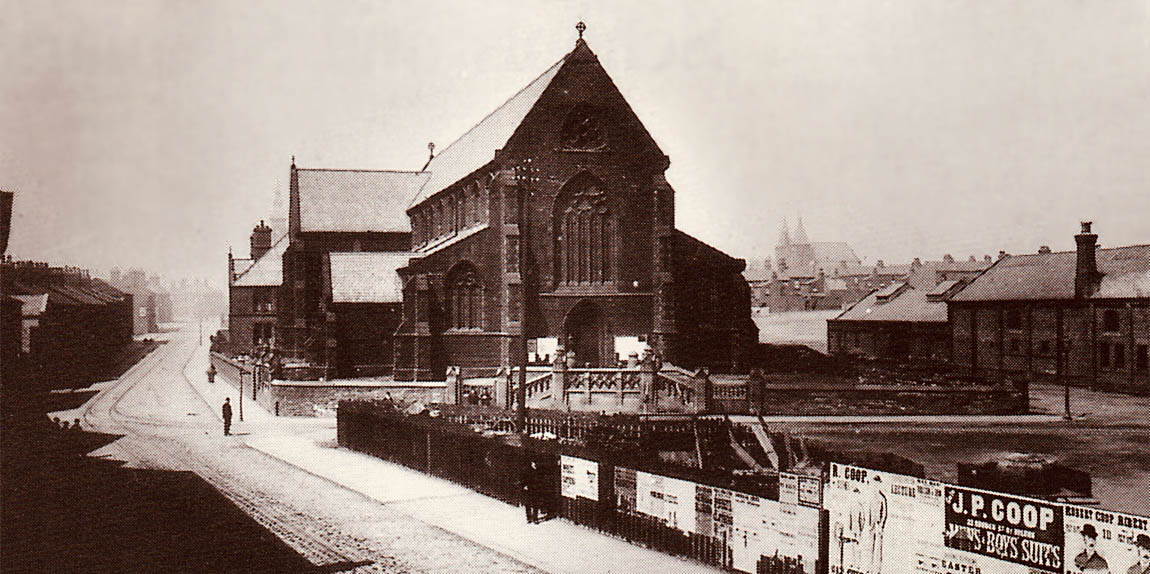 On the night of the 5th, the Rev Dr O’Reilly, the Catholic Lord Bishop of Liverpool, administered confirmation at Holy Cross Church (pictured above) to 330 young people. The St Helens Newspaper subsequently wrote that the ceremony had been a "most imposing one" and had attracted a very large congregation with the church being crowded in every part.
Frederick Hayes, Thomas Wilson and William Wilson appeared in court charged with being drunk and refusing to leave the Golden Lion Inn in Lyon Street when ordered. The incident had taken place at 5:45pm on a Saturday evening, suggesting that they had been drinking since lunchtime. Most works finished at noon on Saturdays. Then the men would be paid and some would head straight for the pub for a long session of boozing.
What was unusual about this case was when they had arrived at the Golden Lion they were all very drunk and the landlady Maria Thornburn had refused to serve them. So they went elsewhere to buy half-a-gallon of beer and brought it into Mrs Thornburn's pub and began drinking it!
She seems to have tolerated that cheeky act but her patience wore thin when William Wilson went for another half-a-gallon of beer. A constable was sent for but when PC Tanner arrived, the threesome still refused to leave. And so he went for assistance but by the time more police turned up the men had gone. The magistrates fined the defendants £1 and costs each or, alternatively, they had to go to prison for a month.
In another case Edward Quigley was summoned to appear in court to face a charge of assault – but failed to show up. That gave the magistrates the option of issuing a warrant for the man's arrest, which they tended to do in more serious cases when there was a no-show defendant. But they clearly thought his attack on Thomas McCaffery was not particularly bad, although the latter probably begged to differ.
McCaffery told how he had been sitting in Kay's public house in Liverpool Road on the previous Saturday night when Quigley and seven or eight others had walked in. He said the defendant immediately went across to him and told him he was good enough for him. Exactly what that meant was not explained, other than suggesting that McCaffery would be a suitable opponent to fight.
The complainant then claimed that Quigley began striking him and then the others all joined in and knocked him down, kicking McCaffery several times. The latter said he only knew who Quigley was and so had not been able to bring charges against his other attackers. This may not have been a random attack but Edward Quigley choosing not to turn up to the hearing meant he could not tell his side of the story. In the man's absence, he was fined 10 shillings and costs.
The shops in St Helens stayed open until very late on Saturdays to take advantage of workers who got paid on that day and had money to burn. As well as it being hard on shop workers having to work until 10 or 11pm, there was also the problem of drunken customers, with some, as I said earlier, having been boozing since lunchtime.
When John Fay appeared in court to face a charge of wilfully and maliciously damaging four squares of glass on the previous Saturday evening, an extraordinary story was told. The man had previously ordered a suit of clothes from James Hatchman's shop in Church Street and had gone to collect them. But he was drunk when he entered the shop and a dispute arose which led to the clothier being assaulted.
So Hatchman left his shop to go for a policeman and appears to have locked his front door, leaving Fay trapped inside the shop. While Hatchman was away, John Fay went to the back of the shop and smashed a rear window in order to make his escape from the premises. But after climbing through the window, the drunken man found that there was no way out of the backyard and when the bobby arrived he found Fay hiding in the outside toilet.
The man ultimately paid 15 shillings for the clothes but refused to pay for the damage that he had caused, leading to the court case. The magistrates ordered Fay to pay the cost of replacing the damaged window, together with a fine of 5 shillings and costs.
The Newspaper described another case involving the pub traveller rule. Persons deemed to have travelled some distance were allowed to be served alcohol outside of normal licensing hours. The traveller law was introduced so that people who had walked a long way to find work could obtain refreshments at any time.
However, it wasn't until 1910 that a change in the law stipulated that the distance should be at least 3 miles. And so until then, some persons who didn't live that far away from a pub, claimed to be a traveller as an excuse to be served out of hours. The police were wise to this ruse and disputes often arose.
However, in the case of Thomas Topping he appears to have been a genuine traveller and he was charged this week with having been drunk and refusing to quit the licensed premises of Cecilia Ormshaw at Windle City. PC Hargreaves said at 11pm on the night in question, he had been called to Mrs Ormshaw's premises.
There he found Topping, who had been asked to leave the pub because it was closing time, refusing to leave. That was on the ground that he was a traveller and he claimed to have journeyed 200 miles on that day. PC Hargreaves put him out but Topping – who was described as an elderly man – rushed back in.
The constable ejected him from the house for a second time and Topping then threatened him with a stick and used it to repeatedly strike the pub door. Thomas was fined one shilling and costs, which altogether came to £1 4 shillings.
Mary Greenall was accused of using "all sorts of vile and opprobrious names" when she appeared in the dock. It was another neighbourly dispute in the Smithy Brow / Parr Street district of St Helens. Catherine Jackson told the court that the trouble began when Mrs Greenall's son threw dirty water over her and she told him that if he did it again, she would stick his head down the grid.
Mary Greenall heard what she said and came at her in a fury and made threats of her own. She was then accused of seizing Catherine Jackson by her hair and Mrs Greenall's daughter brought a poker out to her. However, it does not appear to have been used, as her neighbours managed to rescue Catherine.
The Newspaper, in its own fashion, described how Mary Greenall came across as a noisy, loud-mouthed woman: "The defendant while in court gave some illustrations of the amenities of social life at Smithy Brow, and of the volubility of her colloquial powers, as she had to be repeatedly told to be quiet, and had even to be threatened that she would be locked up if she persisted in her frequent interruptions of the witnesses."
Mrs Greenall's defence was that Catherine Jackson had previously thrown dirty water over her children but the magistrates considered the case proved and ordered her to find sureties to keep the peace.
St Helens Newspaper courtesy St Helens Archive Service at Eccleston Library
Next Week's stories will include the origins of Sacred Heart Church, the dog attack on a little girl, the prolific boots thief, the dolly tubs on sale at the old Baldwin Street workhouse and the man that jumped on the back of a bobby in Hardshaw Street.
The worst things an abused wife could do were to fight back against her husband and take to drink. Both acts would be used against her in court, with the abusive husband downplaying his violence and shifting the blame for his marriage problems onto his wife.
James Holland appeared in court this week charged with assaulting his wife in Parr. She had taken out a warrant for his arrest and told the court that she had been unhappily married to her husband for about six months. Mrs Holland said that on the previous Friday night, James had left her without anything to eat and no money and so she had gone for assistance to the relieving officer for St Helens.
James Fowler doled out small amounts of cash to those in desperate need on behalf of the Prescot Guardians. But Fowler had said that he could not help her and she must go to wherever her husband was. That was his mother's house where she found him three days later. She said that upon telling James what Mr Fowler had said, he had struck her several times in her side.
But during cross-examination, Mrs Holland admitted that on the Friday night she had been drinking and witnesses for the defence claimed that the woman had scratched her husband's face and all that he had done during the alleged assault was push her away. So the magistrates dismissed the case and advised the woman to accept her husband's offer of five shillings a week to live apart from him.
Frederick Hayes, Thomas Wilson and William Wilson appeared in court charged with being drunk and refusing to leave the Golden Lion Inn in Lyon Street when ordered. The incident had taken place at 5:45pm on a Saturday evening, suggesting that they had been drinking since lunchtime. Most works finished at noon on Saturdays. Then the men would be paid and some would head straight for the pub for a long session of boozing.
What was unusual about this case was when they had arrived at the Golden Lion they were all very drunk and the landlady Maria Thornburn had refused to serve them. So they went elsewhere to buy half-a-gallon of beer and brought it into Mrs Thornburn's pub and began drinking it!
She seems to have tolerated that cheeky act but her patience wore thin when William Wilson went for another half-a-gallon of beer. A constable was sent for but when PC Tanner arrived, the threesome still refused to leave. And so he went for assistance but by the time more police turned up the men had gone. The magistrates fined the defendants £1 and costs each or, alternatively, they had to go to prison for a month.
In another case Edward Quigley was summoned to appear in court to face a charge of assault – but failed to show up. That gave the magistrates the option of issuing a warrant for the man's arrest, which they tended to do in more serious cases when there was a no-show defendant. But they clearly thought his attack on Thomas McCaffery was not particularly bad, although the latter probably begged to differ.
McCaffery told how he had been sitting in Kay's public house in Liverpool Road on the previous Saturday night when Quigley and seven or eight others had walked in. He said the defendant immediately went across to him and told him he was good enough for him. Exactly what that meant was not explained, other than suggesting that McCaffery would be a suitable opponent to fight.
The complainant then claimed that Quigley began striking him and then the others all joined in and knocked him down, kicking McCaffery several times. The latter said he only knew who Quigley was and so had not been able to bring charges against his other attackers. This may not have been a random attack but Edward Quigley choosing not to turn up to the hearing meant he could not tell his side of the story. In the man's absence, he was fined 10 shillings and costs.
The shops in St Helens stayed open until very late on Saturdays to take advantage of workers who got paid on that day and had money to burn. As well as it being hard on shop workers having to work until 10 or 11pm, there was also the problem of drunken customers, with some, as I said earlier, having been boozing since lunchtime.
When John Fay appeared in court to face a charge of wilfully and maliciously damaging four squares of glass on the previous Saturday evening, an extraordinary story was told. The man had previously ordered a suit of clothes from James Hatchman's shop in Church Street and had gone to collect them. But he was drunk when he entered the shop and a dispute arose which led to the clothier being assaulted.
So Hatchman left his shop to go for a policeman and appears to have locked his front door, leaving Fay trapped inside the shop. While Hatchman was away, John Fay went to the back of the shop and smashed a rear window in order to make his escape from the premises. But after climbing through the window, the drunken man found that there was no way out of the backyard and when the bobby arrived he found Fay hiding in the outside toilet.
The man ultimately paid 15 shillings for the clothes but refused to pay for the damage that he had caused, leading to the court case. The magistrates ordered Fay to pay the cost of replacing the damaged window, together with a fine of 5 shillings and costs.
The Newspaper described another case involving the pub traveller rule. Persons deemed to have travelled some distance were allowed to be served alcohol outside of normal licensing hours. The traveller law was introduced so that people who had walked a long way to find work could obtain refreshments at any time.
However, it wasn't until 1910 that a change in the law stipulated that the distance should be at least 3 miles. And so until then, some persons who didn't live that far away from a pub, claimed to be a traveller as an excuse to be served out of hours. The police were wise to this ruse and disputes often arose.
However, in the case of Thomas Topping he appears to have been a genuine traveller and he was charged this week with having been drunk and refusing to quit the licensed premises of Cecilia Ormshaw at Windle City. PC Hargreaves said at 11pm on the night in question, he had been called to Mrs Ormshaw's premises.
There he found Topping, who had been asked to leave the pub because it was closing time, refusing to leave. That was on the ground that he was a traveller and he claimed to have journeyed 200 miles on that day. PC Hargreaves put him out but Topping – who was described as an elderly man – rushed back in.
The constable ejected him from the house for a second time and Topping then threatened him with a stick and used it to repeatedly strike the pub door. Thomas was fined one shilling and costs, which altogether came to £1 4 shillings.
Mary Greenall was accused of using "all sorts of vile and opprobrious names" when she appeared in the dock. It was another neighbourly dispute in the Smithy Brow / Parr Street district of St Helens. Catherine Jackson told the court that the trouble began when Mrs Greenall's son threw dirty water over her and she told him that if he did it again, she would stick his head down the grid.
Mary Greenall heard what she said and came at her in a fury and made threats of her own. She was then accused of seizing Catherine Jackson by her hair and Mrs Greenall's daughter brought a poker out to her. However, it does not appear to have been used, as her neighbours managed to rescue Catherine.
The Newspaper, in its own fashion, described how Mary Greenall came across as a noisy, loud-mouthed woman: "The defendant while in court gave some illustrations of the amenities of social life at Smithy Brow, and of the volubility of her colloquial powers, as she had to be repeatedly told to be quiet, and had even to be threatened that she would be locked up if she persisted in her frequent interruptions of the witnesses."
Mrs Greenall's defence was that Catherine Jackson had previously thrown dirty water over her children but the magistrates considered the case proved and ordered her to find sureties to keep the peace.
St Helens Newspaper courtesy St Helens Archive Service at Eccleston Library
Next Week's stories will include the origins of Sacred Heart Church, the dog attack on a little girl, the prolific boots thief, the dolly tubs on sale at the old Baldwin Street workhouse and the man that jumped on the back of a bobby in Hardshaw Street.
This week's many stories include the drunks at the Golden Lion Inn who brought in their own ale, the dirty water chucking on Smithy Brow, the confirmation at Holy Cross Church, the abused wife who said she was left with nothing to eat and the drunken man who smashed a window to escape from a Church Street clothier's shop.
The worst things an abused wife could do were to fight back against her husband and take to drink.
Both acts would be used against her in court, with the abusive husband downplaying his violence and shifting the blame for his marriage problems onto his wife.
James Holland appeared in court this week charged with assaulting his wife in Parr.
His wife had taken out a warrant for his arrest and told the court that she had been unhappily married to her husband for about six months.
Mrs Holland said that on the previous Friday night, James had left her without anything to eat and no money and so she had gone for assistance to the relieving officer for St Helens.
James Fowler doled out small amounts of cash to those in desperate need on behalf of the Prescot Guardians.
But Fowler had said that he could not help her and she must go to wherever her husband was.
That was his mother's house where she found him three days later.
She said that upon telling James what Mr Fowler had said, he had struck her several times in her side.
But during cross-examination, Mrs Holland admitted that on the Friday night she had been drinking and witnesses for the defence claimed that the woman had scratched her husband's face and all that he had done during the alleged assault was push her away.
So the magistrates dismissed the case and advised the woman to accept her husband's offer of five shillings a week to live apart from him.
On the night of the 5th, the Rev Dr O’Reilly, the Catholic Lord Bishop of Liverpool, administered confirmation at Holy Cross Church (pictured above) to 330 young people.
The St Helens Newspaper subsequently wrote that the ceremony had been a "most imposing one" and had attracted a very large congregation with the church being crowded in every part.
Frederick Hayes, Thomas Wilson and William Wilson appeared in court charged with being drunk and refusing to leave the Golden Lion Inn in Lyon Street when ordered.
The incident had taken place at 5:45pm on a Saturday evening, suggesting that they had been drinking since lunchtime.
Most works finished at noon on Saturdays. Then the men would be paid and some would head straight for the pub for a long session of boozing.
What was unusual about this case was when they had arrived at the Golden Lion they were all very drunk and the landlady Maria Thornburn had refused to serve them.
So they went elsewhere to buy half-a-gallon of beer and brought it into Mrs Thornburn's pub and began drinking it!
She seems to have tolerated that cheeky act but her patience wore thin when William Wilson went for another half-a-gallon of beer.
A constable was sent for but when PC Tanner arrived, the threesome still refused to leave. And so he went for assistance but by the time more police turned up the men had gone.
The magistrates fined the defendants £1 and costs each or, alternatively, they had to go to prison for a month.
In another case Edward Quigley was summoned to appear in court to face a charge of assault – but failed to show up.
That gave the magistrates the option of issuing a warrant for the man's arrest, which they tended to do in more serious cases when there was a no-show defendant.
But they clearly thought his attack on Thomas McCaffery was not particularly bad, although the latter probably begged to differ.
McCaffery told how he had been sitting in Kay's public house in Liverpool Road on the previous Saturday night when Quigley and seven or eight others had walked in.
He said the defendant immediately went across to him and told him he was good enough for him.
Exactly what that meant was not explained, other than suggesting that McCaffery would be a suitable opponent to fight.
The complainant then claimed that Quigley began striking him and then the others all joined in and knocked him down, kicking McCaffery several times.
The latter said he only knew who Quigley was and so had not been able to bring charges against his other attackers.
This may not have been a random attack but Edward Quigley choosing not to turn up to the hearing meant he could not tell his side of the story. In the man's absence, he was fined 10 shillings and costs.
The shops in St Helens stayed open until very late on Saturdays to take advantage of workers who got paid on that day and had money to burn.
As well as it being hard on shop workers having to work until 10 or 11pm, there was also the problem of drunken customers, with some, as I said earlier, having been boozing since lunchtime.
When John Fay appeared in court to face a charge of wilfully and maliciously damaging four squares of glass on the previous Saturday evening, an extraordinary story was told.
The man had previously ordered a suit of clothes from James Hatchman's shop in Church Street and had gone to collect them.
But he was drunk when he entered the shop and a dispute arose which led to the clothier being assaulted.
So Hatchman left his premises to go for a policeman and appears to have locked his front door, leaving Fay trapped inside the shop.
While Hatchman was away, John Fay went to the back of the shop and smashed a rear window in order to make his escape from the premises.
But after climbing through the window, the drunken man found that there was no way out of the backyard and when the bobby arrived he found Fay hiding in the outside toilet.
The man ultimately paid 15 shillings for the clothes but refused to pay for the damage that he had caused, leading to the court case.
The magistrates ordered Fay to pay the cost of replacing the damaged window, together with a fine of 5 shillings and costs.
The Newspaper described another case involving the pub traveller rule.
Persons deemed to have travelled some distance were allowed to be served alcohol outside of normal licensing hours.
The traveller law was introduced so that people who had walked a long way to find work could obtain refreshments at any time.
However, it wasn't until 1910 that a change in the law stipulated that the distance should be at least 3 miles.
And so until then, some persons who didn't live that far away from a pub, claimed to be a traveller as an excuse to be served out of hours.
The police were wise to this ruse and disputes often arose.
However, in the case of Thomas Topping he appears to have been a genuine traveller and he was charged this week with having been drunk and refusing to quit the licensed premises of Cecilia Ormshaw at Windle City.
PC Hargreaves said at 11pm on the night in question, he had been called to Mrs Ormshaw's premises.
There he found Topping, who had been asked to leave the pub because it was closing time, refusing to leave.
That was on the ground that he was a traveller and he claimed to have journeyed 200 miles on that day.
PC Hargreaves put him out but Topping – who was described as an elderly man – rushed back in.
The constable ejected him from the house for a second time and Topping then threatened him with a stick and used it to repeatedly strike the pub door.
Thomas was fined one shilling and costs, which altogether came to £1 4 shillings.
Mary Greenall was accused of using "all sorts of vile and opprobrious names" when she appeared in the dock.
It was another neighbourly dispute in the Smithy Brow / Parr Street district of St Helens.
Catherine Jackson told the court that the trouble began when Mrs Greenall's son threw dirty water over her and she told him that if he did it again, she would stick his head down the grid.
Mary Greenall heard what she said and came at her in a fury and made threats of her own.
She was then accused of seizing Catherine Jackson by her hair and Mrs Greenall's daughter brought a poker out to her. However, it does not appear to have been used, as her neighbours managed to rescue Catherine.
The Newspaper, in its own fashion, described how Mary Greenall came across as a noisy, loud-mouthed woman:
"The defendant while in court gave some illustrations of the amenities of social life at Smithy Brow, and of the volubility of her colloquial powers, as she had to be repeatedly told to be quiet, and had even to be threatened that she would be locked up if she persisted in her frequent interruptions of the witnesses."
Mrs Greenall's defence was that Catherine Jackson had previously thrown dirty water over her children but the magistrates considered the case proved and ordered her to find sureties to keep the peace.
St Helens Newspaper courtesy St Helens Archive Service at Eccleston Library
Next Week's stories will include the origins of Sacred Heart Church, the dog attack on a little girl, the prolific boots thief, the dolly tubs on sale at the old Baldwin Street workhouse and the man that jumped on the back of a bobby in Hardshaw Street.
The worst things an abused wife could do were to fight back against her husband and take to drink.
Both acts would be used against her in court, with the abusive husband downplaying his violence and shifting the blame for his marriage problems onto his wife.
James Holland appeared in court this week charged with assaulting his wife in Parr.
His wife had taken out a warrant for his arrest and told the court that she had been unhappily married to her husband for about six months.
Mrs Holland said that on the previous Friday night, James had left her without anything to eat and no money and so she had gone for assistance to the relieving officer for St Helens.
James Fowler doled out small amounts of cash to those in desperate need on behalf of the Prescot Guardians.
But Fowler had said that he could not help her and she must go to wherever her husband was.
That was his mother's house where she found him three days later.
She said that upon telling James what Mr Fowler had said, he had struck her several times in her side.
But during cross-examination, Mrs Holland admitted that on the Friday night she had been drinking and witnesses for the defence claimed that the woman had scratched her husband's face and all that he had done during the alleged assault was push her away.
So the magistrates dismissed the case and advised the woman to accept her husband's offer of five shillings a week to live apart from him.
The St Helens Newspaper subsequently wrote that the ceremony had been a "most imposing one" and had attracted a very large congregation with the church being crowded in every part.
Frederick Hayes, Thomas Wilson and William Wilson appeared in court charged with being drunk and refusing to leave the Golden Lion Inn in Lyon Street when ordered.
The incident had taken place at 5:45pm on a Saturday evening, suggesting that they had been drinking since lunchtime.
Most works finished at noon on Saturdays. Then the men would be paid and some would head straight for the pub for a long session of boozing.
What was unusual about this case was when they had arrived at the Golden Lion they were all very drunk and the landlady Maria Thornburn had refused to serve them.
So they went elsewhere to buy half-a-gallon of beer and brought it into Mrs Thornburn's pub and began drinking it!
She seems to have tolerated that cheeky act but her patience wore thin when William Wilson went for another half-a-gallon of beer.
A constable was sent for but when PC Tanner arrived, the threesome still refused to leave. And so he went for assistance but by the time more police turned up the men had gone.
The magistrates fined the defendants £1 and costs each or, alternatively, they had to go to prison for a month.
In another case Edward Quigley was summoned to appear in court to face a charge of assault – but failed to show up.
That gave the magistrates the option of issuing a warrant for the man's arrest, which they tended to do in more serious cases when there was a no-show defendant.
But they clearly thought his attack on Thomas McCaffery was not particularly bad, although the latter probably begged to differ.
McCaffery told how he had been sitting in Kay's public house in Liverpool Road on the previous Saturday night when Quigley and seven or eight others had walked in.
He said the defendant immediately went across to him and told him he was good enough for him.
Exactly what that meant was not explained, other than suggesting that McCaffery would be a suitable opponent to fight.
The complainant then claimed that Quigley began striking him and then the others all joined in and knocked him down, kicking McCaffery several times.
The latter said he only knew who Quigley was and so had not been able to bring charges against his other attackers.
This may not have been a random attack but Edward Quigley choosing not to turn up to the hearing meant he could not tell his side of the story. In the man's absence, he was fined 10 shillings and costs.
The shops in St Helens stayed open until very late on Saturdays to take advantage of workers who got paid on that day and had money to burn.
As well as it being hard on shop workers having to work until 10 or 11pm, there was also the problem of drunken customers, with some, as I said earlier, having been boozing since lunchtime.
When John Fay appeared in court to face a charge of wilfully and maliciously damaging four squares of glass on the previous Saturday evening, an extraordinary story was told.
The man had previously ordered a suit of clothes from James Hatchman's shop in Church Street and had gone to collect them.
But he was drunk when he entered the shop and a dispute arose which led to the clothier being assaulted.
So Hatchman left his premises to go for a policeman and appears to have locked his front door, leaving Fay trapped inside the shop.
While Hatchman was away, John Fay went to the back of the shop and smashed a rear window in order to make his escape from the premises.
But after climbing through the window, the drunken man found that there was no way out of the backyard and when the bobby arrived he found Fay hiding in the outside toilet.
The man ultimately paid 15 shillings for the clothes but refused to pay for the damage that he had caused, leading to the court case.
The magistrates ordered Fay to pay the cost of replacing the damaged window, together with a fine of 5 shillings and costs.
The Newspaper described another case involving the pub traveller rule.
Persons deemed to have travelled some distance were allowed to be served alcohol outside of normal licensing hours.
The traveller law was introduced so that people who had walked a long way to find work could obtain refreshments at any time.
However, it wasn't until 1910 that a change in the law stipulated that the distance should be at least 3 miles.
And so until then, some persons who didn't live that far away from a pub, claimed to be a traveller as an excuse to be served out of hours.
The police were wise to this ruse and disputes often arose.
However, in the case of Thomas Topping he appears to have been a genuine traveller and he was charged this week with having been drunk and refusing to quit the licensed premises of Cecilia Ormshaw at Windle City.
PC Hargreaves said at 11pm on the night in question, he had been called to Mrs Ormshaw's premises.
There he found Topping, who had been asked to leave the pub because it was closing time, refusing to leave.
That was on the ground that he was a traveller and he claimed to have journeyed 200 miles on that day.
PC Hargreaves put him out but Topping – who was described as an elderly man – rushed back in.
The constable ejected him from the house for a second time and Topping then threatened him with a stick and used it to repeatedly strike the pub door.
Thomas was fined one shilling and costs, which altogether came to £1 4 shillings.
Mary Greenall was accused of using "all sorts of vile and opprobrious names" when she appeared in the dock.
It was another neighbourly dispute in the Smithy Brow / Parr Street district of St Helens.
Catherine Jackson told the court that the trouble began when Mrs Greenall's son threw dirty water over her and she told him that if he did it again, she would stick his head down the grid.
Mary Greenall heard what she said and came at her in a fury and made threats of her own.
She was then accused of seizing Catherine Jackson by her hair and Mrs Greenall's daughter brought a poker out to her. However, it does not appear to have been used, as her neighbours managed to rescue Catherine.
The Newspaper, in its own fashion, described how Mary Greenall came across as a noisy, loud-mouthed woman:
"The defendant while in court gave some illustrations of the amenities of social life at Smithy Brow, and of the volubility of her colloquial powers, as she had to be repeatedly told to be quiet, and had even to be threatened that she would be locked up if she persisted in her frequent interruptions of the witnesses."
Mrs Greenall's defence was that Catherine Jackson had previously thrown dirty water over her children but the magistrates considered the case proved and ordered her to find sureties to keep the peace.
St Helens Newspaper courtesy St Helens Archive Service at Eccleston Library
Next Week's stories will include the origins of Sacred Heart Church, the dog attack on a little girl, the prolific boots thief, the dolly tubs on sale at the old Baldwin Street workhouse and the man that jumped on the back of a bobby in Hardshaw Street.