
IOO YEARS AGO THIS WEEK 28 JULY - 3 AUGUST 1925
This week's many stories include the man prosecuted for being five minutes late in producing his driving licence, the ridiculous row between neighbours in Greenbank, the St Helens MP gets shirty with a shipbroker in the Commons, the father and son that attacked each other in Grant Street and a brick from the old parish church is ceremoniously laid on the new one.
We begin at 7pm on July 28th when the Sutton Manor Colliery Institute Brass Band played on Parr Recreation Ground. The performance was part of the council's programme of summer music in St Helens' parks.
In the 1920s if the police stopped your car and you didn't have your licence on you, the officer did not say "You've got so many days to produce it at a police station". Instead, you were booked straight away!
When Thomas Houghton of Woodville Street appeared in St Helens Police Court he insisted that he had shown his licence to the constable "five or ten minutes after he pulled me up". To that remark the Magistrates Clerk said: "It was too late then". That did not go down well with the defendant who retorted:
"I have been driving twenty years and never been pulled up before and never had an accident. I suppose there are drivers on the Bench who perhaps could not lay their hands on their licences just at the moment they wanted to. I have put pound notes away and could not find them." Mr Houghton was told to pay 4 shillings costs.
While walking down Broad Oak Road in the early hours of the morning, PC Trail came across Mary McPaul leaning against a wall. The elderly Mary admitted having had a few drinks but was furious when in court this week Supt Dunn revealed that she had 33 convictions for drunkenness against her, saying: "That was years ago. It has nowt to do wi’ this." Mary was told that if she immediately left St Helens the charge of lodging out against her would be dismissed and she agreed to go.
A row between neighbours and relatives in Greenbank led to a court case in which there were summonses and cross-summonses aplenty. It led to shouts from people in the courtroom saying: "Oh, you are telling lies. May the Lord forgive you" and "Now, Maggie, speak the truth." Ellen Hill claimed she had been called a "big, dirty, fat thing". And Mary Hill complained of being scandalised by her mother-in-law who, she said, then threw the contents of a milk jug over her. Claims of threats and assaults were also made and promptly denied. One witness from Liverpool Street (pictured above) said she had witnessed the assault when going for two packets of "cigs". Another witness then walked from the back of the court with a container of crockery and placed it at the front but for what purpose was not explained. One of the defendants then went and sat on the crockery! It was a real circus with a very predictable outcome, with all parties bound over to be of good behaviour for a year. There was not much chance of that!
Another family had been at war in Grant Street and their somewhat violent squabbles also got fully aired in court this week. William Simm had been summoned for assaulting his son Richard by throwing a cup at him and inflicting a wound 1½ inches in length that required two stitches. The man had returned home drunk and began quarrelling with his wife because she was preparing their son's supper before his.
Blows were exchanged and the son got hold of a poker but other members of the family wrested it off him. At that point the father smashed a cup over the head of Richard and created the wound. In anger William Simm knocked down a gas bracket, plunging the room into darkness and causing a gas escape. When the police arrived on the scene the father barricaded himself inside and a forced entrance had to be made. Upon being arrested and charged, William Simm said: "Well, he struck me first. I did it in self-defence."
When Richard began to give evidence he broke down in the witness box and the case had to be delayed for a short time for him to compose himself. The father did not help to heal the family divisions in court by what the Reporter described as him having "excitedly accused his wife of being a nagging woman". William added that his wife had even got their house put in her own name and had told him he was only a lodger. When asked by the Bench how he had received a black eye, the father replied:
"My son hit me and he should be ashamed of himself hitting his father of over sixty years of age." Both William and Richard were bound over to keep the peace for six months and the Bench expressed the hope that there would be peace in the house, as they said it seemed to be merely a domestic quarrel that should never have been brought into court.
Some women who claimed their husbands had abused them would go into the street and create a bother. That could lead to them being prosecuted rather than their husband. Mary Cook of Higher Parr Street was one such individual who about midnight had been heard by a constable creating a racket on her own doorstep using what the Reporter called "unparliamentary language".
The officer advised her to go inside, which initially she did. But Mary was soon outside again causing a rumpus. You didn't get more than one warning from the police and so the officer told her she would be reported. Asked in court for an explanation of the bother, she said her husband had been thrashing her and had knocked over a paraffin lamp onto a clean tablecloth. Mrs Cook was bound over for six months.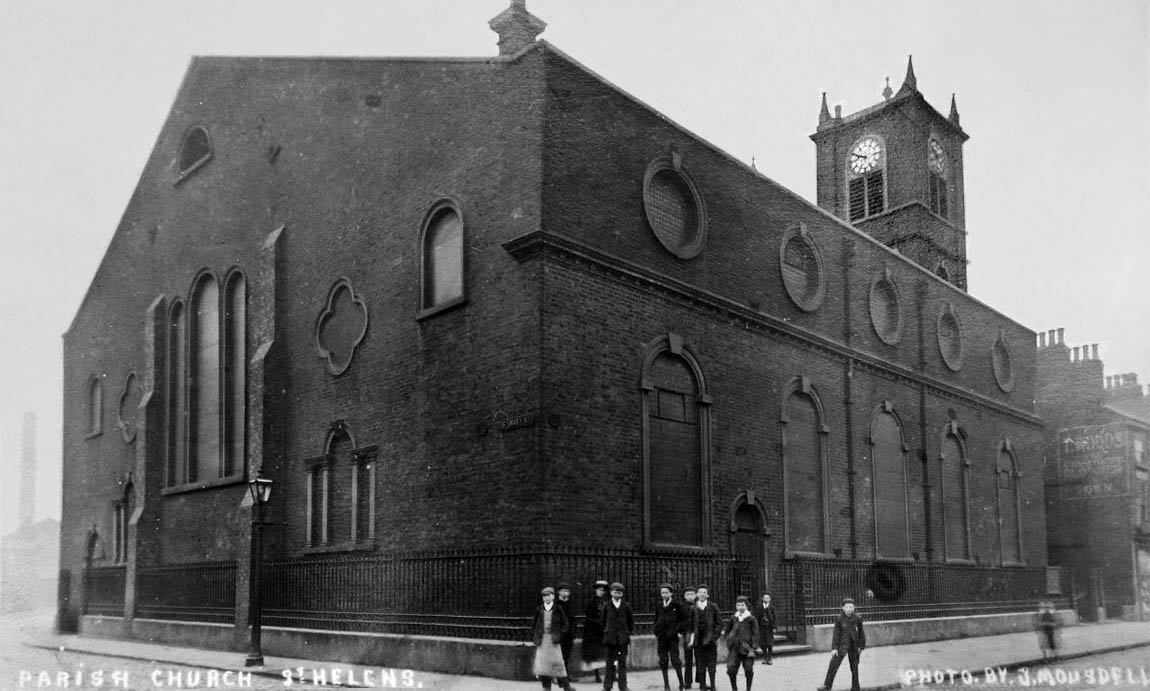 The new parish church was nearing completion and the Reporter described how a novel ceremony had taken place linking the old with the new. The new Vicar of St Helens, the Rev Child, had along with 40 members of his Church Council, ascended the winding staircase to the present top of the incomplete tower and laid a brick from the old church (pictured above) that had burned down in 1916.
The brick was set in a prominent position above the chancery arch looking west where, it was said, it would be seen "for all time". The Vicar then gave a short address on the link between the old and the new church and the ceremony ended with some singing, which was said to have attracted the curiosity of some passers-by on the street below.
This week Arthur Tanner from Fox Street (near Victoria Park) was summoned to court by his wife Eleanor on a charge of persistent cruelty. In reality such cases were applications for separation orders with maintenance payments – but they were far from automatically granted. Mrs Tanner said she had been forced to leave her husband on July 20th in consequence of his cruel treatment to her, which she said had been ongoing for two years.
Arthur Tanner then launched into a temper tantrum in court using what was described as very bad language and the case had to be stopped for a while. One might have thought that his behaviour was sufficient to prove his wife's case. But for reasons that were unexplained in the newspaper account, Mrs Tanner's application was turned down.
The controversial Unemployment Insurance Bill was currently passing through Parliament and the outspoken MP Colonel Henry Burton was accused of making misleading statements. It was stated that the Conservative MP for Sudbury was cherry picking a few cases of high wages without explaining their context and implying such payments were commonplace.
On the 31st James Sexton, the MP for St Helens and secretary of the Dockers Union, stated that Colonel Burton had that day in the Commons treated them to "another Baron Munchausen story" about some men earning £15 a week and others supposedly making £8 in just two days.
He said the few coal trimmers on steam ships who earned £15 a week "worked in an atmosphere which would poison the devil, and they worked day and night. Colonel Burton wants the House to believe that these wages are typical of the money earned by the men in the docks. As a rule those men could only get one and a half day's work a week. Colonel Burton, as a shipbroker, could earn £10,000 in ten minutes by twiddling a pen."
St Helens Reporter courtesy St Helens Archive Service at Eccleston Library
Next Week's stories will include the plans for the new East Lancashire Road, the August Bank Holiday field days, Black Bob causes trouble at the Salisbury lodging house and the bickering neighbours in Hills Moss Road.
We begin at 7pm on July 28th when the Sutton Manor Colliery Institute Brass Band played on Parr Recreation Ground. The performance was part of the council's programme of summer music in St Helens' parks.
In the 1920s if the police stopped your car and you didn't have your licence on you, the officer did not say "You've got so many days to produce it at a police station". Instead, you were booked straight away!
When Thomas Houghton of Woodville Street appeared in St Helens Police Court he insisted that he had shown his licence to the constable "five or ten minutes after he pulled me up". To that remark the Magistrates Clerk said: "It was too late then". That did not go down well with the defendant who retorted:
"I have been driving twenty years and never been pulled up before and never had an accident. I suppose there are drivers on the Bench who perhaps could not lay their hands on their licences just at the moment they wanted to. I have put pound notes away and could not find them." Mr Houghton was told to pay 4 shillings costs.
While walking down Broad Oak Road in the early hours of the morning, PC Trail came across Mary McPaul leaning against a wall. The elderly Mary admitted having had a few drinks but was furious when in court this week Supt Dunn revealed that she had 33 convictions for drunkenness against her, saying: "That was years ago. It has nowt to do wi’ this." Mary was told that if she immediately left St Helens the charge of lodging out against her would be dismissed and she agreed to go.
A row between neighbours and relatives in Greenbank led to a court case in which there were summonses and cross-summonses aplenty. It led to shouts from people in the courtroom saying: "Oh, you are telling lies. May the Lord forgive you" and "Now, Maggie, speak the truth." Ellen Hill claimed she had been called a "big, dirty, fat thing". And Mary Hill complained of being scandalised by her mother-in-law who, she said, then threw the contents of a milk jug over her.
Another family had been at war in Grant Street and their somewhat violent squabbles also got fully aired in court this week. William Simm had been summoned for assaulting his son Richard by throwing a cup at him and inflicting a wound 1½ inches in length that required two stitches. The man had returned home drunk and began quarrelling with his wife because she was preparing their son's supper before his.
Blows were exchanged and the son got hold of a poker but other members of the family wrested it off him. At that point the father smashed a cup over the head of Richard and created the wound. In anger William Simm knocked down a gas bracket, plunging the room into darkness and causing a gas escape. When the police arrived on the scene the father barricaded himself inside and a forced entrance had to be made. Upon being arrested and charged, William Simm said: "Well, he struck me first. I did it in self-defence."
When Richard began to give evidence he broke down in the witness box and the case had to be delayed for a short time for him to compose himself. The father did not help to heal the family divisions in court by what the Reporter described as him having "excitedly accused his wife of being a nagging woman". William added that his wife had even got their house put in her own name and had told him he was only a lodger. When asked by the Bench how he had received a black eye, the father replied:
"My son hit me and he should be ashamed of himself hitting his father of over sixty years of age." Both William and Richard were bound over to keep the peace for six months and the Bench expressed the hope that there would be peace in the house, as they said it seemed to be merely a domestic quarrel that should never have been brought into court.
Some women who claimed their husbands had abused them would go into the street and create a bother. That could lead to them being prosecuted rather than their husband. Mary Cook of Higher Parr Street was one such individual who about midnight had been heard by a constable creating a racket on her own doorstep using what the Reporter called "unparliamentary language".
The officer advised her to go inside, which initially she did. But Mary was soon outside again causing a rumpus. You didn't get more than one warning from the police and so the officer told her she would be reported. Asked in court for an explanation of the bother, she said her husband had been thrashing her and had knocked over a paraffin lamp onto a clean tablecloth. Mrs Cook was bound over for six months.
The brick was set in a prominent position above the chancery arch looking west where, it was said, it would be seen "for all time". The Vicar then gave a short address on the link between the old and the new church and the ceremony ended with some singing, which was said to have attracted the curiosity of some passers-by on the street below.
This week Arthur Tanner from Fox Street (near Victoria Park) was summoned to court by his wife Eleanor on a charge of persistent cruelty. In reality such cases were applications for separation orders with maintenance payments – but they were far from automatically granted. Mrs Tanner said she had been forced to leave her husband on July 20th in consequence of his cruel treatment to her, which she said had been ongoing for two years.
Arthur Tanner then launched into a temper tantrum in court using what was described as very bad language and the case had to be stopped for a while. One might have thought that his behaviour was sufficient to prove his wife's case. But for reasons that were unexplained in the newspaper account, Mrs Tanner's application was turned down.
The controversial Unemployment Insurance Bill was currently passing through Parliament and the outspoken MP Colonel Henry Burton was accused of making misleading statements. It was stated that the Conservative MP for Sudbury was cherry picking a few cases of high wages without explaining their context and implying such payments were commonplace.
On the 31st James Sexton, the MP for St Helens and secretary of the Dockers Union, stated that Colonel Burton had that day in the Commons treated them to "another Baron Munchausen story" about some men earning £15 a week and others supposedly making £8 in just two days.
He said the few coal trimmers on steam ships who earned £15 a week "worked in an atmosphere which would poison the devil, and they worked day and night. Colonel Burton wants the House to believe that these wages are typical of the money earned by the men in the docks. As a rule those men could only get one and a half day's work a week. Colonel Burton, as a shipbroker, could earn £10,000 in ten minutes by twiddling a pen."
St Helens Reporter courtesy St Helens Archive Service at Eccleston Library
Next Week's stories will include the plans for the new East Lancashire Road, the August Bank Holiday field days, Black Bob causes trouble at the Salisbury lodging house and the bickering neighbours in Hills Moss Road.
This week's many stories include the man prosecuted for being five minutes late in producing his driving licence, the ridiculous row between neighbours in Greenbank, the St Helens MP gets shirty with a shipbroker in the Commons, the father and son that attacked each other in Grant Street and a brick from the old parish church is ceremoniously laid on the new one.
We begin at 7pm on July 28th when the Sutton Manor Colliery Institute Brass Band played on Parr Recreation Ground. The performance was part of the council's programme of summer music in St Helens' parks.
In the 1920s if the police stopped your car and you didn't have your licence on you, the officer did not say "You've got so many days to produce it at a police station". Instead, you were booked straight away!
When Thomas Houghton of Woodville Street appeared in St Helens Police Court he insisted that he had shown his licence to the constable "five or ten minutes after he pulled me up".
To that remark the Magistrates Clerk said: "It was too late then". That did not go down well with the defendant who retorted:
"I have been driving twenty years and never been pulled up before and never had an accident.
"I suppose there are drivers on the Bench who perhaps could not lay their hands on their licences just at the moment they wanted to. I have put pound notes away and could not find them." Mr Houghton was told to pay 4 shillings costs.
While walking down Broad Oak Road in the early hours of the morning, PC Trail came across Mary McPaul leaning against a wall.
The elderly Mary admitted having had a few drinks but was furious when in court this week Supt Dunn revealed that she had 33 convictions for drunkenness against her, saying:
"That was years ago. It has nowt to do wi’ this." Mary was told that if she immediately left St Helens the charge of lodging out against her would be dismissed and she agreed to go.
A row between neighbours and relatives in Greenbank led to a court case in which there were summonses and cross-summonses aplenty.
It led to shouts from people in the courtroom saying: "Oh, you are telling lies. May the Lord forgive you" and "Now, Maggie, speak the truth."
Ellen Hill claimed she had been called a "big, dirty, fat thing". And Mary Hill complained of being scandalised by her mother-in-law who, she said, then threw the contents of a milk jug over her.
Claims of threats and assaults were also made and promptly denied. One witness from Liverpool Street (pictured above) said she had witnessed the assault when going for two packets of "cigs".
Another witness then walked from the back of the court with a container of crockery and placed it at the front but for what purpose was not explained. One of the defendants then went and sat on the crockery!
It was a real circus with a very predictable outcome, with all parties bound over to be of good behaviour for a year. There was not much chance of that!
Another family had been at war in Grant Street and their somewhat violent squabbles also got fully aired in court this week.
William Simm had been summoned for assaulting his son Richard by throwing a cup at him and inflicting a wound 1½ inches in length that required two stitches.
The man had returned home drunk and began quarrelling with his wife because she was preparing their son's supper before his.
Blows were exchanged and the son got hold of a poker but other members of the family wrested it off him.
At that point the father smashed a cup over the head of Richard and created the wound.
In anger William Simm knocked down a gas bracket, plunging the room into darkness and causing a gas escape.
When the police arrived on the scene the father barricaded himself inside and a forced entrance had to be made.
Upon being arrested and charged, William Simm said: "Well, he struck me first. I did it in self-defence."
When Richard began to give evidence he broke down in the witness box and the case had to be delayed for a short time for him to compose himself.
The father did not help to heal the family divisions in court by what the Reporter described as him having "excitedly accused his wife of being a nagging woman".
William added that his wife had even got their house put in her own name and had told him he was only a lodger. When asked by the Bench how he had received a black eye, the father replied:
"My son hit me and he should be ashamed of himself hitting his father of over sixty years of age."
Both William and Richard were bound over to keep the peace for six months and the Bench expressed the hope that there would be peace in the house, as they said it seemed to be merely a domestic quarrel that should never have been brought into court.
Some women who claimed their husbands had abused them would go into the street and create a bother. That could lead to them being prosecuted rather than their husband.
Mary Cook of Higher Parr Street was one such individual who about midnight had been heard by a constable creating a racket on her own doorstep using what the Reporter called "unparliamentary language".
The officer advised her to go inside, which initially she did. But Mary was soon outside again causing a rumpus.
You didn't get more than one warning from the police and so the officer told her she would be reported.
Asked in court for an explanation of the bother, she said her husband had been thrashing her and had knocked over a paraffin lamp onto a clean tablecloth. Mrs Cook was bound over for six months.
The new parish church was nearing completion and the Reporter described how a novel ceremony had taken place linking the old with the new.
The new Vicar of St Helens, the Rev Child, had along with 40 members of his Church Council, ascended the winding staircase to the present top of the incomplete tower and laid a brick from the old church (pictured above) that had burned down in 1916.
The brick was set in a prominent position above the chancery arch looking west where, it was said, it would be seen "for all time".
The Vicar then gave a short address on the link between the old and the new church and the ceremony ended with some singing, which was said to have attracted the curiosity of some passers-by on the street below.
This week Arthur Tanner from Fox Street (near Victoria Park) was summoned to court by his wife Eleanor on a charge of persistent cruelty.
In reality such cases were applications for separation orders with maintenance payments – but they were far from automatically granted.
Mrs Tanner said she had been forced to leave her husband on July 20th in consequence of his cruel treatment to her, which she said had been ongoing for two years.
Arthur Tanner then launched into a temper tantrum in court using what was described as very bad language and the case had to be stopped for a while.
One might have thought that his behaviour was sufficient to prove his wife's case. But for reasons that were unexplained in the newspaper account, Mrs Tanner's application was turned down.
The controversial Unemployment Insurance Bill was currently passing through Parliament and the outspoken MP Colonel Henry Burton was accused of making misleading statements.
It was stated that the Conservative MP for Sudbury was cherry picking a few cases of high wages without explaining their context and implying such payments were commonplace.
On the 31st James Sexton, the MP for St Helens and secretary of the Dockers Union, stated that Colonel Burton had that day in the Commons treated them to "another Baron Munchausen story" about some men earning £15 a week and others supposedly making £8 in just two days.
He said the few coal trimmers on steam ships who earned £15 a week "worked in an atmosphere which would poison the devil, and they worked day and night.
"Colonel Burton wants the House to believe that these wages are typical of the money earned by the men in the docks.
"As a rule those men could only get one and a half day's work a week. Colonel Burton, as a shipbroker, could earn £10,000 in ten minutes by twiddling a pen."
St Helens Reporter courtesy St Helens Archive Service at Eccleston Library
Next Week's stories will include the plans for the new East Lancashire Road, the August Bank Holiday field days, Black Bob causes trouble at the Salisbury lodging house and the bickering neighbours in Hills Moss Road.
We begin at 7pm on July 28th when the Sutton Manor Colliery Institute Brass Band played on Parr Recreation Ground. The performance was part of the council's programme of summer music in St Helens' parks.
In the 1920s if the police stopped your car and you didn't have your licence on you, the officer did not say "You've got so many days to produce it at a police station". Instead, you were booked straight away!
When Thomas Houghton of Woodville Street appeared in St Helens Police Court he insisted that he had shown his licence to the constable "five or ten minutes after he pulled me up".
To that remark the Magistrates Clerk said: "It was too late then". That did not go down well with the defendant who retorted:
"I have been driving twenty years and never been pulled up before and never had an accident.
"I suppose there are drivers on the Bench who perhaps could not lay their hands on their licences just at the moment they wanted to. I have put pound notes away and could not find them." Mr Houghton was told to pay 4 shillings costs.
While walking down Broad Oak Road in the early hours of the morning, PC Trail came across Mary McPaul leaning against a wall.
The elderly Mary admitted having had a few drinks but was furious when in court this week Supt Dunn revealed that she had 33 convictions for drunkenness against her, saying:
"That was years ago. It has nowt to do wi’ this." Mary was told that if she immediately left St Helens the charge of lodging out against her would be dismissed and she agreed to go.
A row between neighbours and relatives in Greenbank led to a court case in which there were summonses and cross-summonses aplenty.
It led to shouts from people in the courtroom saying: "Oh, you are telling lies. May the Lord forgive you" and "Now, Maggie, speak the truth."
Ellen Hill claimed she had been called a "big, dirty, fat thing". And Mary Hill complained of being scandalised by her mother-in-law who, she said, then threw the contents of a milk jug over her.
Another witness then walked from the back of the court with a container of crockery and placed it at the front but for what purpose was not explained. One of the defendants then went and sat on the crockery!
It was a real circus with a very predictable outcome, with all parties bound over to be of good behaviour for a year. There was not much chance of that!
Another family had been at war in Grant Street and their somewhat violent squabbles also got fully aired in court this week.
William Simm had been summoned for assaulting his son Richard by throwing a cup at him and inflicting a wound 1½ inches in length that required two stitches.
The man had returned home drunk and began quarrelling with his wife because she was preparing their son's supper before his.
Blows were exchanged and the son got hold of a poker but other members of the family wrested it off him.
At that point the father smashed a cup over the head of Richard and created the wound.
In anger William Simm knocked down a gas bracket, plunging the room into darkness and causing a gas escape.
When the police arrived on the scene the father barricaded himself inside and a forced entrance had to be made.
Upon being arrested and charged, William Simm said: "Well, he struck me first. I did it in self-defence."
When Richard began to give evidence he broke down in the witness box and the case had to be delayed for a short time for him to compose himself.
The father did not help to heal the family divisions in court by what the Reporter described as him having "excitedly accused his wife of being a nagging woman".
William added that his wife had even got their house put in her own name and had told him he was only a lodger. When asked by the Bench how he had received a black eye, the father replied:
"My son hit me and he should be ashamed of himself hitting his father of over sixty years of age."
Both William and Richard were bound over to keep the peace for six months and the Bench expressed the hope that there would be peace in the house, as they said it seemed to be merely a domestic quarrel that should never have been brought into court.
Some women who claimed their husbands had abused them would go into the street and create a bother. That could lead to them being prosecuted rather than their husband.
Mary Cook of Higher Parr Street was one such individual who about midnight had been heard by a constable creating a racket on her own doorstep using what the Reporter called "unparliamentary language".
The officer advised her to go inside, which initially she did. But Mary was soon outside again causing a rumpus.
You didn't get more than one warning from the police and so the officer told her she would be reported.
Asked in court for an explanation of the bother, she said her husband had been thrashing her and had knocked over a paraffin lamp onto a clean tablecloth. Mrs Cook was bound over for six months.
The new parish church was nearing completion and the Reporter described how a novel ceremony had taken place linking the old with the new.
The brick was set in a prominent position above the chancery arch looking west where, it was said, it would be seen "for all time".
The Vicar then gave a short address on the link between the old and the new church and the ceremony ended with some singing, which was said to have attracted the curiosity of some passers-by on the street below.
This week Arthur Tanner from Fox Street (near Victoria Park) was summoned to court by his wife Eleanor on a charge of persistent cruelty.
In reality such cases were applications for separation orders with maintenance payments – but they were far from automatically granted.
Mrs Tanner said she had been forced to leave her husband on July 20th in consequence of his cruel treatment to her, which she said had been ongoing for two years.
Arthur Tanner then launched into a temper tantrum in court using what was described as very bad language and the case had to be stopped for a while.
One might have thought that his behaviour was sufficient to prove his wife's case. But for reasons that were unexplained in the newspaper account, Mrs Tanner's application was turned down.
The controversial Unemployment Insurance Bill was currently passing through Parliament and the outspoken MP Colonel Henry Burton was accused of making misleading statements.
It was stated that the Conservative MP for Sudbury was cherry picking a few cases of high wages without explaining their context and implying such payments were commonplace.
On the 31st James Sexton, the MP for St Helens and secretary of the Dockers Union, stated that Colonel Burton had that day in the Commons treated them to "another Baron Munchausen story" about some men earning £15 a week and others supposedly making £8 in just two days.
He said the few coal trimmers on steam ships who earned £15 a week "worked in an atmosphere which would poison the devil, and they worked day and night.
"Colonel Burton wants the House to believe that these wages are typical of the money earned by the men in the docks.
"As a rule those men could only get one and a half day's work a week. Colonel Burton, as a shipbroker, could earn £10,000 in ten minutes by twiddling a pen."
St Helens Reporter courtesy St Helens Archive Service at Eccleston Library
Next Week's stories will include the plans for the new East Lancashire Road, the August Bank Holiday field days, Black Bob causes trouble at the Salisbury lodging house and the bickering neighbours in Hills Moss Road.