
IOO YEARS AGO THIS WEEK 27 APRIL - 3 MAY 1926
This week's many stories include the bigamous marriage at Christ Church in Eccleston, the preparations for a miners' strike, the disabled children that were being supported in St Helens, the scheme of free home nursing for contagious diseases, the Bold Street attack on the police and Winston Churchill annoys St Helens' church leaders with his new tax.
We begin on the 27th when it was reported that Pilkington's were discounting rumours they were slashing the wages of all their employees. A director stated that their 7.5% cut would only be applied to sheet glass workers and not those employed on plate glass.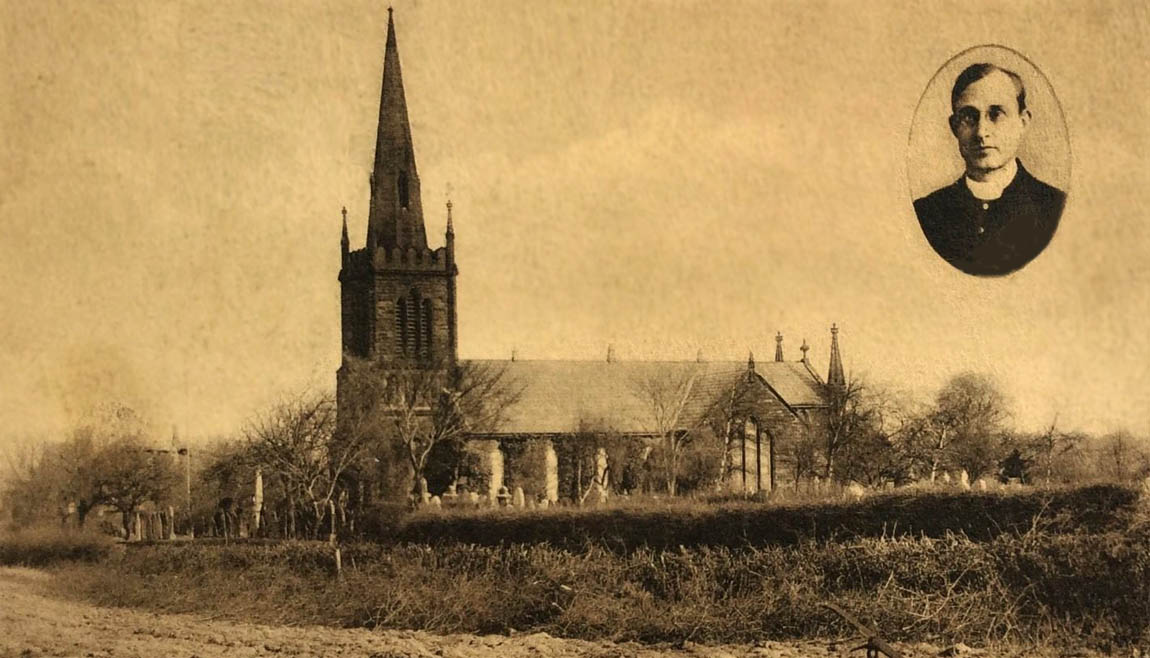 Also on the 27th glassworker Peter Johnson of Charles Street in St Helens appeared in court charged with bigamy. In March 1923 he had married Ann Whittle at Holy Cross Church but the couple parted only a month later. Johnson was accused of going through a form of marriage with Mary Waring at Christ Church in Eccleston (pictured above) in April 1925 and was remanded in custody for further enquiries to be made.
At a later hearing Johnson alleged that his wife had left him with a 5-week-old baby to look after. Ann, he claimed, had stayed away for seven months but he said he took her back before she left him again in June 1924 and she was now in domestic service in Manchester. Ann Whittle, Peter Johnson's legal wife, was in the courtroom and stated that she had left him because he sulked, as she put it.
She added that her husband had not provided her with a home of her own and she had been forced to live with his parents in Market Street and did not get on with them. Ann said last Christmas she had returned to St Helens and gone to a picture show with her brother and had seen her husband with his new "wife".
Peter Johnson was committed for trial at Manchester Assizes where he could expect a prison sentence. Mary Waring had also been charged with aiding and abetting Johnson after it was revealed that when living in Arthur Street, her landlady had warned her that her intended was already a married man. Mary was alleged to have told the woman to mind her own business.
In 1917 free home nursing was introduced for children in St Helens suffering from contagious diseases and the pioneering scheme was credited with saving many lives. But it was considered expensive with two or three nurses directly employed by the St Helens Health Committee and it appears to have been dropped by the early to mid-1920s.
However, on the 27th the committee announced that they had come to an arrangement with the St Helens and District Nursing Home. The nurses would be paid £75 to cover 1,200 visits made to treat cases of measles and whooping cough etc. and a shilling for every additional patient that they saw.
On the 27th the Mayor of St Helens, Alderman Thomas Hamblett, presided at the annual meeting of the St Helens Crippled and Invalid Children's Aid Society. He said there was no cause that deserved support more and commented how two years ago he had begun pressing for the establishment of an open-air school. That would serve the needs of the almost 300 estimated delicate children in St Helens.
Ald. Hamblett hoped that it would soon become a reality and, when it did, the school in Rainford Road would take his name. It was stated at the meeting that 65% of the children of St Helens began their lives with impaired health and the society's treasurer Edith Pilkington remarked: "It is difficult for poor children to obtain fresh air, sunshine and suitable food."
The society's annual report showed that 125 cases had been supplied with surgical appliances and boots and 53 had received milk and nourishment. Sixty children had also been sent to various hospitals and institutions.
The miners would not be locked out of their pits until next week and although there was no absolute certainty that what was effectively a strike would take place, contingencies were being made. During the 1921 strike the St Helens miners' children were provided with meals, partly as the result of a grant made to St Helens Corporation by the Ministry of Health. With that experience in mind, the council had already written to the government to say they expected to have to spend £7,000 in feeding schoolchildren in the event of a strike and requesting another grant. In the Commons on the 30th, James Sexton, the St Helens MP, (pictured above) asked if the government was going to approve the application.
The written answer that he received was that they could not make such a commitment in advance but if any emergency arose, authorities should notify the Board of Education. Basically, a "yes" answer but not yet.
Winston Churchill was the Chancellor of the Exchequer and he caused a storm in his Budget this week by introducing a gambling tax. Although betting was largely illegal, it could legitimately be undertaken on racecourses and through credit accounts in certain licensed offices. And although Churchill's tax was only aimed at the legal gambling industry, church leaders were appalled.
In St Helens, the churches passed a resolution which they forwarded to the prime minister, Stanley Baldwin, protesting against the tax on the ground that it would "encourage a grave national evil and is against the highest interests of the State." Meanwhile in the Commons, Churchill declared that "any attempt to import a moral issue into the question would be repulsed by the good sense of an overwhelming public opinion." That did not turn out to be the case as it led to more illegal gambling and the tax was abandoned in 1930, although it established a precedent for such taxes.
On the 30th John Clitheroe of Knowsley Road appeared in the Police Court after he had called out to another motorcyclist: "It is a trap". The St Helens police then used stop watches to check on the speed of motorists and so-called speed traps, mainly on Greenfield Road, were very controversial and deemed unfair. Clitheroe told the Bench that he was only trying to do good. However, that was not quite how the authorities saw his act and he was fined £1.
The St Helens Reporter was published on the 30th and described how work would begin next week on the building of the much-vaunted Sutton silk factory. It was expected to take 7 months for the Nuera Art Silk Company to build their new plant on the site of the former Sutton Glass Works in Lancots Lane. Eventually it was hoped that thousands of jobs would be created.
In January 1924 the Conservative Party splinter group called the St Helens Women's Unionist Association had formed a Children's Loyalty League. When it was founded the Reporter wrote: "Loyalty to King and country is a strong element in the Children's Loyalty League, and they are taught physical exercises, country dancing and singing and generally have a real good time under well-regulated conditions."
The Reporter described how last weekend the Loyalty League had presented a "delightful pageant" in a sold-out Theatre Royal, which consisted of a "charming display of fairy plays, tactical marches and national dances", which had been very well received.
The paper also wrote: "Michael Reegan is to the St. Helens Police what the lamb was to Mary – a devoted follower. On Monday, for instance, he was fined at the Police Court for being drunk and disorderly, but his devotion was so pronounced that he was there again on Tuesday! Possibly he did not wish to renew his acquaintance with the prisoner's dock so quickly, but anyway, he was there to answer a similar charge of being drunk and disorderly." For his latest offence Michael had been found fighting in Water Street and was fined £1.
Attempting to make an arrest in the Greenbank district of St Helens was always risky. The police were so loathed that their officers risked serious injury from persons wanting to prevent them taking their prisoner to their station. On the 30th William Giliker of Bold Street was accused of attacking the police after they had attempted to arrest another man for betting.
PC Spedding told the court that the individual that they had sought had taken refuge in a house in Bold Street. He and another officer forced their way in but Giliker, who was one of a crowd at the door, had dragged him back by his coat collar. A struggle followed and Giliker was accused of giving the policeman a violent blow to the face. That caused PC Spedding to fall to the ground where he was again struck by Giliker and kicked.
He said the crowd of men in the house was so hostile they could not arrest Giliker as well as the other man and it took them several days to track him down. In his defence Giliker said he had been helping his brother move furniture and he denied committing any assault. He requested time to bring witnesses to court and the case was remanded for a week.
A number of May Queen crowning festivals took place at the Catholic churches in St Helens on May 1st and 2nd – including at Holy Cross, St Austin's and St Anne's in Sutton. The Reporter gushingly described "picturesque scenes" that were "beautiful in the extreme".
And finally, on the 2nd the annual Labour Demonstration took place on the vacant land at the rear of Bridge Street with much talk about the miners' dispute and General Strike that was expected to start in two days. There was an attendance of 3,000 with the main speaker making this appeal for the men to behave well during the strike: "Let there be no violence, or disorder. Fold your arms and do nothing."
St Helens Reporter courtesy St Helens Archive Service at Eccleston Library
Next Week's stories will include the start of the General Strike, a call for volunteers to maintain vital services, the washout start to the cricket season, the violent bookie in Parr Stocks Road and a defence of the young women of St Helens.
We begin on the 27th when it was reported that Pilkington's were discounting rumours they were slashing the wages of all their employees. A director stated that their 7.5% cut would only be applied to sheet glass workers and not those employed on plate glass.
At a later hearing Johnson alleged that his wife had left him with a 5-week-old baby to look after. Ann, he claimed, had stayed away for seven months but he said he took her back before she left him again in June 1924 and she was now in domestic service in Manchester. Ann Whittle, Peter Johnson's legal wife, was in the courtroom and stated that she had left him because he sulked, as she put it.
She added that her husband had not provided her with a home of her own and she had been forced to live with his parents in Market Street and did not get on with them. Ann said last Christmas she had returned to St Helens and gone to a picture show with her brother and had seen her husband with his new "wife".
Peter Johnson was committed for trial at Manchester Assizes where he could expect a prison sentence. Mary Waring had also been charged with aiding and abetting Johnson after it was revealed that when living in Arthur Street, her landlady had warned her that her intended was already a married man. Mary was alleged to have told the woman to mind her own business.
In 1917 free home nursing was introduced for children in St Helens suffering from contagious diseases and the pioneering scheme was credited with saving many lives. But it was considered expensive with two or three nurses directly employed by the St Helens Health Committee and it appears to have been dropped by the early to mid-1920s.
However, on the 27th the committee announced that they had come to an arrangement with the St Helens and District Nursing Home. The nurses would be paid £75 to cover 1,200 visits made to treat cases of measles and whooping cough etc. and a shilling for every additional patient that they saw.
On the 27th the Mayor of St Helens, Alderman Thomas Hamblett, presided at the annual meeting of the St Helens Crippled and Invalid Children's Aid Society. He said there was no cause that deserved support more and commented how two years ago he had begun pressing for the establishment of an open-air school. That would serve the needs of the almost 300 estimated delicate children in St Helens.
Ald. Hamblett hoped that it would soon become a reality and, when it did, the school in Rainford Road would take his name. It was stated at the meeting that 65% of the children of St Helens began their lives with impaired health and the society's treasurer Edith Pilkington remarked: "It is difficult for poor children to obtain fresh air, sunshine and suitable food."
The society's annual report showed that 125 cases had been supplied with surgical appliances and boots and 53 had received milk and nourishment. Sixty children had also been sent to various hospitals and institutions.
The miners would not be locked out of their pits until next week and although there was no absolute certainty that what was effectively a strike would take place, contingencies were being made. During the 1921 strike the St Helens miners' children were provided with meals, partly as the result of a grant made to St Helens Corporation by the Ministry of Health.
The written answer that he received was that they could not make such a commitment in advance but if any emergency arose, authorities should notify the Board of Education. Basically, a "yes" answer but not yet.
Winston Churchill was the Chancellor of the Exchequer and he caused a storm in his Budget this week by introducing a gambling tax. Although betting was largely illegal, it could legitimately be undertaken on racecourses and through credit accounts in certain licensed offices. And although Churchill's tax was only aimed at the legal gambling industry, church leaders were appalled.
In St Helens, the churches passed a resolution which they forwarded to the prime minister, Stanley Baldwin, protesting against the tax on the ground that it would "encourage a grave national evil and is against the highest interests of the State." Meanwhile in the Commons, Churchill declared that "any attempt to import a moral issue into the question would be repulsed by the good sense of an overwhelming public opinion." That did not turn out to be the case as it led to more illegal gambling and the tax was abandoned in 1930, although it established a precedent for such taxes.
On the 30th John Clitheroe of Knowsley Road appeared in the Police Court after he had called out to another motorcyclist: "It is a trap". The St Helens police then used stop watches to check on the speed of motorists and so-called speed traps, mainly on Greenfield Road, were very controversial and deemed unfair. Clitheroe told the Bench that he was only trying to do good. However, that was not quite how the authorities saw his act and he was fined £1.
The St Helens Reporter was published on the 30th and described how work would begin next week on the building of the much-vaunted Sutton silk factory. It was expected to take 7 months for the Nuera Art Silk Company to build their new plant on the site of the former Sutton Glass Works in Lancots Lane. Eventually it was hoped that thousands of jobs would be created.
In January 1924 the Conservative Party splinter group called the St Helens Women's Unionist Association had formed a Children's Loyalty League. When it was founded the Reporter wrote: "Loyalty to King and country is a strong element in the Children's Loyalty League, and they are taught physical exercises, country dancing and singing and generally have a real good time under well-regulated conditions."
The Reporter described how last weekend the Loyalty League had presented a "delightful pageant" in a sold-out Theatre Royal, which consisted of a "charming display of fairy plays, tactical marches and national dances", which had been very well received.
The paper also wrote: "Michael Reegan is to the St. Helens Police what the lamb was to Mary – a devoted follower. On Monday, for instance, he was fined at the Police Court for being drunk and disorderly, but his devotion was so pronounced that he was there again on Tuesday! Possibly he did not wish to renew his acquaintance with the prisoner's dock so quickly, but anyway, he was there to answer a similar charge of being drunk and disorderly." For his latest offence Michael had been found fighting in Water Street and was fined £1.
Attempting to make an arrest in the Greenbank district of St Helens was always risky. The police were so loathed that their officers risked serious injury from persons wanting to prevent them taking their prisoner to their station. On the 30th William Giliker of Bold Street was accused of attacking the police after they had attempted to arrest another man for betting.
PC Spedding told the court that the individual that they had sought had taken refuge in a house in Bold Street. He and another officer forced their way in but Giliker, who was one of a crowd at the door, had dragged him back by his coat collar. A struggle followed and Giliker was accused of giving the policeman a violent blow to the face. That caused PC Spedding to fall to the ground where he was again struck by Giliker and kicked.
He said the crowd of men in the house was so hostile they could not arrest Giliker as well as the other man and it took them several days to track him down. In his defence Giliker said he had been helping his brother move furniture and he denied committing any assault. He requested time to bring witnesses to court and the case was remanded for a week.
A number of May Queen crowning festivals took place at the Catholic churches in St Helens on May 1st and 2nd – including at Holy Cross, St Austin's and St Anne's in Sutton. The Reporter gushingly described "picturesque scenes" that were "beautiful in the extreme".
And finally, on the 2nd the annual Labour Demonstration took place on the vacant land at the rear of Bridge Street with much talk about the miners' dispute and General Strike that was expected to start in two days. There was an attendance of 3,000 with the main speaker making this appeal for the men to behave well during the strike: "Let there be no violence, or disorder. Fold your arms and do nothing."
St Helens Reporter courtesy St Helens Archive Service at Eccleston Library
Next Week's stories will include the start of the General Strike, a call for volunteers to maintain vital services, the washout start to the cricket season, the violent bookie in Parr Stocks Road and a defence of the young women of St Helens.
This week's many stories include the bigamous marriage at Christ Church in Eccleston, the preparations for a miners' strike, the disabled children that were being supported in St Helens, the scheme of free home nursing for contagious diseases, the Bold Street attack on the police and Winston Churchill annoys St Helens' church leaders with his new tax.
We begin on the 27th when it was reported that Pilkington's were discounting rumours they were slashing the wages of all their employees.
A director stated that their 7.5% cut would only be applied to sheet glass workers and not those employed on plate glass.
Also on the 27th glassworker Peter Johnson of Charles Street in St Helens appeared in court charged with bigamy.
In March 1923 he had married Ann Whittle at Holy Cross Church but the couple parted only a month later.
Johnson was accused of going through a form of marriage with Mary Waring at Christ Church in Eccleston (pictured above) in April 1925 and was remanded in custody for further enquiries to be made.
At a later hearing Johnson alleged that his wife had left him with a 5-week-old baby to look after.
Ann, he claimed, had stayed away for seven months but he said he took her back before she left him again in June 1924 and she was now in domestic service in Manchester.
Ann Whittle, Peter Johnson's legal wife, was in the courtroom and stated that she had left him because he sulked, as she put it.
She added that her husband had not provided her with a home of her own and she had been forced to live with his parents in Market Street and did not get on with them.
Ann said last Christmas she had returned to St Helens and gone to a picture show with her brother and had seen her husband with his new "wife".
Peter Johnson was committed for trial at Manchester Assizes where he could expect a prison sentence.
Mary Waring had also been charged with aiding and abetting Johnson after it was revealed that when living in Arthur Street, her landlady had warned her that her intended was already a married man. Mary was alleged to have told the woman to mind her own business.
In 1917 free home nursing was introduced for children in St Helens suffering from contagious diseases and the pioneering scheme was credited with saving many lives.
But it was considered expensive with two or three nurses directly employed by the St Helens Health Committee and it appears to have been dropped by the early to mid-1920s.
However, on the 27th the committee announced that they had come to an arrangement with the St Helens and District Nursing Home.
The nurses would be paid £75 to cover 1,200 visits made to treat cases of measles and whooping cough etc. and a shilling for every additional patient that they saw.
On the 27th the Mayor of St Helens, Alderman Thomas Hamblett, presided at the annual meeting of the St Helens Crippled and Invalid Children's Aid Society.
He said there was no cause that deserved support more and commented how two years ago he had begun pressing for the establishment of an open-air school.
That would serve the needs of the almost 300 estimated delicate children in St Helens.
Ald. Hamblett hoped that it would soon become a reality and, when it did, the school in Rainford Road would take his name.
It was stated at the meeting that 65% of the children of St Helens began their lives with impaired health and the society's treasurer Edith Pilkington remarked:
"It is difficult for poor children to obtain fresh air, sunshine and suitable food."
The society's annual report showed that 125 cases had been supplied with surgical appliances and boots and 53 had received milk and nourishment. Sixty children had also been sent to various hospitals and institutions.
The miners would not be locked out of their pits until next week and although there was no absolute certainty that what was effectively a strike would take place, contingencies were being made.
During the 1921 strike the St Helens miners' children were provided with meals, partly as the result of a grant made to St Helens Corporation by the Ministry of Health.
With that experience in mind, the council had already written to the government to say they expected to have to spend £7,000 in feeding schoolchildren in the event of a strike and requesting another grant.
In the Commons on the 30th, James Sexton, the St Helens MP (pictured above), asked if the government was going to approve the application.
The written answer that he received was that they could not make such a commitment in advance but if any emergency arose, authorities should notify the Board of Education. Basically, a "yes" answer but not yet.
Winston Churchill was the Chancellor of the Exchequer and he caused a storm in his Budget this week by introducing a gambling tax.
Although betting was largely illegal, it could legitimately be undertaken on racecourses and through credit accounts in certain licensed offices.
And although Churchill's tax was only aimed at the legal gambling industry, church leaders were appalled.
In St Helens, the churches passed a resolution which they forwarded to the prime minister, Stanley Baldwin, protesting against the tax on the ground that it would "encourage a grave national evil and is against the highest interests of the State."
Meanwhile in the Commons, Churchill declared that "any attempt to import a moral issue into the question would be repulsed by the good sense of an overwhelming public opinion."
That did not turn out to be the case as it led to more illegal gambling and the tax was abandoned in 1930, although it established a precedent for such taxes.
On the 30th John Clitheroe of Knowsley Road appeared in the Police Court after he had called out to another motorcyclist: "It is a trap".
The St Helens police then used stop watches to check on the speed of motorists and so-called speed traps, mainly on Greenfield Road, were very controversial and deemed unfair.
Clitheroe told the Bench that he was only trying to do good. However, that was not quite how the authorities saw his act and he was fined £1.
The St Helens Reporter was published on the 30th and described how work would begin next week on the building of the much-vaunted Sutton silk factory.
It was expected to take 7 months for the Nuera Art Silk Company to build their new plant on the site of the former Sutton Glass Works in Lancots Lane.
Eventually it was hoped that thousands of jobs would be created.
In January 1924 the Conservative Party splinter group called the St Helens Women's Unionist Association had formed a Children's Loyalty League.
When it was founded the Reporter wrote: "Loyalty to King and country is a strong element in the Children's Loyalty League, and they are taught physical exercises, country dancing and singing and generally have a real good time under well-regulated conditions."
The Reporter described how last weekend the Loyalty League had presented a "delightful pageant" in a sold-out Theatre Royal, which consisted of a "charming display of fairy plays, tactical marches and national dances", which had been very well received.
The paper also wrote: "Michael Reegan is to the St. Helens Police what the lamb was to Mary – a devoted follower. On Monday, for instance, he was fined at the Police Court for being drunk and disorderly, but his devotion was so pronounced that he was there again on Tuesday!
"Possibly he did not wish to renew his acquaintance with the prisoner's dock so quickly, but anyway, he was there to answer a similar charge of being drunk and disorderly."
For his latest offence Michael had been found fighting in Water Street and was fined £1.
Attempting to make an arrest in the Greenbank district of St Helens was always risky.
The police were so loathed that their officers risked serious injury from persons wanting to prevent them taking their prisoner to their station.
On the 30th William Giliker of Bold Street was accused of attacking the police after they had attempted to arrest another man for betting.
PC Spedding told the court that the individual that they had sought had taken refuge in a house in Bold Street.
He and another officer forced their way in but Giliker, who was one of a crowd at the door, had dragged him back by his coat collar.
A struggle followed and Giliker was accused of giving the policeman a violent blow to the face. That caused PC Spedding to fall to the ground where he was again struck by Giliker and kicked.
He said the crowd of men in the house was so hostile they could not arrest Giliker as well as the other man and it took them several days to track him down.
In his defence Giliker said he had been helping his brother move furniture and he denied committing any assault.
He requested time to bring witnesses to court and the case was remanded for a week.
A number of May Queen crowning festivals took place at the Catholic churches in St Helens on May 1st and 2nd – including at Holy Cross, St Austin's and St Anne's in Sutton.
The Reporter gushingly described "picturesque scenes" that were "beautiful in the extreme".
And finally, on the 2nd the annual Labour Demonstration took place on the vacant land at the rear of Bridge Street with much talk about the miners' dispute and General Strike that was expected to start in two days.
There was an attendance of 3,000 with the main speaker making this appeal for the men to behave well during the strike: "Let there be no violence, or disorder. Fold your arms and do nothing."
St Helens Reporter courtesy St Helens Archive Service at Eccleston Library
Next Week's stories will include the start of the General Strike, a call for volunteers to maintain vital services, the washout start to the cricket season, the violent bookie in Parr Stocks Road and a defence of the young women of St Helens.
We begin on the 27th when it was reported that Pilkington's were discounting rumours they were slashing the wages of all their employees.
A director stated that their 7.5% cut would only be applied to sheet glass workers and not those employed on plate glass.
Also on the 27th glassworker Peter Johnson of Charles Street in St Helens appeared in court charged with bigamy.
In March 1923 he had married Ann Whittle at Holy Cross Church but the couple parted only a month later.
At a later hearing Johnson alleged that his wife had left him with a 5-week-old baby to look after.
Ann, he claimed, had stayed away for seven months but he said he took her back before she left him again in June 1924 and she was now in domestic service in Manchester.
Ann Whittle, Peter Johnson's legal wife, was in the courtroom and stated that she had left him because he sulked, as she put it.
She added that her husband had not provided her with a home of her own and she had been forced to live with his parents in Market Street and did not get on with them.
Ann said last Christmas she had returned to St Helens and gone to a picture show with her brother and had seen her husband with his new "wife".
Peter Johnson was committed for trial at Manchester Assizes where he could expect a prison sentence.
Mary Waring had also been charged with aiding and abetting Johnson after it was revealed that when living in Arthur Street, her landlady had warned her that her intended was already a married man. Mary was alleged to have told the woman to mind her own business.
In 1917 free home nursing was introduced for children in St Helens suffering from contagious diseases and the pioneering scheme was credited with saving many lives.
But it was considered expensive with two or three nurses directly employed by the St Helens Health Committee and it appears to have been dropped by the early to mid-1920s.
However, on the 27th the committee announced that they had come to an arrangement with the St Helens and District Nursing Home.
The nurses would be paid £75 to cover 1,200 visits made to treat cases of measles and whooping cough etc. and a shilling for every additional patient that they saw.
On the 27th the Mayor of St Helens, Alderman Thomas Hamblett, presided at the annual meeting of the St Helens Crippled and Invalid Children's Aid Society.
He said there was no cause that deserved support more and commented how two years ago he had begun pressing for the establishment of an open-air school.
That would serve the needs of the almost 300 estimated delicate children in St Helens.
Ald. Hamblett hoped that it would soon become a reality and, when it did, the school in Rainford Road would take his name.
It was stated at the meeting that 65% of the children of St Helens began their lives with impaired health and the society's treasurer Edith Pilkington remarked:
"It is difficult for poor children to obtain fresh air, sunshine and suitable food."
The society's annual report showed that 125 cases had been supplied with surgical appliances and boots and 53 had received milk and nourishment. Sixty children had also been sent to various hospitals and institutions.
The miners would not be locked out of their pits until next week and although there was no absolute certainty that what was effectively a strike would take place, contingencies were being made.
During the 1921 strike the St Helens miners' children were provided with meals, partly as the result of a grant made to St Helens Corporation by the Ministry of Health.
With that experience in mind, the council had already written to the government to say they expected to have to spend £7,000 in feeding schoolchildren in the event of a strike and requesting another grant.
The written answer that he received was that they could not make such a commitment in advance but if any emergency arose, authorities should notify the Board of Education. Basically, a "yes" answer but not yet.
Winston Churchill was the Chancellor of the Exchequer and he caused a storm in his Budget this week by introducing a gambling tax.
Although betting was largely illegal, it could legitimately be undertaken on racecourses and through credit accounts in certain licensed offices.
And although Churchill's tax was only aimed at the legal gambling industry, church leaders were appalled.
In St Helens, the churches passed a resolution which they forwarded to the prime minister, Stanley Baldwin, protesting against the tax on the ground that it would "encourage a grave national evil and is against the highest interests of the State."
Meanwhile in the Commons, Churchill declared that "any attempt to import a moral issue into the question would be repulsed by the good sense of an overwhelming public opinion."
That did not turn out to be the case as it led to more illegal gambling and the tax was abandoned in 1930, although it established a precedent for such taxes.
On the 30th John Clitheroe of Knowsley Road appeared in the Police Court after he had called out to another motorcyclist: "It is a trap".
The St Helens police then used stop watches to check on the speed of motorists and so-called speed traps, mainly on Greenfield Road, were very controversial and deemed unfair.
Clitheroe told the Bench that he was only trying to do good. However, that was not quite how the authorities saw his act and he was fined £1.
The St Helens Reporter was published on the 30th and described how work would begin next week on the building of the much-vaunted Sutton silk factory.
It was expected to take 7 months for the Nuera Art Silk Company to build their new plant on the site of the former Sutton Glass Works in Lancots Lane.
Eventually it was hoped that thousands of jobs would be created.
In January 1924 the Conservative Party splinter group called the St Helens Women's Unionist Association had formed a Children's Loyalty League.
When it was founded the Reporter wrote: "Loyalty to King and country is a strong element in the Children's Loyalty League, and they are taught physical exercises, country dancing and singing and generally have a real good time under well-regulated conditions."
The Reporter described how last weekend the Loyalty League had presented a "delightful pageant" in a sold-out Theatre Royal, which consisted of a "charming display of fairy plays, tactical marches and national dances", which had been very well received.
The paper also wrote: "Michael Reegan is to the St. Helens Police what the lamb was to Mary – a devoted follower. On Monday, for instance, he was fined at the Police Court for being drunk and disorderly, but his devotion was so pronounced that he was there again on Tuesday!
"Possibly he did not wish to renew his acquaintance with the prisoner's dock so quickly, but anyway, he was there to answer a similar charge of being drunk and disorderly."
For his latest offence Michael had been found fighting in Water Street and was fined £1.
Attempting to make an arrest in the Greenbank district of St Helens was always risky.
The police were so loathed that their officers risked serious injury from persons wanting to prevent them taking their prisoner to their station.
On the 30th William Giliker of Bold Street was accused of attacking the police after they had attempted to arrest another man for betting.
PC Spedding told the court that the individual that they had sought had taken refuge in a house in Bold Street.
He and another officer forced their way in but Giliker, who was one of a crowd at the door, had dragged him back by his coat collar.
A struggle followed and Giliker was accused of giving the policeman a violent blow to the face. That caused PC Spedding to fall to the ground where he was again struck by Giliker and kicked.
He said the crowd of men in the house was so hostile they could not arrest Giliker as well as the other man and it took them several days to track him down.
In his defence Giliker said he had been helping his brother move furniture and he denied committing any assault.
He requested time to bring witnesses to court and the case was remanded for a week.
A number of May Queen crowning festivals took place at the Catholic churches in St Helens on May 1st and 2nd – including at Holy Cross, St Austin's and St Anne's in Sutton.
The Reporter gushingly described "picturesque scenes" that were "beautiful in the extreme".
And finally, on the 2nd the annual Labour Demonstration took place on the vacant land at the rear of Bridge Street with much talk about the miners' dispute and General Strike that was expected to start in two days.
There was an attendance of 3,000 with the main speaker making this appeal for the men to behave well during the strike: "Let there be no violence, or disorder. Fold your arms and do nothing."
St Helens Reporter courtesy St Helens Archive Service at Eccleston Library
Next Week's stories will include the start of the General Strike, a call for volunteers to maintain vital services, the washout start to the cricket season, the violent bookie in Parr Stocks Road and a defence of the young women of St Helens.