
IOO YEARS AGO THIS WEEK 21 - 27 SEPTEMBER 1926
This week's many stories include the Lea Green farmer who was in a pickle with his pikel, Lord John Sanger's Circus comes to town, the two little children from Dentons Green who ran away from home, a delay to plans to reduce relief payments to destitute miners' families, the carnival dance in Rainford Village Hall and the wife who claimed her husband showed contempt to her when sober – and assaulted her while drunk.
"We have come to the conclusion that there has been a good deal of lying; more falsehoods have been heard this morning, than we have heard for a long time." That was the statement made by the Chairman of the Bench in St Helens Police Court on the 21st when Thomas Finnigan and William Naylor of Swaine Street were charged with stealing coal from the railway at Lea Green. The Chairman added, "We are very glad that all the colliers are not like you two. You are a disgrace to them. Your records are bad."
There was enormous deprivation caused by the miners' strike and most people who stole coal were in desperate need. But Finnigan and Naylor were among the minority profiting by selling the coal that was taken from such places as railway wagons in sidings. They had flogged their ill-gotten gains to William Sutton, who was a coal dealer living in Lea Green Cottages.
The latter said he had bought it believing the coal had come from the Sutton Manor waste heaps. But the magistrates did not believe Sutton and fined him and his brother 40 shillings for receiving stolen property. And the same punishment was imposed on Thomas Finnigan and William Naylor for thieving the coal in the first place.
With so much destitution caused by the miners' strike, the Prescot Board of Guardians had for some months been forced to make huge increases in the total amount of relief payments that were made to those in desperate need. Only family members of married strikers normally qualified for such assistance and not the men themselves. But the guardians were running out of money and so at a meeting held on the 21st, they discussed reducing the scale of strike relief by 20%.
However, some members believed that the end of the strike could shortly be in view. And after a vote was taken, the guardians agreed by a majority of just one member to continue to pay their existing scale for another fortnight. But if the strike had not ended by then, the 20% reduction would be implemented.
On the same day it was reported that the St Helens police were searching for two young children who had gone missing. Nine-year-old Edward Broderick and his six-year-old sister Kathleen had left home at 8:45 am on the previous morning to go to their school at Dentons Green – but had then disappeared.
However, the boy had recently played truant and been "corrected by his parents", as it was reported. And so it seemed more likely that the two had run away from their home in Princess Avenue, rather than having been taken away by some stranger.
And that proved to be the case as two days later the pair was found by their father and the police in what was known as the Mushroom Fields by Ravenhead brickworks. Edward and Kathleen were reported as having been in a very starved and distressed condition after having slept out during the intense cold of the previous two nights.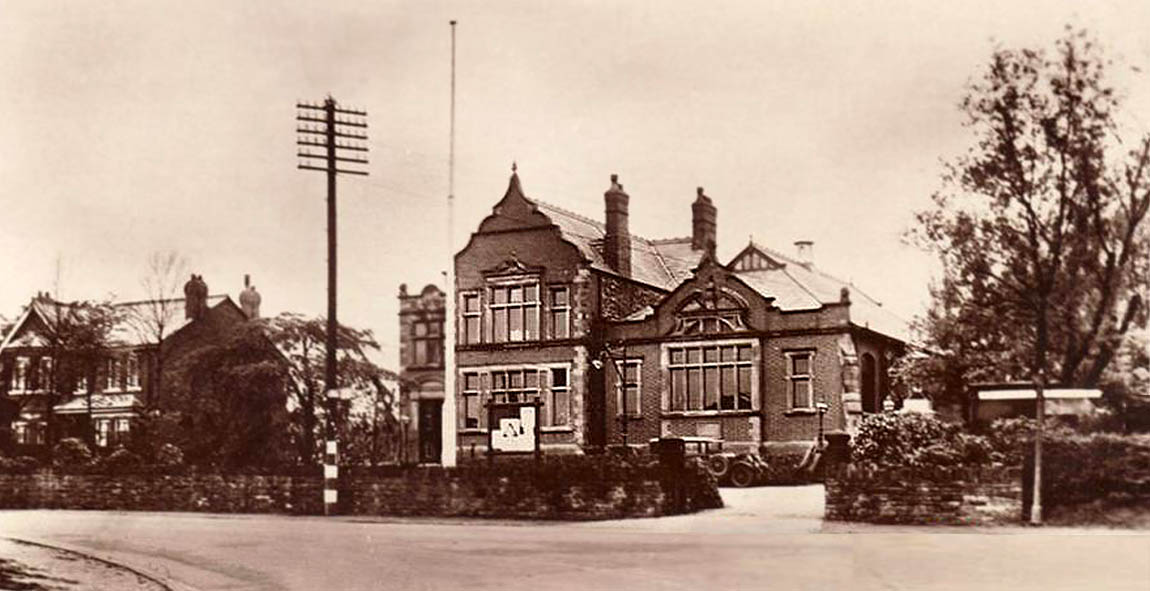 On the 24th Rainford Conservative Association held a carnival dance in the Village Hall (pictured above in slightly later years). The Ormskirk Advertiser subsequently wrote: "Many gay costumes were worn, and amongst the prizewinners were – Spanish Lady, Miss Madeline Grundy; Little Boy Blue, Miss Appleton; Egyptian Lady, Miss Berry; Eve [as in Adam and...], Miss Tuke; The Dope Merchant, Mr Barton; Dutchman, Mr Glover; Spanish gentleman, Mr Grundy." I wonder what gay costume the dope merchant wore? Apparently, the term referring to the sale of illegal drugs was in use from early on in the 20th century, which I find surprising.
On the 24th the magistrates in St Helens Police Court examined a farmer's pikel as part of a case in which Henry Fenney was accused of assault. I am assuming that a pikel is a small wooden pike and it was used to assault Joseph Birchall after Fenney had found him trespassing in his field at Lea Green Farm.
The youth from Chester Lane was taking a shortcut across the field when the farmer approached him to tell the lad off. Birchall told the court that he had said to Fenney, "What harm am I doing?" That resulted in the farmer striking the lad twice with his pikel. It can't have been a very strong pikel, as the second strike led to the implement breaking.
Birchall fell to the ground and as he got up, Fenney cut him on the face with the pikel's broken shaft. Cross-examined, Birchall denied using bad language towards Fenney and in his defence the farmer said he had experienced great trouble from trespassers. But the 52-year-old Fenney was fined £3 and ordered to pay Joseph's advocate's fee and court costs.
There had been a poisoning outbreak among poultry at St Helens and the rumour mill had assumed that it was the dastardly work of somebody out for revenge. But it was revealed this week that after analysis, a weed called cockle had been found to have been accidentally ground up with the birds' food. Cockle was harmless to strong animals but it was fatal to delicate livestock. It was reported that some of the finest stocks of birds had been badly affected.
There was another case in the Police Court this week of persistent cruelty to a wife in which all the prurient details of the couple's relationship were publicly aired. Such cases were in reality about the granting of separation orders with maintenance and there was no reason why they could not be considered in private.
But instead in a public court, Thomas Hannay from Windle Street was accused of making threats to kill his wife and being repeatedly cruel to her. The couple had been married nearly 20 years and they had nine children. The defendant was a shop manager and his wife said when he was sober, he treated her with contempt and when he was drunk he attacked her.
Although the husband earned a very good wage of £6 5 shillings per week, Mrs Hannay said he only gave her £2 10 shillings to keep the house and 11 people and she had to sew to earn money. It was also alleged that the man had a girlfriend and Mrs Hannay told the magistrates: "He has told me, in front of my children, that he loves her, and that he hates me."
The Liverpool Evening Express in its version said the other woman had "kissed and caressed" Thomas Hannay in the presence of his wife and the husband had admitted threatening his wife with a razor. The case was adjourned for a month for the court missionary / social worker to try and resolve the couple's marital problems.
"See Pimpo at Lord John Sanger's Circus" was the headline to an advert in the St Helens Reporter on the 24th. The circus took place on the following day in what was described as the Hospital Farm Field in Marshalls Cross Road, which in 1926 was more accustomed to accommodating meetings of striking miners.
These were the advertised attractions: "Indian whirlwind riders; giant elephants; dancing horses of all nations; comical kangaroos; super-human sea lions; deadly snakes; daring feats in mid-air; Royal creams; comedy rodeo and 20 star turns." Strangely, no time was set for the show, which was also being exhibited in Earlestown on the 27th in what was described as Lunt's Field in Crow Lane.
Also on the 27th in St Helens Police Court, William Simm from Herbert Street in Sutton was charged with obtaining one shilling from William Tomlin with intent to defraud. The haulage hand on strike had gone into the shop in Junction Lane and told the owner he was getting up a subscription list for a new football club to be called the Fisher Street Club.
The 19-year-old had been going round various premises collecting sums of between 6d and 5 shillings and had acquired 9s 6d, which he spent on going to the pictures and toffees. In court the young man pleaded: "Give me one more chance and it will not occur again." Superintendent Dunn told the Bench that William's father was a very respectable man but his parents could not do anything with their son.
He had been before the court on three different occasions and the Bench decided to put him on probation for 12 months and said they hoped this would be a chance for him to retrieve his character. William was also ordered to pay 8 shillings costs.
St Helens Reporter courtesy St Helens Archive Service at Eccleston Library
Next Week's stories will include the dangerous outcrop workings, the popularity of opera in St Helens, the intimidation at Sutton Manor Colliery and the man who used the Emergency Powers Act as an excuse for running away from a policeman.
"We have come to the conclusion that there has been a good deal of lying; more falsehoods have been heard this morning, than we have heard for a long time." That was the statement made by the Chairman of the Bench in St Helens Police Court on the 21st when Thomas Finnigan and William Naylor of Swaine Street were charged with stealing coal from the railway at Lea Green. The Chairman added, "We are very glad that all the colliers are not like you two. You are a disgrace to them. Your records are bad."
There was enormous deprivation caused by the miners' strike and most people who stole coal were in desperate need. But Finnigan and Naylor were among the minority profiting by selling the coal that was taken from such places as railway wagons in sidings. They had flogged their ill-gotten gains to William Sutton, who was a coal dealer living in Lea Green Cottages.
The latter said he had bought it believing the coal had come from the Sutton Manor waste heaps. But the magistrates did not believe Sutton and fined him and his brother 40 shillings for receiving stolen property. And the same punishment was imposed on Thomas Finnigan and William Naylor for thieving the coal in the first place.
With so much destitution caused by the miners' strike, the Prescot Board of Guardians had for some months been forced to make huge increases in the total amount of relief payments that were made to those in desperate need. Only family members of married strikers normally qualified for such assistance and not the men themselves. But the guardians were running out of money and so at a meeting held on the 21st, they discussed reducing the scale of strike relief by 20%.
However, some members believed that the end of the strike could shortly be in view. And after a vote was taken, the guardians agreed by a majority of just one member to continue to pay their existing scale for another fortnight. But if the strike had not ended by then, the 20% reduction would be implemented.
On the same day it was reported that the St Helens police were searching for two young children who had gone missing. Nine-year-old Edward Broderick and his six-year-old sister Kathleen had left home at 8:45 am on the previous morning to go to their school at Dentons Green – but had then disappeared.
However, the boy had recently played truant and been "corrected by his parents", as it was reported. And so it seemed more likely that the two had run away from their home in Princess Avenue, rather than having been taken away by some stranger.
And that proved to be the case as two days later the pair was found by their father and the police in what was known as the Mushroom Fields by Ravenhead brickworks. Edward and Kathleen were reported as having been in a very starved and distressed condition after having slept out during the intense cold of the previous two nights.
On the 24th the magistrates in St Helens Police Court examined a farmer's pikel as part of a case in which Henry Fenney was accused of assault. I am assuming that a pikel is a small wooden pike and it was used to assault Joseph Birchall after Fenney had found him trespassing in his field at Lea Green Farm.
The youth from Chester Lane was taking a shortcut across the field when the farmer approached him to tell the lad off. Birchall told the court that he had said to Fenney, "What harm am I doing?" That resulted in the farmer striking the lad twice with his pikel. It can't have been a very strong pikel, as the second strike led to the implement breaking.
Birchall fell to the ground and as he got up, Fenney cut him on the face with the pikel's broken shaft. Cross-examined, Birchall denied using bad language towards Fenney and in his defence the farmer said he had experienced great trouble from trespassers. But the 52-year-old Fenney was fined £3 and ordered to pay Joseph's advocate's fee and court costs.
There had been a poisoning outbreak among poultry at St Helens and the rumour mill had assumed that it was the dastardly work of somebody out for revenge. But it was revealed this week that after analysis, a weed called cockle had been found to have been accidentally ground up with the birds' food. Cockle was harmless to strong animals but it was fatal to delicate livestock. It was reported that some of the finest stocks of birds had been badly affected.
There was another case in the Police Court this week of persistent cruelty to a wife in which all the prurient details of the couple's relationship were publicly aired. Such cases were in reality about the granting of separation orders with maintenance and there was no reason why they could not be considered in private.
But instead in a public court, Thomas Hannay from Windle Street was accused of making threats to kill his wife and being repeatedly cruel to her. The couple had been married nearly 20 years and they had nine children. The defendant was a shop manager and his wife said when he was sober, he treated her with contempt and when he was drunk he attacked her.
Although the husband earned a very good wage of £6 5 shillings per week, Mrs Hannay said he only gave her £2 10 shillings to keep the house and 11 people and she had to sew to earn money. It was also alleged that the man had a girlfriend and Mrs Hannay told the magistrates: "He has told me, in front of my children, that he loves her, and that he hates me."
The Liverpool Evening Express in its version said the other woman had "kissed and caressed" Thomas Hannay in the presence of his wife and the husband had admitted threatening his wife with a razor. The case was adjourned for a month for the court missionary / social worker to try and resolve the couple's marital problems.
"See Pimpo at Lord John Sanger's Circus" was the headline to an advert in the St Helens Reporter on the 24th. The circus took place on the following day in what was described as the Hospital Farm Field in Marshalls Cross Road, which in 1926 was more accustomed to accommodating meetings of striking miners.
These were the advertised attractions: "Indian whirlwind riders; giant elephants; dancing horses of all nations; comical kangaroos; super-human sea lions; deadly snakes; daring feats in mid-air; Royal creams; comedy rodeo and 20 star turns." Strangely, no time was set for the show, which was also being exhibited in Earlestown on the 27th in what was described as Lunt's Field in Crow Lane.
Also on the 27th in St Helens Police Court, William Simm from Herbert Street in Sutton was charged with obtaining one shilling from William Tomlin with intent to defraud. The haulage hand on strike had gone into the shop in Junction Lane and told the owner he was getting up a subscription list for a new football club to be called the Fisher Street Club.
The 19-year-old had been going round various premises collecting sums of between 6d and 5 shillings and had acquired 9s 6d, which he spent on going to the pictures and toffees. In court the young man pleaded: "Give me one more chance and it will not occur again." Superintendent Dunn told the Bench that William's father was a very respectable man but his parents could not do anything with their son.
He had been before the court on three different occasions and the Bench decided to put him on probation for 12 months and said they hoped this would be a chance for him to retrieve his character. William was also ordered to pay 8 shillings costs.
St Helens Reporter courtesy St Helens Archive Service at Eccleston Library
Next Week's stories will include the dangerous outcrop workings, the popularity of opera in St Helens, the intimidation at Sutton Manor Colliery and the man who used the Emergency Powers Act as an excuse for running away from a policeman.
This week's many stories include the Lea Green farmer who was in a pickle with his pikel, Lord John Sanger's Circus comes to town, the two little children from Dentons Green who ran away from home, a delay to plans to reduce relief payments to destitute miners' families, the carnival dance in Rainford Village Hall and the wife who claimed her husband showed contempt to her when sober – and assaulted her while drunk.
"We have come to the conclusion that there has been a good deal of lying; more falsehoods have been heard this morning, than we have heard for a long time."
That was the statement made by the Chairman of the Bench in St Helens Police Court on the 21st when Thomas Finnigan and William Naylor of Swaine Street were charged with stealing coal from the railway at Lea Green.
The Chairman added, "We are very glad that all the colliers are not like you two. You are a disgrace to them. Your records are bad."
There was enormous deprivation caused by the miners' strike and most people who stole coal were in desperate need.
But Finnigan and Naylor were among the minority profiting by selling the coal that was taken from such places as railway wagons in sidings.
They had flogged their ill-gotten gains to William Sutton, who was a coal dealer living in Lea Green Cottages.
The latter said he had bought it believing the coal had come from the Sutton Manor waste heaps.
But the magistrates did not believe Sutton and fined him and his brother 40 shillings for receiving stolen property.
And the same punishment was imposed on Thomas Finnigan and William Naylor for thieving the coal in the first place.
With so much destitution caused by the miners' strike, the Prescot Board of Guardians had for some months been forced to make huge increases in the total amount of relief payments that were made to those in desperate need.
Only family members of married strikers normally qualified for such assistance and not the men themselves.
But the guardians were running out of money and so at a meeting held on the 21st, they discussed reducing the scale of strike relief by 20%.
However, some members believed that the end of the strike could shortly be in view.
And after a vote was taken, the guardians agreed by a majority of just one member to continue to pay their existing scale for another fortnight.
But if the strike had not ended by then, the 20% reduction would be implemented.
On the same day it was reported that the St Helens police were searching for two young children who had gone missing.
Nine-year-old Edward Broderick and his six-year-old sister Kathleen had left home at 8:45 am on the previous morning to go to their school at Dentons Green – but had then disappeared.
However, the boy had recently played truant and been "corrected by his parents", as it was reported.
And so it seemed more likely that the two had run away from their home in Princess Avenue, rather than having been taken away by some stranger.
And that proved to be the case as two days later the pair was found by their father and the police in what was known as the Mushroom Fields by Ravenhead brickworks.
Edward and Kathleen were reported as having been in a very starved and distressed condition after having slept out during the intense cold of the previous two nights.
On the 24th Rainford Conservative Association held a carnival dance in the Village Hall (pictured above in slightly later years). The Ormskirk Advertiser subsequently wrote:
"Many gay costumes were worn, and amongst the prizewinners were – Spanish Lady, Miss Madeline Grundy; Little Boy Blue, Miss Appleton; Egyptian Lady, Miss Berry; Eve [as in Adam and...], Miss Tuke; The Dope Merchant, Mr Barton; Dutchman, Mr Glover; Spanish gentleman, Mr Grundy."
I wonder what gay costume the dope merchant wore? Apparently, the term referring to the sale of illegal drugs was in use from early on in the 20th century, which I find surprising.
On the 24th the magistrates in St Helens Police Court examined a farmer's pikel as part of a case in which Henry Fenney was accused of assault.
I am assuming that a pikel is a small wooden pike and it was used to assault Joseph Birchall after Fenney had found him trespassing in his field at Lea Green Farm.
The youth from Chester Lane was taking a shortcut across the field when the farmer approached him to tell the lad off.
Birchall told the court that he had said to Fenney, "What harm am I doing?"
That resulted in the farmer striking the lad twice with his pikel.
It can't have been a very strong pikel, as the second strike led to the implement breaking.
Birchall fell to the ground and as he got up, Fenney cut him on the face with the pikel's broken shaft.
Cross-examined, Birchall denied using bad language towards Fenney and in his defence the farmer said he had experienced great trouble from trespassers.
But the 52-year-old Fenney was fined £3 and ordered to pay Joseph's advocate's fee and court costs.
There had been a poisoning outbreak among poultry at St Helens and the rumour mill had assumed that it was the dastardly work of somebody out for revenge.
But it was revealed this week that after analysis, a weed called cockle had been found to have been accidentally ground up with the birds' food.
Cockle was harmless to strong animals but it was fatal to delicate livestock.
It was reported that some of the finest stocks of birds had been badly affected.
There was another case in the Police Court this week of persistent cruelty to a wife in which all the prurient details of the couple's relationship were publicly aired.
Such cases were in reality about the granting of separation orders with maintenance and there was no reason why they could not be considered in private.
But instead in a public court, Thomas Hannay from Windle Street was accused of making threats to kill his wife and being repeatedly cruel to her.
The couple had been married nearly 20 years and they had nine children.
The defendant was a shop manager and his wife said when he was sober, he treated her with contempt and when he was drunk he attacked her.
Although the husband earned a very good wage of £6 5 shillings per week, Mrs Hannay said he only gave her £2 10 shillings to keep the house and 11 people and she had to sew to earn money.
It was also alleged that the man had a girlfriend and Mrs Hannay told the magistrates:
"He has told me, in front of my children, that he loves her, and that he hates me."
The Liverpool Evening Express in its version said the other woman had "kissed and caressed" Thomas Hannay in the presence of his wife and the husband had admitted threatening his wife with a razor.
The case was adjourned for a month for the court missionary / social worker to try and resolve the couple's marital problems.
"See Pimpo at Lord John Sanger's Circus" was the headline to an advert in the St Helens Reporter on the 24th.
The circus took place on the following day in what was described as the Hospital Farm Field in Marshalls Cross Road, which in 1926 was more accustomed to accommodating meetings of striking miners.
These were the advertised attractions:
"Indian whirlwind riders; giant elephants; dancing horses of all nations; comical kangaroos; super-human sea lions; deadly snakes; daring feats in mid-air; Royal creams; comedy rodeo and 20 star turns."
Strangely, no time was set for the show, which was also being exhibited in Earlestown on the 27th in what was described as Lunt's Field in Crow Lane.
Also on the 27th in St Helens Police Court, William Simm from Herbert Street in Sutton was charged with obtaining one shilling from William Tomlin with intent to defraud.
The haulage hand on strike had gone into the shop in Junction Lane and told the owner he was getting up a subscription list for a new football club to be called the Fisher Street Club.
The 19-year-old had been going round various premises collecting sums of between 6d and 5 shillings and had acquired 9s 6d, which he spent on going to the pictures and toffees.
In court the young man pleaded: "Give me one more chance and it will not occur again."
Superintendent Dunn told the Bench that William's father was a very respectable man but his parents could not do anything with their son.
He had been before the court on three different occasions and the Bench decided to put him on probation for 12 months and said they hoped this would be a chance for him to retrieve his character.
William was also ordered to pay 8 shillings costs.
St Helens Reporter courtesy St Helens Archive Service at Eccleston Library
Next Week's stories will include the dangerous outcrop workings, the popularity of opera in St Helens, the intimidation at Sutton Manor Colliery and the man who used the Emergency Powers Act as an excuse for running away from a policeman.
"We have come to the conclusion that there has been a good deal of lying; more falsehoods have been heard this morning, than we have heard for a long time."
That was the statement made by the Chairman of the Bench in St Helens Police Court on the 21st when Thomas Finnigan and William Naylor of Swaine Street were charged with stealing coal from the railway at Lea Green.
The Chairman added, "We are very glad that all the colliers are not like you two. You are a disgrace to them. Your records are bad."
There was enormous deprivation caused by the miners' strike and most people who stole coal were in desperate need.
But Finnigan and Naylor were among the minority profiting by selling the coal that was taken from such places as railway wagons in sidings.
They had flogged their ill-gotten gains to William Sutton, who was a coal dealer living in Lea Green Cottages.
The latter said he had bought it believing the coal had come from the Sutton Manor waste heaps.
But the magistrates did not believe Sutton and fined him and his brother 40 shillings for receiving stolen property.
And the same punishment was imposed on Thomas Finnigan and William Naylor for thieving the coal in the first place.
With so much destitution caused by the miners' strike, the Prescot Board of Guardians had for some months been forced to make huge increases in the total amount of relief payments that were made to those in desperate need.
Only family members of married strikers normally qualified for such assistance and not the men themselves.
But the guardians were running out of money and so at a meeting held on the 21st, they discussed reducing the scale of strike relief by 20%.
However, some members believed that the end of the strike could shortly be in view.
And after a vote was taken, the guardians agreed by a majority of just one member to continue to pay their existing scale for another fortnight.
But if the strike had not ended by then, the 20% reduction would be implemented.
On the same day it was reported that the St Helens police were searching for two young children who had gone missing.
Nine-year-old Edward Broderick and his six-year-old sister Kathleen had left home at 8:45 am on the previous morning to go to their school at Dentons Green – but had then disappeared.
However, the boy had recently played truant and been "corrected by his parents", as it was reported.
And so it seemed more likely that the two had run away from their home in Princess Avenue, rather than having been taken away by some stranger.
And that proved to be the case as two days later the pair was found by their father and the police in what was known as the Mushroom Fields by Ravenhead brickworks.
Edward and Kathleen were reported as having been in a very starved and distressed condition after having slept out during the intense cold of the previous two nights.
"Many gay costumes were worn, and amongst the prizewinners were – Spanish Lady, Miss Madeline Grundy; Little Boy Blue, Miss Appleton; Egyptian Lady, Miss Berry; Eve [as in Adam and...], Miss Tuke; The Dope Merchant, Mr Barton; Dutchman, Mr Glover; Spanish gentleman, Mr Grundy."
I wonder what gay costume the dope merchant wore? Apparently, the term referring to the sale of illegal drugs was in use from early on in the 20th century, which I find surprising.
On the 24th the magistrates in St Helens Police Court examined a farmer's pikel as part of a case in which Henry Fenney was accused of assault.
I am assuming that a pikel is a small wooden pike and it was used to assault Joseph Birchall after Fenney had found him trespassing in his field at Lea Green Farm.
The youth from Chester Lane was taking a shortcut across the field when the farmer approached him to tell the lad off.
Birchall told the court that he had said to Fenney, "What harm am I doing?"
That resulted in the farmer striking the lad twice with his pikel.
It can't have been a very strong pikel, as the second strike led to the implement breaking.
Birchall fell to the ground and as he got up, Fenney cut him on the face with the pikel's broken shaft.
Cross-examined, Birchall denied using bad language towards Fenney and in his defence the farmer said he had experienced great trouble from trespassers.
But the 52-year-old Fenney was fined £3 and ordered to pay Joseph's advocate's fee and court costs.
There had been a poisoning outbreak among poultry at St Helens and the rumour mill had assumed that it was the dastardly work of somebody out for revenge.
But it was revealed this week that after analysis, a weed called cockle had been found to have been accidentally ground up with the birds' food.
Cockle was harmless to strong animals but it was fatal to delicate livestock.
It was reported that some of the finest stocks of birds had been badly affected.
There was another case in the Police Court this week of persistent cruelty to a wife in which all the prurient details of the couple's relationship were publicly aired.
Such cases were in reality about the granting of separation orders with maintenance and there was no reason why they could not be considered in private.
But instead in a public court, Thomas Hannay from Windle Street was accused of making threats to kill his wife and being repeatedly cruel to her.
The couple had been married nearly 20 years and they had nine children.
The defendant was a shop manager and his wife said when he was sober, he treated her with contempt and when he was drunk he attacked her.
Although the husband earned a very good wage of £6 5 shillings per week, Mrs Hannay said he only gave her £2 10 shillings to keep the house and 11 people and she had to sew to earn money.
It was also alleged that the man had a girlfriend and Mrs Hannay told the magistrates:
"He has told me, in front of my children, that he loves her, and that he hates me."
The Liverpool Evening Express in its version said the other woman had "kissed and caressed" Thomas Hannay in the presence of his wife and the husband had admitted threatening his wife with a razor.
The case was adjourned for a month for the court missionary / social worker to try and resolve the couple's marital problems.
"See Pimpo at Lord John Sanger's Circus" was the headline to an advert in the St Helens Reporter on the 24th.
The circus took place on the following day in what was described as the Hospital Farm Field in Marshalls Cross Road, which in 1926 was more accustomed to accommodating meetings of striking miners.
These were the advertised attractions:
"Indian whirlwind riders; giant elephants; dancing horses of all nations; comical kangaroos; super-human sea lions; deadly snakes; daring feats in mid-air; Royal creams; comedy rodeo and 20 star turns."
Strangely, no time was set for the show, which was also being exhibited in Earlestown on the 27th in what was described as Lunt's Field in Crow Lane.
Also on the 27th in St Helens Police Court, William Simm from Herbert Street in Sutton was charged with obtaining one shilling from William Tomlin with intent to defraud.
The haulage hand on strike had gone into the shop in Junction Lane and told the owner he was getting up a subscription list for a new football club to be called the Fisher Street Club.
The 19-year-old had been going round various premises collecting sums of between 6d and 5 shillings and had acquired 9s 6d, which he spent on going to the pictures and toffees.
In court the young man pleaded: "Give me one more chance and it will not occur again."
Superintendent Dunn told the Bench that William's father was a very respectable man but his parents could not do anything with their son.
He had been before the court on three different occasions and the Bench decided to put him on probation for 12 months and said they hoped this would be a chance for him to retrieve his character.
William was also ordered to pay 8 shillings costs.
St Helens Reporter courtesy St Helens Archive Service at Eccleston Library
Next Week's stories will include the dangerous outcrop workings, the popularity of opera in St Helens, the intimidation at Sutton Manor Colliery and the man who used the Emergency Powers Act as an excuse for running away from a policeman.