
IOO YEARS AGO THIS WEEK 15 - 21 DECEMBER 1925
This week's many stories include the Christmas Fat Cattle Show at the Fleece, Rainford Potteries fancy dress Christmas ball, the Christmas postal arrangements, Lennon's turkeys and geese that were for sale, the St Helens schools' Christmas parties and plays and Beauty and the Beast is performed at the Theatre Royal.
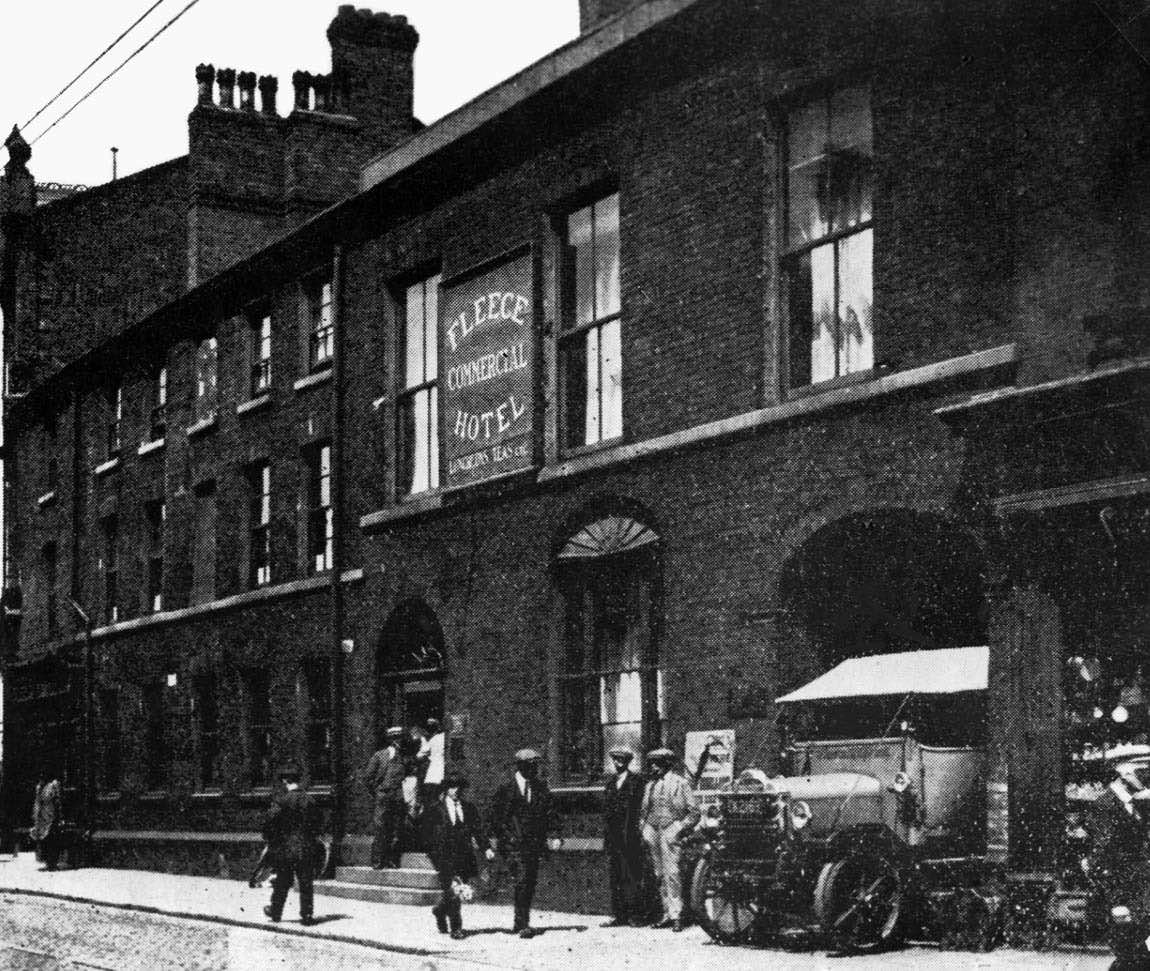 We begin on the 15th when the annual Christmas Fat Cattle Show took place in the yard of the Fleece Hotel in Church Street in St Helens. This was not the same Fleece that closed in 1986, as the original Church Street hotel was demolished in 1931 and a new Fleece built in the same year. The St Helens Reporter set the scene as the animals were paraded to the local butchers:
"The tumult and the shouting dies. There is a hush in the crowd, broken only by a voice somewhere in the rear whispering, “Bring the body in.” All necks crane forward, a dozen throats are cleared, and there is a general expression of approval as the procession they await comes into view. The procession walks round in the little ring formed by the admiring spectators, and after a short space a sharp voice rings out, “Champ’on heifer; What'll you give for her? Twenty-five pounds. Twenty-five-ten. Twenty-six."
The Reporter stated that immediately a beast appeared, the butchers would clutch it round its ribs and neck and "other attractive parts" to see how much meat there was to be had. "And, satisfied that the animal would look nice on the counter, bidding started and eventually the innocent cow would be knocked down, to become a week or two hence, somebody's week-end joint and stew meat."
On the evenings of the 16th and 17th, what the Reporter described as "two delightful little plays, beautifully staged and cleverly acted", were given by the children of the Rivington Road Girls School. Large audiences of parents and friends were said to have been enthusiastic in their appreciation of the kids' efforts and on the first evening the Mayor was also present.
"The Yuletide Season Has Again Arrived!", declared the headline to an advert from Morton's in the Reporter on the 18th. They owned the Victoria Bakery in North Road and the popular Edinburgh Cafe in Church Street and were advertising "Dainty Confectionery for Christmas Cheer". Those delights included gateaux, shortbread, decorated cakes and fancy pastry.
"The Christmas turkey is incomplete without a garland of sausages. Try Mortons' Sausages . . . for this purpose or for the tea table. They have a fine flavour and are unequalled in quality being made from the best ingredients."
During the previous thirty years Lennons had become the dominant food store in St Helens. In an advert in the Reporter they claimed that during the "dark days of the war" they had supplied over a quarter of the town's population. As well as a large presence in St Helens Market, the firm founded by Frank Lennon had premises in Park Road, Peasley Cross Lane, Nutgrove Road and Gladstone Street. They also had a bakery in Ashcroft Street, flour factory in Milk Street and branches in Leigh and Bolton. Lennon's full-page advert in the paper said:
"Christmas comes but once a year and when it comes it brings good cheer. So here's a Merry Xmas and a hearty invitation to all to purchase one of Lennon's wonderful Xmas hampers." These were advertised as available for 20 shillings, 30 shillings or 40 shillings. The ad also said: "We have 10,000 Turkeys and 5,000 Geese consigned direct from the best farms in Ireland."
For three years from 1921, Christmas parties were held annually in St Helens for around 2,000 of its poorest children, organised by the Mayor and funded through the generosity of local people. The donated cash also paid for some Christmas food parcels to be provided for the unemployed.
But in 1924 the Mayor of St Helens, Alderman Thomas Hamblett, said deciding which kids qualified for the parties had been problematic: "It was a difficult and sometimes a painful task to single out the ten per cent. of poorest children from their classmates." And so after discussing the matter with headmasters, he decided to go one step further and provide Christmas parties for all of the children attending the town's elementary schools.
In total about 20,000 kids could look forward to a party, although the extra cost meant there would not be sufficient cash left over to give the unemployed their food parcel. The school parties were now an annual event and would remain so for many years to come. In 1925 the children broke up on December 23rd and from the 11th – when the first party was held – until the end of term, the present mayor and Father Christmas would be very busy attending them.
Allanson Street Boys School had been the first to benefit and the Reporter wrote: "The hall was tastefully decorated for the occasion, while the caps worn by all present added greatly to the gaiety of the scene." After tea the evening's entertainment began with a sing-song, including carols and sea shanties. And the highlight was the arrival of Father Christmas, with the Reporter writing:
"By a careful manipulation of lights the fall of darkness was stimulated and all boys went to sleep. Suddenly Father Christmas appeared between the Mayor and Mayoress illuminated by daylight glow. He was greeted with continued cheering. Notes from the younger boys were handed to him, then on a further cheer being given by the kiddies he then disappeared as suddenly and as mysteriously as he came, vanishing so it seemed into the air itself." The Reporter was advising its readers to post early for Christmas. But not very early, as would be expected today. The Christmas Day morning delivery was still in place and the Post Office was asking people to post their letters by noon on the 23rd, and parcels a day before, in order to guarantee delivery by the 25th.
Just how many people would take their advice I cannot say, as it was a tradition to wait until Christmas Eve before posting cards and presents so they would arrive on the day itself. That meant that the postal service got overloaded and it was not uncommon for the poor postie to not finish his deliveries until the middle of Christmas Day afternoon. In the days leading up to the 25th it was reported that there would "only" be two mail deliveries in St Helens, first thing in the morning and late afternoon.
Rainford Potteries annual fancy-dress Christmas Ball took place on the 18th and was quite an event. This year's party was held in Rainford Village Hall, which the Reporter said:
"…presented a scene of bright colour and joyous movement, and one reveller described it as “a leaf from the book of ‘Arabian nights’.” Hundreds of multi-coloured electric lights peeped through a forest of festoons, and a huge chandelier, consisting of myriads of tiny mirrors, was set a-spinning above the heads of the revellers.
"As the limelights were projected upon it rainbow hued lights were showered on the dancers. Fierce looking Indian Braves mingled with characters culled from the pages of fiction, and representatives of the League of Nations threaded their way through the gay and happy throng."
Towards the end of the evening some of the artistes that were appearing at the St Helens Theatre Royal performed in the hall and gave what was described as a costume representation of a cabaret scene.
On the 19th the Ladies Committee of the Parr Temperance Prize Band held their second annual Christmas Carnival at what was then called Robins Lane Council School. There were six prizes on offer for what was described as the spot waltz competition.
Over Christmas in 1875 the St Helens Theatre Royal had hosted "The grand comic pantomime, Beauty and the Beast", as it was advertised. Fifty years later for a week from December 21st, "The grand comic spectacular pantomime, Beauty and the Beast", was being performed at the Theatre Royal. It was a different building (in Corporation Street, as opposed to Waterloo Street) and, presumably, a different version of the panto.
Of the long cast list, my favourite names of the 1925 performers were Jolly Dollie Barrie and Flo Rice's Sweeties. Meanwhile, the Hippodrome Theatre had a performance of 'Stunts of 1925', which was described as a real revue in ten scenes.
St Helens Reporter courtesy St Helens Archive Service at Eccleston Library
Next Week's stories will include the Christmas service at the St Helens Cenotaph, the children's Christmas parties in Sutton and Clock Face, Uncle Ben's Christmas painting competition and Rainford Potteries fancy dress Christmas ball.
"The tumult and the shouting dies. There is a hush in the crowd, broken only by a voice somewhere in the rear whispering, “Bring the body in.” All necks crane forward, a dozen throats are cleared, and there is a general expression of approval as the procession they await comes into view. The procession walks round in the little ring formed by the admiring spectators, and after a short space a sharp voice rings out, “Champ’on heifer; What'll you give for her? Twenty-five pounds. Twenty-five-ten. Twenty-six."
The Reporter stated that immediately a beast appeared, the butchers would clutch it round its ribs and neck and "other attractive parts" to see how much meat there was to be had. "And, satisfied that the animal would look nice on the counter, bidding started and eventually the innocent cow would be knocked down, to become a week or two hence, somebody's week-end joint and stew meat."
On the evenings of the 16th and 17th, what the Reporter described as "two delightful little plays, beautifully staged and cleverly acted", were given by the children of the Rivington Road Girls School. Large audiences of parents and friends were said to have been enthusiastic in their appreciation of the kids' efforts and on the first evening the Mayor was also present.
"The Yuletide Season Has Again Arrived!", declared the headline to an advert from Morton's in the Reporter on the 18th. They owned the Victoria Bakery in North Road and the popular Edinburgh Cafe in Church Street and were advertising "Dainty Confectionery for Christmas Cheer". Those delights included gateaux, shortbread, decorated cakes and fancy pastry.
"The Christmas turkey is incomplete without a garland of sausages. Try Mortons' Sausages . . . for this purpose or for the tea table. They have a fine flavour and are unequalled in quality being made from the best ingredients."
During the previous thirty years Lennons had become the dominant food store in St Helens. In an advert in the Reporter they claimed that during the "dark days of the war" they had supplied over a quarter of the town's population. As well as a large presence in St Helens Market, the firm founded by Frank Lennon had premises in Park Road, Peasley Cross Lane, Nutgrove Road and Gladstone Street. They also had a bakery in Ashcroft Street, flour factory in Milk Street and branches in Leigh and Bolton. Lennon's full-page advert in the paper said:
"Christmas comes but once a year and when it comes it brings good cheer. So here's a Merry Xmas and a hearty invitation to all to purchase one of Lennon's wonderful Xmas hampers." These were advertised as available for 20 shillings, 30 shillings or 40 shillings. The ad also said: "We have 10,000 Turkeys and 5,000 Geese consigned direct from the best farms in Ireland."
For three years from 1921, Christmas parties were held annually in St Helens for around 2,000 of its poorest children, organised by the Mayor and funded through the generosity of local people. The donated cash also paid for some Christmas food parcels to be provided for the unemployed.
But in 1924 the Mayor of St Helens, Alderman Thomas Hamblett, said deciding which kids qualified for the parties had been problematic: "It was a difficult and sometimes a painful task to single out the ten per cent. of poorest children from their classmates." And so after discussing the matter with headmasters, he decided to go one step further and provide Christmas parties for all of the children attending the town's elementary schools.
In total about 20,000 kids could look forward to a party, although the extra cost meant there would not be sufficient cash left over to give the unemployed their food parcel. The school parties were now an annual event and would remain so for many years to come. In 1925 the children broke up on December 23rd and from the 11th – when the first party was held – until the end of term, the present mayor and Father Christmas would be very busy attending them.
Allanson Street Boys School had been the first to benefit and the Reporter wrote: "The hall was tastefully decorated for the occasion, while the caps worn by all present added greatly to the gaiety of the scene." After tea the evening's entertainment began with a sing-song, including carols and sea shanties. And the highlight was the arrival of Father Christmas, with the Reporter writing:
"By a careful manipulation of lights the fall of darkness was stimulated and all boys went to sleep. Suddenly Father Christmas appeared between the Mayor and Mayoress illuminated by daylight glow. He was greeted with continued cheering. Notes from the younger boys were handed to him, then on a further cheer being given by the kiddies he then disappeared as suddenly and as mysteriously as he came, vanishing so it seemed into the air itself."
Just how many people would take their advice I cannot say, as it was a tradition to wait until Christmas Eve before posting cards and presents so they would arrive on the day itself. That meant that the postal service got overloaded and it was not uncommon for the poor postie to not finish his deliveries until the middle of Christmas Day afternoon. In the days leading up to the 25th it was reported that there would "only" be two mail deliveries in St Helens, first thing in the morning and late afternoon.
Rainford Potteries annual fancy-dress Christmas Ball took place on the 18th and was quite an event. This year's party was held in Rainford Village Hall, which the Reporter said:
"…presented a scene of bright colour and joyous movement, and one reveller described it as “a leaf from the book of ‘Arabian nights’.” Hundreds of multi-coloured electric lights peeped through a forest of festoons, and a huge chandelier, consisting of myriads of tiny mirrors, was set a-spinning above the heads of the revellers.
"As the limelights were projected upon it rainbow hued lights were showered on the dancers. Fierce looking Indian Braves mingled with characters culled from the pages of fiction, and representatives of the League of Nations threaded their way through the gay and happy throng."
Towards the end of the evening some of the artistes that were appearing at the St Helens Theatre Royal performed in the hall and gave what was described as a costume representation of a cabaret scene.
On the 19th the Ladies Committee of the Parr Temperance Prize Band held their second annual Christmas Carnival at what was then called Robins Lane Council School. There were six prizes on offer for what was described as the spot waltz competition.
Over Christmas in 1875 the St Helens Theatre Royal had hosted "The grand comic pantomime, Beauty and the Beast", as it was advertised. Fifty years later for a week from December 21st, "The grand comic spectacular pantomime, Beauty and the Beast", was being performed at the Theatre Royal. It was a different building (in Corporation Street, as opposed to Waterloo Street) and, presumably, a different version of the panto.
Of the long cast list, my favourite names of the 1925 performers were Jolly Dollie Barrie and Flo Rice's Sweeties. Meanwhile, the Hippodrome Theatre had a performance of 'Stunts of 1925', which was described as a real revue in ten scenes.
St Helens Reporter courtesy St Helens Archive Service at Eccleston Library
Next Week's stories will include the Christmas service at the St Helens Cenotaph, the children's Christmas parties in Sutton and Clock Face, Uncle Ben's Christmas painting competition and Rainford Potteries fancy dress Christmas ball.
This week's many stories include the Christmas Fat Cattle Show at the Fleece, Rainford Potteries fancy dress Christmas ball, the Christmas postal arrangements, Lennon's turkeys and geese that were for sale, the St Helens schools' Christmas parties and plays and Beauty and the Beast is performed at the Theatre Royal.
We begin on the 15th when the annual Christmas Fat Cattle Show took place in the yard of the Fleece Hotel in Church Street in St Helens.
This was not the same Fleece that closed in 1986, as the original Church Street hotel was demolished in 1931 and a new Fleece built in the same year.
The St Helens Reporter set the scene as the animals were paraded to the local butchers:
"The tumult and the shouting dies. There is a hush in the crowd, broken only by a voice somewhere in the rear whispering, “Bring the body in.”
"All necks crane forward, a dozen throats are cleared, and there is a general expression of approval as the procession they await comes into view.
"The procession walks round in the little ring formed by the admiring spectators, and after a short space a sharp voice rings out, “Champ’on heifer; What'll you give for her? Twenty-five pounds. Twenty-five-ten. Twenty-six."
The Reporter stated that immediately a beast appeared, the butchers would clutch it round its ribs and neck and "other attractive parts" to see how much meat there was to be had.
"And, satisfied that the animal would look nice on the counter, bidding started and eventually the innocent cow would be knocked down, to become a week or two hence, somebody's week-end joint and stew meat."
On the evenings of the 16th and 17th, what the Reporter described as "two delightful little plays, beautifully staged and cleverly acted", were given by the children of the Rivington Road Girls School.
Large audiences of parents and friends were said to have been enthusiastic in their appreciation of the kids' efforts and on the first evening the Mayor was also present.
"The Yuletide Season Has Again Arrived!", declared the headline to an advert from Morton's in the Reporter on the 18th.
They owned the Victoria Bakery in North Road and the popular Edinburgh Cafe in Church Street and were advertising "Dainty Confectionery for Christmas Cheer". Those delights included gateaux, shortbread, decorated cakes and fancy pastry.
"The Christmas turkey is incomplete without a garland of sausages. Try Mortons' Sausages . . . for this purpose or for the tea table. They have a fine flavour and are unequalled in quality being made from the best ingredients."
During the previous thirty years Lennons had become the dominant food store in St Helens.
In an advert in the Reporter they claimed that during the "dark days of the war" they had supplied over a quarter of the town's population.
As well as a large presence in St Helens Market, the firm founded by Frank Lennon had premises in Park Road, Peasley Cross Lane, Nutgrove Road and Gladstone Street.
They also had a bakery in Ashcroft Street, flour factory in Milk Street and branches in Leigh and Bolton. Lennon's full-page advert in the paper said:
"Christmas comes but once a year and when it comes it brings good cheer. So here's a Merry Xmas and a hearty invitation to all to purchase one of Lennon's wonderful Xmas hampers."
These were advertised as available for 20 shillings, 30 shillings or 40 shillings. The ad also said:
"We have 10,000 Turkeys and 5,000 Geese consigned direct from the best farms in Ireland."
For three years from 1921, Christmas parties were held annually in St Helens for around 2,000 of its poorest children, organised by the Mayor and funded through the generosity of local people.
The donated cash also paid for some Christmas food parcels to be provided for the unemployed.
But in 1924 the Mayor of St Helens, Alderman Thomas Hamblett, said deciding which kids qualified for the parties had been problematic:
"It was a difficult and sometimes a painful task to single out the ten per cent. of poorest children from their classmates."
And so after discussing the matter with headmasters, he decided to go one step further and provide Christmas parties for all of the children attending the town's elementary schools.
In total about 20,000 kids could look forward to a party, although the extra cost meant there would not be sufficient cash left over to give the unemployed their food parcel.
The school parties were now an annual event and would remain so for many years to come.
In 1925 the children broke up on December 23rd and from the 11th – when the first party was held – until the end of term, the present mayor and Father Christmas would be very busy attending them.
Allanson Street Boys School had been the first to benefit and the Reporter wrote:
"The hall was tastefully decorated for the occasion, while the caps worn by all present added greatly to the gaiety of the scene."
After tea the evening's entertainment began with a sing-song, including carols and sea shanties.
And the highlight was the arrival of Father Christmas, with the Reporter writing:
"By a careful manipulation of lights the fall of darkness was stimulated and all boys went to sleep. Suddenly Father Christmas appeared between the Mayor and Mayoress illuminated by daylight glow. He was greeted with continued cheering.
"Notes from the younger boys were handed to him, then on a further cheer being given by the kiddies he then disappeared as suddenly and as mysteriously as he came, vanishing so it seemed into the air itself."
The Reporter was advising its readers to post early for Christmas. But not very early, as would be expected today.
The Christmas Day morning delivery was still in place and the Post Office was asking people to post their letters by noon on the 23rd, and parcels a day before, in order to guarantee delivery by the 25th.
Just how many people would take their advice I cannot say, as it was a tradition to wait until Christmas Eve before posting cards and presents so they would arrive on the day itself.
That meant that the postal service got overloaded and it was not uncommon for the poor postie to not finish his deliveries until the middle of Christmas Day afternoon.
In the days leading up to the 25th it was reported that there would "only" be two mail deliveries in St Helens, first thing in the morning and late afternoon.
Rainford Potteries annual fancy-dress Christmas Ball took place on the 18th and was quite an event. This year's party was held in Rainford Village Hall, which the Reporter said:
"…presented a scene of bright colour and joyous movement, and one reveller described it as “a leaf from the book of ‘Arabian nights’.” Hundreds of multi-coloured electric lights peeped through a forest of festoons, and a huge chandelier, consisting of myriads of tiny mirrors, was set a-spinning above the heads of the revellers.
"As the limelights were projected upon it rainbow hued lights were showered on the dancers. Fierce looking Indian Braves mingled with characters culled from the pages of fiction, and representatives of the League of Nations threaded their way through the gay and happy throng."
Towards the end of the evening some of the artistes that were appearing at the St Helens Theatre Royal performed in the hall and gave what was described as a costume representation of a cabaret scene.
On the 19th the Ladies Committee of the Parr Temperance Prize Band held their second annual Christmas Carnival at what was then called Robins Lane Council School.
There were six prizes on offer for what was described as the spot waltz competition.
Over Christmas in 1875 the St Helens Theatre Royal had hosted "The grand comic pantomime, Beauty and the Beast", as it was advertised.
Fifty years later for a week from December 21st, "The grand comic spectacular pantomime, Beauty and the Beast", was being performed at the Theatre Royal.
It was a different building (in Corporation Street, as opposed to Waterloo Street) and, presumably, a different version of the panto.
Of the long cast list, my favourite names of the 1925 performers were Jolly Dollie Barrie and Flo Rice's Sweeties.
Meanwhile, the Hippodrome Theatre had a performance of 'Stunts of 1925', which was described as a real revue in ten scenes.
St Helens Reporter courtesy St Helens Archive Service at Eccleston Library
Next Week's stories will include the Christmas service at the St Helens Cenotaph, the children's Christmas parties in Sutton and Clock Face, Uncle Ben's Christmas painting competition and Rainford Potteries fancy dress Christmas ball.
This was not the same Fleece that closed in 1986, as the original Church Street hotel was demolished in 1931 and a new Fleece built in the same year.
The St Helens Reporter set the scene as the animals were paraded to the local butchers:
"The tumult and the shouting dies. There is a hush in the crowd, broken only by a voice somewhere in the rear whispering, “Bring the body in.”
"All necks crane forward, a dozen throats are cleared, and there is a general expression of approval as the procession they await comes into view.
"The procession walks round in the little ring formed by the admiring spectators, and after a short space a sharp voice rings out, “Champ’on heifer; What'll you give for her? Twenty-five pounds. Twenty-five-ten. Twenty-six."
The Reporter stated that immediately a beast appeared, the butchers would clutch it round its ribs and neck and "other attractive parts" to see how much meat there was to be had.
"And, satisfied that the animal would look nice on the counter, bidding started and eventually the innocent cow would be knocked down, to become a week or two hence, somebody's week-end joint and stew meat."
On the evenings of the 16th and 17th, what the Reporter described as "two delightful little plays, beautifully staged and cleverly acted", were given by the children of the Rivington Road Girls School.
Large audiences of parents and friends were said to have been enthusiastic in their appreciation of the kids' efforts and on the first evening the Mayor was also present.
"The Yuletide Season Has Again Arrived!", declared the headline to an advert from Morton's in the Reporter on the 18th.
They owned the Victoria Bakery in North Road and the popular Edinburgh Cafe in Church Street and were advertising "Dainty Confectionery for Christmas Cheer". Those delights included gateaux, shortbread, decorated cakes and fancy pastry.
"The Christmas turkey is incomplete without a garland of sausages. Try Mortons' Sausages . . . for this purpose or for the tea table. They have a fine flavour and are unequalled in quality being made from the best ingredients."
During the previous thirty years Lennons had become the dominant food store in St Helens.
In an advert in the Reporter they claimed that during the "dark days of the war" they had supplied over a quarter of the town's population.
As well as a large presence in St Helens Market, the firm founded by Frank Lennon had premises in Park Road, Peasley Cross Lane, Nutgrove Road and Gladstone Street.
They also had a bakery in Ashcroft Street, flour factory in Milk Street and branches in Leigh and Bolton. Lennon's full-page advert in the paper said:
"Christmas comes but once a year and when it comes it brings good cheer. So here's a Merry Xmas and a hearty invitation to all to purchase one of Lennon's wonderful Xmas hampers."
These were advertised as available for 20 shillings, 30 shillings or 40 shillings. The ad also said:
"We have 10,000 Turkeys and 5,000 Geese consigned direct from the best farms in Ireland."
For three years from 1921, Christmas parties were held annually in St Helens for around 2,000 of its poorest children, organised by the Mayor and funded through the generosity of local people.
The donated cash also paid for some Christmas food parcels to be provided for the unemployed.
But in 1924 the Mayor of St Helens, Alderman Thomas Hamblett, said deciding which kids qualified for the parties had been problematic:
"It was a difficult and sometimes a painful task to single out the ten per cent. of poorest children from their classmates."
And so after discussing the matter with headmasters, he decided to go one step further and provide Christmas parties for all of the children attending the town's elementary schools.
In total about 20,000 kids could look forward to a party, although the extra cost meant there would not be sufficient cash left over to give the unemployed their food parcel.
The school parties were now an annual event and would remain so for many years to come.
In 1925 the children broke up on December 23rd and from the 11th – when the first party was held – until the end of term, the present mayor and Father Christmas would be very busy attending them.
Allanson Street Boys School had been the first to benefit and the Reporter wrote:
"The hall was tastefully decorated for the occasion, while the caps worn by all present added greatly to the gaiety of the scene."
After tea the evening's entertainment began with a sing-song, including carols and sea shanties.
And the highlight was the arrival of Father Christmas, with the Reporter writing:
"By a careful manipulation of lights the fall of darkness was stimulated and all boys went to sleep. Suddenly Father Christmas appeared between the Mayor and Mayoress illuminated by daylight glow. He was greeted with continued cheering.
"Notes from the younger boys were handed to him, then on a further cheer being given by the kiddies he then disappeared as suddenly and as mysteriously as he came, vanishing so it seemed into the air itself."
The Christmas Day morning delivery was still in place and the Post Office was asking people to post their letters by noon on the 23rd, and parcels a day before, in order to guarantee delivery by the 25th.
Just how many people would take their advice I cannot say, as it was a tradition to wait until Christmas Eve before posting cards and presents so they would arrive on the day itself.
That meant that the postal service got overloaded and it was not uncommon for the poor postie to not finish his deliveries until the middle of Christmas Day afternoon.
In the days leading up to the 25th it was reported that there would "only" be two mail deliveries in St Helens, first thing in the morning and late afternoon.
Rainford Potteries annual fancy-dress Christmas Ball took place on the 18th and was quite an event. This year's party was held in Rainford Village Hall, which the Reporter said:
"…presented a scene of bright colour and joyous movement, and one reveller described it as “a leaf from the book of ‘Arabian nights’.” Hundreds of multi-coloured electric lights peeped through a forest of festoons, and a huge chandelier, consisting of myriads of tiny mirrors, was set a-spinning above the heads of the revellers.
"As the limelights were projected upon it rainbow hued lights were showered on the dancers. Fierce looking Indian Braves mingled with characters culled from the pages of fiction, and representatives of the League of Nations threaded their way through the gay and happy throng."
Towards the end of the evening some of the artistes that were appearing at the St Helens Theatre Royal performed in the hall and gave what was described as a costume representation of a cabaret scene.
On the 19th the Ladies Committee of the Parr Temperance Prize Band held their second annual Christmas Carnival at what was then called Robins Lane Council School.
There were six prizes on offer for what was described as the spot waltz competition.
Over Christmas in 1875 the St Helens Theatre Royal had hosted "The grand comic pantomime, Beauty and the Beast", as it was advertised.
Fifty years later for a week from December 21st, "The grand comic spectacular pantomime, Beauty and the Beast", was being performed at the Theatre Royal.
It was a different building (in Corporation Street, as opposed to Waterloo Street) and, presumably, a different version of the panto.
Of the long cast list, my favourite names of the 1925 performers were Jolly Dollie Barrie and Flo Rice's Sweeties.
Meanwhile, the Hippodrome Theatre had a performance of 'Stunts of 1925', which was described as a real revue in ten scenes.
St Helens Reporter courtesy St Helens Archive Service at Eccleston Library
Next Week's stories will include the Christmas service at the St Helens Cenotaph, the children's Christmas parties in Sutton and Clock Face, Uncle Ben's Christmas painting competition and Rainford Potteries fancy dress Christmas ball.