
IOO YEARS AGO THIS WEEK 13 - 19 JULY 1926
This week's many stories include the arrival of a trackless train in St Helens, the brave man who saved a dog from drowning in the canal, the plans to expand St Helens Town Hall, the nocturnal potato pickers of Blackbrook, why the St Helens MP was not a hypocrite and the unemployed man forced to pay maintenance to a wife who had her own business.
Public appeals by St Helens Police to identify unknown persons were usually in connection with deceased strangers found floating in the canal. However, this week the Chief Constable of St Helens was trying to find the identity of a living person.
The young woman aged 18 to 20 had been found wandering in St Helens on the previous Sunday evening suffering from loss of memory. As so often occurred, there were no follow up stories in the newspapers as to her condition or identity.
On the 15th the first trackless train arrived in St Helens. The vehicle was on a three-year world tour and brought out huge crowds wherever it went. The trackless train comprised a locomotive with tender and a luxuriously appointed Pullman car containing dining and sleeping accommodation for five persons.
It was used by MGM to promote its films but while in St Helens the trackless train was also promoting the annual Poppy Day appeal. In reality the "train" was an articulated, rubbed-wheeled road vehicle that was hauled by a steam loco similar to those that the first St Helens trams were pulled by during the 1890s.
Husbands were still required to pay maintenance money to their separated wife even if the woman was working – and they were not. In St Helens Police Court on the 15th, Edward Owen, who was now living in Liverpool, was charged with wife desertion, which effectively meant he was being asked to pay maintenance to his separated spouse. The couple had been married for 17 years and had three children.
The solicitor appearing for Mrs Owen told the court that his client was running a business in Ormskirk Street in St Helens and said a young woman named Louise Brown was mixed up in the case. At that point Edward Owen said he objected to the girl's name being mentioned, claiming she had nothing to do with the hearing. "My wife listened to other people's gossip. That is how the trouble began", insisted Mr Owen.
But Mrs Owen told the court that her husband had walked out on her in 1924 and had gone to London where Louise Brown was staying. He subsequently returned home but had departed again last February. However, Owen blamed his wife, claiming that she flew into such violent tempers that he could stand it no longer and said when she told him to clear off he had taken her at her word.
Edward said that his wife had transferred their business into her own name and she made at least £5 a week whereas at present he was unemployed. But Mr Owen was still ordered to pay his wife 10 shilling per week maintenance and the court costs, sums, he insisted, that he simply could not pay.
Thomas Rawlinson of Raglan Street also appeared in court on the 15th charged with persistent cruelty to his wife. That was another means of seeking a separation order with maintenance payments. Rawlinson claimed that his wife's parents had constantly interfered in their marriage and her father had wanted to fight him.
To that remark his wife's solicitor said: "No wonder he interfered after you had kicked her and blacked her eye." Rawlinson was ordered to pay 7 shillings a week maintenance to his wife.
Henry Stringman was the 60-year-old farmer who ran Blackbrook Farm in Chain Lane and had a big problem with nocturnal potato pickers. It was such a problem that Henry had been keeping a night-time vigil on his crops, aided by a police constable.
And at 12:30am they had nabbed James Merton and Joseph Fitzpatrick, both of Raglan Street, and Thomas O’Neil of Clyde Street in the act of stealing his spuds. In court this week Farmer Stringman reckoned thefts of his potato crop and damage to his young cabbages had cost him about £14 and the three defendants were fined 10 shillings each.
For reasons that I don't know exactly, the St Helens tram on the Windle City route was nicknamed, somewhat wonderfully, "Winsome Winnie"! In the St Helens Reporter on the 16th, a letter-writer implored the Tramways Manager to travel once on Winsome Winnie and then, hopefully, something would be done about its lack of ventilation, which, in the present hot weather was said to be stifling passengers.
During the warm weather canal drownings in St Helens were much more common. Although the water might look inviting during hot spells, it was often muddy and contained vegetation and dumped items that could trap the unwary swimmer. Arthur Roberts was the latest to die, having gone to swim in the canal, about 300 yards away from Southport Colliery in Parr.
The 25-year-old from Back Chancery Lane had been with three or four companions who had all come out of the water after a bathe. But Arthur had decided to go back in and have another swim. He safely got across to the other bank but when he tried to swim back, he only got as far as halfway before throwing up his arms and sinking. Arthur's friends made valiant attempts to save him but they were to no avail.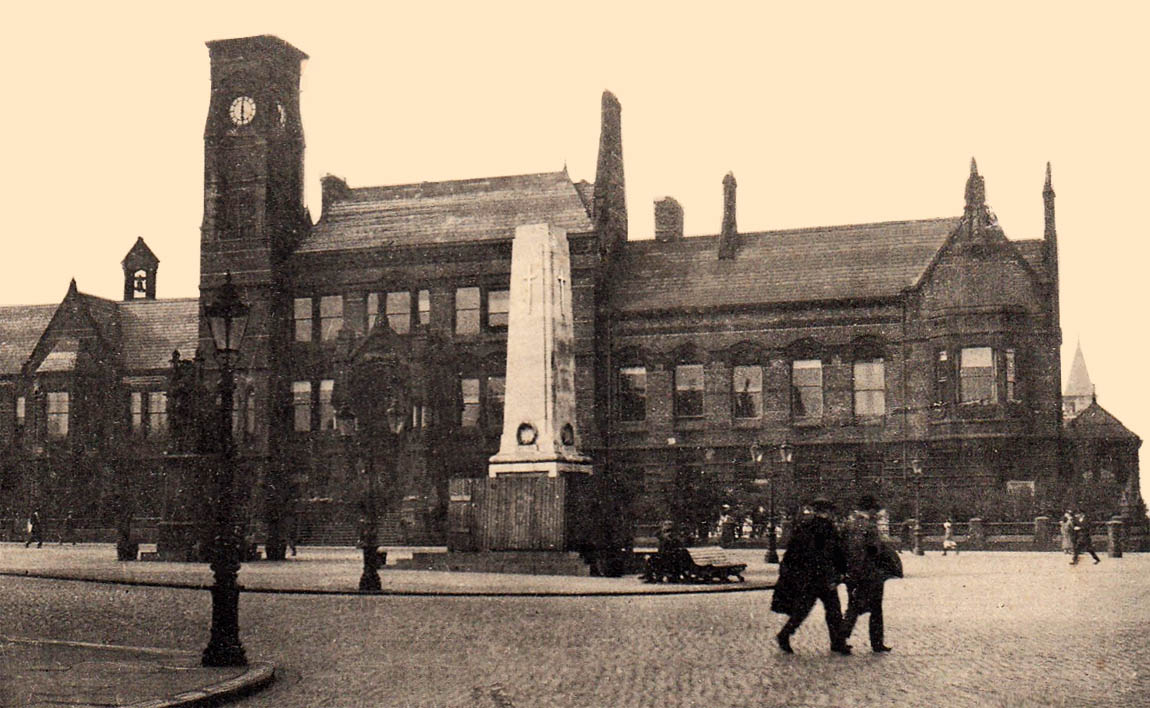 1926 was the 50th anniversary of the opening of St Helens Town Hall and some people wanted to commemorate the event by knocking it down! There was an accommodation crisis in the hall with insufficient space for officers and visitors and a popular solution to the problem was for it to be demolished and rebuilt.
But that would be extremely expensive and so on the 16th it was announced that new accommodation would instead be added. The expansion would cost £60,000 and include improvements to the existing police station.
Joseph Carragher of Vernon Street in St Helens was praised in the Police Court on the 16th for his action in saving a drowning dog. The Mayor of St Helens, Ald Thomas Hamblett, handed Carragher a medal and a £5 gift from the RSPCA and told him: "I am delighted to make the presentation. What you did was a splendid action and showed great and humane feeling. The world would be a better place if there were more men like you.”
And the world would be a better place if there were fewer men like the owner of the dog. He had cruelly thrown his pet into the canal and as the banks were very steep, the animal could not get out and so the dog swam until it became exhausted. Mr Carragher, seeing its plight, threw off his clothes, jumped in the water and carried the dog to the bank, which was a distance of about 20 yards.
It was considered a far more serious crime to use your own home for betting than taking bets on the street. It was also more risky, as lots of people coming to your house attracted attention. At St Helens Police Court on the 16th, the huge fine of £20 was imposed on Thomas Langley of Kirkland Street for using his premises for betting.
When the police raided the house, 179 betting slips relating to 711 bets on horses that were running that day and £18 in cash were found. The slips and money were discovered concealed in various places, including a canvas bag, tobacco box, teacup, carpet bag, black satchel and a green baize bag. In his defence Langley said he had been out of work but had now got a job and given up bookmaking.
Sunday was the day when the mineworkers within the St Helens district held their mass meetings to discuss their present situation, with their strike / lockout now 10 weeks old. On Sunday the 18th a meeting of miners was held at Clock Face in which James Sexton was the main speaker. A man in the crowd asked the St Helens MP about his recent criticism of capitalist-supporting newspapers, as he himself wrote for one of them.
Mr Sexton said that in his case he wrote articles for the Liverpool Weekly Post putting strongly and clearly Labour's position and his pieces were always printed as written. A resolution was unanimously passed by those in attendance that proposals put forward by the coal owners of Lancashire and Cheshire to resolve the dispute were not worthy of consideration. They also decided to continue to oppose any local settlements.
Cheating the dole authorities and the Board of Guardians – who provided backstop relief to those in desperate need – was harshly treated. In St Helens Police Court on the 19th, John Connor of Elliott Street was sentenced to a month's hard labour for obtaining £5 14s by false pretences. Connor had told the Board of Guardians that neither he nor his wife were working, when she was in fact earning 32 shillings a week. During the miners' long stoppage, relief payments could only be made for the men's children and their wives.
At the same hearing, Edward McCabe of Waterloo Street was sentenced to 14 days in prison. He had claimed relief to the extent of £1 in respect of a child of which he was the father. However, McCabe had failed to pass the money onto the child's mother, who was not his wife.
St Helens Reporter courtesy St Helens Archive Service at Eccleston Library
Next Week's stories will include the poetic miner from Parr, the terrific summer storm, the attack on a Traverse Street housekeeper, Crank's Rose Queen Carnival and the Sutton Moss telegraph pole that was chopped down for firewood.
Public appeals by St Helens Police to identify unknown persons were usually in connection with deceased strangers found floating in the canal. However, this week the Chief Constable of St Helens was trying to find the identity of a living person.
The young woman aged 18 to 20 had been found wandering in St Helens on the previous Sunday evening suffering from loss of memory. As so often occurred, there were no follow up stories in the newspapers as to her condition or identity.
On the 15th the first trackless train arrived in St Helens. The vehicle was on a three-year world tour and brought out huge crowds wherever it went. The trackless train comprised a locomotive with tender and a luxuriously appointed Pullman car containing dining and sleeping accommodation for five persons.
It was used by MGM to promote its films but while in St Helens the trackless train was also promoting the annual Poppy Day appeal. In reality the "train" was an articulated, rubbed-wheeled road vehicle that was hauled by a steam loco similar to those that the first St Helens trams were pulled by during the 1890s.
Husbands were still required to pay maintenance money to their separated wife even if the woman was working – and they were not. In St Helens Police Court on the 15th, Edward Owen, who was now living in Liverpool, was charged with wife desertion, which effectively meant he was being asked to pay maintenance to his separated spouse. The couple had been married for 17 years and had three children.
The solicitor appearing for Mrs Owen told the court that his client was running a business in Ormskirk Street in St Helens and said a young woman named Louise Brown was mixed up in the case. At that point Edward Owen said he objected to the girl's name being mentioned, claiming she had nothing to do with the hearing. "My wife listened to other people's gossip. That is how the trouble began", insisted Mr Owen.
But Mrs Owen told the court that her husband had walked out on her in 1924 and had gone to London where Louise Brown was staying. He subsequently returned home but had departed again last February. However, Owen blamed his wife, claiming that she flew into such violent tempers that he could stand it no longer and said when she told him to clear off he had taken her at her word.
Edward said that his wife had transferred their business into her own name and she made at least £5 a week whereas at present he was unemployed. But Mr Owen was still ordered to pay his wife 10 shilling per week maintenance and the court costs, sums, he insisted, that he simply could not pay.
Thomas Rawlinson of Raglan Street also appeared in court on the 15th charged with persistent cruelty to his wife. That was another means of seeking a separation order with maintenance payments. Rawlinson claimed that his wife's parents had constantly interfered in their marriage and her father had wanted to fight him.
To that remark his wife's solicitor said: "No wonder he interfered after you had kicked her and blacked her eye." Rawlinson was ordered to pay 7 shillings a week maintenance to his wife.
Henry Stringman was the 60-year-old farmer who ran Blackbrook Farm in Chain Lane and had a big problem with nocturnal potato pickers. It was such a problem that Henry had been keeping a night-time vigil on his crops, aided by a police constable.
And at 12:30am they had nabbed James Merton and Joseph Fitzpatrick, both of Raglan Street, and Thomas O’Neil of Clyde Street in the act of stealing his spuds. In court this week Farmer Stringman reckoned thefts of his potato crop and damage to his young cabbages had cost him about £14 and the three defendants were fined 10 shillings each.
For reasons that I don't know exactly, the St Helens tram on the Windle City route was nicknamed, somewhat wonderfully, "Winsome Winnie"! In the St Helens Reporter on the 16th, a letter-writer implored the Tramways Manager to travel once on Winsome Winnie and then, hopefully, something would be done about its lack of ventilation, which, in the present hot weather was said to be stifling passengers.
During the warm weather canal drownings in St Helens were much more common. Although the water might look inviting during hot spells, it was often muddy and contained vegetation and dumped items that could trap the unwary swimmer. Arthur Roberts was the latest to die, having gone to swim in the canal, about 300 yards away from Southport Colliery in Parr.
The 25-year-old from Back Chancery Lane had been with three or four companions who had all come out of the water after a bathe. But Arthur had decided to go back in and have another swim. He safely got across to the other bank but when he tried to swim back, he only got as far as halfway before throwing up his arms and sinking. Arthur's friends made valiant attempts to save him but they were to no avail.
But that would be extremely expensive and so on the 16th it was announced that new accommodation would instead be added. The expansion would cost £60,000 and include improvements to the existing police station.
Joseph Carragher of Vernon Street in St Helens was praised in the Police Court on the 16th for his action in saving a drowning dog. The Mayor of St Helens, Ald Thomas Hamblett, handed Carragher a medal and a £5 gift from the RSPCA and told him: "I am delighted to make the presentation. What you did was a splendid action and showed great and humane feeling. The world would be a better place if there were more men like you.”
And the world would be a better place if there were fewer men like the owner of the dog. He had cruelly thrown his pet into the canal and as the banks were very steep, the animal could not get out and so the dog swam until it became exhausted. Mr Carragher, seeing its plight, threw off his clothes, jumped in the water and carried the dog to the bank, which was a distance of about 20 yards.
It was considered a far more serious crime to use your own home for betting than taking bets on the street. It was also more risky, as lots of people coming to your house attracted attention. At St Helens Police Court on the 16th, the huge fine of £20 was imposed on Thomas Langley of Kirkland Street for using his premises for betting.
When the police raided the house, 179 betting slips relating to 711 bets on horses that were running that day and £18 in cash were found. The slips and money were discovered concealed in various places, including a canvas bag, tobacco box, teacup, carpet bag, black satchel and a green baize bag. In his defence Langley said he had been out of work but had now got a job and given up bookmaking.
Sunday was the day when the mineworkers within the St Helens district held their mass meetings to discuss their present situation, with their strike / lockout now 10 weeks old. On Sunday the 18th a meeting of miners was held at Clock Face in which James Sexton was the main speaker. A man in the crowd asked the St Helens MP about his recent criticism of capitalist-supporting newspapers, as he himself wrote for one of them.
Mr Sexton said that in his case he wrote articles for the Liverpool Weekly Post putting strongly and clearly Labour's position and his pieces were always printed as written. A resolution was unanimously passed by those in attendance that proposals put forward by the coal owners of Lancashire and Cheshire to resolve the dispute were not worthy of consideration. They also decided to continue to oppose any local settlements.
Cheating the dole authorities and the Board of Guardians – who provided backstop relief to those in desperate need – was harshly treated. In St Helens Police Court on the 19th, John Connor of Elliott Street was sentenced to a month's hard labour for obtaining £5 14s by false pretences. Connor had told the Board of Guardians that neither he nor his wife were working, when she was in fact earning 32 shillings a week. During the miners' long stoppage, relief payments could only be made for the men's children and their wives.
At the same hearing, Edward McCabe of Waterloo Street was sentenced to 14 days in prison. He had claimed relief to the extent of £1 in respect of a child of which he was the father. However, McCabe had failed to pass the money onto the child's mother, who was not his wife.
St Helens Reporter courtesy St Helens Archive Service at Eccleston Library
Next Week's stories will include the poetic miner from Parr, the terrific summer storm, the attack on a Traverse Street housekeeper, Crank's Rose Queen Carnival and the Sutton Moss telegraph pole that was chopped down for firewood.
This week's many stories include the arrival of a trackless train in St Helens, the brave man who saved a dog from drowning in the canal, the plans to expand St Helens Town Hall, the nocturnal potato pickers of Blackbrook, why the St Helens MP was not a hypocrite and the unemployed man forced to pay maintenance to a wife who had her own business.
Public appeals by St Helens Police to identify unknown persons were usually in connection with deceased strangers found floating in the canal.
However, this week the Chief Constable of St Helens was trying to find the identity of a living person.
The young woman aged 18 to 20 had been found wandering in St Helens on the previous Sunday evening suffering from loss of memory.
As so often occurred, there were no follow up stories in the newspapers as to her condition or identity.
On the 15th the first trackless train arrived in St Helens. The vehicle was on a three-year world tour and brought out huge crowds wherever it went.
The trackless train comprised a locomotive with tender and a luxuriously appointed Pullman car containing dining and sleeping accommodation for five persons.
It was used by MGM to promote its films but while in St Helens the trackless train was also promoting the annual Poppy Day appeal.
In reality the "train" was an articulated, rubbed-wheeled road vehicle that was hauled by a steam loco similar to those that the first St Helens trams were pulled by during the 1890s.
Husbands were still required to pay maintenance money to their separated wife even if the woman was working – and they were not.
In St Helens Police Court on the 15th, Edward Owen, who was now living in Liverpool, was charged with wife desertion, which effectively meant he was being asked to pay maintenance to his separated spouse.
The couple had been married for 17 years and had three children.
The solicitor appearing for Mrs Owen told the court that his client was running a business in Ormskirk Street in St Helens and said a young woman named Louise Brown was mixed up in the case.
At that point Edward Owen said he objected to the girl's name being mentioned, claiming she had nothing to do with the hearing.
"My wife listened to other people's gossip. That is how the trouble began", insisted Mr Owen.
But Mrs Owen told the court that her husband had walked out on her in 1924 and had gone to London where Louise Brown was staying.
He subsequently returned home but had departed again last February.
However, Owen blamed his wife, claiming that she flew into such violent tempers that he could stand it no longer and said when she told him to clear off he had taken her at her word.
Edward said that his wife had transferred their business into her own name and she made at least £5 a week whereas at present he was unemployed.
But Mr Owen was still ordered to pay his wife 10 shilling per week maintenance and the court costs, sums, he insisted, that he simply could not pay.
Thomas Rawlinson of Raglan Street also appeared in court on the 15th charged with persistent cruelty to his wife.
That was another means of seeking a separation order with maintenance payments.
Rawlinson claimed that his wife's parents had constantly interfered in their marriage and her father had wanted to fight him.
To that remark his wife's solicitor said: "No wonder he interfered after you had kicked her and blacked her eye."
Rawlinson was ordered to pay 7 shillings a week maintenance to his wife.
Henry Stringman was the 60-year-old farmer who ran Blackbrook Farm in Chain Lane and had a big problem with nocturnal potato pickers.
It was such a problem that Henry had been keeping a night-time vigil on his crops, aided by a police constable.
And at 12:30am they had nabbed James Merton and Joseph Fitzpatrick, both of Raglan Street, and Thomas O’Neil of Clyde Street in the act of stealing his spuds.
In court this week Farmer Stringman reckoned thefts of his potato crop and damage to his young cabbages had cost him about £14 and the three defendants were fined 10 shillings each.
For reasons that I don't know exactly, the St Helens tram on the Windle City route was nicknamed, somewhat wonderfully, "Winsome Winnie"!
In the St Helens Reporter on the 16th, a letter-writer implored the Tramways Manager to travel once on Winsome Winnie and then, hopefully, something would be done about its lack of ventilation, which, in the present hot weather was said to be stifling passengers.
During the warm weather canal drownings in St Helens were much more common.
Although the water might look inviting during hot spells, it was often muddy and contained vegetation and dumped items that could trap the unwary swimmer.
Arthur Roberts was the latest to die, having gone to swim in the canal, about 300 yards away from Southport Colliery in Parr.
The 25-year-old from Back Chancery Lane had been with three or four companions who had all come out of the water after a bathe.
But Arthur had decided to go back in and have another swim.
He safely got across to the other bank but when he tried to swim back, he only got as far as halfway before throwing up his arms and sinking.
Arthur's friends made valiant attempts to save him but they were to no avail.
1926 was the 50th anniversary of the opening of St Helens Town Hall and some people wanted to commemorate the event by knocking it down!
There was an accommodation crisis in the hall with insufficient space for officers and visitors and a popular solution to the problem was for it to be demolished and rebuilt.
But that would be extremely expensive and so on the 16th it was announced that new accommodation would instead be added.
The expansion would cost £60,000 and include improvements to the existing police station.
Joseph Carragher of Vernon Street in St Helens was praised in the Police Court on the 16th for his action in saving a drowning dog.
The Mayor of St Helens, Ald Thomas Hamblett, handed Carragher a medal and a £5 gift from the RSPCA and told him:
"I am delighted to make the presentation. What you did was a splendid action and showed great and humane feeling. The world would be a better place if there were more men like you.”
And the world would be a better place if there were fewer men like the owner of the dog.
He had cruelly thrown his pet into the canal and as the banks were very steep, the animal could not get out and so the dog swam until it became exhausted.
Mr Carragher, seeing its plight, threw off his clothes, jumped in the water and carried the dog to the bank, which was a distance of about 20 yards.
It was considered a far more serious crime to use your own home for betting than taking bets on the street.
It was also more risky, as lots of people coming to your house attracted attention.
At St Helens Police Court on the 16th, the huge fine of £20 was imposed on Thomas Langley of Kirkland Street for using his premises for betting.
When the police raided the house, 179 betting slips relating to 711 bets on horses that were running that day and £18 in cash were found.
The slips and money were discovered concealed in various places, including a canvas bag, tobacco box, teacup, carpet bag, black satchel and a green baize bag.
In his defence Langley said he had been out of work but had now got a job and given up bookmaking.
Sunday was the day when the mineworkers within the St Helens district held their mass meetings to discuss their present situation, with their strike / lockout now 10 weeks old.
On Sunday the 18th a meeting of miners was held at Clock Face in which James Sexton was the main speaker.
A man in the crowd asked the St Helens MP about his recent criticism of capitalist-supporting newspapers, as he himself wrote for one of them.
Mr Sexton said that in his case he wrote articles for the Liverpool Weekly Post putting strongly and clearly Labour's position and his pieces were always printed as written.
A resolution was unanimously passed by those in attendance that proposals put forward by the coal owners of Lancashire and Cheshire to resolve the dispute were not worthy of consideration.
They also decided to continue to oppose any local settlements.
Cheating the dole authorities and the Board of Guardians – who provided backstop relief to those in desperate need – was harshly treated.
In St Helens Police Court on the 19th, John Connor of Elliott Street was sentenced to a month's hard labour for obtaining £5 14s by false pretences.
Connor had told the Board of Guardians that neither he nor his wife were working, when she was in fact earning 32 shillings a week.
During the miners' long stoppage, relief payments could only be made for the men's children and their wives.
At the same hearing, Edward McCabe of Waterloo Street was sentenced to 14 days in prison.
He had claimed relief to the extent of £1 in respect of a child of which he was the father.
However, McCabe had failed to pass the money onto the child's mother, who was not his wife.
St Helens Reporter courtesy St Helens Archive Service at Eccleston Library
Next Week's stories will include the poetic miner from Parr, the terrific summer storm, the attack on a Traverse Street housekeeper, Crank's Rose Queen Carnival and the Sutton Moss telegraph pole that was chopped down for firewood.
Public appeals by St Helens Police to identify unknown persons were usually in connection with deceased strangers found floating in the canal.
However, this week the Chief Constable of St Helens was trying to find the identity of a living person.
The young woman aged 18 to 20 had been found wandering in St Helens on the previous Sunday evening suffering from loss of memory.
As so often occurred, there were no follow up stories in the newspapers as to her condition or identity.
On the 15th the first trackless train arrived in St Helens. The vehicle was on a three-year world tour and brought out huge crowds wherever it went.
The trackless train comprised a locomotive with tender and a luxuriously appointed Pullman car containing dining and sleeping accommodation for five persons.
It was used by MGM to promote its films but while in St Helens the trackless train was also promoting the annual Poppy Day appeal.
In reality the "train" was an articulated, rubbed-wheeled road vehicle that was hauled by a steam loco similar to those that the first St Helens trams were pulled by during the 1890s.
Husbands were still required to pay maintenance money to their separated wife even if the woman was working – and they were not.
In St Helens Police Court on the 15th, Edward Owen, who was now living in Liverpool, was charged with wife desertion, which effectively meant he was being asked to pay maintenance to his separated spouse.
The couple had been married for 17 years and had three children.
The solicitor appearing for Mrs Owen told the court that his client was running a business in Ormskirk Street in St Helens and said a young woman named Louise Brown was mixed up in the case.
At that point Edward Owen said he objected to the girl's name being mentioned, claiming she had nothing to do with the hearing.
"My wife listened to other people's gossip. That is how the trouble began", insisted Mr Owen.
But Mrs Owen told the court that her husband had walked out on her in 1924 and had gone to London where Louise Brown was staying.
He subsequently returned home but had departed again last February.
However, Owen blamed his wife, claiming that she flew into such violent tempers that he could stand it no longer and said when she told him to clear off he had taken her at her word.
Edward said that his wife had transferred their business into her own name and she made at least £5 a week whereas at present he was unemployed.
But Mr Owen was still ordered to pay his wife 10 shilling per week maintenance and the court costs, sums, he insisted, that he simply could not pay.
Thomas Rawlinson of Raglan Street also appeared in court on the 15th charged with persistent cruelty to his wife.
That was another means of seeking a separation order with maintenance payments.
Rawlinson claimed that his wife's parents had constantly interfered in their marriage and her father had wanted to fight him.
To that remark his wife's solicitor said: "No wonder he interfered after you had kicked her and blacked her eye."
Rawlinson was ordered to pay 7 shillings a week maintenance to his wife.
Henry Stringman was the 60-year-old farmer who ran Blackbrook Farm in Chain Lane and had a big problem with nocturnal potato pickers.
It was such a problem that Henry had been keeping a night-time vigil on his crops, aided by a police constable.
And at 12:30am they had nabbed James Merton and Joseph Fitzpatrick, both of Raglan Street, and Thomas O’Neil of Clyde Street in the act of stealing his spuds.
In court this week Farmer Stringman reckoned thefts of his potato crop and damage to his young cabbages had cost him about £14 and the three defendants were fined 10 shillings each.
For reasons that I don't know exactly, the St Helens tram on the Windle City route was nicknamed, somewhat wonderfully, "Winsome Winnie"!
In the St Helens Reporter on the 16th, a letter-writer implored the Tramways Manager to travel once on Winsome Winnie and then, hopefully, something would be done about its lack of ventilation, which, in the present hot weather was said to be stifling passengers.
During the warm weather canal drownings in St Helens were much more common.
Although the water might look inviting during hot spells, it was often muddy and contained vegetation and dumped items that could trap the unwary swimmer.
Arthur Roberts was the latest to die, having gone to swim in the canal, about 300 yards away from Southport Colliery in Parr.
The 25-year-old from Back Chancery Lane had been with three or four companions who had all come out of the water after a bathe.
But Arthur had decided to go back in and have another swim.
He safely got across to the other bank but when he tried to swim back, he only got as far as halfway before throwing up his arms and sinking.
Arthur's friends made valiant attempts to save him but they were to no avail.
There was an accommodation crisis in the hall with insufficient space for officers and visitors and a popular solution to the problem was for it to be demolished and rebuilt.
But that would be extremely expensive and so on the 16th it was announced that new accommodation would instead be added.
The expansion would cost £60,000 and include improvements to the existing police station.
Joseph Carragher of Vernon Street in St Helens was praised in the Police Court on the 16th for his action in saving a drowning dog.
The Mayor of St Helens, Ald Thomas Hamblett, handed Carragher a medal and a £5 gift from the RSPCA and told him:
"I am delighted to make the presentation. What you did was a splendid action and showed great and humane feeling. The world would be a better place if there were more men like you.”
And the world would be a better place if there were fewer men like the owner of the dog.
He had cruelly thrown his pet into the canal and as the banks were very steep, the animal could not get out and so the dog swam until it became exhausted.
Mr Carragher, seeing its plight, threw off his clothes, jumped in the water and carried the dog to the bank, which was a distance of about 20 yards.
It was considered a far more serious crime to use your own home for betting than taking bets on the street.
It was also more risky, as lots of people coming to your house attracted attention.
At St Helens Police Court on the 16th, the huge fine of £20 was imposed on Thomas Langley of Kirkland Street for using his premises for betting.
When the police raided the house, 179 betting slips relating to 711 bets on horses that were running that day and £18 in cash were found.
The slips and money were discovered concealed in various places, including a canvas bag, tobacco box, teacup, carpet bag, black satchel and a green baize bag.
In his defence Langley said he had been out of work but had now got a job and given up bookmaking.
Sunday was the day when the mineworkers within the St Helens district held their mass meetings to discuss their present situation, with their strike / lockout now 10 weeks old.
On Sunday the 18th a meeting of miners was held at Clock Face in which James Sexton was the main speaker.
A man in the crowd asked the St Helens MP about his recent criticism of capitalist-supporting newspapers, as he himself wrote for one of them.
Mr Sexton said that in his case he wrote articles for the Liverpool Weekly Post putting strongly and clearly Labour's position and his pieces were always printed as written.
A resolution was unanimously passed by those in attendance that proposals put forward by the coal owners of Lancashire and Cheshire to resolve the dispute were not worthy of consideration.
They also decided to continue to oppose any local settlements.
Cheating the dole authorities and the Board of Guardians – who provided backstop relief to those in desperate need – was harshly treated.
In St Helens Police Court on the 19th, John Connor of Elliott Street was sentenced to a month's hard labour for obtaining £5 14s by false pretences.
Connor had told the Board of Guardians that neither he nor his wife were working, when she was in fact earning 32 shillings a week.
During the miners' long stoppage, relief payments could only be made for the men's children and their wives.
At the same hearing, Edward McCabe of Waterloo Street was sentenced to 14 days in prison.
He had claimed relief to the extent of £1 in respect of a child of which he was the father.
However, McCabe had failed to pass the money onto the child's mother, who was not his wife.
St Helens Reporter courtesy St Helens Archive Service at Eccleston Library
Next Week's stories will include the poetic miner from Parr, the terrific summer storm, the attack on a Traverse Street housekeeper, Crank's Rose Queen Carnival and the Sutton Moss telegraph pole that was chopped down for firewood.