
IOO YEARS AGO THIS WEEK 3 - 9 AUGUST 1926
This week's many stories include the dramatic rescue of a drowning dog at Gillars Green, the turnip thief in St Helens Hospital's garden, the Russian Pole who stole coal to have some tea, the St Helens MP criticises Parliament's long holiday, the St Helens man who impersonated a vicar, comic Sandy Powell returns to St Helens and the police's night-time vigil off Hawthorne Road to catch coal thieves.
What had driven Ruth Greenhough from St Helens to attempt suicide was not seemingly revealed when she appeared in court at Prescot on the 3rd. The 17-year-old had been in service in Huyton but her mistress (as her employer was described) had smelt gas coming from her kitchen.
The woman found Ruth lying on her back with her head in the oven and the gas turned on, which was then a common means of suicide. The girl pleaded guilty to the charge of having attempted to commit suicide and upon consenting to go into a home for girls she was discharged from the court.
That was after Superintendent Lewis had explained to the Bench that Ruth was a native of St Helens and there was no room for her in her father's home after he had remarried. Suicide was not decriminalised in England and Wales until 1961.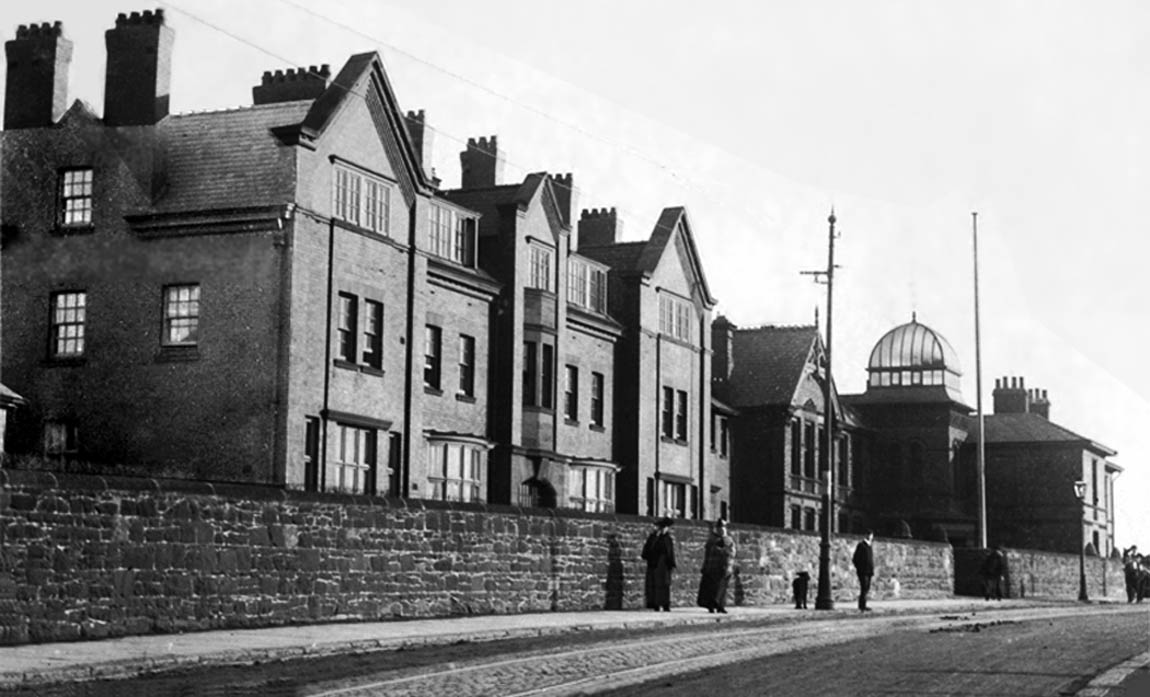 Thomas Millington was a gardener at St Helens Hospital (pictured above) who told St Helens Magistrates on the 3rd: "Owing to continuous raids on the hospital gardens we were compelled to get police assistance." I doubt the bobbies would be prepared to go on stake-out to catch vegetable thieves today but Joseph Dutton had been nabbed in the hospital grounds in that fashion with turnips in his possession.
The 15-year-old from Cleveland Street offered an interesting excuse for his thieving. Joseph insisted that it had not been a deliberate act but he had been kicking a football about and the ball had gone over the hospital wall. He went to retrieve his ball and had been tempted by the turnips.
But if he had been playing football in the street, Joseph would have been committing another crime. He refused to give the name of the other boy who had been with him and Joseph was fined 6s 6d including costs.
A dramatic rescue of a drowning dog by an ex-policeman and another man was reported on the 4th. The retired Sergeant John Foster had come across two boys in tears near the old Gillars Green Colliery in Eccleston that had closed in 1883. Upon inquiring of the trouble, they said: "Brock is drowning in the pit. Brock is our dog. He chased a rat. The rat dived down the pit, and Brock dived down after it."
Mr Foster went to the shaft, which was 250 yards deep and full of water and with the assistance of John Jones of Silkstone Street, the ex-policeman began rescue operations. A ladder was put across the shaft and a rope was wound round the rungs. Mr Jones then fastened the rope round his waist and was lowered down.
The crumbling brickwork round the shaft made operations even more dangerous. Bricks missed his head several times but Jones went into the water and gathered the dog in his arms. The Liverpool Evening Express wrote: "He brought it triumphantly to the surface, where Brock barked his thanks before leaving with his now delighted juvenile owners."
The mining strike / lockout had been underway for several months causing great hardship and the resulting coal shortages were badly affecting many industries. And so what did the House of Commons decide to do about the crisis? On the 4th they voted by 173 to 49 to go on a three-month holiday! Of course, they preferred to call it a recess but in the debate that agreed on the suspension of business until November 9th, Labour MPs denounced the long break.
James Sexton, the St Helens MP, said: "If members had seen, as I have seen, women unable to feed their infants and begging for bread along the road, you would have more consideration for the people who are suffering. Such things [going on a long recess] are embittering the minds of the people."
There used to be more Russians and so-called Russian Poles living in St Helens than any other foreign nationalities. I don't have any figures for 1926 but the St Helens Chief Constable's annual report for 1933 revealed 51 such individuals out of 103 "aliens" resident in the town. A further 17 were Lithuanian.
Many would likely have been coal miners with limited English, such as Daniel Dimmock of Ashcroft Street in Parr. He appeared in Warrington Petty Sessions on the 4th after being caught stealing 42lbs of coal worth 9d from Collins Green Colliery. "Me no coal, me no tea" was the excuse that Daniel had supposedly offered to the police and he was fined 15 shillings.
But it wasn't just from collieries where coal was being taken. Recently a railway policeman had told St Helens magistrates: "The amount of coal stealing in the St. Helens district [from railway sidings] is now terrific. We lose as much as eight to ten tons a day." And so proactive measures were being undertaken to catch thieves, some of whom were selling it on.
When Arthur Wilson and Joseph Taylor both of Waterdale Crescent were charged in St Helens Police Court on the 4th with stealing coal from the railway company, PC Tinsley explained that he and another officer had been on a night-time vigil. During the previous evening coal that had been loaded on a train at the LMS railway sidings off Hawthorne Road ready to be transported to Garston had been raided by numerous persons.
They removed two tons and left it in three stacks at the side of some fencing. That was so they could collect the coal in the early hours when they were less likely to be seen. But the police were aware of their plan and at 5.30am Wilson and Taylor showed their hands and began putting some of the coal in sacks and walking off with it towards Sutton. Wilson and Taylor appeared in the courtroom only hours later and they were both fined £1.
And William Stirrup of Bold Street in St Helens appeared in court on the 5th charged with stealing a homing pigeon belonging to James Sparks of Hamer Street. He had registered his bird with the National Homing Union and an identification ring had been placed around a foot.
The pigeon had been lost some time ago and suspicion fell on Stirrup who had been seen trapping a pigeon by means of a special trap kept in his loft. The police visited the place and found a bird bearing the number that William Sparks had reported as missing. But when they went again, the bird had gone. William Stirrup denied ever having had the missing pigeon but was fined £5.
The St Helens Reporter on the 6th described how Vincent Fildes of Newmarket Place in St Helens had been sentenced to 12 months in prison with hard labour at Rochdale. That was after dressing up as a clergyman and collecting small amounts of cash. The magistrates told the man that he had done a "shameful thing".
But he was used to having done shameful stuff, having been birched when 12 for stealing money and three months later, he pinched two pairs of boots off his own grandmother. For that he was sent to a reformatory for five years. But placing a lot of young criminals together often had an adverse effect and after coming out Fildes continued his ways and was repeatedly sent to prison, amassing a dozen convictions.
And a year's hard labour did not make Fildes go straight either, as in 1927 he was imprisoned for 3 more years after again posing as a clergyman, this time in Preston. By now he'd acquired a scar down one cheek, probably from his time in jail. This wouldn't have helped his impersonations, as you don't come across all that many 23-year-old scar-faced vicars! From the 9th 'Helter Skelter', which was advertised in the Reporter as "the latest London rollicking Revue", began a run at the Hippodrome Theatre in St Helens. The musical comedy drama starred Sandy Powell, who had first appeared at the Hippodrome in 1916 as a 16-year-old. He later became a massive radio star with the catchphrase "Can You Hear Me Mother"?
Sandy was born Albert Arthur Powell in Rotherham and during the comic's early music hall days would usually wear a kilt in the style of a Scottish comedian. Once when doing radio work Powell dropped his script onto the studio floor. While he rearranged the pages, he said "Can You Hear Me Mother" into the microphone, as his mother was profoundly deaf. This rapidly became Sandy’s catchphrase. What were listed as "12 Helter Skelter girls" also appeared in the revue.
St Helens Reporter courtesy St Helens Archive Service at Eccleston Library
Next Week's stories will include the conman at Saints who claimed to be a famous rugby player, a boy's brave canal rescue of another boy, the series of break-ins in St Helens, the miners' dispute over safety coal and the Parr miners carnival.
What had driven Ruth Greenhough from St Helens to attempt suicide was not seemingly revealed when she appeared in court at Prescot on the 3rd. The 17-year-old had been in service in Huyton but her mistress (as her employer was described) had smelt gas coming from her kitchen.
The woman found Ruth lying on her back with her head in the oven and the gas turned on, which was then a common means of suicide. The girl pleaded guilty to the charge of having attempted to commit suicide and upon consenting to go into a home for girls she was discharged from the court.
That was after Superintendent Lewis had explained to the Bench that Ruth was a native of St Helens and there was no room for her in her father's home after he had remarried. Suicide was not decriminalised in England and Wales until 1961.
The 15-year-old from Cleveland Street offered an interesting excuse for his thieving. Joseph insisted that it had not been a deliberate act but he had been kicking a football about and the ball had gone over the hospital wall. He went to retrieve his ball and had been tempted by the turnips.
But if he had been playing football in the street, Joseph would have been committing another crime. He refused to give the name of the other boy who had been with him and Joseph was fined 6s 6d including costs.
A dramatic rescue of a drowning dog by an ex-policeman and another man was reported on the 4th. The retired Sergeant John Foster had come across two boys in tears near the old Gillars Green Colliery in Eccleston that had closed in 1883. Upon inquiring of the trouble, they said: "Brock is drowning in the pit. Brock is our dog. He chased a rat. The rat dived down the pit, and Brock dived down after it."
Mr Foster went to the shaft, which was 250 yards deep and full of water and with the assistance of John Jones of Silkstone Street, the ex-policeman began rescue operations. A ladder was put across the shaft and a rope was wound round the rungs. Mr Jones then fastened the rope round his waist and was lowered down.
The crumbling brickwork round the shaft made operations even more dangerous. Bricks missed his head several times but Jones went into the water and gathered the dog in his arms. The Liverpool Evening Express wrote: "He brought it triumphantly to the surface, where Brock barked his thanks before leaving with his now delighted juvenile owners."
The mining strike / lockout had been underway for several months causing great hardship and the resulting coal shortages were badly affecting many industries. And so what did the House of Commons decide to do about the crisis? On the 4th they voted by 173 to 49 to go on a three-month holiday! Of course, they preferred to call it a recess but in the debate that agreed on the suspension of business until November 9th, Labour MPs denounced the long break.
James Sexton, the St Helens MP, said: "If members had seen, as I have seen, women unable to feed their infants and begging for bread along the road, you would have more consideration for the people who are suffering. Such things [going on a long recess] are embittering the minds of the people."
There used to be more Russians and so-called Russian Poles living in St Helens than any other foreign nationalities. I don't have any figures for 1926 but the St Helens Chief Constable's annual report for 1933 revealed 51 such individuals out of 103 "aliens" resident in the town. A further 17 were Lithuanian.
Many would likely have been coal miners with limited English, such as Daniel Dimmock of Ashcroft Street in Parr. He appeared in Warrington Petty Sessions on the 4th after being caught stealing 42lbs of coal worth 9d from Collins Green Colliery. "Me no coal, me no tea" was the excuse that Daniel had supposedly offered to the police and he was fined 15 shillings.
But it wasn't just from collieries where coal was being taken. Recently a railway policeman had told St Helens magistrates: "The amount of coal stealing in the St. Helens district [from railway sidings] is now terrific. We lose as much as eight to ten tons a day." And so proactive measures were being undertaken to catch thieves, some of whom were selling it on.
When Arthur Wilson and Joseph Taylor both of Waterdale Crescent were charged in St Helens Police Court on the 4th with stealing coal from the railway company, PC Tinsley explained that he and another officer had been on a night-time vigil. During the previous evening coal that had been loaded on a train at the LMS railway sidings off Hawthorne Road ready to be transported to Garston had been raided by numerous persons.
They removed two tons and left it in three stacks at the side of some fencing. That was so they could collect the coal in the early hours when they were less likely to be seen. But the police were aware of their plan and at 5.30am Wilson and Taylor showed their hands and began putting some of the coal in sacks and walking off with it towards Sutton. Wilson and Taylor appeared in the courtroom only hours later and they were both fined £1.
And William Stirrup of Bold Street in St Helens appeared in court on the 5th charged with stealing a homing pigeon belonging to James Sparks of Hamer Street. He had registered his bird with the National Homing Union and an identification ring had been placed around a foot.
The pigeon had been lost some time ago and suspicion fell on Stirrup who had been seen trapping a pigeon by means of a special trap kept in his loft. The police visited the place and found a bird bearing the number that William Sparks had reported as missing. But when they went again, the bird had gone. William Stirrup denied ever having had the missing pigeon but was fined £5.
The St Helens Reporter on the 6th described how Vincent Fildes of Newmarket Place in St Helens had been sentenced to 12 months in prison with hard labour at Rochdale. That was after dressing up as a clergyman and collecting small amounts of cash. The magistrates told the man that he had done a "shameful thing".
But he was used to having done shameful stuff, having been birched when 12 for stealing money and three months later, he pinched two pairs of boots off his own grandmother. For that he was sent to a reformatory for five years. But placing a lot of young criminals together often had an adverse effect and after coming out Fildes continued his ways and was repeatedly sent to prison, amassing a dozen convictions.
And a year's hard labour did not make Fildes go straight either, as in 1927 he was imprisoned for 3 more years after again posing as a clergyman, this time in Preston. By now he'd acquired a scar down one cheek, probably from his time in jail. This wouldn't have helped his impersonations, as you don't come across all that many 23-year-old scar-faced vicars!
Sandy was born Albert Arthur Powell in Rotherham and during the comic's early music hall days would usually wear a kilt in the style of a Scottish comedian. Once when doing radio work Powell dropped his script onto the studio floor. While he rearranged the pages, he said "Can You Hear Me Mother" into the microphone, as his mother was profoundly deaf. This rapidly became Sandy’s catchphrase. What were listed as "12 Helter Skelter girls" also appeared in the revue.
St Helens Reporter courtesy St Helens Archive Service at Eccleston Library
Next Week's stories will include the conman at Saints who claimed to be a famous rugby player, a boy's brave canal rescue of another boy, the series of break-ins in St Helens, the miners' dispute over safety coal and the Parr miners carnival.
This week's many stories include the dramatic rescue of a drowning dog at Gillars Green, the turnip thief in St Helens Hospital's garden, the Russian Pole who stole coal to have some tea, the St Helens MP criticises Parliament's long holiday, the St Helens man who impersonated a vicar, comic Sandy Powell returns to St Helens and the police's night-time vigil off Hawthorne Road to catch coal thieves.
What had driven Ruth Greenhough from St Helens to attempt suicide was not seemingly revealed when she appeared in court at Prescot on the 3rd.
The 17-year-old had been in service in Huyton but her mistress (as her employer was described) had smelt gas coming from her kitchen.
The woman found Ruth lying on her back with her head in the oven and the gas turned on, which was then a common means of suicide.
The girl pleaded guilty to the charge of having attempted to commit suicide and upon consenting to go into a home for girls she was discharged from the court.
That was after Superintendent Lewis had explained to the Bench that Ruth was a native of St Helens and there was no room for her in her father's home after he had remarried.
Suicide was not decriminalised in England and Wales until 1961.
Thomas Millington was a gardener at St Helens Hospital (pictured above) who told St Helens Magistrates on the 3rd:
"Owing to continuous raids on the hospital gardens we were compelled to get police assistance."
I doubt the bobbies would be prepared to go on stake-out to catch vegetable thieves today but Joseph Dutton had been nabbed in the hospital grounds in that fashion with turnips in his possession.
The 15-year-old from Cleveland Street offered an interesting excuse for his thieving.
Joseph insisted that it had not been a deliberate act but he had been kicking a football about and the ball had gone over the hospital wall.
He went to retrieve his ball and had been tempted by the turnips.
But if he had been playing football in the street, Joseph would have been committing another crime.
He refused to give the name of the other boy who had been with him and Joseph was fined 6s 6d including costs.
A dramatic rescue of a drowning dog by an ex-policeman and another man was reported on the 4th.
The retired Sergeant John Foster had come across two boys in tears near the old Gillars Green Colliery in Eccleston that had closed in 1883. Upon inquiring of the trouble, they said:
"Brock is drowning in the pit. Brock is our dog. He chased a rat. The rat dived down the pit, and Brock dived down after it."
Mr Foster went to the shaft, which was 250 yards deep and full of water and with the assistance of John Jones of Silkstone Street, the ex-policeman began rescue operations.
A ladder was put across the shaft and a rope was wound round the rungs. Mr Jones then fastened the rope round his waist and was lowered down.
The crumbling brickwork round the shaft made operations even more dangerous.
Bricks missed his head several times but Jones went into the water and gathered the dog in his arms.
The Liverpool Evening Express wrote: "He brought it triumphantly to the surface, where Brock barked his thanks before leaving with his now delighted juvenile owners."
The mining strike / lockout had been underway for several months causing great hardship and the resulting coal shortages were badly affecting many industries.
And so what did the House of Commons decide to do about the crisis? On the 4th they voted by 173 to 49 to go on a three-month holiday!
Of course, they preferred to call it a recess but in the debate that agreed on the suspension of business until November 9th, Labour MPs denounced the long break. James Sexton, the St Helens MP, said:
"If members had seen, as I have seen, women unable to feed their infants and begging for bread along the road, you would have more consideration for the people who are suffering. Such things [going on a long recess] are embittering the minds of the people."
There used to be more Russians and so-called Russian Poles living in St Helens than any other foreign nationalities.
I don't have any figures for 1926 but the St Helens Chief Constable's annual report for 1933 revealed 51 such individuals out of 103 "aliens" resident in the town. A further 17 were Lithuanian.
Many would likely have been coal miners with limited English, such as Daniel Dimmock of Ashcroft Street in Parr.
He appeared in Warrington Petty Sessions on the 4th after being caught stealing 42lbs of coal worth 9d from Collins Green Colliery.
"Me no coal, me no tea" was the excuse that Daniel had supposedly offered to the police and he was fined 15 shillings.
But it wasn't just from collieries where coal was being taken. Recently a railway policeman had told St Helens magistrates:
"The amount of coal stealing in the St. Helens district [from railway sidings] is now terrific. We lose as much as eight to ten tons a day."
And so proactive measures were being undertaken to catch thieves, some of whom were selling it on.
When Arthur Wilson and Joseph Taylor both of Waterdale Crescent were charged in St Helens Police Court on the 4th with stealing coal from the railway company, PC Tinsley explained that he and another officer had been on a night-time vigil.
During the previous evening coal that had been loaded on a train at the LMS railway sidings off Hawthorne Road ready to be transported to Garston had been raided by numerous persons.
They removed two tons and left it in three stacks at the side of some fencing. That was so they could collect the coal in the early hours when they were less likely to be seen.
But the police were aware of their plan and at 5.30am Wilson and Taylor showed their hands and began putting some of the coal in sacks and walking off with it towards Sutton.
Wilson and Taylor appeared in the courtroom only hours later and they were both fined £1.
And William Stirrup of Bold Street in St Helens appeared in court on the 5th charged with stealing a homing pigeon belonging to James Sparks of Hamer Street.
He had registered his bird with the National Homing Union and an identification ring had been placed around a foot.
The pigeon had been lost some time ago and suspicion fell on Stirrup who had been seen trapping a pigeon by means of a special trap kept in his loft.
The police visited the place and found a bird bearing the number that William Sparks had reported as missing. But when they went again, the bird had gone.
William Stirrup denied ever having had the missing pigeon but was fined £5.
The St Helens Reporter on the 6th described how Vincent Fildes of Newmarket Place in St Helens had been sentenced to 12 months in prison with hard labour at Rochdale. That was after dressing up as a clergyman and collecting small amounts of cash.
The magistrates told the man that he had done a "shameful thing".
But he was used to having done shameful stuff, having been birched when 12 for stealing money and three months later, he pinched two pairs of boots off his own grandmother.
For that he was sent to a reformatory for five years. But placing a lot of young criminals together often had an adverse effect and after coming out Fildes continued his ways and was repeatedly sent to prison, amassing a dozen convictions.
And a year's hard labour did not make Fildes go straight either, as in 1927 he was imprisoned for 3 more years after again posing as a clergyman, this time in Preston.
By now he'd acquired a scar down one cheek, probably from his time in jail. This wouldn't have helped his impersonations, as you don't come across all that many 23-year-old scar-faced vicars!
From the 9th 'Helter Skelter', which was advertised in the Reporter as "the latest London rollicking Revue", began a run at the Hippodrome Theatre in St Helens.
The musical comedy drama starred Sandy Powell, who had first appeared at the Hippodrome in 1916 as a 16-year-old.
He later became a massive radio star with the catchphrase "Can You Hear Me Mother"?
Sandy was born Albert Arthur Powell in Rotherham and during the comic's early music hall days would usually wear a kilt in the style of a Scottish comedian.
Once when doing radio work Powell dropped his script onto the studio floor.
While he rearranged the pages, he said "Can You Hear Me Mother" into the microphone, as his mother was profoundly deaf. This rapidly became Sandy’s catchphrase.
What were listed as "12 Helter Skelter girls" also appeared in the revue.
St Helens Reporter courtesy St Helens Archive Service at Eccleston Library
Next Week's stories will include the conman at Saints who claimed to be a famous rugby player, a boy's brave canal rescue of another boy, the series of break-ins in St Helens, the miners' dispute over safety coal and the Parr miners carnival.
What had driven Ruth Greenhough from St Helens to attempt suicide was not seemingly revealed when she appeared in court at Prescot on the 3rd.
The 17-year-old had been in service in Huyton but her mistress (as her employer was described) had smelt gas coming from her kitchen.
The woman found Ruth lying on her back with her head in the oven and the gas turned on, which was then a common means of suicide.
The girl pleaded guilty to the charge of having attempted to commit suicide and upon consenting to go into a home for girls she was discharged from the court.
That was after Superintendent Lewis had explained to the Bench that Ruth was a native of St Helens and there was no room for her in her father's home after he had remarried.
Suicide was not decriminalised in England and Wales until 1961.
"Owing to continuous raids on the hospital gardens we were compelled to get police assistance."
I doubt the bobbies would be prepared to go on stake-out to catch vegetable thieves today but Joseph Dutton had been nabbed in the hospital grounds in that fashion with turnips in his possession.
The 15-year-old from Cleveland Street offered an interesting excuse for his thieving.
Joseph insisted that it had not been a deliberate act but he had been kicking a football about and the ball had gone over the hospital wall.
He went to retrieve his ball and had been tempted by the turnips.
But if he had been playing football in the street, Joseph would have been committing another crime.
He refused to give the name of the other boy who had been with him and Joseph was fined 6s 6d including costs.
A dramatic rescue of a drowning dog by an ex-policeman and another man was reported on the 4th.
The retired Sergeant John Foster had come across two boys in tears near the old Gillars Green Colliery in Eccleston that had closed in 1883. Upon inquiring of the trouble, they said:
"Brock is drowning in the pit. Brock is our dog. He chased a rat. The rat dived down the pit, and Brock dived down after it."
Mr Foster went to the shaft, which was 250 yards deep and full of water and with the assistance of John Jones of Silkstone Street, the ex-policeman began rescue operations.
A ladder was put across the shaft and a rope was wound round the rungs. Mr Jones then fastened the rope round his waist and was lowered down.
The crumbling brickwork round the shaft made operations even more dangerous.
Bricks missed his head several times but Jones went into the water and gathered the dog in his arms.
The Liverpool Evening Express wrote: "He brought it triumphantly to the surface, where Brock barked his thanks before leaving with his now delighted juvenile owners."
The mining strike / lockout had been underway for several months causing great hardship and the resulting coal shortages were badly affecting many industries.
And so what did the House of Commons decide to do about the crisis? On the 4th they voted by 173 to 49 to go on a three-month holiday!
Of course, they preferred to call it a recess but in the debate that agreed on the suspension of business until November 9th, Labour MPs denounced the long break. James Sexton, the St Helens MP, said:
"If members had seen, as I have seen, women unable to feed their infants and begging for bread along the road, you would have more consideration for the people who are suffering. Such things [going on a long recess] are embittering the minds of the people."
There used to be more Russians and so-called Russian Poles living in St Helens than any other foreign nationalities.
I don't have any figures for 1926 but the St Helens Chief Constable's annual report for 1933 revealed 51 such individuals out of 103 "aliens" resident in the town. A further 17 were Lithuanian.
Many would likely have been coal miners with limited English, such as Daniel Dimmock of Ashcroft Street in Parr.
He appeared in Warrington Petty Sessions on the 4th after being caught stealing 42lbs of coal worth 9d from Collins Green Colliery.
"Me no coal, me no tea" was the excuse that Daniel had supposedly offered to the police and he was fined 15 shillings.
But it wasn't just from collieries where coal was being taken. Recently a railway policeman had told St Helens magistrates:
"The amount of coal stealing in the St. Helens district [from railway sidings] is now terrific. We lose as much as eight to ten tons a day."
And so proactive measures were being undertaken to catch thieves, some of whom were selling it on.
When Arthur Wilson and Joseph Taylor both of Waterdale Crescent were charged in St Helens Police Court on the 4th with stealing coal from the railway company, PC Tinsley explained that he and another officer had been on a night-time vigil.
During the previous evening coal that had been loaded on a train at the LMS railway sidings off Hawthorne Road ready to be transported to Garston had been raided by numerous persons.
They removed two tons and left it in three stacks at the side of some fencing. That was so they could collect the coal in the early hours when they were less likely to be seen.
But the police were aware of their plan and at 5.30am Wilson and Taylor showed their hands and began putting some of the coal in sacks and walking off with it towards Sutton.
Wilson and Taylor appeared in the courtroom only hours later and they were both fined £1.
And William Stirrup of Bold Street in St Helens appeared in court on the 5th charged with stealing a homing pigeon belonging to James Sparks of Hamer Street.
He had registered his bird with the National Homing Union and an identification ring had been placed around a foot.
The pigeon had been lost some time ago and suspicion fell on Stirrup who had been seen trapping a pigeon by means of a special trap kept in his loft.
The police visited the place and found a bird bearing the number that William Sparks had reported as missing. But when they went again, the bird had gone.
William Stirrup denied ever having had the missing pigeon but was fined £5.
The St Helens Reporter on the 6th described how Vincent Fildes of Newmarket Place in St Helens had been sentenced to 12 months in prison with hard labour at Rochdale. That was after dressing up as a clergyman and collecting small amounts of cash.
The magistrates told the man that he had done a "shameful thing".
But he was used to having done shameful stuff, having been birched when 12 for stealing money and three months later, he pinched two pairs of boots off his own grandmother.
For that he was sent to a reformatory for five years. But placing a lot of young criminals together often had an adverse effect and after coming out Fildes continued his ways and was repeatedly sent to prison, amassing a dozen convictions.
And a year's hard labour did not make Fildes go straight either, as in 1927 he was imprisoned for 3 more years after again posing as a clergyman, this time in Preston.
By now he'd acquired a scar down one cheek, probably from his time in jail. This wouldn't have helped his impersonations, as you don't come across all that many 23-year-old scar-faced vicars!
From the 9th 'Helter Skelter', which was advertised in the Reporter as "the latest London rollicking Revue", began a run at the Hippodrome Theatre in St Helens.
He later became a massive radio star with the catchphrase "Can You Hear Me Mother"?
Sandy was born Albert Arthur Powell in Rotherham and during the comic's early music hall days would usually wear a kilt in the style of a Scottish comedian.
Once when doing radio work Powell dropped his script onto the studio floor.
While he rearranged the pages, he said "Can You Hear Me Mother" into the microphone, as his mother was profoundly deaf. This rapidly became Sandy’s catchphrase.
What were listed as "12 Helter Skelter girls" also appeared in the revue.
St Helens Reporter courtesy St Helens Archive Service at Eccleston Library
Next Week's stories will include the conman at Saints who claimed to be a famous rugby player, a boy's brave canal rescue of another boy, the series of break-ins in St Helens, the miners' dispute over safety coal and the Parr miners carnival.