
IOO YEARS AGO THIS WEEK 2 - 8 MARCH 1926
This week's many stories include the injured Haydock miner's failed attempt at extending his compensation payments, why it was going to be last orders at the Black Horse, the Mill Stone and Red Rat, the ex-soldier's suicide in an Eccleston lake, the solicitor's complaint about the poor facilities in St Helens Police Station, the plans for electric lamps for point duty policemen, the problematic Parr refuse tip and the many motor vehicle dealers in St Helens.
There was a time when St Helens had a drinking house for every 200 inhabitants. But since the late 19th century, pressure from temperance movements supported by the police had led to the culling of many licences. However, closing down a pub or beerhouse when they were not breaching their licensing conditions meant compensation had to be paid to the owners.
And so a self-financing scheme was created in which all licensed houses had to pay an annual levy into a compensation pot. When the licensing magistrates decided that a beerhouse or pub was no longer needed, compensation from the fund was paid to the owner. The clever scheme that cost St Helens ratepayers nothing also served as an inducement for the surrendering of licences. And during the first half of the 20th century there were many drinking houses in the town that were closed in this manner. This week the Canal Vaults (pictured above), the Black Horse in Eccleston Street, the Mill Stone in College Street, the Star Inn in Merton Bank Road and the Red Rat in Sutton were considered for closure under the compensation scheme. Greenall Whitley was the owner of all the pubs and told the magistrates that the position in St Helens regarding its average population to each licensed house was now much better than in other towns.
Their solicitor said St Helens was a lot nearer the "idealistic state" than other places. The town now had only one licence for every 534 inhabitants, while Bolton had 353, Oldham 341, Wigan 397, Preston 413 and Stockport 433. Despite this the magistrates decided that the Black Horse, The Mill Stone and the Red Rat were redundant and so would be closed subject to compensation being paid, although the Canal Vaults and the Star Inn would live to fight another day.
Compensation for injury through an accident at work was still nothing like today. It generally took the form of small weekly payments that were less than the employee's usual wage and which were only paid while the person was off work. When a doctor judged that the worker was fit to return, the individual was often unable to resume their normal job and so instead was offered poorer paid lighter work.
And sometimes the alternative work was not considered suitable and the employee would then apply to the St Helens County Court for the compensation payments to resume. That was what happened on March 3rd after Haydock miner Peter Cunliffe had been injured in a colliery and upon his return to the mine had been offered a job undertaking less strenuous spadework. He told a hearing: "I cannot use a spade in the pit because of an injury to a knee."
To that remark the Richard Evans Colliery Company's solicitor said: "I can use a spade and I have an artificial leg." That was probably an unfair comparison, as the solicitor would probably not have used his spade for hours at a time. Cunliffe even had a doctor's statement that such work would be unsuitable but the judge still gave judgment for the company with the miner ordered to pay the costs of the hearing. Peter Cunliffe would either have to see if he could manage to undertake spadework in the mine or else find another job.
Also on the 3rd, Halsall Farrington of Duke Street appeared in St Helens Police Court to face an unspecified serious charge. His solicitor complained about the poor facilities in St Helens Police Station for solicitors to interview their clients while in custody. He said they consisted of either an interview inside the cell or in the passage by the cell door. An application for bail was rejected but the chairman of the Bench told Superintendent Dunn that the police must give the solicitor every opportunity to see Farrington, such as access in a private room.
Five former St Helens territorials were also prosecuted for not returning their kits after being discharged from the 5th Battalion of the Prince of Wales Volunteers. The arrival of a summons had concentrated the men's minds and the Bench was told that with the exception of a few small items, all of the missing kit had now been returned. The five were ordered to make good the deficiencies and each pay 13 shillings costs.
Three boys appeared in St Helens Juvenile Court on the 3rd accused of raiding shops and stealing boxes of cigarettes. Two were bound over but the other – who was also accused of attempting to steal offertory boxes from Lowe House Church – was fined £1 and warned that he would be sent to a reformatory if he appeared in court again.
At a meeting of the St Helens Town Council on the 3rd, the Mayor confirmed that the War Memorial in Victoria Square would be unveiled on Easter Sunday. Pilkingtons and Greenall Whitley had both donated £100 to the fund but Alderman Hamblett pointed out that £600 still needed to be raised to pay for the Cenotaph and he hoped that by the time of its unveiling it would be free of debt.
Cllr Simm complained of the nuisance of paper blowing for some distance from their Parr depot's refuse tip. "It is most unfair to the people of Parr", he said, as the councillor called for proper fencing to be installed around the tip.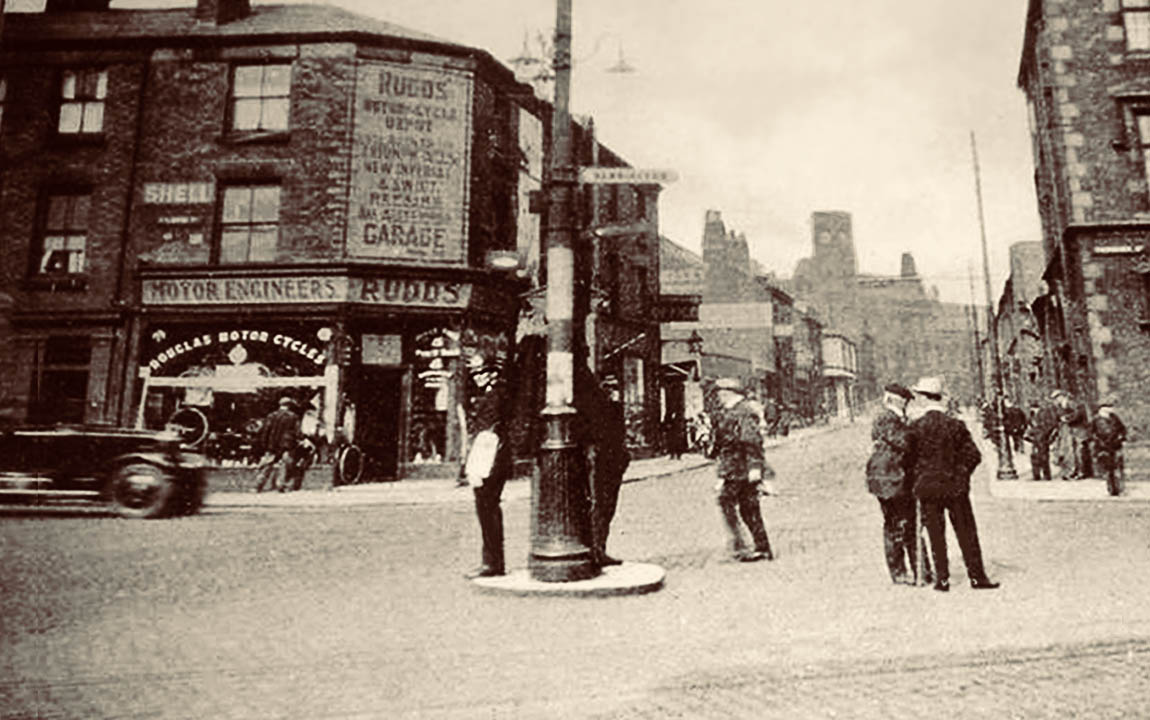 When motorists were prosecuted for ignoring the point duty policemen in St Helens (such as above at Sefton Place), they sometimes complained that they had not seen him waving his arms about. And so at the meeting Cllr Davies asked the chairman of the Watch Committee to consider installing electric arc lamps at all places where police officers were on point duty. He was told that the matter would be considered.
And there was good news for ratepayers, as the rate for the next financial year was being reduced from 16 shillings in the pound to 15 shillings, a most unusual event! In 1917 the rates had been 8s 6d in the pound but had increased considerably during the war years through high inflation.
Although there was a lot of suffering in the 1920s with many men out of work or on short-time, the majority of workers were in full-time employment and earning decent money. And with what came to be known as hire purchase readily available, they were able to take advantage of all the 1920s luxury goods that were on the market, including wireless sets and motor vehicles.
Although cars were still mainly the preserve of the better-off, the working class in St Helens heavily embraced motorcycles, with or without a sidecar. And a feature in the St Helens Reporter on the 5th revealed how demand was now so high that there were as many as eleven motor vehicle dealers within the town itself.
These were the Barlow Motor Co, Bridge Street; D. Caldwell, Duke Street; Central Motor Co, Corporation Street; W. Cook, Church Street; F. Cholerton, Bridge Street; W. Corbett, North Road; A. Rudd, Baldwin Street; W. Jackson, Greenfield Road; McLean & Appleton Ltd, Prescot Road; T. Pilch & Co, Dentons Green and Queen's Garage, Boundary Road.
Just how many former soldiers killed themselves after their experiences in WW1 will never be known, as a connection with their military service was rarely made at their inquest. But a link was established at the hearing on John Kerr of St Helens Road in Prescot, which took place on the 7th. John had left his home on March 5th telling his wife that he was going to see his uncle who lived over the road. But he was never seen alive again and his body was found on the following day floating in a lake at Eccleston.
John's watch had stopped at 9:38 suggesting that he must have gone straight to the lake from his home. His widow told the Coroner that her husband since his discharge from the army had been highly-strung but generally was of a cheerful disposition. The Coroner said it was unfortunate that a man "should have his nervous system upset by activities in the war" and he said there was no doubt that his mind had become unbalanced.
An upset nervous system was, no doubt, an understatement of the trauma that many went through when on war service and afterwards. But, as I said, it was unusual for it to be referenced at all, in part because many war veterans kept their feelings bottled up inside.
St Helens Reporter courtesy St Helens Archive Service at Eccleston Library
Next Week's stories will include the speed trap in Greenfield Road, the College Street bridge collapse, the Wireless for Hospitals fund, the comical case of the motorbike that wouldn't start and the Parr coalman's attack on a customer.
There was a time when St Helens had a drinking house for every 200 inhabitants. But since the late 19th century, pressure from temperance movements supported by the police had led to the culling of many licences. However, closing down a pub or beerhouse when they were not breaching their licensing conditions meant compensation had to be paid to the owners.
And so a self-financing scheme was created in which all licensed houses had to pay an annual levy into a compensation pot. When the licensing magistrates decided that a beerhouse or pub was no longer needed, compensation from the fund was paid to the owner. The clever scheme that cost St Helens ratepayers nothing also served as an inducement for the surrendering of licences.
Their solicitor said St Helens was a lot nearer the "idealistic state" than other places. The town now had only one licence for every 534 inhabitants, while Bolton had 353, Oldham 341, Wigan 397, Preston 413 and Stockport 433. Despite this the magistrates decided that the Black Horse, The Mill Stone and the Red Rat were redundant and so would be closed subject to compensation being paid, although the Canal Vaults and the Star Inn would live to fight another day.
Compensation for injury through an accident at work was still nothing like today. It generally took the form of small weekly payments that were less than the employee's usual wage and which were only paid while the person was off work. When a doctor judged that the worker was fit to return, the individual was often unable to resume their normal job and so instead was offered poorer paid lighter work.
And sometimes the alternative work was not considered suitable and the employee would then apply to the St Helens County Court for the compensation payments to resume. That was what happened on March 3rd after Haydock miner Peter Cunliffe had been injured in a colliery and upon his return to the mine had been offered a job undertaking less strenuous spadework. He told a hearing: "I cannot use a spade in the pit because of an injury to a knee."
To that remark the Richard Evans Colliery Company's solicitor said: "I can use a spade and I have an artificial leg." That was probably an unfair comparison, as the solicitor would probably not have used his spade for hours at a time. Cunliffe even had a doctor's statement that such work would be unsuitable but the judge still gave judgment for the company with the miner ordered to pay the costs of the hearing. Peter Cunliffe would either have to see if he could manage to undertake spadework in the mine or else find another job.
Also on the 3rd, Halsall Farrington of Duke Street appeared in St Helens Police Court to face an unspecified serious charge. His solicitor complained about the poor facilities in St Helens Police Station for solicitors to interview their clients while in custody. He said they consisted of either an interview inside the cell or in the passage by the cell door. An application for bail was rejected but the chairman of the Bench told Superintendent Dunn that the police must give the solicitor every opportunity to see Farrington, such as access in a private room.
Five former St Helens territorials were also prosecuted for not returning their kits after being discharged from the 5th Battalion of the Prince of Wales Volunteers. The arrival of a summons had concentrated the men's minds and the Bench was told that with the exception of a few small items, all of the missing kit had now been returned. The five were ordered to make good the deficiencies and each pay 13 shillings costs.
Three boys appeared in St Helens Juvenile Court on the 3rd accused of raiding shops and stealing boxes of cigarettes. Two were bound over but the other – who was also accused of attempting to steal offertory boxes from Lowe House Church – was fined £1 and warned that he would be sent to a reformatory if he appeared in court again.
At a meeting of the St Helens Town Council on the 3rd, the Mayor confirmed that the War Memorial in Victoria Square would be unveiled on Easter Sunday. Pilkingtons and Greenall Whitley had both donated £100 to the fund but Alderman Hamblett pointed out that £600 still needed to be raised to pay for the Cenotaph and he hoped that by the time of its unveiling it would be free of debt.
Cllr Simm complained of the nuisance of paper blowing for some distance from their Parr depot's refuse tip. "It is most unfair to the people of Parr", he said, as the councillor called for proper fencing to be installed around the tip.
And there was good news for ratepayers, as the rate for the next financial year was being reduced from 16 shillings in the pound to 15 shillings, a most unusual event! In 1917 the rates had been 8s 6d in the pound but had increased considerably during the war years through high inflation.
Although there was a lot of suffering in the 1920s with many men out of work or on short-time, the majority of workers were in full-time employment and earning decent money. And with what came to be known as hire purchase readily available, they were able to take advantage of all the 1920s luxury goods that were on the market, including wireless sets and motor vehicles.
Although cars were still mainly the preserve of the better-off, the working class in St Helens heavily embraced motorcycles, with or without a sidecar. And a feature in the St Helens Reporter on the 5th revealed how demand was now so high that there were as many as eleven motor vehicle dealers within the town itself.
These were the Barlow Motor Co, Bridge Street; D. Caldwell, Duke Street; Central Motor Co, Corporation Street; W. Cook, Church Street; F. Cholerton, Bridge Street; W. Corbett, North Road; A. Rudd, Baldwin Street; W. Jackson, Greenfield Road; McLean & Appleton Ltd, Prescot Road; T. Pilch & Co, Dentons Green and Queen's Garage, Boundary Road.
Just how many former soldiers killed themselves after their experiences in WW1 will never be known, as a connection with their military service was rarely made at their inquest. But a link was established at the hearing on John Kerr of St Helens Road in Prescot, which took place on the 7th. John had left his home on March 5th telling his wife that he was going to see his uncle who lived over the road. But he was never seen alive again and his body was found on the following day floating in a lake at Eccleston.
John's watch had stopped at 9:38 suggesting that he must have gone straight to the lake from his home. His widow told the Coroner that her husband since his discharge from the army had been highly-strung but generally was of a cheerful disposition. The Coroner said it was unfortunate that a man "should have his nervous system upset by activities in the war" and he said there was no doubt that his mind had become unbalanced.
An upset nervous system was, no doubt, an understatement of the trauma that many went through when on war service and afterwards. But, as I said, it was unusual for it to be referenced at all, in part because many war veterans kept their feelings bottled up inside.
St Helens Reporter courtesy St Helens Archive Service at Eccleston Library
Next Week's stories will include the speed trap in Greenfield Road, the College Street bridge collapse, the Wireless for Hospitals fund, the comical case of the motorbike that wouldn't start and the Parr coalman's attack on a customer.
This week's many stories include the injured Haydock miner's failed attempt at extending his compensation payments, why it was going to be last orders at the Black Horse, the Mill Stone and Red Rat, the ex-soldier's suicide in an Eccleston lake, the solicitor's complaint about the poor facilities in St Helens Police Station, the plans for electric lamps for point duty policemen, the problematic Parr refuse tip and the many motor vehicle dealers in St Helens.
There was a time when St Helens had a drinking house for every 200 inhabitants.
But since the late 19th century, pressure from temperance movements supported by the police had led to the culling of many licences.
However, closing down a pub or beerhouse when they were not breaching their licensing conditions meant compensation had to be paid to the owners.
And so a self-financing scheme was created in which all licensed houses had to pay an annual levy into a compensation pot.
When the licensing magistrates decided that a beerhouse or pub was no longer needed, compensation from the fund was paid to the owner.
The clever scheme that cost St Helens ratepayers nothing also served as an inducement for the surrendering of licences.
And during the first half of the 20th century there were many drinking houses in the town that were closed in this manner.
This week the Canal Vaults (pictured above), the Black Horse in Eccleston Street, the Mill Stone in College Street, the Star Inn in Merton Bank Road and the Red Rat in Sutton were considered for closure under the compensation scheme.
Greenall Whitley was the owner of all the pubs and told the magistrates that the position in St Helens regarding its average population to each licensed house was now much better than in other towns.
Their solicitor said St Helens was a lot nearer the "idealistic state" than other places.
The town now had only one licence for every 534 inhabitants, while Bolton had 353, Oldham 341, Wigan 397, Preston 413 and Stockport 433.
Despite this the magistrates decided that the Black Horse, The Mill Stone and the Red Rat were redundant and so would be closed subject to compensation being paid, although the Canal Vaults and the Star Inn would live to fight another day.
Compensation for injury through an accident at work was still nothing like today.
It generally took the form of small weekly payments that were less than the employee's usual wage and which were only paid while the person was off work.
When a doctor judged that the worker was fit to return, the individual was often unable to resume their normal job and so instead was offered poorer paid lighter work.
And sometimes the alternative work was not considered suitable and the employee would then apply to the St Helens County Court for the compensation payments to resume.
That was what happened on March 3rd after Haydock miner Peter Cunliffe had been injured in a colliery and upon his return to the mine had been offered a job undertaking less strenuous spadework. He told a hearing:
"I cannot use a spade in the pit because of an injury to a knee."
To that remark the Richard Evans Colliery Company's solicitor said: "I can use a spade and I have an artificial leg."
That was probably an unfair comparison, as the solicitor would probably not have used his spade for hours at a time.
Cunliffe even had a doctor's statement that such work would be unsuitable but the judge still gave judgment for the company with the miner ordered to pay the costs of the hearing.
Peter Cunliffe would either have to see if he could manage to undertake spadework in the mine or else find another job.
Also on the 3rd, Halsall Farrington of Duke Street appeared in St Helens Police Court to face an unspecified serious charge.
His solicitor complained about the poor facilities in St Helens Police Station for solicitors to interview their clients while in custody.
He said they consisted of either an interview inside the cell or in the passage by the cell door.
An application for bail was rejected but the chairman of the Bench told Superintendent Dunn that the police must give the solicitor every opportunity to see Farrington, such as access in a private room.
Five former St Helens territorials were also prosecuted for not returning their kits after being discharged from the 5th Battalion of the Prince of Wales Volunteers.
The arrival of a summons had concentrated the men's minds and the Bench was told that with the exception of a few small items, all of the missing kit had now been returned.
The five were ordered to make good the deficiencies and each pay 13 shillings costs.
Three boys appeared in St Helens Juvenile Court on the 3rd accused of raiding shops and stealing boxes of cigarettes.
Two were bound over but the other – who was also accused of attempting to steal offertory boxes from Lowe House Church – was fined £1 and warned that he would be sent to a reformatory if he appeared in court again.
At a meeting of the St Helens Town Council on the 3rd, the Mayor confirmed that the War Memorial in Victoria Square would be unveiled on Easter Sunday.
Pilkingtons and Greenall Whitley had both donated £100 to the fund but Alderman Hamblett pointed out that £600 still needed to be raised to pay for the Cenotaph and he hoped that by the time of its unveiling it would be free of debt.
Cllr Simm complained of the nuisance of paper blowing for some distance from their Parr depot's refuse tip.
"It is most unfair to the people of Parr", he said, as the councillor called for proper fencing to be installed around the tip.
When motorists were prosecuted for ignoring the point duty policemen in St Helens (such as above at Sefton Place), they sometimes complained that they had not seen him waving his arms about.
And so at the meeting Cllr Davies asked the chairman of the Watch Committee to consider installing electric arc lamps at all places where police officers were on point duty. He was told that the matter would be considered.
And there was good news for ratepayers, as the rate for the next financial year was being reduced from 16 shillings in the pound to 15 shillings, a most unusual event!
In 1917 the rates had been 8s 6d in the pound but had increased considerably during the war years through high inflation.
Although there was a lot of suffering in the 1920s with many men out of work or on short-time, the majority of workers were in full-time employment and earning decent money.
And with what came to be known as hire purchase readily available, they were able to take advantage of all the 1920s luxury goods that were on the market, including wireless sets and motor vehicles.
Although cars were still mainly the preserve of the better-off, the working class in St Helens heavily embraced motorcycles, with or without a sidecar.
And a feature in the St Helens Reporter on the 5th revealed how demand was now so high that there were as many as eleven motor vehicle dealers within the town itself.
These were the Barlow Motor Co, Bridge Street; D. Caldwell, Duke Street; Central Motor Co, Corporation Street; W. Cook, Church Street; F. Cholerton, Bridge Street; W. Corbett, North Road; A. Rudd, Baldwin Street; W. Jackson, Greenfield Road; McLean & Appleton Ltd, Prescot Road; T. Pilch & Co, Dentons Green and Queen's Garage, Boundary Road.
Just how many former soldiers killed themselves after their experiences in WW1 will never be known, as a connection with their military service was rarely made at their inquest.
But a link was established at the hearing on John Kerr of St Helens Road in Prescot, which took place on the 7th.
John had left his home on March 5th telling his wife that he was going to see his uncle who lived over the road.
But he was never seen alive again and his body was found on the following day floating in a lake at Eccleston.
John's watch had stopped at 9:38 suggesting that he must have gone straight to the lake from his home.
His widow told the Coroner that her husband since his discharge from the army had been highly-strung but generally was of a cheerful disposition.
The Coroner said it was unfortunate that a man "should have his nervous system upset by activities in the war" and he said there was no doubt that his mind had become unbalanced.
An upset nervous system was, no doubt, an understatement of the trauma that many went through when on war service and afterwards.
But, as I said, it was unusual for it to be referenced at all, in part because many war veterans kept their feelings bottled up inside.
St Helens Reporter courtesy St Helens Archive Service at Eccleston Library
Next Week's stories will include the speed trap in Greenfield Road, the College Street bridge collapse, the Wireless for Hospitals fund, the comical case of the motorbike that wouldn't start and the Parr coalman's attack on a customer.
There was a time when St Helens had a drinking house for every 200 inhabitants.
But since the late 19th century, pressure from temperance movements supported by the police had led to the culling of many licences.
However, closing down a pub or beerhouse when they were not breaching their licensing conditions meant compensation had to be paid to the owners.
And so a self-financing scheme was created in which all licensed houses had to pay an annual levy into a compensation pot.
When the licensing magistrates decided that a beerhouse or pub was no longer needed, compensation from the fund was paid to the owner.
The clever scheme that cost St Helens ratepayers nothing also served as an inducement for the surrendering of licences.
And during the first half of the 20th century there were many drinking houses in the town that were closed in this manner.
Greenall Whitley was the owner of all the pubs and told the magistrates that the position in St Helens regarding its average population to each licensed house was now much better than in other towns.
Their solicitor said St Helens was a lot nearer the "idealistic state" than other places.
The town now had only one licence for every 534 inhabitants, while Bolton had 353, Oldham 341, Wigan 397, Preston 413 and Stockport 433.
Despite this the magistrates decided that the Black Horse, The Mill Stone and the Red Rat were redundant and so would be closed subject to compensation being paid, although the Canal Vaults and the Star Inn would live to fight another day.
Compensation for injury through an accident at work was still nothing like today.
It generally took the form of small weekly payments that were less than the employee's usual wage and which were only paid while the person was off work.
When a doctor judged that the worker was fit to return, the individual was often unable to resume their normal job and so instead was offered poorer paid lighter work.
And sometimes the alternative work was not considered suitable and the employee would then apply to the St Helens County Court for the compensation payments to resume.
That was what happened on March 3rd after Haydock miner Peter Cunliffe had been injured in a colliery and upon his return to the mine had been offered a job undertaking less strenuous spadework. He told a hearing:
"I cannot use a spade in the pit because of an injury to a knee."
To that remark the Richard Evans Colliery Company's solicitor said: "I can use a spade and I have an artificial leg."
That was probably an unfair comparison, as the solicitor would probably not have used his spade for hours at a time.
Cunliffe even had a doctor's statement that such work would be unsuitable but the judge still gave judgment for the company with the miner ordered to pay the costs of the hearing.
Peter Cunliffe would either have to see if he could manage to undertake spadework in the mine or else find another job.
Also on the 3rd, Halsall Farrington of Duke Street appeared in St Helens Police Court to face an unspecified serious charge.
His solicitor complained about the poor facilities in St Helens Police Station for solicitors to interview their clients while in custody.
He said they consisted of either an interview inside the cell or in the passage by the cell door.
An application for bail was rejected but the chairman of the Bench told Superintendent Dunn that the police must give the solicitor every opportunity to see Farrington, such as access in a private room.
Five former St Helens territorials were also prosecuted for not returning their kits after being discharged from the 5th Battalion of the Prince of Wales Volunteers.
The arrival of a summons had concentrated the men's minds and the Bench was told that with the exception of a few small items, all of the missing kit had now been returned.
The five were ordered to make good the deficiencies and each pay 13 shillings costs.
Three boys appeared in St Helens Juvenile Court on the 3rd accused of raiding shops and stealing boxes of cigarettes.
Two were bound over but the other – who was also accused of attempting to steal offertory boxes from Lowe House Church – was fined £1 and warned that he would be sent to a reformatory if he appeared in court again.
At a meeting of the St Helens Town Council on the 3rd, the Mayor confirmed that the War Memorial in Victoria Square would be unveiled on Easter Sunday.
Pilkingtons and Greenall Whitley had both donated £100 to the fund but Alderman Hamblett pointed out that £600 still needed to be raised to pay for the Cenotaph and he hoped that by the time of its unveiling it would be free of debt.
Cllr Simm complained of the nuisance of paper blowing for some distance from their Parr depot's refuse tip.
"It is most unfair to the people of Parr", he said, as the councillor called for proper fencing to be installed around the tip.
And so at the meeting Cllr Davies asked the chairman of the Watch Committee to consider installing electric arc lamps at all places where police officers were on point duty. He was told that the matter would be considered.
And there was good news for ratepayers, as the rate for the next financial year was being reduced from 16 shillings in the pound to 15 shillings, a most unusual event!
In 1917 the rates had been 8s 6d in the pound but had increased considerably during the war years through high inflation.
Although there was a lot of suffering in the 1920s with many men out of work or on short-time, the majority of workers were in full-time employment and earning decent money.
And with what came to be known as hire purchase readily available, they were able to take advantage of all the 1920s luxury goods that were on the market, including wireless sets and motor vehicles.
Although cars were still mainly the preserve of the better-off, the working class in St Helens heavily embraced motorcycles, with or without a sidecar.
And a feature in the St Helens Reporter on the 5th revealed how demand was now so high that there were as many as eleven motor vehicle dealers within the town itself.
These were the Barlow Motor Co, Bridge Street; D. Caldwell, Duke Street; Central Motor Co, Corporation Street; W. Cook, Church Street; F. Cholerton, Bridge Street; W. Corbett, North Road; A. Rudd, Baldwin Street; W. Jackson, Greenfield Road; McLean & Appleton Ltd, Prescot Road; T. Pilch & Co, Dentons Green and Queen's Garage, Boundary Road.
Just how many former soldiers killed themselves after their experiences in WW1 will never be known, as a connection with their military service was rarely made at their inquest.
But a link was established at the hearing on John Kerr of St Helens Road in Prescot, which took place on the 7th.
John had left his home on March 5th telling his wife that he was going to see his uncle who lived over the road.
But he was never seen alive again and his body was found on the following day floating in a lake at Eccleston.
John's watch had stopped at 9:38 suggesting that he must have gone straight to the lake from his home.
His widow told the Coroner that her husband since his discharge from the army had been highly-strung but generally was of a cheerful disposition.
The Coroner said it was unfortunate that a man "should have his nervous system upset by activities in the war" and he said there was no doubt that his mind had become unbalanced.
An upset nervous system was, no doubt, an understatement of the trauma that many went through when on war service and afterwards.
But, as I said, it was unusual for it to be referenced at all, in part because many war veterans kept their feelings bottled up inside.
St Helens Reporter courtesy St Helens Archive Service at Eccleston Library
Next Week's stories will include the speed trap in Greenfield Road, the College Street bridge collapse, the Wireless for Hospitals fund, the comical case of the motorbike that wouldn't start and the Parr coalman's attack on a customer.