
FIFTY YEARS AGO THIS WEEK 12 - 18 JANUARY 1976
This week's many stories include the little girls that separately flew thousands of miles to St Helens, more on Leathers' appeal hearings at St Helens Town Hall, the plans to open two dog tracks in Jackson Street are rejected, the boom in ear piercing in St Helens and a complaint from a bank customer after being booked for parking on double-yellow lines.
We begin on the 13th when Harold Worrall of Bramcote Avenue in St Helens died in an industrial accident. The 25-year-old father of two children was a mechanic at Lignacite Ltd in Bold Road in Sutton and died after being taken to St Helens Hospital suffering from severe head injuries.
In yet another example of the poor PR of companies during the 20th century, Lignacite told the Reporter that they had no comment to make. That refusal to say anything was often considered the safest option by firms such as Lignacite just in case there were any future repercussions concerning liability. But the end result was that they were not even prepared to extend sympathy to the man's family.
On the 15th the works manager at the Rocla Pipe Works in Watery Lane in Sutton announced plans to axe jobs at the plant in the wake of the recent recession. He said: "We are feeling the pinch the same as most other concrete pipe manufacturers and find that we are having to make reductions in our workforce." There were currently 50 people employed at the firm and talks were taking place to decide on the number of job losses.
There had been a number of reports over the last two or three years about plans to build a new greyhound racing track in St Helens. Henderson Homes owned and operated the existing 6-acre dog track in Park Road, which had been going since 1932. They had initially wanted to redevelop that site for housing and build a replacement dog track / sports centre, including squash courts, on derelict land in Merton Bank Road.
But in February 1975 Henderson's said the council's Planning Committee had informed them that they were not happy with their proposed location because of its possible effect on local residents through increased traffic and noise. However, another site in Jackson Street had been suggested to them, which Henderson's said they were considering.
And, separately, haulage firm boss Joe Pickavance announced that he planned to build a new dog track and eventually he settled on Jackson Street as well. His scheme would also include an Olympic running track. Both parties, surprisingly, had already been granted outline planning permission but on the 15th the council's Policy and Resources Committee vetoed both schemes.
The reasons given were that it would be impossible to have an Olympic running track and a greyhound track that would conform to racing requirements and the running track would be in isolation. However, the committee said they would consider cash bids to only create a dog track on the council-owned land.
The St Helens Reporter wrote on the 16th that the new "gun" method of ear piercing was leading to a boom in demand in St Helens. Hair By Vicky in Westfield Street said they were getting dozens of bookings from women and the occasional man wanting their ears pierced. Jeweller Roy Lunt of Church Square said he had begun an ear piercing service a year ago and had noticed a recent upsurge in the market. Roy said:
"We get hoards of inquiries each week from people who want their ears pierced. On average we get one man having his ears done for every 10 women who come in. "The males who usually come in are youngsters who only have one ear pierced, something which seems to be in vogue at the moment."
The Reporter devoted quite a lot of space to writing about recent visitors to St Helens who had travelled thousands of miles. Of these two were quite special. Carol Marsh was only nine and she had journeyed alone from Australia on a 30-hour flight to see her grandparents in Eccleston. They were James and Elizabeth Marsh of Ecclesfield Road, with her grandad telling the Reporter: "She was a bit tired after her long journey, but within a day she was as right as rain."
And Sharon Mather was another long distance traveller having journeyed from South Africa by herself to see her grandparents. They were Norah and Albert Littler of Holt Avenue in Billinge. The eight-year-old was described as having been amazed by her first sight of snow.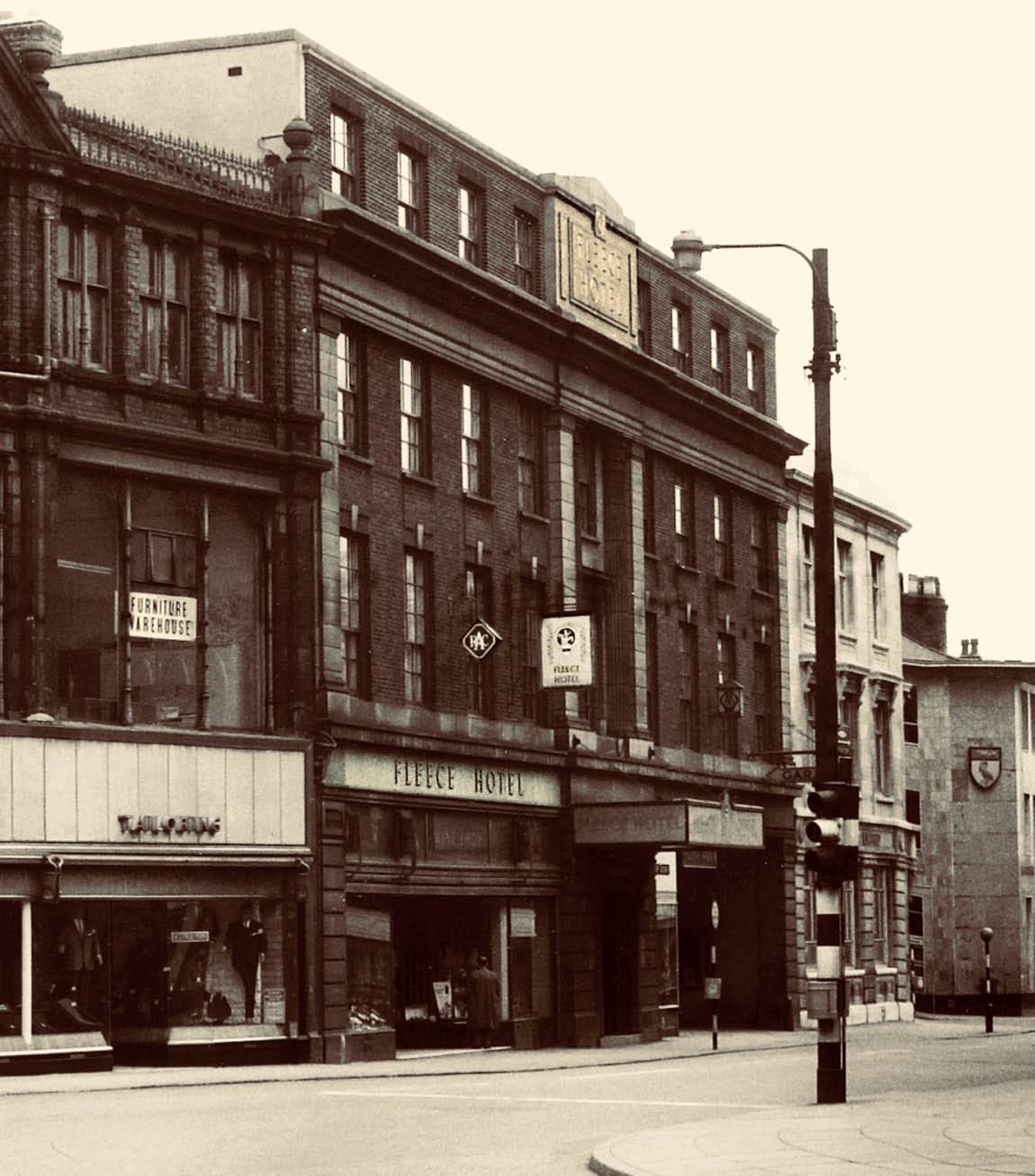 The Fleece Hotel was advertising 3-course businessmen's lunches for £1.25. "In a hurry? – We guarantee you, it will take only 30 minutes," they wrote. And the Damac Music Centre in Nutgrove Road said they had unrepeatable sale offers on guitars and organs.
It was now week 2 of the Leathers' appeal hearings at St Helens Town Hall. The Sutton sulphuric acid firm had been ordered to close by the council but had appealed to the Department of the Environment and an inspector was hearing testimony from both sides. This week Leathers' Finance Director claimed closing his firm could cripple parts of British industry.
Dennis Matthewman explained that besides sulphuric acid, his company at St Helens also produced oleum and liquid sulphur trioxide. He claimed that Leathers supplied half of the oleum market in the country, saying:
"Should the capacity at St. Helens for any reason cease, this would effectively close down a very important section of British industry geared to the manufacture of a wide range of detergents, rubber, oil refining, chemical manufacture, ceramics, plastics and petro-chemical products." I'll bet the residents of Lancots Lane never imagined that the firm polluting their environment was so important!
In 1972 the Liverpool Echo ran a lengthy piece on John James, a jockey from Fleet Lane in Parr, who bore the nickname "Jinx". That was because it had taken the 25-year-old ten years to finally win a race – both as a stable boy and an actual jockey. "I'd been first at the last hurdle several times before," John then explained. "Then I've either fallen or been beaten on the run-in to the post".
But in November 1972, Johnny had finally won his first race. In this week's Reporter it was stated that the National Hunt jockey, who had attended Parr Central School, had acquired his own horse racing stables at Wetherby and planned to try his hand at training.
The paper also reported how Rainford was receiving additional bus services. After a campaign by the local Labour Party, transport bosses had given the village an extra service at lunchtime and were rescheduling buses to cater for rail commuters. And the Reporter added that the residents of Rainford Junction would no longer feel cut off and separated from the village, as from Monday to Friday a special circular service – the no. 50 – would make six journeys a day around Rainford.
One problem with the introduction of double-yellow lines in a number of St Helens town centre streets during the 1960s was that it led to bank customers complaining that they had to park some distance away from the branch that they were visiting. That presented a danger when they were depositing money and had to carry large amounts of cash through the streets to the bank.
In the Reporter, Thatto Heath newsagent Mike Quinn complained that the yellow lines were forcing him to take one of two risks. One was to be robbed of his takings and the other was being fined for illegal parking. Mike of Freckleton Road paid a visit to Williams and Glyn's Bank in Church Street in St Helens every week to make a deposit. He thought the nearest car parks were too far away and would result in him carrying large sums to Church Street and running the risk of being robbed. Instead, he said he parked on double-yellows outside the bank for six or seven minutes each trip.
Mike said although traffic wardens were normally understanding of his predicament, a policeman had booked him and he was facing a £6 fine. A police spokesman told the Reporter: "If there is a system of yellow lines, it is up to the individual to adhere to it. The law is the law." But Mike was advised to write to the police and they said they would re-examine the circumstances.
This week Hugh Pye, the council's Housing and Building Director, claimed that families could be allocated a council house in St Helens faster than any other local authority in England. "If a man and his wife live or work in the area the average period of time they would have to wait after applying would be five months," said Mr Pye, "and that can't be beaten in England."
Cllr Ray Crosby was featured in the Reporter after mounting a campaign to save the ponds of Eccleston. Ray's battle had begun after an application by property developers on the Eccleston Mere housing estate to extend their operations into a nearby wood, which would mean a pond having to be drained.
And finally from the 18th, 'Confessions of a Pop Performer' starring Robin Askwith began a week-long run at the Capitol, replacing a film called 'Truck Stop Women'. And at the ABC Savoy, 'Jaws' entered its fourth week of screening.
St Helens Reporter courtesy St Helens Archive Service at Eccleston Library
Next Week's stories will include the fire at St Helens Greyhound Stadium, the plans to stage a re-enactment of the Rainhill Trials, the Miss Françoise 1976 contest and work begins on the first Mormon place of worship in St Helens.
We begin on the 13th when Harold Worrall of Bramcote Avenue in St Helens died in an industrial accident. The 25-year-old father of two children was a mechanic at Lignacite Ltd in Bold Road in Sutton and died after being taken to St Helens Hospital suffering from severe head injuries.
In yet another example of the poor PR of companies during the 20th century, Lignacite told the Reporter that they had no comment to make. That refusal to say anything was often considered the safest option by firms such as Lignacite just in case there were any future repercussions concerning liability. But the end result was that they were not even prepared to extend sympathy to the man's family.
On the 15th the works manager at the Rocla Pipe Works in Watery Lane in Sutton announced plans to axe jobs at the plant in the wake of the recent recession. He said: "We are feeling the pinch the same as most other concrete pipe manufacturers and find that we are having to make reductions in our workforce." There were currently 50 people employed at the firm and talks were taking place to decide on the number of job losses.
There had been a number of reports over the last two or three years about plans to build a new greyhound racing track in St Helens. Henderson Homes owned and operated the existing 6-acre dog track in Park Road, which had been going since 1932. They had initially wanted to redevelop that site for housing and build a replacement dog track / sports centre, including squash courts, on derelict land in Merton Bank Road.
But in February 1975 Henderson's said the council's Planning Committee had informed them that they were not happy with their proposed location because of its possible effect on local residents through increased traffic and noise. However, another site in Jackson Street had been suggested to them, which Henderson's said they were considering.
And, separately, haulage firm boss Joe Pickavance announced that he planned to build a new dog track and eventually he settled on Jackson Street as well. His scheme would also include an Olympic running track. Both parties, surprisingly, had already been granted outline planning permission but on the 15th the council's Policy and Resources Committee vetoed both schemes.
The reasons given were that it would be impossible to have an Olympic running track and a greyhound track that would conform to racing requirements and the running track would be in isolation. However, the committee said they would consider cash bids to only create a dog track on the council-owned land.
The St Helens Reporter wrote on the 16th that the new "gun" method of ear piercing was leading to a boom in demand in St Helens. Hair By Vicky in Westfield Street said they were getting dozens of bookings from women and the occasional man wanting their ears pierced. Jeweller Roy Lunt of Church Square said he had begun an ear piercing service a year ago and had noticed a recent upsurge in the market. Roy said:
"We get hoards of inquiries each week from people who want their ears pierced. On average we get one man having his ears done for every 10 women who come in. "The males who usually come in are youngsters who only have one ear pierced, something which seems to be in vogue at the moment."
The Reporter devoted quite a lot of space to writing about recent visitors to St Helens who had travelled thousands of miles. Of these two were quite special. Carol Marsh was only nine and she had journeyed alone from Australia on a 30-hour flight to see her grandparents in Eccleston. They were James and Elizabeth Marsh of Ecclesfield Road, with her grandad telling the Reporter: "She was a bit tired after her long journey, but within a day she was as right as rain."
And Sharon Mather was another long distance traveller having journeyed from South Africa by herself to see her grandparents. They were Norah and Albert Littler of Holt Avenue in Billinge. The eight-year-old was described as having been amazed by her first sight of snow.
It was now week 2 of the Leathers' appeal hearings at St Helens Town Hall. The Sutton sulphuric acid firm had been ordered to close by the council but had appealed to the Department of the Environment and an inspector was hearing testimony from both sides. This week Leathers' Finance Director claimed closing his firm could cripple parts of British industry.
Dennis Matthewman explained that besides sulphuric acid, his company at St Helens also produced oleum and liquid sulphur trioxide. He claimed that Leathers supplied half of the oleum market in the country, saying:
"Should the capacity at St. Helens for any reason cease, this would effectively close down a very important section of British industry geared to the manufacture of a wide range of detergents, rubber, oil refining, chemical manufacture, ceramics, plastics and petro-chemical products." I'll bet the residents of Lancots Lane never imagined that the firm polluting their environment was so important!
In 1972 the Liverpool Echo ran a lengthy piece on John James, a jockey from Fleet Lane in Parr, who bore the nickname "Jinx". That was because it had taken the 25-year-old ten years to finally win a race – both as a stable boy and an actual jockey. "I'd been first at the last hurdle several times before," John then explained. "Then I've either fallen or been beaten on the run-in to the post".
But in November 1972, Johnny had finally won his first race. In this week's Reporter it was stated that the National Hunt jockey, who had attended Parr Central School, had acquired his own horse racing stables at Wetherby and planned to try his hand at training.
The paper also reported how Rainford was receiving additional bus services. After a campaign by the local Labour Party, transport bosses had given the village an extra service at lunchtime and were rescheduling buses to cater for rail commuters. And the Reporter added that the residents of Rainford Junction would no longer feel cut off and separated from the village, as from Monday to Friday a special circular service – the no. 50 – would make six journeys a day around Rainford.
One problem with the introduction of double-yellow lines in a number of St Helens town centre streets during the 1960s was that it led to bank customers complaining that they had to park some distance away from the branch that they were visiting. That presented a danger when they were depositing money and had to carry large amounts of cash through the streets to the bank.
In the Reporter, Thatto Heath newsagent Mike Quinn complained that the yellow lines were forcing him to take one of two risks. One was to be robbed of his takings and the other was being fined for illegal parking. Mike of Freckleton Road paid a visit to Williams and Glyn's Bank in Church Street in St Helens every week to make a deposit. He thought the nearest car parks were too far away and would result in him carrying large sums to Church Street and running the risk of being robbed. Instead, he said he parked on double-yellows outside the bank for six or seven minutes each trip.
Mike said although traffic wardens were normally understanding of his predicament, a policeman had booked him and he was facing a £6 fine. A police spokesman told the Reporter: "If there is a system of yellow lines, it is up to the individual to adhere to it. The law is the law." But Mike was advised to write to the police and they said they would re-examine the circumstances.
This week Hugh Pye, the council's Housing and Building Director, claimed that families could be allocated a council house in St Helens faster than any other local authority in England. "If a man and his wife live or work in the area the average period of time they would have to wait after applying would be five months," said Mr Pye, "and that can't be beaten in England."
Cllr Ray Crosby was featured in the Reporter after mounting a campaign to save the ponds of Eccleston. Ray's battle had begun after an application by property developers on the Eccleston Mere housing estate to extend their operations into a nearby wood, which would mean a pond having to be drained.
And finally from the 18th, 'Confessions of a Pop Performer' starring Robin Askwith began a week-long run at the Capitol, replacing a film called 'Truck Stop Women'. And at the ABC Savoy, 'Jaws' entered its fourth week of screening.
St Helens Reporter courtesy St Helens Archive Service at Eccleston Library
Next Week's stories will include the fire at St Helens Greyhound Stadium, the plans to stage a re-enactment of the Rainhill Trials, the Miss Françoise 1976 contest and work begins on the first Mormon place of worship in St Helens.
This week's many stories include the little girls that separately flew thousands of miles to St Helens, more on Leathers' appeal hearings at St Helens Town Hall, the plans to open two dog tracks in Jackson Street are rejected, the boom in ear piercing in St Helens and a complaint from a bank customer after being booked for parking on double-yellow lines.
We begin on the 13th when Harold Worrall of Bramcote Avenue in St Helens died in an industrial accident.
The 25-year-old father of two children was a mechanic at Lignacite Ltd in Bold Road in Sutton and died after being taken to St Helens Hospital suffering from severe head injuries.
In yet another example of the poor PR of companies during the 20th century, Lignacite told the Reporter that they had no comment to make.
That refusal to say anything was often considered the safest option by firms such as Lignacite just in case there were any future repercussions concerning liability.
But the end result was that they were not even prepared to extend sympathy to the man's family.
On the 15th the works manager at the Rocla Pipe Works in Watery Lane in Sutton announced plans to axe jobs at the plant in the wake of the recent recession. He said:
"We are feeling the pinch the same as most other concrete pipe manufacturers and find that we are having to make reductions in our workforce."
There were currently 50 people employed at the firm and talks were taking place to decide on the number of job losses.
There had been a number of reports over the last two or three years about plans to build a new greyhound racing track in St Helens.
Henderson Homes owned and operated the existing 6-acre dog track in Park Road, which had been going since 1932.
They had initially wanted to redevelop that site for housing and build a replacement dog track / sports centre, including squash courts, on derelict land in Merton Bank Road.
But in February 1975 Henderson's said the council's Planning Committee had informed them that they were not happy with their proposed location because of its possible effect on local residents through increased traffic and noise.
However, another site in Jackson Street had been suggested to them, which Henderson's said they were considering.
And, separately, haulage firm boss Joe Pickavance announced that he planned to build a new dog track and eventually he settled on Jackson Street as well. His scheme would also include an Olympic running track.
Both parties, surprisingly, had already been granted outline planning permission but on the 15th the council's Policy and Resources Committee vetoed both schemes.
The reasons given were that it would be impossible to have an Olympic running track and a greyhound track that would conform to racing requirements and the running track would be in isolation.
However, the committee said they would consider cash bids to only create a dog track on the council-owned land.
The St Helens Reporter wrote on the 16th that the new "gun" method of ear piercing was leading to a boom in demand in St Helens.
Hair By Vicky in Westfield Street said they were getting dozens of bookings from women and the occasional man wanting their ears pierced.
Jeweller Roy Lunt of Church Square said he had begun an ear piercing service a year ago and had noticed a recent upsurge in the market.
Roy said: "We get hoards of inquiries each week from people who want their ears pierced. On average we get one man having his ears done for every 10 women who come in.
"The males who usually come in are youngsters who only have one ear pierced, something which seems to be in vogue at the moment."
The Reporter devoted quite a lot of space to writing about recent visitors to St Helens who had travelled thousands of miles.
Of these two were quite special. Carol Marsh was only nine and she had journeyed alone from Australia on a 30-hour flight to see her grandparents in Eccleston.
They were James and Elizabeth Marsh of Ecclesfield Road, with her grandad telling the Reporter:
"She was a bit tired after her long journey, but within a day she was as right as rain."
And Sharon Mather was another long distance traveller having journeyed from South Africa by herself to see her grandparents.
They were Norah and Albert Littler of Holt Avenue in Billinge. The eight-year-old was described as having been amazed by her first sight of snow.
The Fleece Hotel was advertising 3-course businessmen's lunches for £1.25. "In a hurry? – We guarantee you, it will take only 30 minutes," they wrote.
And the Damac Music Centre in Nutgrove Road said they had unrepeatable sale offers on guitars and organs.
It was now week 2 of the Leathers' appeal hearings at St Helens Town Hall.
The Sutton sulphuric acid firm had been ordered to close by the council but had appealed to the Department of the Environment and an inspector was hearing testimony from both sides.
This week Leathers' Finance Director claimed closing his firm could cripple parts of British industry.
Dennis Matthewman explained that besides sulphuric acid, his company at St Helens also produced oleum and liquid sulphur trioxide.
He claimed that Leathers supplied half of the oleum market in the country, saying:
"Should the capacity at St. Helens for any reason cease, this would effectively close down a very important section of British industry geared to the manufacture of a wide range of detergents, rubber, oil refining, chemical manufacture, ceramics, plastics and petro-chemical products."
I'll bet the residents of Lancots Lane never imagined that the firm polluting their environment was so important!
In 1972 the Liverpool Echo ran a lengthy piece on John James, a jockey from Fleet Lane in Parr, who bore the nickname "Jinx".
That was because it had taken the 25-year-old ten years to finally win a race – both as a stable boy and an actual jockey.
"I'd been first at the last hurdle several times before," John then explained. "Then I've either fallen or been beaten on the run-in to the post".
But in November 1972, Johnny had finally won his first race.
In this week's Reporter it was stated that the National Hunt jockey, who had attended Parr Central School, had acquired his own horse racing stables at Wetherby and planned to try his hand at training.
The paper also reported how Rainford was receiving additional bus services.
After a campaign by the local Labour Party, transport bosses had given the village an extra service at lunchtime and were rescheduling buses to cater for rail commuters.
And the Reporter added that the residents of Rainford Junction would no longer feel cut off and separated from the village, as from Monday to Friday a special circular service – the no. 50 – would make six journeys a day around Rainford.
One problem with the introduction of double-yellow lines in a number of St Helens town centre streets during the 1960s was that it led to bank customers complaining that they had to park some distance away from the branch that they were visiting.
That presented a danger when they were depositing money and had to carry large amounts of cash through the streets to the bank.
In the Reporter, Thatto Heath newsagent Mike Quinn complained that the yellow lines were forcing him to take one of two risks.
One was to be robbed of his takings and the other was being fined for illegal parking.
Mike of Freckleton Road paid a visit to Williams and Glyn's Bank in Church Street in St Helens every week to make a deposit.
He thought the nearest car parks were too far away and would result in him carrying large sums to Church Street and running the risk of being robbed.
Instead, he said he parked on double-yellows outside the bank for six or seven minutes each trip.
Mike said although traffic wardens were normally understanding of his predicament, a policeman had booked him and he was facing a £6 fine.
A police spokesman told the Reporter: "If there is a system of yellow lines, it is up to the individual to adhere to it. The law is the law."
But Mike was advised to write to the police and they said they would re-examine the circumstances.
This week Hugh Pye, the council's Housing and Building Director, claimed that families could be allocated a council house in St Helens faster than any other local authority in England.
"If a man and his wife live or work in the area the average period of time they would have to wait after applying would be five months," said Mr Pye, "and that can't be beaten in England."
Cllr Ray Crosby was featured in the Reporter after mounting a campaign to save the ponds of Eccleston.
Ray's battle had begun after an application by property developers on the Eccleston Mere housing estate to extend their operations into a nearby wood, which would mean a pond having to be drained.
And finally from the 18th, 'Confessions of a Pop Performer' starring Robin Askwith began a week-long run at the Capitol, replacing a film called 'Truck Stop Women'.
And at the ABC Savoy, 'Jaws' entered its fourth week of screening.
St Helens Reporter courtesy St Helens Archive Service at Eccleston Library
Next Week's stories will include the fire at St Helens Greyhound Stadium, the plans to stage a re-enactment of the Rainhill Trials, the Miss Françoise 1976 contest and work begins on the first Mormon place of worship in St Helens.
We begin on the 13th when Harold Worrall of Bramcote Avenue in St Helens died in an industrial accident.
The 25-year-old father of two children was a mechanic at Lignacite Ltd in Bold Road in Sutton and died after being taken to St Helens Hospital suffering from severe head injuries.
In yet another example of the poor PR of companies during the 20th century, Lignacite told the Reporter that they had no comment to make.
That refusal to say anything was often considered the safest option by firms such as Lignacite just in case there were any future repercussions concerning liability.
But the end result was that they were not even prepared to extend sympathy to the man's family.
On the 15th the works manager at the Rocla Pipe Works in Watery Lane in Sutton announced plans to axe jobs at the plant in the wake of the recent recession. He said:
"We are feeling the pinch the same as most other concrete pipe manufacturers and find that we are having to make reductions in our workforce."
There were currently 50 people employed at the firm and talks were taking place to decide on the number of job losses.
There had been a number of reports over the last two or three years about plans to build a new greyhound racing track in St Helens.
Henderson Homes owned and operated the existing 6-acre dog track in Park Road, which had been going since 1932.
They had initially wanted to redevelop that site for housing and build a replacement dog track / sports centre, including squash courts, on derelict land in Merton Bank Road.
But in February 1975 Henderson's said the council's Planning Committee had informed them that they were not happy with their proposed location because of its possible effect on local residents through increased traffic and noise.
However, another site in Jackson Street had been suggested to them, which Henderson's said they were considering.
And, separately, haulage firm boss Joe Pickavance announced that he planned to build a new dog track and eventually he settled on Jackson Street as well. His scheme would also include an Olympic running track.
Both parties, surprisingly, had already been granted outline planning permission but on the 15th the council's Policy and Resources Committee vetoed both schemes.
The reasons given were that it would be impossible to have an Olympic running track and a greyhound track that would conform to racing requirements and the running track would be in isolation.
However, the committee said they would consider cash bids to only create a dog track on the council-owned land.
The St Helens Reporter wrote on the 16th that the new "gun" method of ear piercing was leading to a boom in demand in St Helens.
Hair By Vicky in Westfield Street said they were getting dozens of bookings from women and the occasional man wanting their ears pierced.
Jeweller Roy Lunt of Church Square said he had begun an ear piercing service a year ago and had noticed a recent upsurge in the market.
Roy said: "We get hoards of inquiries each week from people who want their ears pierced. On average we get one man having his ears done for every 10 women who come in.
"The males who usually come in are youngsters who only have one ear pierced, something which seems to be in vogue at the moment."
The Reporter devoted quite a lot of space to writing about recent visitors to St Helens who had travelled thousands of miles.
Of these two were quite special. Carol Marsh was only nine and she had journeyed alone from Australia on a 30-hour flight to see her grandparents in Eccleston.
They were James and Elizabeth Marsh of Ecclesfield Road, with her grandad telling the Reporter:
"She was a bit tired after her long journey, but within a day she was as right as rain."
And Sharon Mather was another long distance traveller having journeyed from South Africa by herself to see her grandparents.
They were Norah and Albert Littler of Holt Avenue in Billinge. The eight-year-old was described as having been amazed by her first sight of snow.
And the Damac Music Centre in Nutgrove Road said they had unrepeatable sale offers on guitars and organs.
It was now week 2 of the Leathers' appeal hearings at St Helens Town Hall.
The Sutton sulphuric acid firm had been ordered to close by the council but had appealed to the Department of the Environment and an inspector was hearing testimony from both sides.
This week Leathers' Finance Director claimed closing his firm could cripple parts of British industry.
Dennis Matthewman explained that besides sulphuric acid, his company at St Helens also produced oleum and liquid sulphur trioxide.
He claimed that Leathers supplied half of the oleum market in the country, saying:
"Should the capacity at St. Helens for any reason cease, this would effectively close down a very important section of British industry geared to the manufacture of a wide range of detergents, rubber, oil refining, chemical manufacture, ceramics, plastics and petro-chemical products."
I'll bet the residents of Lancots Lane never imagined that the firm polluting their environment was so important!
In 1972 the Liverpool Echo ran a lengthy piece on John James, a jockey from Fleet Lane in Parr, who bore the nickname "Jinx".
That was because it had taken the 25-year-old ten years to finally win a race – both as a stable boy and an actual jockey.
"I'd been first at the last hurdle several times before," John then explained. "Then I've either fallen or been beaten on the run-in to the post".
But in November 1972, Johnny had finally won his first race.
In this week's Reporter it was stated that the National Hunt jockey, who had attended Parr Central School, had acquired his own horse racing stables at Wetherby and planned to try his hand at training.
The paper also reported how Rainford was receiving additional bus services.
After a campaign by the local Labour Party, transport bosses had given the village an extra service at lunchtime and were rescheduling buses to cater for rail commuters.
And the Reporter added that the residents of Rainford Junction would no longer feel cut off and separated from the village, as from Monday to Friday a special circular service – the no. 50 – would make six journeys a day around Rainford.
One problem with the introduction of double-yellow lines in a number of St Helens town centre streets during the 1960s was that it led to bank customers complaining that they had to park some distance away from the branch that they were visiting.
That presented a danger when they were depositing money and had to carry large amounts of cash through the streets to the bank.
In the Reporter, Thatto Heath newsagent Mike Quinn complained that the yellow lines were forcing him to take one of two risks.
One was to be robbed of his takings and the other was being fined for illegal parking.
Mike of Freckleton Road paid a visit to Williams and Glyn's Bank in Church Street in St Helens every week to make a deposit.
He thought the nearest car parks were too far away and would result in him carrying large sums to Church Street and running the risk of being robbed.
Instead, he said he parked on double-yellows outside the bank for six or seven minutes each trip.
Mike said although traffic wardens were normally understanding of his predicament, a policeman had booked him and he was facing a £6 fine.
A police spokesman told the Reporter: "If there is a system of yellow lines, it is up to the individual to adhere to it. The law is the law."
But Mike was advised to write to the police and they said they would re-examine the circumstances.
This week Hugh Pye, the council's Housing and Building Director, claimed that families could be allocated a council house in St Helens faster than any other local authority in England.
"If a man and his wife live or work in the area the average period of time they would have to wait after applying would be five months," said Mr Pye, "and that can't be beaten in England."
Cllr Ray Crosby was featured in the Reporter after mounting a campaign to save the ponds of Eccleston.
Ray's battle had begun after an application by property developers on the Eccleston Mere housing estate to extend their operations into a nearby wood, which would mean a pond having to be drained.
And finally from the 18th, 'Confessions of a Pop Performer' starring Robin Askwith began a week-long run at the Capitol, replacing a film called 'Truck Stop Women'.
And at the ABC Savoy, 'Jaws' entered its fourth week of screening.
St Helens Reporter courtesy St Helens Archive Service at Eccleston Library
Next Week's stories will include the fire at St Helens Greyhound Stadium, the plans to stage a re-enactment of the Rainhill Trials, the Miss Françoise 1976 contest and work begins on the first Mormon place of worship in St Helens.