
150 YEARS AGO THIS WEEK 16 - 22 JUNE 1875
This week's many stories include St Helens Cottage Hospital's annual meeting, the ongoing scarlet fever outbreak in St Helens, how Thatto Heath was becoming a little village, two pit sinking deaths occur in Bold and Thatto Heath, the curious slander case brought by a Rainford miner against a coal boss and there's hope that a Rivers Pollution Bill would improve the highly polluted Sankey Brook and Mersey.
The latest death stats for last month were released this week and showed that the scarlet fever outbreak in St Helens was still continuing. It had been the highest cause of fatalities in the town with eight deaths occurring. Croup had caused four persons to lose their lives; diphtheria had led to two fatalities and typhoid one. In total there had been 78 deaths during the month with 31 of the deceased aged under five.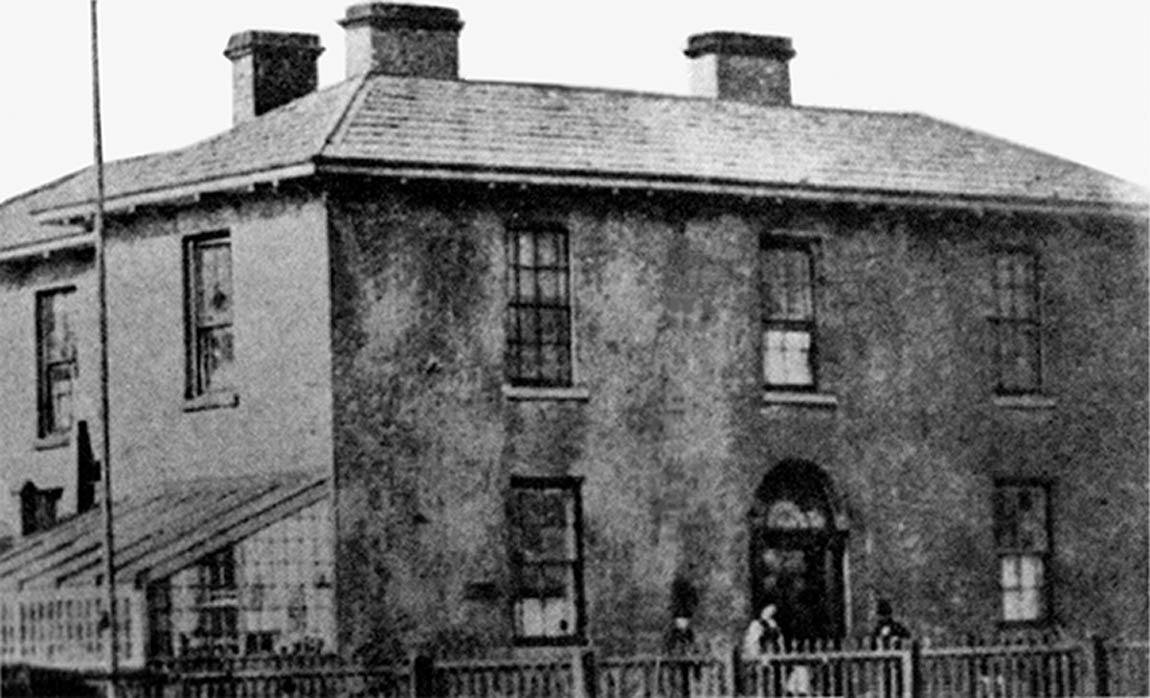 On the 16th the second annual meeting of the friends and supporters of St Helens Cottage Hospital (pictured above prior to the house’s conversion into a hospital) was held in which it was revealed that 77 patients had been in the hospital during the past year. Of these 58 had been discharged to convalesce at home and nine had died, leaving ten patients still in the hospital at the close of the year.
The hospital committee during the past 12 months had received £457 in donations and £247 in annual subscriptions, which was a considerable increase on the previous year. The annual report also disclosed that they now had 12 permanent hospital beds and 10 occasional beds, so that in case of an emergency 22 beds could be fitted up. The chairman of the meeting said it was a matter of congratulation that the establishment of the hospital had affected so much good and its financial position had much improved.
In 1869 the St Helens Newspaper wrote in uncomplimentary terms about the state of Thatto Heath:
"We cannot help saying that it is about one of the most neglected and unprotected place in the borough of St. Helens, to say nothing about the police arrangements, of which the least said is best at present. We wish, most heartily, that our Town Council could spare their surveyor, if only for a day, to look over the condition of the people's necessities on the heath. There is scarcely a house that has a supply of water fit for domestic purposes. Thatto Heath is worse provided for in this essential of domestic life, health, and cleanliness, than any other part of the borough, and there is no reason why this should continue any longer."
On the 16th the monthly meeting of the council's Paving, Highway and Sewering Committee was held in which it was stated that Thatto Heath was now becoming "a little village" and a large quantity of land was being laid out on the hillside for building purposes.
A large part of Thatto Heath had been – as the name suggests – heathland but that was now being eroded by development with about 100 more cottages soon to be erected. However, a lack of proper sewering was still said to be an issue with the present drainage going into a local brook.
The Road Surveyor also reported to the meeting that the flagging of College Street, Park Road and Watery Lane in Sutton was progressing satisfactorily. Sinking new coal shafts and extending existing ones was very dangerous work and especially so if basic safety protocols were not followed.
This week John Naylor died while working at a new pit in Thatto Heath. The 32-year-old had been sinking a shaft but when resuming work at 7am had failed to send a light down the shaft to check if any gas had been generated during the night. Naylor instead travelled down in the large bucket known as a hoppett.
But as soon as he reached the bottom he detected gas and immediately called to be hauled back up. Only 5 yards from the top he became unconscious and fell from the hoppett to the bottom of the shaft, a distance of 15 yards. By the time Naylor could be extricated he was found to be dead.
On the following day a similar fatal accident occurred at the new Bold Colliery that was presently being sunk. A pumping engine that pumped out water from the bottom of a shaft had stopped working and John Ryan had been instructed to go and bring the engine man who lived at Burtonwood.
But the 19-year-old said he would sort the problem himself and was promptly lowered down the shaft. John managed to restart the engine but when he called to be drawn up the shaft again, he was seen to be clinging to the outside of the hoppett and shouting "I'm fainting". The young man then let go his hold and fell 64 yards to the bottom of the shaft where he was found to be dead.
On the 19th the St Helens Newspaper wrote a lengthy leader article welcoming the Rivers Pollution Bill that was currently going through Parliament. The paper reminisced over times as recent as the 1830s when the River Mersey between Widnes and Warrington was "pure and enjoyable" and a great place to fish both on a commercial basis and as a sport.
And the Irwell near Manchester had once been "a clear and pelucid stream in whose waters hundreds of bathers sought healthful recreation, and upon whose bosom pleasant regattas took place. "Now it is a filthy stream, and at a recent regatta several persons actually fainted on its banks caused by the health-destroying odours which arose from its troubled surface."
And the Newspaper also had this to say about the Sankey Brook that flowed through St Helens: "Thirty years ago it irrigated the meadows from Parr to Sankey; and in the neighbourhood of Bewsey Hall and the Dallam meadows its banks were replete with scores of quiet nooks and rural retreats, where scores of anglers might nightly be seen during the season amusing themselves and procuring a dainty supper for their families.
"Now all this is ended by the pollution of the stream by the manufacturers making it the outlet for the poisonous acids which flow from their manufactories – all these pleasant associations and privileges which go so far to make up the sum of human happiness, adding so materially to the comfort of the domestic life are gone."
On the 20th a sermon was preached in St Helens Parish Church and a collection was made on behalf of the Cottage Hospital in Peasley Cross.
Last year a grand fete was held in Knowsley Park to celebrate Prescot Oddfellows forming a widow and orphans fund. About 600 members of lodges from the district wearing the regalia of their order and carrying flags and banners took part in the long procession accompanied by two bands. It had been a working day but shopkeepers closed their doors and – as the Newspaper put it – "the whole town turned out to do honour to the occasion".
On the 21st the Prescot Oddfellows held a "Grand Pic-Nic" in Knowsley Park in aid of their widows and orphans fund. Another procession accompanied by bands formed by members from the various lodges walked through Prescot before entering the park. The Prescot Reporter said the crowd numbered between 4,000 and 5,000 and added:
"During the afternoon a programme of amusements was gone through, which included – punchinello [puppet show], racing, balloon ascents, dancing, cricket, aunt sally, &c. A camera obscura was on the ground, and seemed to afford great pleasure to the company and found plenty of patrons."
And finally, at St Helens County Court on the 22nd a curious slander case was heard in which a Rainford miner brought a case against a coal boss. The former called Matthew Kenyon said John Johnson had accused him of stealing his dogs and as a consequence he'd lost his employment at Victoria Colliery in Old Lane and his part-time job as a gamewatcher for Lord Derby.
Gamewatchers kept an eye out for poachers and Matthew had been stationed in Berringtons Lane near where Johnson kept two setter puppies. When they went missing Matthew got the blame. The 34-year-old from Pasture Lane then applied for employment with the Rainford Local Board but was told he could not be hired because of Johnson's accusation that he was a thief and a scoundrel and had several times been in the hands of the police. Matthew Kenyon sought £500 damages from John Johnson but a jury after considering the case for twenty minutes awarded him just £5.
St Helens Newspaper courtesy St Helens Archive Service at Eccleston Library
Next Week's stories will include the 44-year-old described as an elderly coal stealer, the lazy fellow that attacked his mother in a Greenbank pub, Griffin's Portrait Club seeks members, the 11-year-old concertina thief and the window smasher in a police cell.
The latest death stats for last month were released this week and showed that the scarlet fever outbreak in St Helens was still continuing. It had been the highest cause of fatalities in the town with eight deaths occurring. Croup had caused four persons to lose their lives; diphtheria had led to two fatalities and typhoid one. In total there had been 78 deaths during the month with 31 of the deceased aged under five.
The hospital committee during the past 12 months had received £457 in donations and £247 in annual subscriptions, which was a considerable increase on the previous year. The annual report also disclosed that they now had 12 permanent hospital beds and 10 occasional beds, so that in case of an emergency 22 beds could be fitted up. The chairman of the meeting said it was a matter of congratulation that the establishment of the hospital had affected so much good and its financial position had much improved.
In 1869 the St Helens Newspaper wrote in uncomplimentary terms about the state of Thatto Heath:
"We cannot help saying that it is about one of the most neglected and unprotected place in the borough of St. Helens, to say nothing about the police arrangements, of which the least said is best at present. We wish, most heartily, that our Town Council could spare their surveyor, if only for a day, to look over the condition of the people's necessities on the heath. There is scarcely a house that has a supply of water fit for domestic purposes. Thatto Heath is worse provided for in this essential of domestic life, health, and cleanliness, than any other part of the borough, and there is no reason why this should continue any longer."
On the 16th the monthly meeting of the council's Paving, Highway and Sewering Committee was held in which it was stated that Thatto Heath was now becoming "a little village" and a large quantity of land was being laid out on the hillside for building purposes.
A large part of Thatto Heath had been – as the name suggests – heathland but that was now being eroded by development with about 100 more cottages soon to be erected. However, a lack of proper sewering was still said to be an issue with the present drainage going into a local brook.
The Road Surveyor also reported to the meeting that the flagging of College Street, Park Road and Watery Lane in Sutton was progressing satisfactorily. Sinking new coal shafts and extending existing ones was very dangerous work and especially so if basic safety protocols were not followed.
This week John Naylor died while working at a new pit in Thatto Heath. The 32-year-old had been sinking a shaft but when resuming work at 7am had failed to send a light down the shaft to check if any gas had been generated during the night. Naylor instead travelled down in the large bucket known as a hoppett.
But as soon as he reached the bottom he detected gas and immediately called to be hauled back up. Only 5 yards from the top he became unconscious and fell from the hoppett to the bottom of the shaft, a distance of 15 yards. By the time Naylor could be extricated he was found to be dead.
On the following day a similar fatal accident occurred at the new Bold Colliery that was presently being sunk. A pumping engine that pumped out water from the bottom of a shaft had stopped working and John Ryan had been instructed to go and bring the engine man who lived at Burtonwood.
But the 19-year-old said he would sort the problem himself and was promptly lowered down the shaft. John managed to restart the engine but when he called to be drawn up the shaft again, he was seen to be clinging to the outside of the hoppett and shouting "I'm fainting". The young man then let go his hold and fell 64 yards to the bottom of the shaft where he was found to be dead.
On the 19th the St Helens Newspaper wrote a lengthy leader article welcoming the Rivers Pollution Bill that was currently going through Parliament. The paper reminisced over times as recent as the 1830s when the River Mersey between Widnes and Warrington was "pure and enjoyable" and a great place to fish both on a commercial basis and as a sport.
And the Irwell near Manchester had once been "a clear and pelucid stream in whose waters hundreds of bathers sought healthful recreation, and upon whose bosom pleasant regattas took place. "Now it is a filthy stream, and at a recent regatta several persons actually fainted on its banks caused by the health-destroying odours which arose from its troubled surface."
And the Newspaper also had this to say about the Sankey Brook that flowed through St Helens: "Thirty years ago it irrigated the meadows from Parr to Sankey; and in the neighbourhood of Bewsey Hall and the Dallam meadows its banks were replete with scores of quiet nooks and rural retreats, where scores of anglers might nightly be seen during the season amusing themselves and procuring a dainty supper for their families.
"Now all this is ended by the pollution of the stream by the manufacturers making it the outlet for the poisonous acids which flow from their manufactories – all these pleasant associations and privileges which go so far to make up the sum of human happiness, adding so materially to the comfort of the domestic life are gone."
On the 20th a sermon was preached in St Helens Parish Church and a collection was made on behalf of the Cottage Hospital in Peasley Cross.
Last year a grand fete was held in Knowsley Park to celebrate Prescot Oddfellows forming a widow and orphans fund. About 600 members of lodges from the district wearing the regalia of their order and carrying flags and banners took part in the long procession accompanied by two bands. It had been a working day but shopkeepers closed their doors and – as the Newspaper put it – "the whole town turned out to do honour to the occasion".
On the 21st the Prescot Oddfellows held a "Grand Pic-Nic" in Knowsley Park in aid of their widows and orphans fund. Another procession accompanied by bands formed by members from the various lodges walked through Prescot before entering the park. The Prescot Reporter said the crowd numbered between 4,000 and 5,000 and added:
"During the afternoon a programme of amusements was gone through, which included – punchinello [puppet show], racing, balloon ascents, dancing, cricket, aunt sally, &c. A camera obscura was on the ground, and seemed to afford great pleasure to the company and found plenty of patrons."
And finally, at St Helens County Court on the 22nd a curious slander case was heard in which a Rainford miner brought a case against a coal boss. The former called Matthew Kenyon said John Johnson had accused him of stealing his dogs and as a consequence he'd lost his employment at Victoria Colliery in Old Lane and his part-time job as a gamewatcher for Lord Derby.
Gamewatchers kept an eye out for poachers and Matthew had been stationed in Berringtons Lane near where Johnson kept two setter puppies. When they went missing Matthew got the blame. The 34-year-old from Pasture Lane then applied for employment with the Rainford Local Board but was told he could not be hired because of Johnson's accusation that he was a thief and a scoundrel and had several times been in the hands of the police. Matthew Kenyon sought £500 damages from John Johnson but a jury after considering the case for twenty minutes awarded him just £5.
St Helens Newspaper courtesy St Helens Archive Service at Eccleston Library
Next Week's stories will include the 44-year-old described as an elderly coal stealer, the lazy fellow that attacked his mother in a Greenbank pub, Griffin's Portrait Club seeks members, the 11-year-old concertina thief and the window smasher in a police cell.
This week's many stories include St Helens Cottage Hospital's annual meeting, the ongoing scarlet fever outbreak in St Helens, how Thatto Heath was becoming a little village, two pit sinking deaths occur in Bold and Thatto Heath, the curious slander case brought by a Rainford miner against a coal boss and there's hope that a Rivers Pollution Bill would improve the highly polluted Sankey Brook and Mersey.
The latest death stats for last month were released this week and showed that the scarlet fever outbreak in St Helens was still continuing.
It had been the highest cause of fatalities in the town with eight deaths occurring. Croup had caused four persons to lose their lives; diphtheria had led to two fatalities and typhoid one.
In total there had been 78 deaths during the month with 31 of the deceased aged under five.
On the 16th the second annual meeting of the friends and supporters of St Helens Cottage Hospital (pictured above prior to the house’s conversion into a hospital) was held in which it was revealed that 77 patients had been in the hospital during the past year.
Of these 58 had been discharged to convalesce at home and nine had died, leaving ten patients still in the hospital at the close of the year.
The hospital committee during the past 12 months had received £457 in donations and £247 in annual subscriptions, which was a considerable increase on the previous year.
The annual report also disclosed that they now had 12 permanent hospital beds and 10 occasional beds, so that in case of an emergency 22 beds could be fitted up.
The chairman of the meeting said it was a matter of congratulation that the establishment of the hospital had affected so much good and its financial position had much improved.
In 1869 the St Helens Newspaper wrote in uncomplimentary terms about the state of Thatto Heath:
"We cannot help saying that it is about one of the most neglected and unprotected place in the borough of St. Helens, to say nothing about the police arrangements, of which the least said is best at present. We wish, most heartily, that our Town Council could spare their surveyor, if only for a day, to look over the condition of the people's necessities on the heath.
"There is scarcely a house that has a supply of water fit for domestic purposes. Thatto Heath is worse provided for in this essential of domestic life, health, and cleanliness, than any other part of the borough, and there is no reason why this should continue any longer."
On the 16th the monthly meeting of the council's Paving, Highway and Sewering Committee was held in which it was stated that Thatto Heath was now becoming "a little village" and a large quantity of land was being laid out on the hillside for building purposes.
A large part of Thatto Heath had been – as the name suggests – heathland but that was now being eroded by development with about 100 more cottages soon to be erected.
However, a lack of proper sewering was still said to be an issue with the present drainage going into a local brook.
The Road Surveyor also reported to the meeting that the flagging of College Street, Park Road and Watery Lane in Sutton was progressing satisfactorily.
Sinking new coal shafts and extending existing ones was very dangerous work and especially so if basic safety protocols were not followed.
This week John Naylor died while working at a new pit in Thatto Heath.
The 32-year-old had been sinking a shaft but when resuming work at 7am had failed to send a light down the shaft to check if any gas had been generated during the night.
Naylor instead travelled down in the large bucket known as a hoppett. But as soon as he reached the bottom he detected gas and immediately called to be hauled back up.
Only 5 yards from the top he became unconscious and fell from the hoppett to the bottom of the shaft, a distance of 15 yards. By the time Naylor could be extricated he was found to be dead.
On the following day a similar fatal accident occurred at the new Bold Colliery that was presently being sunk.
A pumping engine that pumped out water from the bottom of a shaft had stopped working and John Ryan had been instructed to go and bring the engine man who lived at Burtonwood.
But the 19-year-old said he would sort the problem himself and was promptly lowered down the shaft.
John managed to restart the engine but when he called to be drawn up the shaft again, he was seen to be clinging to the outside of the hoppett and shouting "I'm fainting".
The young man then let go his hold and fell 64 yards to the bottom of the shaft where he was found to be dead.
On the 19th the St Helens Newspaper wrote a lengthy leader article welcoming the Rivers Pollution Bill that was currently going through Parliament.
The paper reminisced over times as recent as the 1830s when the River Mersey between Widnes and Warrington was "pure and enjoyable" and a great place to fish both on a commercial basis and as a sport.
And the Irwell near Manchester had once been "a clear and pelucid stream in whose waters hundreds of bathers sought healthful recreation, and upon whose bosom pleasant regattas took place.
"Now it is a filthy stream, and at a recent regatta several persons actually fainted on its banks caused by the health-destroying odours which arose from its troubled surface."
And the Newspaper also had this to say about the Sankey Brook that flowed through St Helens:
"Thirty years ago it irrigated the meadows from Parr to Sankey; and in the neighbourhood of Bewsey Hall and the Dallam meadows its banks were replete with scores of quiet nooks and rural retreats, where scores of anglers might nightly be seen during the season amusing themselves and procuring a dainty supper for their families.
"Now all this is ended by the pollution of the stream by the manufacturers making it the outlet for the poisonous acids which flow from their manufactories – all these pleasant associations and privileges which go so far to make up the sum of human happiness, adding so materially to the comfort of the domestic life are gone."
On the 20th a sermon was preached in St Helens Parish Church and a collection was made on behalf of the Cottage Hospital in Peasley Cross.
Last year a grand fete was held in Knowsley Park to celebrate Prescot Oddfellows forming a widow and orphans fund.
About 600 members of lodges from the district wearing the regalia of their order and carrying flags and banners took part in the long procession accompanied by two bands.
It had been a working day but shopkeepers closed their doors and – as the Newspaper put it – "the whole town turned out to do honour to the occasion".
On the 21st the Prescot Oddfellows held a "Grand Pic-Nic" in Knowsley Park in aid of their widows and orphans fund.
Another procession accompanied by bands formed by members from the various lodges walked through Prescot before entering the park. The Prescot Reporter said the crowd numbered between 4,000 and 5,000 and added:
"During the afternoon a programme of amusements was gone through, which included – punchinello [puppet show], racing, balloon ascents, dancing, cricket, aunt sally, &c. A camera obscura was on the ground, and seemed to afford great pleasure to the company and found plenty of patrons."
And finally, at St Helens County Court on the 22nd a curious slander case was heard in which a Rainford miner brought a case against a coal boss.
The former called Matthew Kenyon said John Johnson had accused him of stealing his dogs and as a consequence he'd lost his employment at Victoria Colliery in Old Lane and his part-time job as a gamewatcher for Lord Derby.
Gamewatchers kept an eye out for poachers and Matthew had been stationed in Berringtons Lane near where Johnson kept two setter puppies. When they went missing Matthew got the blame.
The 34-year-old from Pasture Lane then applied for employment with the Rainford Local Board but was told he could not be hired because of Johnson's accusation that he was a thief and a scoundrel and had several times been in the hands of the police.
Matthew Kenyon sought £500 damages from John Johnson but a jury after considering the case for twenty minutes awarded him just £5.
St Helens Newspaper courtesy St Helens Archive Service at Eccleston Library
Next Week's stories will include the 44-year-old described as an elderly coal stealer, the lazy fellow that attacked his mother in a Greenbank pub, Griffin's Portrait Club seeks members, the 11-year-old concertina thief and the window smasher in a police cell.
The latest death stats for last month were released this week and showed that the scarlet fever outbreak in St Helens was still continuing.
It had been the highest cause of fatalities in the town with eight deaths occurring. Croup had caused four persons to lose their lives; diphtheria had led to two fatalities and typhoid one.
In total there had been 78 deaths during the month with 31 of the deceased aged under five.
Of these 58 had been discharged to convalesce at home and nine had died, leaving ten patients still in the hospital at the close of the year.
The hospital committee during the past 12 months had received £457 in donations and £247 in annual subscriptions, which was a considerable increase on the previous year.
The annual report also disclosed that they now had 12 permanent hospital beds and 10 occasional beds, so that in case of an emergency 22 beds could be fitted up.
The chairman of the meeting said it was a matter of congratulation that the establishment of the hospital had affected so much good and its financial position had much improved.
In 1869 the St Helens Newspaper wrote in uncomplimentary terms about the state of Thatto Heath:
"We cannot help saying that it is about one of the most neglected and unprotected place in the borough of St. Helens, to say nothing about the police arrangements, of which the least said is best at present. We wish, most heartily, that our Town Council could spare their surveyor, if only for a day, to look over the condition of the people's necessities on the heath.
"There is scarcely a house that has a supply of water fit for domestic purposes. Thatto Heath is worse provided for in this essential of domestic life, health, and cleanliness, than any other part of the borough, and there is no reason why this should continue any longer."
On the 16th the monthly meeting of the council's Paving, Highway and Sewering Committee was held in which it was stated that Thatto Heath was now becoming "a little village" and a large quantity of land was being laid out on the hillside for building purposes.
A large part of Thatto Heath had been – as the name suggests – heathland but that was now being eroded by development with about 100 more cottages soon to be erected.
However, a lack of proper sewering was still said to be an issue with the present drainage going into a local brook.
The Road Surveyor also reported to the meeting that the flagging of College Street, Park Road and Watery Lane in Sutton was progressing satisfactorily.
Sinking new coal shafts and extending existing ones was very dangerous work and especially so if basic safety protocols were not followed.
This week John Naylor died while working at a new pit in Thatto Heath.
The 32-year-old had been sinking a shaft but when resuming work at 7am had failed to send a light down the shaft to check if any gas had been generated during the night.
Naylor instead travelled down in the large bucket known as a hoppett. But as soon as he reached the bottom he detected gas and immediately called to be hauled back up.
Only 5 yards from the top he became unconscious and fell from the hoppett to the bottom of the shaft, a distance of 15 yards. By the time Naylor could be extricated he was found to be dead.
On the following day a similar fatal accident occurred at the new Bold Colliery that was presently being sunk.
A pumping engine that pumped out water from the bottom of a shaft had stopped working and John Ryan had been instructed to go and bring the engine man who lived at Burtonwood.
But the 19-year-old said he would sort the problem himself and was promptly lowered down the shaft.
John managed to restart the engine but when he called to be drawn up the shaft again, he was seen to be clinging to the outside of the hoppett and shouting "I'm fainting".
The young man then let go his hold and fell 64 yards to the bottom of the shaft where he was found to be dead.
On the 19th the St Helens Newspaper wrote a lengthy leader article welcoming the Rivers Pollution Bill that was currently going through Parliament.
The paper reminisced over times as recent as the 1830s when the River Mersey between Widnes and Warrington was "pure and enjoyable" and a great place to fish both on a commercial basis and as a sport.
And the Irwell near Manchester had once been "a clear and pelucid stream in whose waters hundreds of bathers sought healthful recreation, and upon whose bosom pleasant regattas took place.
"Now it is a filthy stream, and at a recent regatta several persons actually fainted on its banks caused by the health-destroying odours which arose from its troubled surface."
And the Newspaper also had this to say about the Sankey Brook that flowed through St Helens:
"Thirty years ago it irrigated the meadows from Parr to Sankey; and in the neighbourhood of Bewsey Hall and the Dallam meadows its banks were replete with scores of quiet nooks and rural retreats, where scores of anglers might nightly be seen during the season amusing themselves and procuring a dainty supper for their families.
"Now all this is ended by the pollution of the stream by the manufacturers making it the outlet for the poisonous acids which flow from their manufactories – all these pleasant associations and privileges which go so far to make up the sum of human happiness, adding so materially to the comfort of the domestic life are gone."
On the 20th a sermon was preached in St Helens Parish Church and a collection was made on behalf of the Cottage Hospital in Peasley Cross.
Last year a grand fete was held in Knowsley Park to celebrate Prescot Oddfellows forming a widow and orphans fund.
About 600 members of lodges from the district wearing the regalia of their order and carrying flags and banners took part in the long procession accompanied by two bands.
It had been a working day but shopkeepers closed their doors and – as the Newspaper put it – "the whole town turned out to do honour to the occasion".
On the 21st the Prescot Oddfellows held a "Grand Pic-Nic" in Knowsley Park in aid of their widows and orphans fund.
Another procession accompanied by bands formed by members from the various lodges walked through Prescot before entering the park. The Prescot Reporter said the crowd numbered between 4,000 and 5,000 and added:
"During the afternoon a programme of amusements was gone through, which included – punchinello [puppet show], racing, balloon ascents, dancing, cricket, aunt sally, &c. A camera obscura was on the ground, and seemed to afford great pleasure to the company and found plenty of patrons."
And finally, at St Helens County Court on the 22nd a curious slander case was heard in which a Rainford miner brought a case against a coal boss.
The former called Matthew Kenyon said John Johnson had accused him of stealing his dogs and as a consequence he'd lost his employment at Victoria Colliery in Old Lane and his part-time job as a gamewatcher for Lord Derby.
Gamewatchers kept an eye out for poachers and Matthew had been stationed in Berringtons Lane near where Johnson kept two setter puppies. When they went missing Matthew got the blame.
The 34-year-old from Pasture Lane then applied for employment with the Rainford Local Board but was told he could not be hired because of Johnson's accusation that he was a thief and a scoundrel and had several times been in the hands of the police.
Matthew Kenyon sought £500 damages from John Johnson but a jury after considering the case for twenty minutes awarded him just £5.
St Helens Newspaper courtesy St Helens Archive Service at Eccleston Library
Next Week's stories will include the 44-year-old described as an elderly coal stealer, the lazy fellow that attacked his mother in a Greenbank pub, Griffin's Portrait Club seeks members, the 11-year-old concertina thief and the window smasher in a police cell.