
150 YEARS AGO THIS WEEK 6 - 12 OCTOBER 1875
This week's many stories include criticism of the drunkenness in St Helens, the malicious acts committed against the Lorne Hotel, Hospital Saturday takes place, the Greenbank stabbing of a young woman and the policeman that had his trousers torn to pieces.
We begin on the 6th at St Helens Council's monthly meeting when a letter from Marcus Naylor of the Lorne Hotel was read out. The pub on the corner of Fraser Street and Smithy Brow had suffered nine breakages of windows over the previous two years, mainly through stone throwing. Pubs that refused to serve drunken or troublesome persons often suffered such vandalism as an act of revenge and Mr Naylor said three of the most serious incidents had taken place between 4am and 6am.
What the landlord had sent was known as a memorial – a form of petition in which 38 others who were owners of property or burgesses (i.e. had voting rights) in the area had also signed. Councillor Jackson told the meeting that Mr Naylor kept a respectable house but his pub was located in a "low neighbourhood" and the "malicious acts" that had been committed were on account of his being so severe on the "idle and drunken vagabonds of the neighbourhood whom he would not supply with drink."
The landlord's complaint was that there was insufficient police on the streets, particularly during the middle of the night, and he added that his insurance company had refused to cover him anymore. Councillor Jackson claimed that the police had told him that if any serious disturbance took place near the pub, it would be "perfect madness for them to go into it, because they were sure to get murdered."
The head of St Helens police was Supt James Ludlam and it was stated that he had said he was powerless to do anything about the situation with the small number of police officers at his disposal. After a discussion, it was decided that the mayor, who was the town's chief magistrate, would look into the matter.
As if to underline the problems of the Parr Street / Smithy Brow district, John Farrell appeared in court this week charged with being drunk and disorderly and assaulting PC John Wilding. The latter told the court that he had been on duty in Parr Street at 12:30am when he heard screaming and shouts of "police" coming from Fraser's Court.
Upon reaching the place he found Farrell striking his wife and because the constable interfered, the defendant had seized him by his neck, tore the top button off his coat and pulled off the policeman's whistle and thrown it away. Farrell then went into his house but the constable followed him and managed to arrest the man.
But he was very violent all the way to the station and he tore the policeman's trousers literally to pieces. In total including costs and damages, Farrell was fined just under £2 or must serve two months in prison. As usual, there was no penalty for the wife beating, which had started the whole affair.
The Newspaper was often critical of the drunkenness that went on in St Helens and often said that on Saturday nights, and at other times, the town was turned into a saturnalia, meaning a lengthy, debauched Roman festival. In describing the New Year celebrations of 1874, the paper had written:
"The amount of intemperance on Thursday was painful to witness, and was the more observable in the absence of usual business bustle. Young men of the working classes turned the day into a saturnalia, drinking jovially while light lasted, and singing through the streets at night."
It has often been said that the beer in the past was stronger than today. But in this week's paper the Newspaper wondered whether something was being added to the alcohol that made the people of Lancashire get so easily drunk.
"The number of persons who are weekly locked up for being what is termed “drunk and incapable,” or “drunk and disorderly,” in St. Helens, as well as in neighbouring towns, are quite sufficient to lead to the inquiry “Is the drink with which these people are supplied adulterated?”
"Is there any maddening ingredient incorporated with the beer and spirits supplied which tend to produce the lamentable results which make the eve of the Sabbath a saturnalia, at once degrading to the votaries [devoted followers] of our drinking customs, and makes enlightened and Bible reading England a byeword and a reproach to the Christian nations of the world?" I would suggest that the standard practice of paying workers on a Saturday lunchtime, after they had finished work for the week, allowed some to sup strong beer all afternoon and evening and that was the main reason they got into a bad way.
By the mid-1870s, the term "bastardy" was less used in newspaper reports when describing applications for maintenance involving illegitimate children. But the Newspaper said that John Guttridge had this week appeared in court charged with neglecting to obey a bastardy order made by the magistrates. The young man had accrued £3 5 shillings of arrears over the past 12 weeks and was ordered to pay the amount straight away or go to prison for three months.
Clothes stealers when convicted were rarely given the option of a fine. Even after pleading guilty in court, wearing apparel thieves could expect to be sent straight to gaol. It was common for those in lodgings to suddenly take off with other people's property.
But what Peter Norton did was unusual and particularly cruel. He told a Mrs McGuinness that her mother was ill in Manchester but when she arrived in the city the landlady discovered that it was a lie. When Mrs McGuinness returned to St Helens she found that Norton had decamped and several articles of clothing belonging to her husband had gone too.
Norton had even left behind his old clogs, an old shirt and a pair of stockings. Such people rarely went far and a day or two later PC Williamson found him in Sutton and arrested him. Appearing in court this week, Norton was sent to prison for two months.
The address of Garden Street in Greenbank is two misnomers for the price of one! Originally, prior to the district's industrialisation and the arrival of its mainly Irish residents, Greenbank had been the green bank of the St Helens Canal and it's easy to imagine how its few residents could have lived in a nice little place called Garden Street. But by the 1870s I very much doubt that there was any greenery at all, with noxious discharges from the Greenbank Alkali Works – as well as other factories – having long polished off any grass or shrubbery.
I mention this because Joseph Hunt from Garden Street in Greenbank was also in court this week charged with wounding Sarah Simpson with intent to do her bodily harm. It was reported that she and Hunt had been keeping company for seven years. Well, they had clearly been doing more than simply keeping each other company, as Sarah had had two children with the man.
On the previous Saturday night, Hunt had spent half-an-hour in Sarah's home and upon getting up to leave he asked her to go out with him. She refused and he then threatened her and taking a pen knife out of his pocket, he stabbed Sarah in the back of her neck. Hunt was committed to take his trial at the next Kirkdale sessions where the 21-year-old would be sent to prison for 6 months.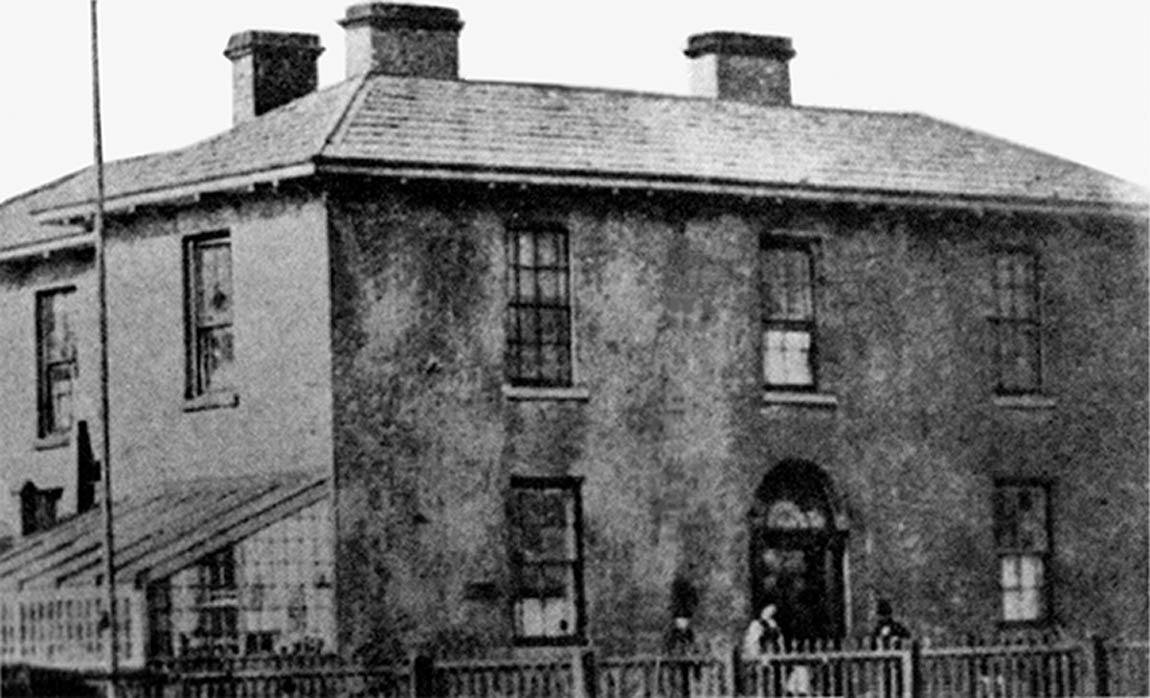 The 9th was Hospital Saturday in which collections were made for St Helens Cottage Hospital, which had opened its doors in Peasley Cross two years before and its original building is pictured above. The hospital had yet to introduce its penny-a-week insurance scheme, which would bring in much revenue and at the moment the institution was largely reliant on donations, as well as the small payments that patients had to make for their care.
During the last year there had been a deficiency in the accounts of £473, which needed to be made good. In a notice placed in the St Helens Newspaper soliciting donations on Hospital Saturday, the hospital wrote:
"To the working classes the hospital must have especially commended itself. It has been a refuge for many in severe sickness and accident, affording conveniences not to be had at home, together with excellent nursing, and quiet; it has often been the means of saving life, and has promoted speedy and complete recovery."
St Helens Newspaper courtesy St Helens Archive Service at Eccleston Library
Next Week's stories will include the man who accidentally drove his horse and cart into a load of bricks in Park Road, the attempted rape by a lodger, the purring case in Haydock and the opening of the Rainford Catholic Chapel.
We begin on the 6th at St Helens Council's monthly meeting when a letter from Marcus Naylor of the Lorne Hotel was read out. The pub on the corner of Fraser Street and Smithy Brow had suffered nine breakages of windows over the previous two years, mainly through stone throwing. Pubs that refused to serve drunken or troublesome persons often suffered such vandalism as an act of revenge and Mr Naylor said three of the most serious incidents had taken place between 4am and 6am.
What the landlord had sent was known as a memorial – a form of petition in which 38 others who were owners of property or burgesses (i.e. had voting rights) in the area had also signed. Councillor Jackson told the meeting that Mr Naylor kept a respectable house but his pub was located in a "low neighbourhood" and the "malicious acts" that had been committed were on account of his being so severe on the "idle and drunken vagabonds of the neighbourhood whom he would not supply with drink."
The landlord's complaint was that there was insufficient police on the streets, particularly during the middle of the night, and he added that his insurance company had refused to cover him anymore. Councillor Jackson claimed that the police had told him that if any serious disturbance took place near the pub, it would be "perfect madness for them to go into it, because they were sure to get murdered."
The head of St Helens police was Supt James Ludlam and it was stated that he had said he was powerless to do anything about the situation with the small number of police officers at his disposal. After a discussion, it was decided that the mayor, who was the town's chief magistrate, would look into the matter.
As if to underline the problems of the Parr Street / Smithy Brow district, John Farrell appeared in court this week charged with being drunk and disorderly and assaulting PC John Wilding. The latter told the court that he had been on duty in Parr Street at 12:30am when he heard screaming and shouts of "police" coming from Fraser's Court.
Upon reaching the place he found Farrell striking his wife and because the constable interfered, the defendant had seized him by his neck, tore the top button off his coat and pulled off the policeman's whistle and thrown it away. Farrell then went into his house but the constable followed him and managed to arrest the man.
But he was very violent all the way to the station and he tore the policeman's trousers literally to pieces. In total including costs and damages, Farrell was fined just under £2 or must serve two months in prison. As usual, there was no penalty for the wife beating, which had started the whole affair.
The Newspaper was often critical of the drunkenness that went on in St Helens and often said that on Saturday nights, and at other times, the town was turned into a saturnalia, meaning a lengthy, debauched Roman festival. In describing the New Year celebrations of 1874, the paper had written:
"The amount of intemperance on Thursday was painful to witness, and was the more observable in the absence of usual business bustle. Young men of the working classes turned the day into a saturnalia, drinking jovially while light lasted, and singing through the streets at night."
It has often been said that the beer in the past was stronger than today. But in this week's paper the Newspaper wondered whether something was being added to the alcohol that made the people of Lancashire get so easily drunk.
"The number of persons who are weekly locked up for being what is termed “drunk and incapable,” or “drunk and disorderly,” in St. Helens, as well as in neighbouring towns, are quite sufficient to lead to the inquiry “Is the drink with which these people are supplied adulterated?”
"Is there any maddening ingredient incorporated with the beer and spirits supplied which tend to produce the lamentable results which make the eve of the Sabbath a saturnalia, at once degrading to the votaries [devoted followers] of our drinking customs, and makes enlightened and Bible reading England a byeword and a reproach to the Christian nations of the world?" I would suggest that the standard practice of paying workers on a Saturday lunchtime, after they had finished work for the week, allowed some to sup strong beer all afternoon and evening and that was the main reason they got into a bad way.
By the mid-1870s, the term "bastardy" was less used in newspaper reports when describing applications for maintenance involving illegitimate children. But the Newspaper said that John Guttridge had this week appeared in court charged with neglecting to obey a bastardy order made by the magistrates. The young man had accrued £3 5 shillings of arrears over the past 12 weeks and was ordered to pay the amount straight away or go to prison for three months.
Clothes stealers when convicted were rarely given the option of a fine. Even after pleading guilty in court, wearing apparel thieves could expect to be sent straight to gaol. It was common for those in lodgings to suddenly take off with other people's property.
But what Peter Norton did was unusual and particularly cruel. He told a Mrs McGuinness that her mother was ill in Manchester but when she arrived in the city the landlady discovered that it was a lie. When Mrs McGuinness returned to St Helens she found that Norton had decamped and several articles of clothing belonging to her husband had gone too.
Norton had even left behind his old clogs, an old shirt and a pair of stockings. Such people rarely went far and a day or two later PC Williamson found him in Sutton and arrested him. Appearing in court this week, Norton was sent to prison for two months.
The address of Garden Street in Greenbank is two misnomers for the price of one! Originally, prior to the district's industrialisation and the arrival of its mainly Irish residents, Greenbank had been the green bank of the St Helens Canal and it's easy to imagine how its few residents could have lived in a nice little place called Garden Street. But by the 1870s I very much doubt that there was any greenery at all, with noxious discharges from the Greenbank Alkali Works – as well as other factories – having long polished off any grass or shrubbery.
I mention this because Joseph Hunt from Garden Street in Greenbank was also in court this week charged with wounding Sarah Simpson with intent to do her bodily harm. It was reported that she and Hunt had been keeping company for seven years. Well, they had clearly been doing more than simply keeping each other company, as Sarah had had two children with the man.
On the previous Saturday night, Hunt had spent half-an-hour in Sarah's home and upon getting up to leave he asked her to go out with him. She refused and he then threatened her and taking a pen knife out of his pocket, he stabbed Sarah in the back of her neck. Hunt was committed to take his trial at the next Kirkdale sessions where the 21-year-old would be sent to prison for 6 months.
During the last year there had been a deficiency in the accounts of £473, which needed to be made good. In a notice placed in the St Helens Newspaper soliciting donations on Hospital Saturday, the hospital wrote:
"To the working classes the hospital must have especially commended itself. It has been a refuge for many in severe sickness and accident, affording conveniences not to be had at home, together with excellent nursing, and quiet; it has often been the means of saving life, and has promoted speedy and complete recovery."
St Helens Newspaper courtesy St Helens Archive Service at Eccleston Library
Next Week's stories will include the man who accidentally drove his horse and cart into a load of bricks in Park Road, the attempted rape by a lodger, the purring case in Haydock and the opening of the Rainford Catholic Chapel.
This week's many stories include criticism of the drunkenness in St Helens, the malicious acts committed against the Lorne Hotel, Hospital Saturday takes place, the Greenbank stabbing of a young woman and the policeman that had his trousers torn to pieces.
We begin on the 6th at St Helens Council's monthly meeting when a letter from Marcus Naylor of the Lorne Hotel was read out.
The pub on the corner of Fraser Street and Smithy Brow had suffered nine breakages of windows over the previous two years, mainly through stone throwing.
Pubs that refused to serve drunken or troublesome persons often suffered such vandalism as an act of revenge and Mr Naylor said three of the most serious incidents had taken place between 4am and 6am.
What the landlord had sent was known as a memorial – a form of petition in which 38 others who were owners of property or burgesses (i.e. had voting rights) in the area had also signed.
Councillor Jackson told the meeting that Mr Naylor kept a respectable house but his pub was located in a "low neighbourhood" and the "malicious acts" that had been committed were on account of his being so severe on the "idle and drunken vagabonds of the neighbourhood whom he would not supply with drink."
The landlord's complaint was that there was insufficient police on the streets, particularly during the middle of the night, and he added that his insurance company had refused to cover him anymore.
Councillor Jackson claimed that the police had told him that if any serious disturbance took place near the pub, it would be "perfect madness for them to go into it, because they were sure to get murdered."
The head of St Helens police was Supt James Ludlam and it was stated that he had said he was powerless to do anything about the situation with the small number of police officers at his disposal.
After a discussion, it was decided that the mayor, who was the town's chief magistrate, would look into the matter.
As if to underline the problems of the Parr Street / Smithy Brow district, John Farrell appeared in court this week charged with being drunk and disorderly and assaulting PC John Wilding.
The latter told the court that he had been on duty in Parr Street at 12:30am when he heard screaming and shouts of "police" coming from Fraser's Court.
Upon reaching the place he found Farrell striking his wife and because the constable interfered, the defendant had seized him by his neck, tore the top button off his coat and pulled off the policeman's whistle and thrown it away.
Farrell then went into his house but the constable followed him and managed to arrest the man.
But he was very violent all the way to the station and he tore the policeman's trousers literally to pieces.
In total including costs and damages, Farrell was fined just under £2 or must serve two months in prison. As usual, there was no penalty for the wife beating, which had started the whole affair.
The Newspaper was often critical of the drunkenness that went on in St Helens and often said that on Saturday nights, and at other times, the town was turned into a saturnalia, meaning a lengthy, debauched Roman festival.
In describing the New Year celebrations of 1874, the paper had written:
"The amount of intemperance on Thursday was painful to witness, and was the more observable in the absence of usual business bustle. Young men of the working classes turned the day into a saturnalia, drinking jovially while light lasted, and singing through the streets at night."
It has often been said that the beer in the past was stronger than today. But in this week's paper the Newspaper wondered whether something was being added to the alcohol that made the people of Lancashire get so easily drunk.
"The number of persons who are weekly locked up for being what is termed “drunk and incapable,” or “drunk and disorderly,” in St. Helens, as well as in neighbouring towns, are quite sufficient to lead to the inquiry “Is the drink with which these people are supplied adulterated?”
"Is there any maddening ingredient incorporated with the beer and spirits supplied which tend to produce the lamentable results which make the eve of the Sabbath a saturnalia, at once degrading to the votaries [devoted followers] of our drinking customs, and makes enlightened and Bible reading England a byeword and a reproach to the Christian nations of the world?"
I would suggest that the standard practice of paying workers on a Saturday lunchtime, after they had finished work for the week, allowed some to sup strong beer all afternoon and evening and that was the main reason they got into a bad way.
By the mid-1870s, the term "bastardy" was less used in newspaper reports when describing applications for maintenance involving illegitimate children.
But the Newspaper said that John Guttridge had this week appeared in court charged with neglecting to obey a bastardy order made by the magistrates.
The young man had accrued £3 5 shillings of arrears over the past 12 weeks and was ordered to pay the amount straight away or go to prison for three months.
Clothes stealers when convicted were rarely given the option of a fine.
Even after pleading guilty in court, wearing apparel thieves could expect to be sent straight to gaol.
It was common for those in lodgings to suddenly take off with other people's property.
But what Peter Norton did was unusual and particularly cruel. He told a Mrs McGuinness that her mother was ill in Manchester but when she arrived in the city the landlady discovered that it was a lie.
When Mrs McGuinness returned to St Helens she found that Norton had decamped and several articles of clothing belonging to her husband had gone too.
Norton had even left behind his old clogs, an old shirt and a pair of stockings.
Such people rarely went far and a day or two later PC Williamson found him in Sutton and arrested him.
Appearing in court this week, Norton was sent to prison for two months.
The address of Garden Street in Greenbank is two misnomers for the price of one!
Originally, prior to the district's industrialisation and the arrival of its mainly Irish residents, Greenbank had been the green bank of the St Helens Canal and it's easy to imagine how its few residents could have lived in a nice little place called Garden Street.
But by the 1870s I very much doubt that there was any greenery at all, with noxious discharges from the Greenbank Alkali Works – as well as other factories – having long polished off any grass or shrubbery.
I mention this because Joseph Hunt from Garden Street in Greenbank was also in court this week charged with wounding Sarah Simpson with intent to do her bodily harm.
It was reported that she and Hunt had been keeping company for seven years.
Well, they had clearly been doing more than simply keeping each other company, as Sarah had had two children with the man.
On the previous Saturday night, Hunt had spent half-an-hour in Sarah's home and upon getting up to leave he asked her to go out with him.
She refused and he then threatened her and taking a pen knife out of his pocket, he stabbed Sarah in the back of her neck.
Hunt was committed to take his trial at the next Kirkdale sessions where the 21-year-old would be sent to prison for 6 months.
The 9th was Hospital Saturday in which collections were made for St Helens Cottage Hospital, which had opened its doors in Peasley Cross two years before and its original building is pictured above.
The hospital had yet to introduce its penny-a-week insurance scheme, which would bring in much revenue and at the moment the institution was largely reliant on donations, as well as the small payments that patients had to make for their care.
During the last year there had been a deficiency in the accounts of £473, which needed to be made good. In a notice placed in the St Helens Newspaper soliciting donations on Hospital Saturday, the hospital wrote:
"To the working classes the hospital must have especially commended itself. It has been a refuge for many in severe sickness and accident, affording conveniences not to be had at home, together with excellent nursing, and quiet; it has often been the means of saving life, and has promoted speedy and complete recovery."
St Helens Newspaper courtesy St Helens Archive Service at Eccleston Library
Next Week's stories will include the man who accidentally drove his horse and cart into a load of bricks in Park Road, the attempted rape by a lodger, the purring case in Haydock and the opening of the Rainford Catholic Chapel.
We begin on the 6th at St Helens Council's monthly meeting when a letter from Marcus Naylor of the Lorne Hotel was read out.
The pub on the corner of Fraser Street and Smithy Brow had suffered nine breakages of windows over the previous two years, mainly through stone throwing.
Pubs that refused to serve drunken or troublesome persons often suffered such vandalism as an act of revenge and Mr Naylor said three of the most serious incidents had taken place between 4am and 6am.
What the landlord had sent was known as a memorial – a form of petition in which 38 others who were owners of property or burgesses (i.e. had voting rights) in the area had also signed.
Councillor Jackson told the meeting that Mr Naylor kept a respectable house but his pub was located in a "low neighbourhood" and the "malicious acts" that had been committed were on account of his being so severe on the "idle and drunken vagabonds of the neighbourhood whom he would not supply with drink."
The landlord's complaint was that there was insufficient police on the streets, particularly during the middle of the night, and he added that his insurance company had refused to cover him anymore.
Councillor Jackson claimed that the police had told him that if any serious disturbance took place near the pub, it would be "perfect madness for them to go into it, because they were sure to get murdered."
The head of St Helens police was Supt James Ludlam and it was stated that he had said he was powerless to do anything about the situation with the small number of police officers at his disposal.
After a discussion, it was decided that the mayor, who was the town's chief magistrate, would look into the matter.
As if to underline the problems of the Parr Street / Smithy Brow district, John Farrell appeared in court this week charged with being drunk and disorderly and assaulting PC John Wilding.
The latter told the court that he had been on duty in Parr Street at 12:30am when he heard screaming and shouts of "police" coming from Fraser's Court.
Upon reaching the place he found Farrell striking his wife and because the constable interfered, the defendant had seized him by his neck, tore the top button off his coat and pulled off the policeman's whistle and thrown it away.
Farrell then went into his house but the constable followed him and managed to arrest the man.
But he was very violent all the way to the station and he tore the policeman's trousers literally to pieces.
In total including costs and damages, Farrell was fined just under £2 or must serve two months in prison. As usual, there was no penalty for the wife beating, which had started the whole affair.
The Newspaper was often critical of the drunkenness that went on in St Helens and often said that on Saturday nights, and at other times, the town was turned into a saturnalia, meaning a lengthy, debauched Roman festival.
In describing the New Year celebrations of 1874, the paper had written:
"The amount of intemperance on Thursday was painful to witness, and was the more observable in the absence of usual business bustle. Young men of the working classes turned the day into a saturnalia, drinking jovially while light lasted, and singing through the streets at night."
It has often been said that the beer in the past was stronger than today. But in this week's paper the Newspaper wondered whether something was being added to the alcohol that made the people of Lancashire get so easily drunk.
"The number of persons who are weekly locked up for being what is termed “drunk and incapable,” or “drunk and disorderly,” in St. Helens, as well as in neighbouring towns, are quite sufficient to lead to the inquiry “Is the drink with which these people are supplied adulterated?”
"Is there any maddening ingredient incorporated with the beer and spirits supplied which tend to produce the lamentable results which make the eve of the Sabbath a saturnalia, at once degrading to the votaries [devoted followers] of our drinking customs, and makes enlightened and Bible reading England a byeword and a reproach to the Christian nations of the world?"
I would suggest that the standard practice of paying workers on a Saturday lunchtime, after they had finished work for the week, allowed some to sup strong beer all afternoon and evening and that was the main reason they got into a bad way.
By the mid-1870s, the term "bastardy" was less used in newspaper reports when describing applications for maintenance involving illegitimate children.
But the Newspaper said that John Guttridge had this week appeared in court charged with neglecting to obey a bastardy order made by the magistrates.
The young man had accrued £3 5 shillings of arrears over the past 12 weeks and was ordered to pay the amount straight away or go to prison for three months.
Clothes stealers when convicted were rarely given the option of a fine.
Even after pleading guilty in court, wearing apparel thieves could expect to be sent straight to gaol.
It was common for those in lodgings to suddenly take off with other people's property.
But what Peter Norton did was unusual and particularly cruel. He told a Mrs McGuinness that her mother was ill in Manchester but when she arrived in the city the landlady discovered that it was a lie.
When Mrs McGuinness returned to St Helens she found that Norton had decamped and several articles of clothing belonging to her husband had gone too.
Norton had even left behind his old clogs, an old shirt and a pair of stockings.
Such people rarely went far and a day or two later PC Williamson found him in Sutton and arrested him.
Appearing in court this week, Norton was sent to prison for two months.
The address of Garden Street in Greenbank is two misnomers for the price of one!
Originally, prior to the district's industrialisation and the arrival of its mainly Irish residents, Greenbank had been the green bank of the St Helens Canal and it's easy to imagine how its few residents could have lived in a nice little place called Garden Street.
But by the 1870s I very much doubt that there was any greenery at all, with noxious discharges from the Greenbank Alkali Works – as well as other factories – having long polished off any grass or shrubbery.
I mention this because Joseph Hunt from Garden Street in Greenbank was also in court this week charged with wounding Sarah Simpson with intent to do her bodily harm.
It was reported that she and Hunt had been keeping company for seven years.
Well, they had clearly been doing more than simply keeping each other company, as Sarah had had two children with the man.
On the previous Saturday night, Hunt had spent half-an-hour in Sarah's home and upon getting up to leave he asked her to go out with him.
She refused and he then threatened her and taking a pen knife out of his pocket, he stabbed Sarah in the back of her neck.
Hunt was committed to take his trial at the next Kirkdale sessions where the 21-year-old would be sent to prison for 6 months.
The hospital had yet to introduce its penny-a-week insurance scheme, which would bring in much revenue and at the moment the institution was largely reliant on donations, as well as the small payments that patients had to make for their care.
During the last year there had been a deficiency in the accounts of £473, which needed to be made good. In a notice placed in the St Helens Newspaper soliciting donations on Hospital Saturday, the hospital wrote:
"To the working classes the hospital must have especially commended itself. It has been a refuge for many in severe sickness and accident, affording conveniences not to be had at home, together with excellent nursing, and quiet; it has often been the means of saving life, and has promoted speedy and complete recovery."
St Helens Newspaper courtesy St Helens Archive Service at Eccleston Library
Next Week's stories will include the man who accidentally drove his horse and cart into a load of bricks in Park Road, the attempted rape by a lodger, the purring case in Haydock and the opening of the Rainford Catholic Chapel.