
IOO YEARS AGO THIS WEEK 27 OCT - 2 NOV 1925
This week's many stories include the problems of building houses in subsidence-ridden Sutton, the use of a tramcar as an old men's shelter in Taylor Park, the brutal Sutton Manor miner, the building of 100 steel houses and the coal stealing youths from Phythian Street who were given their last chance.
We begin on the 27th when the St Helens Housing Committee met and discussed the difficulties of building badly needed homes. They had been hoping to build council houses in Sutton, with locations in Gerards Lane, Leach Lane and New Street being considered. But the government's Ministry of Housing had written to say they thought those places unsuitable to build on because of the likelihood of mining subsidence occurring.
The Ministry said Gerards Lane could potentially be used – but what was described as a raft of concrete would be needed as a foundation for each home. Gerards Lane was also considered unsuitable for running a sewer through, because of the likelihood of subsidence. As St Helens Council would require government permission to borrow funds in order to build the homes, it was unlikely to be granted if the Ministry of Housing was against the schemes.
It was suggested at the meeting that steel-framed houses could be built on Corporation land in Knowsley Road, with their main advantage being quick to construct. The committee chairman said: "Hundreds of men and women in this town are practically out of their minds through the inability to get houses. That is why I would rack a hundred up. They are glad to get anywhere." The committee decided that 100 steel-framed houses would be put up on sites that the Borough Engineer recommended but said these buildings would be in addition to their schemes to construct ordinary brick houses.
During the 1920s magistrates noticeably gave much more consideration to cases, especially involving young persons. On the 28th when three youths from Phythian Street were charged in St Helens Police Court with stealing 100 pounds of coal, the magistrates hearing the case retired three times to privately consider what action to take.
The trio had been collared by PC Johnson after the off-duty officer had looked through the kitchen window of his Glover Street home and seen one of the lads walking towards the Eccleston branch railway siding near Borough Road carrying a sack. Fifty years ago the youths would likely have been sent to Kirkdale Prison for coal stealing. But in the more enlightened 1920s, probation was the likely punishment for a youthful first offender.
The problem for the Bench was that two of the three had already been on probation and it had not deterred them from re-offending. The magistrates said they had considered sending the youths away to a reformatory but after much deliberation had decided to place them on probation for three years.
The two that had previously been before the court, John Maynard and Joseph Burns, were warned that they were being given their last chance: "This time you have had a narrower escape from being sent away than you have ever had in your lives. The future lies entirely with you and you must make up your minds straightaway to keep away from these wicked ways."
On the 29th what was described as a "Bing Girls Whist Drive and Carnival" was held at the Prescot Wire Works. Many of the participants at the BI appeared in fancy dress with the proceeds in aid of Holy Cross Church. On the 30th at a meeting of St Helens Town Council, Councillor Boscow suggested that the Tramways Committee might provide an old tramcar for use as an old men's shelter in Taylor Park. Such shelters were then situated in most parks and recreation grounds in the town and served as places for elderly males to visit during the day and chat.
Alderman Bates seemed horrified at the idea of a tram being used as a shelter, telling the meeting that he hoped the Tramways Committee would not consider an old derelict vehicle suitable for the men to use. However, the committee's chairman, Ald Rudd, said the old men had already approached him about the idea and he thought that a tram could be made very comfortable as a meeting place.
In St Helens Police Court on the 30th, Edwin Goodier from Edgeworth Street in Sutton was summoned for using his house for the purpose of betting. Eight days before, two police officers had kept observation on the house and counted 11 men, 11 women, 2 boys and 2 girls go in through the back door. Then on the following day, 33 persons were seen to enter and on the next day the police raided the place.
Edwin Goodier was a former serviceman suffering from shellshock and the condition called neurasthenia, which involved severe fatigue. Many unemployed got involved with betting to boost their income but using your home was considered a more serious offence than street gambling and Edwin was fined £20. That was a hefty amount but probably the bookmaker that he worked for would have reimbursed him.
The Rotary Club of St Helens had been founded in 1923 and was currently fundraising to provide patients in St Helens and Providence hospitals with a wired "wireless" service using headphones – if that is not a contradiction in terms! The St Helens Reporter on the 30th described how as part of Rotary's fundraising, a whist drive and dance had taken place at the Town Hall.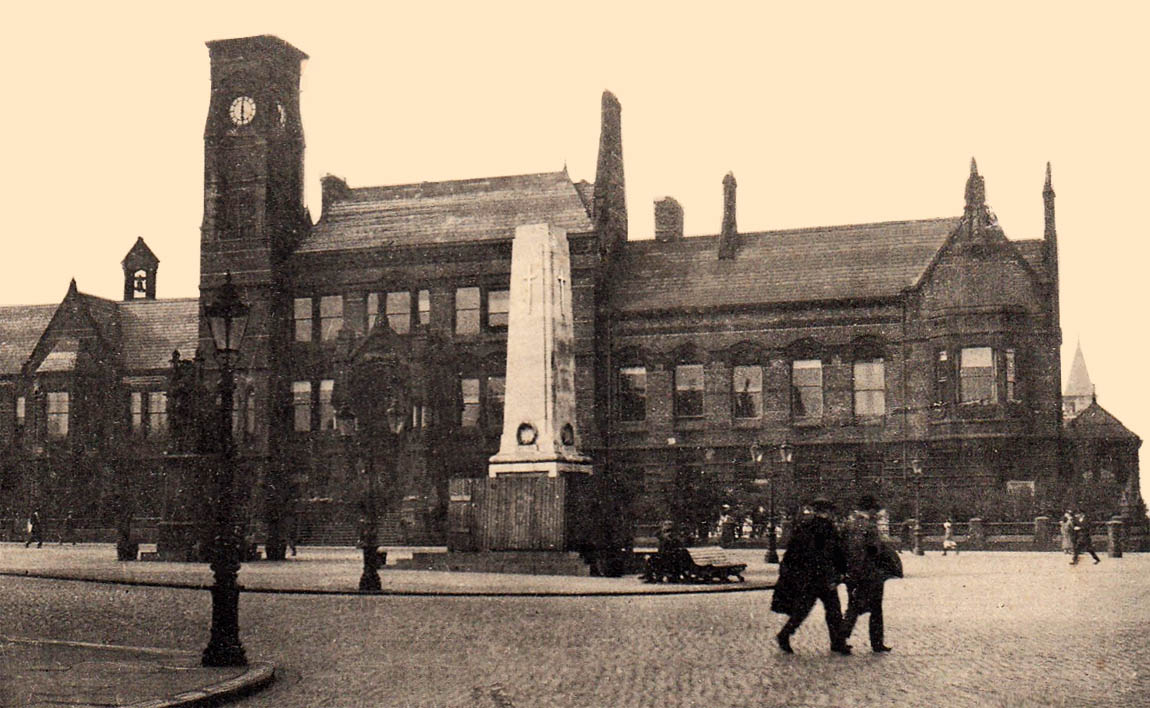 The paper also described how the work of inscribing all the names on the St Helens Cenotaph – as the Victoria Square war memorial was often called – had now begun. However, the St Helens' tribute to the fallen would not be unveiled until Easter Sunday 1926.
The local elections were taking place in St Helens next week and in the Reporter, the Conservative Party – often known as the Unionists – was attacking the Labour Party. Their large adverts claimed that it was Labour Party policy to abolish private enterprise and that wherever they had power the local rates went up. Labour was also accused of being a class party, wanting councillors to be paid and deciding policy in the privacy of a political club and not in the council chamber.
The magistrates in St Helens Police Court were reluctant to sanction applications for separation orders when couples had not been married for very long. Such orders facilitated maintenance payments and a husband could ultimately be jailed for not making them. But once the courts had got involved in a marriage and approved a separation, it was seen as reducing the chances of any reconciliation.
And so, as a result, only the separations of long-term relationships were usually approved. But an exception was made in the case of Fred and Elsie Burrows from Sutton Manor who appeared in court this week. The couple had married just three years before and had one child. In August 1925 when living in Jubits Lane, the husband had entered the house for his dinner and placed a tin of condensed milk on a green baize tablecloth.
Fearing it would leave a mark, his wife Elsie removed the tin and placed it in the scullery. That infuriated her husband who followed his wife and struck her on the side of her face. The blow knocked Elsie to the ground and then Burrows took one of the bars out of the gas stove and hit his wife three times over her head with it. Later that day the man, who was a miner at Sutton Manor Colliery, took his clothes and left the home for good.
The couple had clearly been experiencing problems for some time and as the court probation officer / social worker had been unsuccessful in resolving them, the magistrates ordered Fred Burrows to pay his wife £1 a week maintenance. As usual in such marital cases, the husband was not being prosecuted for his shocking violence against his wife.
On the 31st the Liverpool Weekly Courier stated that there had been an increase in cases of measles in St Helens, especially in the Sutton and Eccleston districts. During the last fortnight there had been two deaths, with pneumonia associated with many of the cases.
And finally, on the 31st a fire took place in the boilerhouse in the basement of Cowley Girls Secondary School, which caused considerable damage. When the fire brigade arrived they found that the place was so hot that the windows in the teachers' apartments over the basement had cracked.
St Helens Reporter courtesy St Helens Archive Service at Eccleston Library
Next Week's stories will include the St Helens contribution to the proposed East Lancashire Road, the Duke Street car dealer with four-wheel brakes, the council election results and the Bold Street bother between neighbours.
We begin on the 27th when the St Helens Housing Committee met and discussed the difficulties of building badly needed homes. They had been hoping to build council houses in Sutton, with locations in Gerards Lane, Leach Lane and New Street being considered. But the government's Ministry of Housing had written to say they thought those places unsuitable to build on because of the likelihood of mining subsidence occurring.
The Ministry said Gerards Lane could potentially be used – but what was described as a raft of concrete would be needed as a foundation for each home. Gerards Lane was also considered unsuitable for running a sewer through, because of the likelihood of subsidence. As St Helens Council would require government permission to borrow funds in order to build the homes, it was unlikely to be granted if the Ministry of Housing was against the schemes.
It was suggested at the meeting that steel-framed houses could be built on Corporation land in Knowsley Road, with their main advantage being quick to construct. The committee chairman said: "Hundreds of men and women in this town are practically out of their minds through the inability to get houses. That is why I would rack a hundred up. They are glad to get anywhere." The committee decided that 100 steel-framed houses would be put up on sites that the Borough Engineer recommended but said these buildings would be in addition to their schemes to construct ordinary brick houses.
During the 1920s magistrates noticeably gave much more consideration to cases, especially involving young persons. On the 28th when three youths from Phythian Street were charged in St Helens Police Court with stealing 100 pounds of coal, the magistrates hearing the case retired three times to privately consider what action to take.
The trio had been collared by PC Johnson after the off-duty officer had looked through the kitchen window of his Glover Street home and seen one of the lads walking towards the Eccleston branch railway siding near Borough Road carrying a sack. Fifty years ago the youths would likely have been sent to Kirkdale Prison for coal stealing. But in the more enlightened 1920s, probation was the likely punishment for a youthful first offender.
The problem for the Bench was that two of the three had already been on probation and it had not deterred them from re-offending. The magistrates said they had considered sending the youths away to a reformatory but after much deliberation had decided to place them on probation for three years.
The two that had previously been before the court, John Maynard and Joseph Burns, were warned that they were being given their last chance: "This time you have had a narrower escape from being sent away than you have ever had in your lives. The future lies entirely with you and you must make up your minds straightaway to keep away from these wicked ways."
On the 29th what was described as a "Bing Girls Whist Drive and Carnival" was held at the Prescot Wire Works. Many of the participants at the BI appeared in fancy dress with the proceeds in aid of Holy Cross Church.
Alderman Bates seemed horrified at the idea of a tram being used as a shelter, telling the meeting that he hoped the Tramways Committee would not consider an old derelict vehicle suitable for the men to use. However, the committee's chairman, Ald Rudd, said the old men had already approached him about the idea and he thought that a tram could be made very comfortable as a meeting place.
In St Helens Police Court on the 30th, Edwin Goodier from Edgeworth Street in Sutton was summoned for using his house for the purpose of betting. Eight days before, two police officers had kept observation on the house and counted 11 men, 11 women, 2 boys and 2 girls go in through the back door. Then on the following day, 33 persons were seen to enter and on the next day the police raided the place.
Edwin Goodier was a former serviceman suffering from shellshock and the condition called neurasthenia, which involved severe fatigue. Many unemployed got involved with betting to boost their income but using your home was considered a more serious offence than street gambling and Edwin was fined £20. That was a hefty amount but probably the bookmaker that he worked for would have reimbursed him.
The Rotary Club of St Helens had been founded in 1923 and was currently fundraising to provide patients in St Helens and Providence hospitals with a wired "wireless" service using headphones – if that is not a contradiction in terms! The St Helens Reporter on the 30th described how as part of Rotary's fundraising, a whist drive and dance had taken place at the Town Hall.
The local elections were taking place in St Helens next week and in the Reporter, the Conservative Party – often known as the Unionists – was attacking the Labour Party. Their large adverts claimed that it was Labour Party policy to abolish private enterprise and that wherever they had power the local rates went up. Labour was also accused of being a class party, wanting councillors to be paid and deciding policy in the privacy of a political club and not in the council chamber.
The magistrates in St Helens Police Court were reluctant to sanction applications for separation orders when couples had not been married for very long. Such orders facilitated maintenance payments and a husband could ultimately be jailed for not making them. But once the courts had got involved in a marriage and approved a separation, it was seen as reducing the chances of any reconciliation.
And so, as a result, only the separations of long-term relationships were usually approved. But an exception was made in the case of Fred and Elsie Burrows from Sutton Manor who appeared in court this week. The couple had married just three years before and had one child. In August 1925 when living in Jubits Lane, the husband had entered the house for his dinner and placed a tin of condensed milk on a green baize tablecloth.
Fearing it would leave a mark, his wife Elsie removed the tin and placed it in the scullery. That infuriated her husband who followed his wife and struck her on the side of her face. The blow knocked Elsie to the ground and then Burrows took one of the bars out of the gas stove and hit his wife three times over her head with it. Later that day the man, who was a miner at Sutton Manor Colliery, took his clothes and left the home for good.
The couple had clearly been experiencing problems for some time and as the court probation officer / social worker had been unsuccessful in resolving them, the magistrates ordered Fred Burrows to pay his wife £1 a week maintenance. As usual in such marital cases, the husband was not being prosecuted for his shocking violence against his wife.
On the 31st the Liverpool Weekly Courier stated that there had been an increase in cases of measles in St Helens, especially in the Sutton and Eccleston districts. During the last fortnight there had been two deaths, with pneumonia associated with many of the cases.
And finally, on the 31st a fire took place in the boilerhouse in the basement of Cowley Girls Secondary School, which caused considerable damage. When the fire brigade arrived they found that the place was so hot that the windows in the teachers' apartments over the basement had cracked.
St Helens Reporter courtesy St Helens Archive Service at Eccleston Library
Next Week's stories will include the St Helens contribution to the proposed East Lancashire Road, the Duke Street car dealer with four-wheel brakes, the council election results and the Bold Street bother between neighbours.
This week's many stories include the problems of building houses in subsidence-ridden Sutton, the use of a tramcar as an old men's shelter in Taylor Park, the brutal Sutton Manor miner, the building of 100 steel houses and the coal stealing youths from Phythian Street who were given their last chance.
We begin on the 27th when the St Helens Housing Committee met and discussed the difficulties of building badly needed homes.
They had been hoping to build council houses in Sutton, with locations in Gerards Lane, Leach Lane and New Street being considered.
But the government's Ministry of Housing had written to say they thought those places unsuitable to build on because of the likelihood of mining subsidence occurring.
The Ministry said Gerards Lane could potentially be used – but what was described as a raft of concrete would be needed as a foundation for each home.
Gerards Lane was also considered unsuitable for running a sewer through, because of the likelihood of subsidence.
As St Helens Council would require government permission to borrow funds in order to build the homes, it was unlikely to be granted if the Ministry of Housing was against the schemes.
It was suggested at the meeting that steel-framed houses could be built on Corporation land in Knowsley Road, with their main advantage being quick to construct.
The committee chairman said: "Hundreds of men and women in this town are practically out of their minds through the inability to get houses. That is why I would rack a hundred up. They are glad to get anywhere."
The committee decided that 100 steel-framed houses would be put up on sites that the Borough Engineer recommended but said these buildings would be in addition to their schemes to construct ordinary brick houses.
During the 1920s magistrates noticeably gave much more consideration to cases, especially involving young persons.
On the 28th when three youths from Phythian Street were charged in St Helens Police Court with stealing 100 pounds of coal, the magistrates hearing the case retired three times to privately consider what action to take.
The trio had been collared by PC Johnson after the off-duty officer had looked through the kitchen window of his Glover Street home and seen one of the lads walking towards the Eccleston branch railway siding near Borough Road carrying a sack.
Fifty years ago the youths would likely have been sent to Kirkdale Prison for coal stealing.
But in the more enlightened 1920s, probation was the likely punishment for a youthful first offender.
The problem for the Bench was that two of the three had already been on probation and it had not deterred them from re-offending.
The magistrates said they had considered sending the youths away to a reformatory but after much deliberation had decided to place them on probation for three years.
The two that had previously been before the court, John Maynard and Joseph Burns, were warned that they were being given their last chance:
"This time you have had a narrower escape from being sent away than you have ever had in your lives. The future lies entirely with you and you must make up your minds straightaway to keep away from these wicked ways."
On the 29th what was described as a "Bing Girls Whist Drive and Carnival" was held at the Prescot Wire Works.
Many of the participants at the BI appeared in fancy dress with the proceeds in aid of Holy Cross Church.
On the 30th at a meeting of St Helens Town Council, Councillor Boscow suggested that the Tramways Committee might provide an old tramcar for use as an old men's shelter in Taylor Park.
Such shelters were then situated in most parks and recreation grounds in the town and served as places for elderly males to visit during the day and chat.
Alderman Bates seemed horrified at the idea of a tram being used as a shelter, telling the meeting that he hoped the Tramways Committee would not consider an old derelict vehicle suitable for the men to use.
However, the committee's chairman, Ald Rudd, said the old men had already approached him about the idea and he thought that a tram could be made very comfortable as a meeting place.
In St Helens Police Court on the 30th, Edwin Goodier from Edgeworth Street in Sutton was summoned for using his house for the purpose of betting.
Eight days before, two police officers had kept observation on the house and counted 11 men, 11 women, 2 boys and 2 girls go in through the back door.
Then on the following day, 33 persons were seen to enter and on the next day the police raided the place.
Edwin Goodier was a former serviceman suffering from shellshock and the condition called neurasthenia, which involved severe fatigue.
Many unemployed got involved with betting to boost their income but using your home was considered a more serious offence than street gambling and Edwin was fined £20.
That was a hefty amount but probably the bookmaker that he worked for would have reimbursed him.
The Rotary Club of St Helens had been founded in 1923 and was currently fundraising to provide patients in St Helens and Providence hospitals with a wired "wireless" service using headphones – if that is not a contradiction in terms!
The St Helens Reporter on the 30th described how as part of Rotary's fundraising, a whist drive and dance had taken place at the Town Hall.
The paper also described how the work of inscribing all the names on the St Helens Cenotaph – as the Victoria Square war memorial was often called – had now begun.
However, the St Helens' tribute to the fallen would not be unveiled until Easter Sunday 1926.
The local elections were taking place in St Helens next week and in the Reporter, the Conservative Party – often known as the Unionists – was attacking the Labour Party.
Their large adverts claimed that it was Labour Party policy to abolish private enterprise and that wherever they had power the local rates went up.
Labour was also accused of being a class party, wanting councillors to be paid and deciding policy in the privacy of a political club and not in the council chamber.
The magistrates in St Helens Police Court were reluctant to sanction applications for separation orders when couples had not been married for very long.
Such orders facilitated maintenance payments and a husband could ultimately be jailed for not making them.
But once the courts had got involved in a marriage and approved a separation, it was seen as reducing the chances of any reconciliation.
And so, as a result, only the separations of long-term relationships were usually approved.
But an exception was made in the case of Fred and Elsie Burrows from Sutton Manor who appeared in court this week.
The couple had married just three years before and had one child. In August 1925 when living in Jubits Lane, the husband had entered the house for his dinner and placed a tin of condensed milk on a green baize tablecloth.
Fearing it would leave a mark, his wife Elsie removed the tin and placed it in the scullery. That infuriated her husband who followed his wife and struck her on the side of her face.
The blow knocked Elsie to the ground and then Burrows took one of the bars out of the gas stove and hit his wife three times over her head with it.
Later that day the man, who was a miner at Sutton Manor Colliery, took his clothes and left the home for good.
The couple had clearly been experiencing problems for some time and as the court probation officer / social worker had been unsuccessful in resolving them, the magistrates ordered Fred Burrows to pay his wife £1 a week maintenance.
As usual in such marital cases, the husband was not being prosecuted for his shocking violence against his wife.
On the 31st the Liverpool Weekly Courier stated that there had been an increase in cases of measles in St Helens, especially in the Sutton and Eccleston districts.
During the last fortnight there had been two deaths, with pneumonia associated with many of the cases.
And finally, on the 31st a fire took place in the boilerhouse in the basement of Cowley Girls Secondary School, which caused considerable damage.
When the fire brigade arrived they found that the place was so hot that the windows in the teachers' apartments over the basement had cracked.
St Helens Reporter courtesy St Helens Archive Service at Eccleston Library
Next Week's stories will include the St Helens contribution to the proposed East Lancashire Road, the Duke Street car dealer with four-wheel brakes, the council election results and the Bold Street bother between neighbours.
We begin on the 27th when the St Helens Housing Committee met and discussed the difficulties of building badly needed homes.
They had been hoping to build council houses in Sutton, with locations in Gerards Lane, Leach Lane and New Street being considered.
But the government's Ministry of Housing had written to say they thought those places unsuitable to build on because of the likelihood of mining subsidence occurring.
The Ministry said Gerards Lane could potentially be used – but what was described as a raft of concrete would be needed as a foundation for each home.
Gerards Lane was also considered unsuitable for running a sewer through, because of the likelihood of subsidence.
As St Helens Council would require government permission to borrow funds in order to build the homes, it was unlikely to be granted if the Ministry of Housing was against the schemes.
It was suggested at the meeting that steel-framed houses could be built on Corporation land in Knowsley Road, with their main advantage being quick to construct.
The committee chairman said: "Hundreds of men and women in this town are practically out of their minds through the inability to get houses. That is why I would rack a hundred up. They are glad to get anywhere."
The committee decided that 100 steel-framed houses would be put up on sites that the Borough Engineer recommended but said these buildings would be in addition to their schemes to construct ordinary brick houses.
During the 1920s magistrates noticeably gave much more consideration to cases, especially involving young persons.
On the 28th when three youths from Phythian Street were charged in St Helens Police Court with stealing 100 pounds of coal, the magistrates hearing the case retired three times to privately consider what action to take.
The trio had been collared by PC Johnson after the off-duty officer had looked through the kitchen window of his Glover Street home and seen one of the lads walking towards the Eccleston branch railway siding near Borough Road carrying a sack.
Fifty years ago the youths would likely have been sent to Kirkdale Prison for coal stealing.
But in the more enlightened 1920s, probation was the likely punishment for a youthful first offender.
The problem for the Bench was that two of the three had already been on probation and it had not deterred them from re-offending.
The magistrates said they had considered sending the youths away to a reformatory but after much deliberation had decided to place them on probation for three years.
The two that had previously been before the court, John Maynard and Joseph Burns, were warned that they were being given their last chance:
"This time you have had a narrower escape from being sent away than you have ever had in your lives. The future lies entirely with you and you must make up your minds straightaway to keep away from these wicked ways."
On the 29th what was described as a "Bing Girls Whist Drive and Carnival" was held at the Prescot Wire Works.
Many of the participants at the BI appeared in fancy dress with the proceeds in aid of Holy Cross Church.
Such shelters were then situated in most parks and recreation grounds in the town and served as places for elderly males to visit during the day and chat.
Alderman Bates seemed horrified at the idea of a tram being used as a shelter, telling the meeting that he hoped the Tramways Committee would not consider an old derelict vehicle suitable for the men to use.
However, the committee's chairman, Ald Rudd, said the old men had already approached him about the idea and he thought that a tram could be made very comfortable as a meeting place.
In St Helens Police Court on the 30th, Edwin Goodier from Edgeworth Street in Sutton was summoned for using his house for the purpose of betting.
Eight days before, two police officers had kept observation on the house and counted 11 men, 11 women, 2 boys and 2 girls go in through the back door.
Then on the following day, 33 persons were seen to enter and on the next day the police raided the place.
Edwin Goodier was a former serviceman suffering from shellshock and the condition called neurasthenia, which involved severe fatigue.
Many unemployed got involved with betting to boost their income but using your home was considered a more serious offence than street gambling and Edwin was fined £20.
That was a hefty amount but probably the bookmaker that he worked for would have reimbursed him.
The Rotary Club of St Helens had been founded in 1923 and was currently fundraising to provide patients in St Helens and Providence hospitals with a wired "wireless" service using headphones – if that is not a contradiction in terms!
The St Helens Reporter on the 30th described how as part of Rotary's fundraising, a whist drive and dance had taken place at the Town Hall.
However, the St Helens' tribute to the fallen would not be unveiled until Easter Sunday 1926.
The local elections were taking place in St Helens next week and in the Reporter, the Conservative Party – often known as the Unionists – was attacking the Labour Party.
Their large adverts claimed that it was Labour Party policy to abolish private enterprise and that wherever they had power the local rates went up.
Labour was also accused of being a class party, wanting councillors to be paid and deciding policy in the privacy of a political club and not in the council chamber.
The magistrates in St Helens Police Court were reluctant to sanction applications for separation orders when couples had not been married for very long.
Such orders facilitated maintenance payments and a husband could ultimately be jailed for not making them.
But once the courts had got involved in a marriage and approved a separation, it was seen as reducing the chances of any reconciliation.
And so, as a result, only the separations of long-term relationships were usually approved.
But an exception was made in the case of Fred and Elsie Burrows from Sutton Manor who appeared in court this week.
The couple had married just three years before and had one child. In August 1925 when living in Jubits Lane, the husband had entered the house for his dinner and placed a tin of condensed milk on a green baize tablecloth.
Fearing it would leave a mark, his wife Elsie removed the tin and placed it in the scullery. That infuriated her husband who followed his wife and struck her on the side of her face.
The blow knocked Elsie to the ground and then Burrows took one of the bars out of the gas stove and hit his wife three times over her head with it.
Later that day the man, who was a miner at Sutton Manor Colliery, took his clothes and left the home for good.
The couple had clearly been experiencing problems for some time and as the court probation officer / social worker had been unsuccessful in resolving them, the magistrates ordered Fred Burrows to pay his wife £1 a week maintenance.
As usual in such marital cases, the husband was not being prosecuted for his shocking violence against his wife.
On the 31st the Liverpool Weekly Courier stated that there had been an increase in cases of measles in St Helens, especially in the Sutton and Eccleston districts.
During the last fortnight there had been two deaths, with pneumonia associated with many of the cases.
And finally, on the 31st a fire took place in the boilerhouse in the basement of Cowley Girls Secondary School, which caused considerable damage.
When the fire brigade arrived they found that the place was so hot that the windows in the teachers' apartments over the basement had cracked.
St Helens Reporter courtesy St Helens Archive Service at Eccleston Library
Next Week's stories will include the St Helens contribution to the proposed East Lancashire Road, the Duke Street car dealer with four-wheel brakes, the council election results and the Bold Street bother between neighbours.