
IOO YEARS AGO THIS WEEK 23 - 29 JUNE 1925
This week's many stories include the Gerards Bridge miner who did not want to pay his wife's debts, the mile-long police chase after youthful card players, the throwing of stones at rooks in Victoria Park, the infant children's charming portrayal of Rumplestiltskin at Lowe House and the miner who told a court that his separated wife could not get blood out of a stone.
Husbands were in law responsible for their wives' debts – but only if they had been unaware of them at the time they were made. Courts would also take into account the circumstances and the types of goods or services that had been taken on credit. When a middle-aged miner named Lawrenson from Gerards Bridge appeared in St Helens County Court on the 24th he complained to Judge Dowdall that tradesmen had for many years allowed his wife to have items without his knowledge and then had come to him for the money.
"I have been punished 38 years in this way and it is time it was stopped," he told the court. "I have paid scores of pounds for things that I know nothing about." The judge in making his ruling said that such cases were very common and very difficult but in Lawrenson's case the debt was for ordinary necessary things for the house and he ruled that the amount must be paid. The original debt was said to be £4 but it had been reduced to £2 and the judge made an order that it should be paid off at the rate of one shilling per month.
Despite the growth of motorised vehicles during the 1920s, the bicycle still ruled the roost as far as the working man was concerned. And with little in the way of security, bikes were very easy to steal. On the 25th five boys appeared before the magistrates in the Juvenile Police Court charged with stealing eight bicycles which different people had left unattended in various streets in St Helens. They were all bound over for two years and ordered to pay various amounts in costs.
The St Helens Reporter on the 26th described a police chase after some youthful card players: "P.C. Drysdale was strolling down Providence-street on Saturday afternoon when he saw several lads sitting on the railings passing their time away gambling with cards. When they saw him they hastily scrambled up the money and cards and did a “bunk.”
"William Graham, of Brunswick-street, was one of the party. He could not run as fast as the others and his lack of pace cost him a seven-and-sixpenny fine. P.C. Drysdale said he chased him for a mile, and when caught, he had six pennies in his hand."
"Throwing stones in a public park is a costly hobby", was the introduction to the Reporter's description of the prosecution of Charles Collins and Robert Howden, both from Victoria Street in Gerards Bridge. The Parks Superintendent had seen the youths along with two younger boys throwing stones at rooks' nests near the main entrance to Victoria Park in Bishop Road. Despite him warning the lads they continued throwing stones and in court they were fined 10 shillings each. "And that will teach you how to behave in the park," declared the Chairman of the Bench.
"Canal Gives Up Its Dead", was the Reporter's headline to its article on the death of Thomas Mannion. It was yet another mystery drowning in the St Helens / Sankey Canal that led to a coroner returning a verdict of "found drowned" – an open verdict, in other words. Thomas was aged about 50 and for much of the last four years had been living in a Church Street lodging house.
He was a Corporation workman but for the previous four weeks had been off sick, which almost certainly meant he'd had no income. On the morning of June 12th, Thomas had asked the keeper of his lodging house if his bed would be all right for that night as he had no money to pay for it. After being told that it would not be a problem, Mr Mannion left the lodging house stating that he would return that evening.
But that was the last time he was seen until a week later when his body was found floating in the double locks opposite Forster's Glass Works in Pocket Nook. On Thomas's body there was just 10d, along with two pawn tickets for articles of clothing that he had pawned a couple of days prior to his disappearance. He had no known relatives and there was no way of knowing for certain if his death had been deliberate or accidental after, perhaps, stumbling into the water in the dark. But his sad circumstances probably pointed to suicide.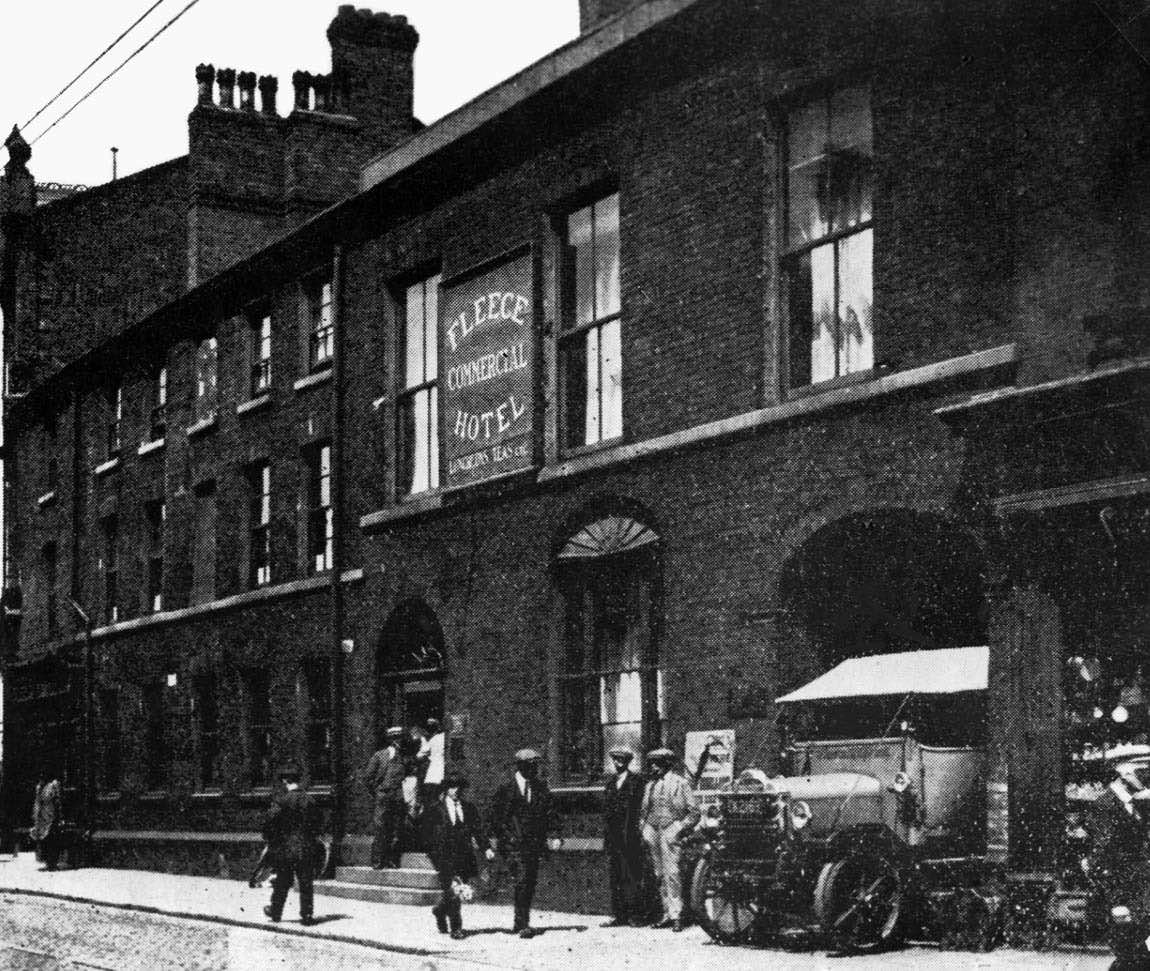 The Reporter predicted a "great attraction" at the Fleece Hotel in Church Street next week when three detached houses with immediate possession were going up for auction. The shortage of housing in St Helens meant the homes were likely to sell for high prices.
This is how the Reporter described the recent fundraising activities of a group of little children: "At the Lowe House Parish Hall, on Wednesday and Thursday of last week, a successful and enjoyable concert was given by children in aid of the Holy Cross decoration fund. The principal item in the entertainment was a play by the infants, “Rumplestiltskin,” in which the little ones completely surprised and charmed the audience by the excellence of their display.
"The principals sustained their parts with the utmost confidence and skill, and not once was there any suspicion of faltering or hesitancy. Their enunciation was perfect, their acting and expression always appropriate without being exaggerated; in fact, each one seemed to be living the part – and enjoying it. The singing was tuneful, the dancing most graceful, and the dressing and the setting very effective."
The term joyride these days tends to be associated with stolen cars but used to simply mean driving for pleasure. When the police stopped Thomas Lievesley of Back Lane for having no lights on his car ten minutes after lighting-up time, he had told the constable: "I had been for a joy-ride with the children." Motorists always seemed to blame their vehicle for any problem with their lights and Mr Lievesley said there was a short-circuit in his battery. Appearing in St Helens Police Court he was fined 5 shillings.
Also in court was Joseph Martin of Park Road who said he was a miner but only worked three days a week. He had been summoned by his wife for £4 unpaid maintenance money and Mrs Martin told the Bench: "We have two children. How are we to live? He had the opportunity of working five days last week and only worked three."
In reply her husband said "Well, I am only working three days now and you can't get blood out of a stone." Martin was ordered to pay his usual weekly amount to his wife and something off the arrears, with the threat of going to prison for 28 days if he failed to comply.
On the evening of the 28th the popular Parr Temperance Band played in Gaskell Park, with a collection made for the band's instrument fund.
And finally, on the 29th Holy Cross Church in Corporation Street was reopened after a period of closure for renovation. The Reporter wrote: "The internal decorations and particularly the cleansing of the stained-glass windows have revealed many hitherto unsuspected beauties of the structure." There had also been many outside repairs undertaken and a new electrical installation inside.
St Helens Reporter courtesy St Helens Archive Service at Eccleston Library
Next Week's stories will include the Waterloo Street fumigation that was mistaken for a fire, the lodging house keeper prosecuted for breaching the Aliens order, the water problem in Hard Lane and the Church Street jeweller that sold ammunition.
Husbands were in law responsible for their wives' debts – but only if they had been unaware of them at the time they were made. Courts would also take into account the circumstances and the types of goods or services that had been taken on credit. When a middle-aged miner named Lawrenson from Gerards Bridge appeared in St Helens County Court on the 24th he complained to Judge Dowdall that tradesmen had for many years allowed his wife to have items without his knowledge and then had come to him for the money.
"I have been punished 38 years in this way and it is time it was stopped," he told the court. "I have paid scores of pounds for things that I know nothing about." The judge in making his ruling said that such cases were very common and very difficult but in Lawrenson's case the debt was for ordinary necessary things for the house and he ruled that the amount must be paid. The original debt was said to be £4 but it had been reduced to £2 and the judge made an order that it should be paid off at the rate of one shilling per month.
Despite the growth of motorised vehicles during the 1920s, the bicycle still ruled the roost as far as the working man was concerned. And with little in the way of security, bikes were very easy to steal. On the 25th five boys appeared before the magistrates in the Juvenile Police Court charged with stealing eight bicycles which different people had left unattended in various streets in St Helens. They were all bound over for two years and ordered to pay various amounts in costs.
The St Helens Reporter on the 26th described a police chase after some youthful card players: "P.C. Drysdale was strolling down Providence-street on Saturday afternoon when he saw several lads sitting on the railings passing their time away gambling with cards. When they saw him they hastily scrambled up the money and cards and did a “bunk.”
"William Graham, of Brunswick-street, was one of the party. He could not run as fast as the others and his lack of pace cost him a seven-and-sixpenny fine. P.C. Drysdale said he chased him for a mile, and when caught, he had six pennies in his hand."
"Throwing stones in a public park is a costly hobby", was the introduction to the Reporter's description of the prosecution of Charles Collins and Robert Howden, both from Victoria Street in Gerards Bridge. The Parks Superintendent had seen the youths along with two younger boys throwing stones at rooks' nests near the main entrance to Victoria Park in Bishop Road. Despite him warning the lads they continued throwing stones and in court they were fined 10 shillings each. "And that will teach you how to behave in the park," declared the Chairman of the Bench.
"Canal Gives Up Its Dead", was the Reporter's headline to its article on the death of Thomas Mannion. It was yet another mystery drowning in the St Helens / Sankey Canal that led to a coroner returning a verdict of "found drowned" – an open verdict, in other words. Thomas was aged about 50 and for much of the last four years had been living in a Church Street lodging house.
He was a Corporation workman but for the previous four weeks had been off sick, which almost certainly meant he'd had no income. On the morning of June 12th, Thomas had asked the keeper of his lodging house if his bed would be all right for that night as he had no money to pay for it. After being told that it would not be a problem, Mr Mannion left the lodging house stating that he would return that evening.
But that was the last time he was seen until a week later when his body was found floating in the double locks opposite Forster's Glass Works in Pocket Nook. On Thomas's body there was just 10d, along with two pawn tickets for articles of clothing that he had pawned a couple of days prior to his disappearance. He had no known relatives and there was no way of knowing for certain if his death had been deliberate or accidental after, perhaps, stumbling into the water in the dark. But his sad circumstances probably pointed to suicide.
This is how the Reporter described the recent fundraising activities of a group of little children: "At the Lowe House Parish Hall, on Wednesday and Thursday of last week, a successful and enjoyable concert was given by children in aid of the Holy Cross decoration fund. The principal item in the entertainment was a play by the infants, “Rumplestiltskin,” in which the little ones completely surprised and charmed the audience by the excellence of their display.
"The principals sustained their parts with the utmost confidence and skill, and not once was there any suspicion of faltering or hesitancy. Their enunciation was perfect, their acting and expression always appropriate without being exaggerated; in fact, each one seemed to be living the part – and enjoying it. The singing was tuneful, the dancing most graceful, and the dressing and the setting very effective."
The term joyride these days tends to be associated with stolen cars but used to simply mean driving for pleasure. When the police stopped Thomas Lievesley of Back Lane for having no lights on his car ten minutes after lighting-up time, he had told the constable: "I had been for a joy-ride with the children." Motorists always seemed to blame their vehicle for any problem with their lights and Mr Lievesley said there was a short-circuit in his battery. Appearing in St Helens Police Court he was fined 5 shillings.
Also in court was Joseph Martin of Park Road who said he was a miner but only worked three days a week. He had been summoned by his wife for £4 unpaid maintenance money and Mrs Martin told the Bench: "We have two children. How are we to live? He had the opportunity of working five days last week and only worked three."
In reply her husband said "Well, I am only working three days now and you can't get blood out of a stone." Martin was ordered to pay his usual weekly amount to his wife and something off the arrears, with the threat of going to prison for 28 days if he failed to comply.
On the evening of the 28th the popular Parr Temperance Band played in Gaskell Park, with a collection made for the band's instrument fund.
And finally, on the 29th Holy Cross Church in Corporation Street was reopened after a period of closure for renovation. The Reporter wrote: "The internal decorations and particularly the cleansing of the stained-glass windows have revealed many hitherto unsuspected beauties of the structure." There had also been many outside repairs undertaken and a new electrical installation inside.
St Helens Reporter courtesy St Helens Archive Service at Eccleston Library
Next Week's stories will include the Waterloo Street fumigation that was mistaken for a fire, the lodging house keeper prosecuted for breaching the Aliens order, the water problem in Hard Lane and the Church Street jeweller that sold ammunition.
This week's many stories include the Gerards Bridge miner who did not want to pay his wife's debts, the mile-long police chase after youthful card players, the throwing of stones at rooks in Victoria Park, the infant children's charming portrayal of Rumplestiltskin at Lowe House and the miner who told a court that his separated wife could not get blood out of a stone.
Husbands were in law responsible for their wives' debts – but only if they had been unaware of them at the time they were made.
Courts would also take into account the circumstances and the types of goods or services that had been taken on credit.
When a middle-aged miner named Lawrenson from Gerards Bridge appeared in St Helens County Court on the 24th he complained to Judge Dowdall that tradesmen had for many years allowed his wife to have items without his knowledge and then had come to him for the money.
"I have been punished 38 years in this way and it is time it was stopped," he told the court. "I have paid scores of pounds for things that I know nothing about."
The judge in making his ruling said that such cases were very common and very difficult but in Lawrenson's case the debt was for ordinary necessary things for the house and he ruled that the amount must be paid.
The original debt was said to be £4 but it had been reduced to £2 and the judge made an order that it should be paid off at the rate of one shilling per month.
Despite the growth of motorised vehicles during the 1920s, the bicycle still ruled the roost as far as the working man was concerned.
And with little in the way of security, bikes were very easy to steal.
On the 25th five boys appeared before the magistrates in the Juvenile Police Court charged with stealing eight bicycles which different people had left unattended in various streets in St Helens.
They were all bound over for two years and ordered to pay various amounts in costs.
The St Helens Reporter on the 26th described a police chase after some youthful card players:
"P.C. Drysdale was strolling down Providence-street on Saturday afternoon when he saw several lads sitting on the railings passing their time away gambling with cards. When they saw him they hastily scrambled up the money and cards and did a “bunk.”
"William Graham, of Brunswick-street, was one of the party. He could not run as fast as the others and his lack of pace cost him a seven-and-sixpenny fine.
"P.C. Drysdale said he chased him for a mile, and when caught, he had six pennies in his hand."
"Throwing stones in a public park is a costly hobby", was the introduction to the Reporter's description of the prosecution of Charles Collins and Robert Howden, both from Victoria Street in Gerards Bridge.
The Parks Superintendent had seen the youths along with two younger boys throwing stones at rooks' nests near the main entrance to Victoria Park in Bishop Road.
Despite him warning the lads they continued throwing stones and in court they were fined 10 shillings each.
"And that will teach you how to behave in the park," declared the Chairman of the Bench.
"Canal Gives Up Its Dead", was the Reporter's headline to its article on the death of Thomas Mannion.
It was yet another mystery drowning in the St Helens / Sankey Canal that led to a coroner returning a verdict of "found drowned" – an open verdict, in other words.
Thomas was aged about 50 and for much of the last four years had been living in a Church Street lodging house.
He was a Corporation workman but for the previous four weeks had been off sick, which almost certainly meant he'd had no income.
On the morning of June 12th, Thomas had asked the keeper of his lodging house if his bed would be all right for that night as he had no money to pay for it.
After being told that it would not be a problem, Mr Mannion left the lodging house stating that he would return that evening.
But that was the last time he was seen until a week later when his body was found floating in the double locks opposite Forster's Glass Works in Pocket Nook.
On Thomas's body there was just 10d, along with two pawn tickets for articles of clothing that he had pawned a couple of days prior to his disappearance.
He had no known relatives and there was no way of knowing for certain if his death had been deliberate or accidental after, perhaps, stumbling into the water in the dark.
But his sad circumstances probably pointed to suicide.
The Reporter predicted a "great attraction" at the Fleece Hotel in Church Street next week when three detached houses with immediate possession were going up for auction.
The shortage of housing in St Helens meant the homes were likely to sell for high prices.
This is how the Reporter described the recent fundraising activities of a group of little children:
"At the Lowe House Parish Hall, on Wednesday and Thursday of last week, a successful and enjoyable concert was given by children in aid of the Holy Cross decoration fund.
"The principal item in the entertainment was a play by the infants, “Rumplestiltskin,” in which the little ones completely surprised and charmed the audience by the excellence of their display.
"The principals sustained their parts with the utmost confidence and skill, and not once was there any suspicion of faltering or hesitancy.
"Their enunciation was perfect, their acting and expression always appropriate without being exaggerated; in fact, each one seemed to be living the part – and enjoying it.
"The singing was tuneful, the dancing most graceful, and the dressing and the setting very effective."
The term joyride these days tends to be associated with stolen cars but used to simply mean driving for pleasure.
When the police stopped Thomas Lievesley of Back Lane for having no lights on his car ten minutes after lighting-up time, he had told the constable: "I had been for a joy-ride with the children."
Motorists always seemed to blame their vehicle for any problem with their lights and Mr Lievesley said there was a short-circuit in his battery. Appearing in St Helens Police Court he was fined 5 shillings.
Also in court was Joseph Martin of Park Road who said he was a miner but only worked three days a week.
He had been summoned by his wife for £4 unpaid maintenance money and Mrs Martin told the Bench:
"We have two children. How are we to live? He had the opportunity of working five days last week and only worked three."
In reply her husband said "Well, I am only working three days now and you can't get blood out of a stone."
Martin was ordered to pay his usual weekly amount to his wife and something off the arrears, with the threat of going to prison for 28 days if he failed to comply.
On the evening of the 28th the popular Parr Temperance Band played in Gaskell Park, with a collection made for the band's instrument fund.
And finally, on the 29th Holy Cross Church in Corporation Street was reopened after a period of closure for renovation.
The Reporter wrote: "The internal decorations and particularly the cleansing of the stained-glass windows have revealed many hitherto unsuspected beauties of the structure."
There had also been many outside repairs undertaken and a new electrical installation inside.
St Helens Reporter courtesy St Helens Archive Service at Eccleston Library
Next Week's stories will include the Waterloo Street fumigation that was mistaken for a fire, the lodging house keeper prosecuted for breaching the Aliens order, the water problem in Hard Lane and the Church Street jeweller that sold ammunition.
Husbands were in law responsible for their wives' debts – but only if they had been unaware of them at the time they were made.
Courts would also take into account the circumstances and the types of goods or services that had been taken on credit.
When a middle-aged miner named Lawrenson from Gerards Bridge appeared in St Helens County Court on the 24th he complained to Judge Dowdall that tradesmen had for many years allowed his wife to have items without his knowledge and then had come to him for the money.
"I have been punished 38 years in this way and it is time it was stopped," he told the court. "I have paid scores of pounds for things that I know nothing about."
The judge in making his ruling said that such cases were very common and very difficult but in Lawrenson's case the debt was for ordinary necessary things for the house and he ruled that the amount must be paid.
The original debt was said to be £4 but it had been reduced to £2 and the judge made an order that it should be paid off at the rate of one shilling per month.
Despite the growth of motorised vehicles during the 1920s, the bicycle still ruled the roost as far as the working man was concerned.
And with little in the way of security, bikes were very easy to steal.
On the 25th five boys appeared before the magistrates in the Juvenile Police Court charged with stealing eight bicycles which different people had left unattended in various streets in St Helens.
They were all bound over for two years and ordered to pay various amounts in costs.
The St Helens Reporter on the 26th described a police chase after some youthful card players:
"P.C. Drysdale was strolling down Providence-street on Saturday afternoon when he saw several lads sitting on the railings passing their time away gambling with cards. When they saw him they hastily scrambled up the money and cards and did a “bunk.”
"William Graham, of Brunswick-street, was one of the party. He could not run as fast as the others and his lack of pace cost him a seven-and-sixpenny fine.
"P.C. Drysdale said he chased him for a mile, and when caught, he had six pennies in his hand."
"Throwing stones in a public park is a costly hobby", was the introduction to the Reporter's description of the prosecution of Charles Collins and Robert Howden, both from Victoria Street in Gerards Bridge.
The Parks Superintendent had seen the youths along with two younger boys throwing stones at rooks' nests near the main entrance to Victoria Park in Bishop Road.
Despite him warning the lads they continued throwing stones and in court they were fined 10 shillings each.
"And that will teach you how to behave in the park," declared the Chairman of the Bench.
"Canal Gives Up Its Dead", was the Reporter's headline to its article on the death of Thomas Mannion.
It was yet another mystery drowning in the St Helens / Sankey Canal that led to a coroner returning a verdict of "found drowned" – an open verdict, in other words.
Thomas was aged about 50 and for much of the last four years had been living in a Church Street lodging house.
He was a Corporation workman but for the previous four weeks had been off sick, which almost certainly meant he'd had no income.
On the morning of June 12th, Thomas had asked the keeper of his lodging house if his bed would be all right for that night as he had no money to pay for it.
After being told that it would not be a problem, Mr Mannion left the lodging house stating that he would return that evening.
But that was the last time he was seen until a week later when his body was found floating in the double locks opposite Forster's Glass Works in Pocket Nook.
On Thomas's body there was just 10d, along with two pawn tickets for articles of clothing that he had pawned a couple of days prior to his disappearance.
He had no known relatives and there was no way of knowing for certain if his death had been deliberate or accidental after, perhaps, stumbling into the water in the dark.
But his sad circumstances probably pointed to suicide.
The shortage of housing in St Helens meant the homes were likely to sell for high prices.
This is how the Reporter described the recent fundraising activities of a group of little children:
"At the Lowe House Parish Hall, on Wednesday and Thursday of last week, a successful and enjoyable concert was given by children in aid of the Holy Cross decoration fund.
"The principal item in the entertainment was a play by the infants, “Rumplestiltskin,” in which the little ones completely surprised and charmed the audience by the excellence of their display.
"The principals sustained their parts with the utmost confidence and skill, and not once was there any suspicion of faltering or hesitancy.
"Their enunciation was perfect, their acting and expression always appropriate without being exaggerated; in fact, each one seemed to be living the part – and enjoying it.
"The singing was tuneful, the dancing most graceful, and the dressing and the setting very effective."
The term joyride these days tends to be associated with stolen cars but used to simply mean driving for pleasure.
When the police stopped Thomas Lievesley of Back Lane for having no lights on his car ten minutes after lighting-up time, he had told the constable: "I had been for a joy-ride with the children."
Motorists always seemed to blame their vehicle for any problem with their lights and Mr Lievesley said there was a short-circuit in his battery. Appearing in St Helens Police Court he was fined 5 shillings.
Also in court was Joseph Martin of Park Road who said he was a miner but only worked three days a week.
He had been summoned by his wife for £4 unpaid maintenance money and Mrs Martin told the Bench:
"We have two children. How are we to live? He had the opportunity of working five days last week and only worked three."
In reply her husband said "Well, I am only working three days now and you can't get blood out of a stone."
Martin was ordered to pay his usual weekly amount to his wife and something off the arrears, with the threat of going to prison for 28 days if he failed to comply.
On the evening of the 28th the popular Parr Temperance Band played in Gaskell Park, with a collection made for the band's instrument fund.
And finally, on the 29th Holy Cross Church in Corporation Street was reopened after a period of closure for renovation.
The Reporter wrote: "The internal decorations and particularly the cleansing of the stained-glass windows have revealed many hitherto unsuspected beauties of the structure."
There had also been many outside repairs undertaken and a new electrical installation inside.
St Helens Reporter courtesy St Helens Archive Service at Eccleston Library
Next Week's stories will include the Waterloo Street fumigation that was mistaken for a fire, the lodging house keeper prosecuted for breaching the Aliens order, the water problem in Hard Lane and the Church Street jeweller that sold ammunition.