
IOO YEARS AGO THIS WEEK 18 - 24 AUGUST 1925
This week's many stories include the Parr father that severely thrashed his son for staying out late, a shindy takes place in Pudding Bag, the hair-raising adventure in Jockeys Brow, the Berry's Lane tragedy, the maintenance order defaulters and the wandering horse that was seen strolling towards the Nag's Head.
We begin on the 18th when the shocking story of a drunken father who severely thrashed his son for staying out late at Parr Fair was told at St Helens Police Court. The solicitor prosecuting for the NSPCC said Thomas Lowe of Smithfield Street had taken off his heavy leather belt and, using its buckled end, had "thrashed the lad unmercifully". William had begged his father to stop but he continued with his brutality and, as a result, the 12-year-old had been left in a very weak condition, suffering severely from the bruises.
William's mother gave evidence with the greatest reluctance. The St Helens Reporter described her as a "thin and rather shabbily dressed woman" who spoke "very timidly and with much hesitation". The Chairman of the Bench allowed the woman to sit down but it was some time before she could compose herself sufficiently to continue giving evidence. She said her husband had only worked ten days in the last two months.
Dr Ferrie said he had examined the boy's injuries and found severe bruises on his back and loins and some deep weals on the forearm and right shoulder. "Very great violence must have been used to cause the marks", the doctor explained. In his defence Thomas Lowe said his son was a "rum boy" and he had warned him before he'd gone to the fair with his sister that he had to come home early. At 10 pm he said he had gone looking for him in a downpour and both the lad and himself had got very wet, which had made him cross.
Lowe said he was sorry he had lost his temper and had hit his son harder than he thought. The Chairman of the Bench said there was not the slightest doubt that the boy had been unmercifully thrashed and he sent the defendant to prison for 14 days. In November Lowe would be sentenced to 18 months hard labour for committing incest with a 14-year-old daughter. That was a separate case, which was currently under investigation, and explains the mother's devastated condition in court.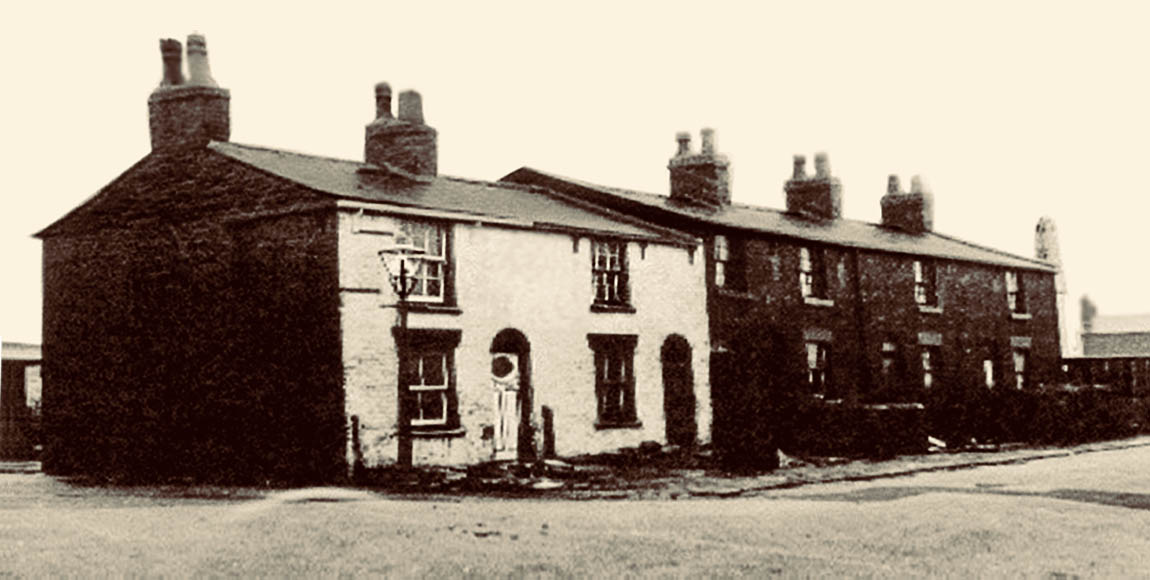 Also on the 18th in St Helens Police Court, the magistrates were told of what the Reporter later described as a "shindy" that had "rudely disturbed" the "serenity of Sutton on a peaceful summer evening". Engine driver William Marsh from Monastery Lane was charged with assaulting Emily Campbell of Woodcock Street (pictured above) in what was locally known as Pudding Bag.
During the hearing there were mentions of numerous items that are not used much today, such as a poker, dolly tub and mangle – and, perhaps, even mantlepiece and dresser could be included in the list. It sounds like the squabble had been brewing for some time but, as usual, the court only heard its latter stages. That was when Mrs Campbell had been standing on her doorstep exchanging insults with William Marsh.
When the latter told the woman to "Get in and wash your blinking face. It's dirty", Mrs Campbell had retorted: "Well, soap and water will not wash your filth". That was the trigger for the man to take off his coat, vest and shirt and strike the woman in her face. Mrs Campbell said in response she had picked up a strawberry basket and struck her attacker with it and, after a struggle for a poker, Marsh pitched Mrs Campbell onto a rug. However, William Marsh claimed that Mrs Campbell had been the real aggressor but, after a lot of witness testimony was given, he was bound over for 3 months.
Most cases of child suffocation occurred through babies sleeping in the same bed as their parents and being accidentally overlain during the night. However, what happened to John Daniels from Berry's Lane was most unusual. The 18-month-old toddler had been sleeping in a cot but had somehow placed his head between its rails and been suffocated. John's tragic story was told at his inquest on Wednesday in St Helens Town Hall when a verdict of misadventure was brought in.
The St Helens Reporter on the 21st described a "hair-raising adventure, possessing all the elements of a first-class cinema thriller" which had occurred in the Jockeys Brow area of Ravenhead. The paper wrote that the district was a "sort of no-man's-land, honeycombed with huge clayholes, and there are a number of waste heaps and colliery headgears." Alongside one of the pits (i.e. clayholes) – that was over 150 yards wide and almost 100 feet deep – ran a narrow roadway and along this Daniel Sixsmith, a middle-aged miner from Sutton Heath Road, had been driving his horse and trap.
With him were his two sons, one of which was aged 16 and the other 4. Startled by the antics of a goat in the roadway, Daniel's horse took fright and bolted straight for the edge of the chasm. The eldest son shouted "Jump, Daddy, before we go over" but the father clung to the reins and attempted to draw his horse away from the brink. But it crashed into the fence around the pit and, after uprooting some wooden stakes, the animal went hurtling down the slope.
The older son managed to jump clear and as the trap went over the edge, the father attempted to save his younger boy by throwing him out onto the bank. The boy held on for a moment but then lost his grip and fell some 20 or 30 feet before landing on a narrow ledge. The horse and trap then turned a complete somersault; the father was pitched out and rolled on by the horse. The animal, complete with the attached trap, then went crashing to the bottom of the pit, breaking its neck and dying within minutes.
But the father had an almost miraculous escape, as when the horse rolled on to him he had been able to steady himself and grip a ledge, which he held on to for some time before being able to climb back to safety. Daniel was badly shaken and suffered some back pain but all three escaped with little more than minor bruises and scratches.
"I have undergone some nasty experiences in the mine, but never so terrifying an adventure as this last one," said the father to a reporter. His wife had been due to accompany her husband in the vehicle but she had changed her mind at the last moment. On the following morning many people from different parts of St Helens visited the spot and watched the helpers attempting to draw the horse and trap to the surface by means of haulage ropes.
The August / September period was when the Christmas Club adverts began appearing in the Reporter. "Only 18 Weeks To Xmas" said Oxley's advert, as they encouraged people to join their Club.
There were many potential infringements of the law for drivers of motor vehicles, both in terms of how they were being driven and the state of the vehicle itself. And so after being repeatedly pulled up by the police, sarcastic comments were often passed. "You fellows think we have nothing else to do but pay fines", was the statement alleged to have been made by Harold Holcroft of Fairclough Street in Earlestown after he had been stopped. That was after PC Griffin had pulled up the lorry driver in Sefton Place in St Helens for not having an efficient silencer. In court this week, Holcroft was fined 10 shillings.
Where to park was quite a problem for drivers. Vehicles, whether horse-driven or motorised, were only allowed to park in the road for the time needed to load or unload goods or persons. Although yellow lines were decades away, there was effectively a no parking rule as such stationary vehicles were seen as likely to cause an obstruction. This week Reginald Chadwick of Grosvenor Road was fined 20 shillings for obstructing the highway after leaving his car parked outside his own butcher's shop for half-an-hour.
"Was It Thirsty?", was the headline to a news snippet in the Reporter about a wandering horse who the police had seen strolling towards the Nag's Head in Eccleston Street. As a consequence James Glynn of Campbell Street was fined 5 shillings in St Helens Police Court for allowing his horse to stray on the highway.
Mr Glynn told the Bench that he hadn't been able to find a stable for his nag in the whole of St Helens and instead had kept it on wasteland between the railway and Gladstone Street and paid two lads to mind it. He said at the time that his horse had gone walkies, he had been away at camp with the Territorials.
With so much unemployment in the town there was a certain amount of tolerance shown to defaulting wife maintenance payers – but it was not unlimited. When James Maxlow from Brook Street appeared in court this week after accumulating £5 5 shillings arrears on a maintenance order, the Bench told him this was his final chance. The court had been adjourning the case since last April but Mr Maxlow said he had finally got a job and would pay his wife £1 a week from now on. But he was firmly told that he would be sent to prison if he did not keep his promise.
Miner Frederick Whitley was given no further chances at another court hearing. It appeared that he was in a position to pay maintenance money to his wife but had been refusing to do so. Just why was not stated but some stubborn husbands were so angry with their wives for leaving them that they refused to pay them any money on principle.
Mary Whitley told the Bench that her husband had only paid her £1 in 14 weeks since the court had issued the maintenance order in May. She said he worked down the mine during the day and at night was employed in a public house in Leigh. As a result Whitley was sent to prison for 28 days.
St Helens Reporter courtesy St Helens Archive Service at Eccleston Library
Next Week's stories will include the noisy motorbike that was called evil, the dangerous dog from Park Road, the Marshalls Cross motor trap and why strings of motor-coaches were parking around St Anne's Church in Sutton.
We begin on the 18th when the shocking story of a drunken father who severely thrashed his son for staying out late at Parr Fair was told at St Helens Police Court. The solicitor prosecuting for the NSPCC said Thomas Lowe of Smithfield Street had taken off his heavy leather belt and, using its buckled end, had "thrashed the lad unmercifully". William had begged his father to stop but he continued with his brutality and, as a result, the 12-year-old had been left in a very weak condition, suffering severely from the bruises.
William's mother gave evidence with the greatest reluctance. The St Helens Reporter described her as a "thin and rather shabbily dressed woman" who spoke "very timidly and with much hesitation". The Chairman of the Bench allowed the woman to sit down but it was some time before she could compose herself sufficiently to continue giving evidence. She said her husband had only worked ten days in the last two months.
Dr Ferrie said he had examined the boy's injuries and found severe bruises on his back and loins and some deep weals on the forearm and right shoulder. "Very great violence must have been used to cause the marks", the doctor explained. In his defence Thomas Lowe said his son was a "rum boy" and he had warned him before he'd gone to the fair with his sister that he had to come home early. At 10 pm he said he had gone looking for him in a downpour and both the lad and himself had got very wet, which had made him cross.
Lowe said he was sorry he had lost his temper and had hit his son harder than he thought. The Chairman of the Bench said there was not the slightest doubt that the boy had been unmercifully thrashed and he sent the defendant to prison for 14 days. In November Lowe would be sentenced to 18 months hard labour for committing incest with a 14-year-old daughter. That was a separate case, which was currently under investigation, and explains the mother's devastated condition in court.
During the hearing there were mentions of numerous items that are not used much today, such as a poker, dolly tub and mangle – and, perhaps, even mantlepiece and dresser could be included in the list. It sounds like the squabble had been brewing for some time but, as usual, the court only heard its latter stages. That was when Mrs Campbell had been standing on her doorstep exchanging insults with William Marsh.
When the latter told the woman to "Get in and wash your blinking face. It's dirty", Mrs Campbell had retorted: "Well, soap and water will not wash your filth". That was the trigger for the man to take off his coat, vest and shirt and strike the woman in her face. Mrs Campbell said in response she had picked up a strawberry basket and struck her attacker with it and, after a struggle for a poker, Marsh pitched Mrs Campbell onto a rug. However, William Marsh claimed that Mrs Campbell had been the real aggressor but, after a lot of witness testimony was given, he was bound over for 3 months.
Most cases of child suffocation occurred through babies sleeping in the same bed as their parents and being accidentally overlain during the night. However, what happened to John Daniels from Berry's Lane was most unusual. The 18-month-old toddler had been sleeping in a cot but had somehow placed his head between its rails and been suffocated. John's tragic story was told at his inquest on Wednesday in St Helens Town Hall when a verdict of misadventure was brought in.
The St Helens Reporter on the 21st described a "hair-raising adventure, possessing all the elements of a first-class cinema thriller" which had occurred in the Jockeys Brow area of Ravenhead. The paper wrote that the district was a "sort of no-man's-land, honeycombed with huge clayholes, and there are a number of waste heaps and colliery headgears." Alongside one of the pits (i.e. clayholes) – that was over 150 yards wide and almost 100 feet deep – ran a narrow roadway and along this Daniel Sixsmith, a middle-aged miner from Sutton Heath Road, had been driving his horse and trap.
With him were his two sons, one of which was aged 16 and the other 4. Startled by the antics of a goat in the roadway, Daniel's horse took fright and bolted straight for the edge of the chasm. The eldest son shouted "Jump, Daddy, before we go over" but the father clung to the reins and attempted to draw his horse away from the brink. But it crashed into the fence around the pit and, after uprooting some wooden stakes, the animal went hurtling down the slope.
The older son managed to jump clear and as the trap went over the edge, the father attempted to save his younger boy by throwing him out onto the bank. The boy held on for a moment but then lost his grip and fell some 20 or 30 feet before landing on a narrow ledge. The horse and trap then turned a complete somersault; the father was pitched out and rolled on by the horse. The animal, complete with the attached trap, then went crashing to the bottom of the pit, breaking its neck and dying within minutes.
But the father had an almost miraculous escape, as when the horse rolled on to him he had been able to steady himself and grip a ledge, which he held on to for some time before being able to climb back to safety. Daniel was badly shaken and suffered some back pain but all three escaped with little more than minor bruises and scratches.
"I have undergone some nasty experiences in the mine, but never so terrifying an adventure as this last one," said the father to a reporter. His wife had been due to accompany her husband in the vehicle but she had changed her mind at the last moment. On the following morning many people from different parts of St Helens visited the spot and watched the helpers attempting to draw the horse and trap to the surface by means of haulage ropes.
The August / September period was when the Christmas Club adverts began appearing in the Reporter. "Only 18 Weeks To Xmas" said Oxley's advert, as they encouraged people to join their Club.
There were many potential infringements of the law for drivers of motor vehicles, both in terms of how they were being driven and the state of the vehicle itself. And so after being repeatedly pulled up by the police, sarcastic comments were often passed. "You fellows think we have nothing else to do but pay fines", was the statement alleged to have been made by Harold Holcroft of Fairclough Street in Earlestown after he had been stopped. That was after PC Griffin had pulled up the lorry driver in Sefton Place in St Helens for not having an efficient silencer. In court this week, Holcroft was fined 10 shillings.
Where to park was quite a problem for drivers. Vehicles, whether horse-driven or motorised, were only allowed to park in the road for the time needed to load or unload goods or persons. Although yellow lines were decades away, there was effectively a no parking rule as such stationary vehicles were seen as likely to cause an obstruction. This week Reginald Chadwick of Grosvenor Road was fined 20 shillings for obstructing the highway after leaving his car parked outside his own butcher's shop for half-an-hour.
"Was It Thirsty?", was the headline to a news snippet in the Reporter about a wandering horse who the police had seen strolling towards the Nag's Head in Eccleston Street. As a consequence James Glynn of Campbell Street was fined 5 shillings in St Helens Police Court for allowing his horse to stray on the highway.
Mr Glynn told the Bench that he hadn't been able to find a stable for his nag in the whole of St Helens and instead had kept it on wasteland between the railway and Gladstone Street and paid two lads to mind it. He said at the time that his horse had gone walkies, he had been away at camp with the Territorials.
With so much unemployment in the town there was a certain amount of tolerance shown to defaulting wife maintenance payers – but it was not unlimited. When James Maxlow from Brook Street appeared in court this week after accumulating £5 5 shillings arrears on a maintenance order, the Bench told him this was his final chance. The court had been adjourning the case since last April but Mr Maxlow said he had finally got a job and would pay his wife £1 a week from now on. But he was firmly told that he would be sent to prison if he did not keep his promise.
Miner Frederick Whitley was given no further chances at another court hearing. It appeared that he was in a position to pay maintenance money to his wife but had been refusing to do so. Just why was not stated but some stubborn husbands were so angry with their wives for leaving them that they refused to pay them any money on principle.
Mary Whitley told the Bench that her husband had only paid her £1 in 14 weeks since the court had issued the maintenance order in May. She said he worked down the mine during the day and at night was employed in a public house in Leigh. As a result Whitley was sent to prison for 28 days.
St Helens Reporter courtesy St Helens Archive Service at Eccleston Library
Next Week's stories will include the noisy motorbike that was called evil, the dangerous dog from Park Road, the Marshalls Cross motor trap and why strings of motor-coaches were parking around St Anne's Church in Sutton.
This week's many stories include the Parr father that severely thrashed his son for staying out late, a shindy takes place in Pudding Bag, the hair-raising adventure in Jockeys Brow, the Berry's Lane tragedy, the maintenance order defaulters and the wandering horse that was seen strolling towards the Nag's Head.
We begin on the 18th when the shocking story of a drunken father who severely thrashed his son for staying out late at Parr Fair was told at St Helens Police Court.
The solicitor prosecuting for the NSPCC said Thomas Lowe of Smithfield Street had taken off his heavy leather belt and, using its buckled end, had "thrashed the lad unmercifully".
William had begged his father to stop but he continued with his brutality and, as a result, the 12-year-old had been left in a very weak condition, suffering severely from the bruises.
William's mother gave evidence with the greatest reluctance. The St Helens Reporter described her as a "thin and rather shabbily dressed woman" who spoke "very timidly and with much hesitation".
The Chairman of the Bench allowed the woman to sit down but it was some time before she could compose herself sufficiently to continue giving evidence. She said her husband had only worked ten days in the last two months.
Dr Ferrie said he had examined the boy's injuries and found severe bruises on his back and loins and some deep weals on the forearm and right shoulder. "Very great violence must have been used to cause the marks", the doctor explained.
In his defence Thomas Lowe said his son was a "rum boy" and he had warned him before he'd gone to the fair with his sister that he had to come home early.
At 10 pm he said he had gone looking for him in a downpour and both the lad and himself had got very wet, which had made him cross.
Lowe said he was sorry he had lost his temper and had hit his son harder than he thought.
The Chairman of the Bench said there was not the slightest doubt that the boy had been unmercifully thrashed and he sent the defendant to prison for 14 days.
In November Lowe would be sentenced to 18 months hard labour for committing incest with a 14-year-old daughter.
That was a separate case, which was currently under investigation, and explains the mother's devastated condition in court.
Also on the 18th in St Helens Police Court, the magistrates were told of what the Reporter later described as a "shindy" that had "rudely disturbed" the "serenity of Sutton on a peaceful summer evening".
Engine driver William Marsh from Monastery Lane was charged with assaulting Emily Campbell of Woodcock Street (pictured above) in what was locally known as Pudding Bag.
During the hearing there were mentions of numerous items that are not used much today, such as a poker, dolly tub and mangle – and, perhaps, even mantlepiece and dresser could be included in the list.
It sounds like the squabble had been brewing for some time but, as usual, the court only heard its latter stages.
That was when Mrs Campbell had been standing on her doorstep exchanging insults with William Marsh.
When the latter told the woman to "Get in and wash your blinking face. It's dirty", Mrs Campbell had retorted: "Well, soap and water will not wash your filth".
That was the trigger for the man to take off his coat, vest and shirt and strike the woman in her face.
Mrs Campbell said in response she had picked up a strawberry basket and struck her attacker with it and, after a struggle for a poker, Marsh pitched Mrs Campbell onto a rug.
However, William Marsh claimed that Mrs Campbell had been the real aggressor but, after a lot of witness testimony was given, he was bound over for 3 months.
Most cases of child suffocation occurred through babies sleeping in the same bed as their parents and being accidentally overlain during the night.
However, what happened to John Daniels from Berry's Lane was most unusual.
The 18-month-old toddler had been sleeping in a cot but had somehow placed his head between its rails and been suffocated.
John's tragic story was told at his inquest on the 19th in St Helens Town Hall when a verdict of misadventure was brought in.
The St Helens Reporter on the 21st described a "hair-raising adventure, possessing all the elements of a first-class cinema thriller" which had occurred in the Jockeys Brow area of Ravenhead.
The paper wrote that the district was a "sort of no-man's-land, honeycombed with huge clayholes, and there are a number of waste heaps and colliery headgears."
Alongside one of the pits (i.e. clayholes) – that was over 150 yards wide and almost 100 feet deep – ran a narrow roadway and along this Daniel Sixsmith, a middle-aged miner from Sutton Heath Road, had been driving his horse and trap.
With him were his two sons, one of which was aged 16 and the other 4. Startled by the antics of a goat in the roadway, Daniel's horse took fright and bolted straight for the edge of the chasm.
The eldest son shouted "Jump, Daddy, before we go over" but the father clung to the reins and attempted to draw his horse away from the brink.
But it crashed into the fence around the pit and, after uprooting some wooden stakes, the animal went hurtling down the slope.
The older son managed to jump clear and as the trap went over the edge, the father attempted to save his younger boy by throwing him out onto the bank.
The boy held on for a moment but then lost his grip and fell some 20 or 30 feet before landing on a narrow ledge.
The horse and trap then turned a complete somersault; the father was pitched out and rolled on by the horse.
The animal, complete with the attached trap, then went crashing to the bottom of the pit, breaking its neck and dying within minutes.
But the father had an almost miraculous escape, as when the horse rolled on to him he had been able to steady himself and grip a ledge, which he held on to for some time before being able to climb back to safety.
Daniel was badly shaken and suffered some back pain but all three escaped with little more than minor bruises and scratches.
"I have undergone some nasty experiences in the mine, but never so terrifying an adventure as this last one," said the father to a reporter.
His wife had been due to accompany her husband in the vehicle but she had changed her mind at the last moment.
On the following morning many people from different parts of St Helens visited the spot and watched the helpers attempting to draw the horse and trap to the surface by means of haulage ropes.
The August / September period was when the Christmas Club adverts began appearing in the Reporter.
"Only 18 Weeks To Xmas" said Oxley's advert, as they encouraged people to join their Club.
There were many potential infringements of the law for drivers of motor vehicles, both in terms of how they were being driven and the state of the vehicle itself.
And so after being repeatedly pulled up by the police, sarcastic comments were often passed.
"You fellows think we have nothing else to do but pay fines", was the statement alleged to have been made by Harold Holcroft of Fairclough Street in Earlestown after he had been stopped.
That was after PC Griffin had pulled up the lorry driver in Sefton Place in St Helens for not having an efficient silencer. In court this week, Holcroft was fined 10 shillings.
Where to park was quite a problem for drivers. Vehicles, whether horse-driven or motorised, were only allowed to park in the road for the time needed to load or unload goods or persons.
Although yellow lines were decades away, there was effectively a no parking rule as such stationary vehicles were seen as likely to cause an obstruction.
This week Reginald Chadwick of Grosvenor Road was fined 20 shillings for obstructing the highway after leaving his car parked outside his own butcher's shop for half-an-hour.
"Was It Thirsty?", was the headline to a news snippet in the Reporter about a wandering horse who the police had seen strolling towards the Nag's Head in Eccleston Street.
As a consequence James Glynn of Campbell Street was fined 5 shillings in St Helens Police Court for allowing his horse to stray on the highway.
Mr Glynn told the Bench that he hadn't been able to find a stable for his nag in the whole of St Helens and instead had kept it on wasteland between the railway and Gladstone Street and paid two lads to mind it.
He said at the time that his horse had gone walkies, he had been away at camp with the Territorials.
With so much unemployment in the town there was a certain amount of tolerance shown to defaulting wife maintenance payers – but it was not unlimited.
When James Maxlow from Brook Street appeared in court this week after accumulating £5 5 shillings arrears on a maintenance order, the Bench told him this was his final chance.
The court had been adjourning the case since last April but Mr Maxlow said he had finally got a job and would pay his wife £1 a week from now on.
But he was firmly told that he would be sent to prison if he did not keep his promise.
Miner Frederick Whitley was given no further chances at another court hearing.
It appeared that he was in a position to pay maintenance money to his wife but had been refusing to do so.
Just why was not stated but some stubborn husbands were so angry with their wives for leaving them that they refused to pay them any money on principle.
Mary Whitley told the Bench that her husband had only paid her £1 in 14 weeks since the court had issued the maintenance order in May.
She said he worked down the mine during the day and at night was employed in a public house in Leigh. As a result Whitley was sent to prison for 28 days.
St Helens Reporter courtesy St Helens Archive Service at Eccleston Library
Next Week's stories will include the noisy motorbike that was called evil, the dangerous dog from Park Road, the Marshalls Cross motor trap and why strings of motor-coaches were parking around St Anne's Church in Sutton.
We begin on the 18th when the shocking story of a drunken father who severely thrashed his son for staying out late at Parr Fair was told at St Helens Police Court.
The solicitor prosecuting for the NSPCC said Thomas Lowe of Smithfield Street had taken off his heavy leather belt and, using its buckled end, had "thrashed the lad unmercifully".
William had begged his father to stop but he continued with his brutality and, as a result, the 12-year-old had been left in a very weak condition, suffering severely from the bruises.
William's mother gave evidence with the greatest reluctance. The St Helens Reporter described her as a "thin and rather shabbily dressed woman" who spoke "very timidly and with much hesitation".
The Chairman of the Bench allowed the woman to sit down but it was some time before she could compose herself sufficiently to continue giving evidence. She said her husband had only worked ten days in the last two months.
Dr Ferrie said he had examined the boy's injuries and found severe bruises on his back and loins and some deep weals on the forearm and right shoulder. "Very great violence must have been used to cause the marks", the doctor explained.
In his defence Thomas Lowe said his son was a "rum boy" and he had warned him before he'd gone to the fair with his sister that he had to come home early.
At 10 pm he said he had gone looking for him in a downpour and both the lad and himself had got very wet, which had made him cross.
Lowe said he was sorry he had lost his temper and had hit his son harder than he thought.
The Chairman of the Bench said there was not the slightest doubt that the boy had been unmercifully thrashed and he sent the defendant to prison for 14 days.
In November Lowe would be sentenced to 18 months hard labour for committing incest with a 14-year-old daughter.
That was a separate case, which was currently under investigation, and explains the mother's devastated condition in court.
Also on the 18th in St Helens Police Court, the magistrates were told of what the Reporter later described as a "shindy" that had "rudely disturbed" the "serenity of Sutton on a peaceful summer evening".
During the hearing there were mentions of numerous items that are not used much today, such as a poker, dolly tub and mangle – and, perhaps, even mantlepiece and dresser could be included in the list.
It sounds like the squabble had been brewing for some time but, as usual, the court only heard its latter stages.
That was when Mrs Campbell had been standing on her doorstep exchanging insults with William Marsh.
When the latter told the woman to "Get in and wash your blinking face. It's dirty", Mrs Campbell had retorted: "Well, soap and water will not wash your filth".
That was the trigger for the man to take off his coat, vest and shirt and strike the woman in her face.
Mrs Campbell said in response she had picked up a strawberry basket and struck her attacker with it and, after a struggle for a poker, Marsh pitched Mrs Campbell onto a rug.
However, William Marsh claimed that Mrs Campbell had been the real aggressor but, after a lot of witness testimony was given, he was bound over for 3 months.
Most cases of child suffocation occurred through babies sleeping in the same bed as their parents and being accidentally overlain during the night.
However, what happened to John Daniels from Berry's Lane was most unusual.
The 18-month-old toddler had been sleeping in a cot but had somehow placed his head between its rails and been suffocated.
John's tragic story was told at his inquest on the 19th in St Helens Town Hall when a verdict of misadventure was brought in.
The St Helens Reporter on the 21st described a "hair-raising adventure, possessing all the elements of a first-class cinema thriller" which had occurred in the Jockeys Brow area of Ravenhead.
The paper wrote that the district was a "sort of no-man's-land, honeycombed with huge clayholes, and there are a number of waste heaps and colliery headgears."
Alongside one of the pits (i.e. clayholes) – that was over 150 yards wide and almost 100 feet deep – ran a narrow roadway and along this Daniel Sixsmith, a middle-aged miner from Sutton Heath Road, had been driving his horse and trap.
With him were his two sons, one of which was aged 16 and the other 4. Startled by the antics of a goat in the roadway, Daniel's horse took fright and bolted straight for the edge of the chasm.
The eldest son shouted "Jump, Daddy, before we go over" but the father clung to the reins and attempted to draw his horse away from the brink.
But it crashed into the fence around the pit and, after uprooting some wooden stakes, the animal went hurtling down the slope.
The older son managed to jump clear and as the trap went over the edge, the father attempted to save his younger boy by throwing him out onto the bank.
The boy held on for a moment but then lost his grip and fell some 20 or 30 feet before landing on a narrow ledge.
The horse and trap then turned a complete somersault; the father was pitched out and rolled on by the horse.
The animal, complete with the attached trap, then went crashing to the bottom of the pit, breaking its neck and dying within minutes.
But the father had an almost miraculous escape, as when the horse rolled on to him he had been able to steady himself and grip a ledge, which he held on to for some time before being able to climb back to safety.
Daniel was badly shaken and suffered some back pain but all three escaped with little more than minor bruises and scratches.
"I have undergone some nasty experiences in the mine, but never so terrifying an adventure as this last one," said the father to a reporter.
His wife had been due to accompany her husband in the vehicle but she had changed her mind at the last moment.
On the following morning many people from different parts of St Helens visited the spot and watched the helpers attempting to draw the horse and trap to the surface by means of haulage ropes.
The August / September period was when the Christmas Club adverts began appearing in the Reporter.
"Only 18 Weeks To Xmas" said Oxley's advert, as they encouraged people to join their Club.
There were many potential infringements of the law for drivers of motor vehicles, both in terms of how they were being driven and the state of the vehicle itself.
And so after being repeatedly pulled up by the police, sarcastic comments were often passed.
"You fellows think we have nothing else to do but pay fines", was the statement alleged to have been made by Harold Holcroft of Fairclough Street in Earlestown after he had been stopped.
That was after PC Griffin had pulled up the lorry driver in Sefton Place in St Helens for not having an efficient silencer. In court this week, Holcroft was fined 10 shillings.
Where to park was quite a problem for drivers. Vehicles, whether horse-driven or motorised, were only allowed to park in the road for the time needed to load or unload goods or persons.
Although yellow lines were decades away, there was effectively a no parking rule as such stationary vehicles were seen as likely to cause an obstruction.
This week Reginald Chadwick of Grosvenor Road was fined 20 shillings for obstructing the highway after leaving his car parked outside his own butcher's shop for half-an-hour.
"Was It Thirsty?", was the headline to a news snippet in the Reporter about a wandering horse who the police had seen strolling towards the Nag's Head in Eccleston Street.
As a consequence James Glynn of Campbell Street was fined 5 shillings in St Helens Police Court for allowing his horse to stray on the highway.
Mr Glynn told the Bench that he hadn't been able to find a stable for his nag in the whole of St Helens and instead had kept it on wasteland between the railway and Gladstone Street and paid two lads to mind it.
He said at the time that his horse had gone walkies, he had been away at camp with the Territorials.
With so much unemployment in the town there was a certain amount of tolerance shown to defaulting wife maintenance payers – but it was not unlimited.
When James Maxlow from Brook Street appeared in court this week after accumulating £5 5 shillings arrears on a maintenance order, the Bench told him this was his final chance.
The court had been adjourning the case since last April but Mr Maxlow said he had finally got a job and would pay his wife £1 a week from now on.
But he was firmly told that he would be sent to prison if he did not keep his promise.
Miner Frederick Whitley was given no further chances at another court hearing.
It appeared that he was in a position to pay maintenance money to his wife but had been refusing to do so.
Just why was not stated but some stubborn husbands were so angry with their wives for leaving them that they refused to pay them any money on principle.
Mary Whitley told the Bench that her husband had only paid her £1 in 14 weeks since the court had issued the maintenance order in May.
She said he worked down the mine during the day and at night was employed in a public house in Leigh. As a result Whitley was sent to prison for 28 days.
St Helens Reporter courtesy St Helens Archive Service at Eccleston Library
Next Week's stories will include the noisy motorbike that was called evil, the dangerous dog from Park Road, the Marshalls Cross motor trap and why strings of motor-coaches were parking around St Anne's Church in Sutton.