
IOO YEARS AGO THIS WEEK 15 - 21 SEPTEMBER 1925
This week's many stories include the tram conductor assaulted over a halfpenny, the horse attached to a milk float that went walkies, the opening of West Park Grammar School, the magnificent revival of Rainford Sports, the exhausted Liverpool Road landlord who had his clothing destroyed by a drunk and the man who accused a bobby of spending too much time talking to young women.
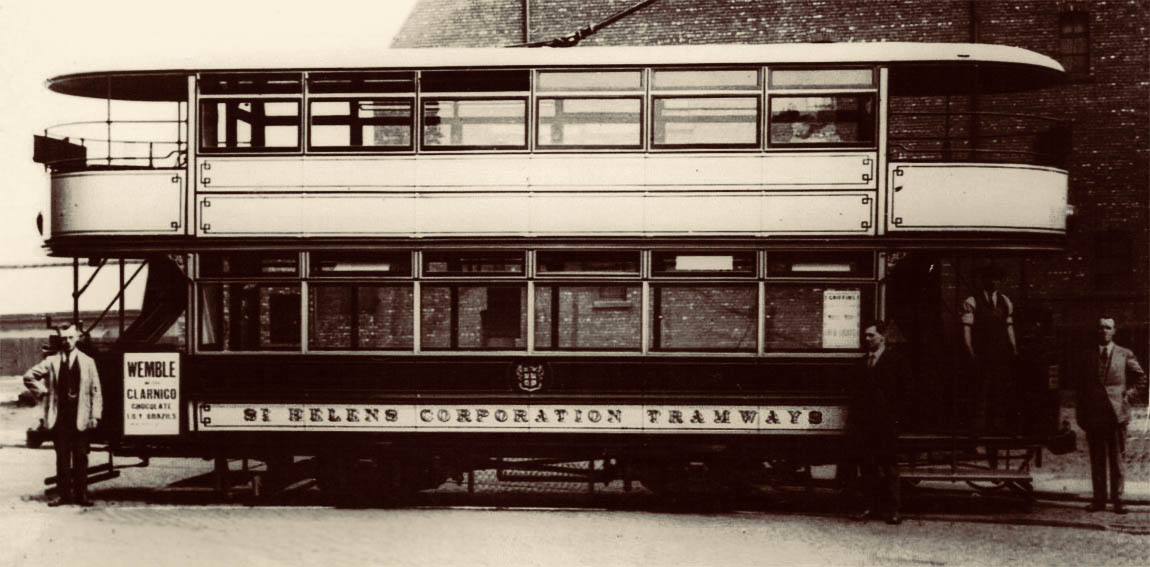 We begin in St Helens Police Court where the Bench heard this week how a man had attacked a tram conductor over a halfpenny. Thomas Appleton was a passenger on the top deck of a late evening tram from Prescot that was returning to St Helens. He claimed that he had boarded it at Eccleston Lane Ends and tended the required twopenny fare.
However, conductor Frank Waring believed the man had got on the tram at Prescot and insisted on being paid the full 2½d. Appleton paid the extra halfpenny but was aggrieved in doing so and when the tram was leaving Portico and the conductor went upstairs to collect more fares, the young man told the conductor that he had "twisted" him.
When the tram reached Toll Bar, Appleton then came down to the lower deck and became abusive to the conductor who ordered him to leave the car. Appleton refused to get out and struck the conductor twice, knocking him down on the platform. The tram was then delayed at the stop for 10 minutes while the assailant was ejected from the tram, although the defendant claimed in court that it was nearly half-an-hour.
A tram inspector said that Appleton had told him, "I admit I lost my temper and struck at him once", which he denied saying in court. After a number of witnesses had given evidence, the defendant was fined 10 shillings and the Bench expressed the hope that it would serve as a warning to Appleton not to lose his temper when riding in a tram.
Milk floats were one of the last modes of transport to abandon horses, with electric versions only becoming widespread from the 1940s. I suppose the stop-start nature of milk deliveries suited being hauled by horses better than early motor transport that could prove difficult in getting going. But horses were quite capable of getting going on their own accord and his animal doing just that landed Lynester Nevin in court this week.
The farmer cum milkman from Knowles Farm in Eccleston had been delivering milk in Carr Street, near Windleshaw Road. During the 1920s people were expected to have their own jug which the milkman poured milk into. And while Lynester Nevin was inside a customer's kitchen filling their jug, his horse decided to go walkies.
Frederick Bolds told the court that he had been cycling along Carr Street when he saw the horse and float travelling along the road with nobody in charge. He said he shouted "Whoa" and the horse stopped and then he informed a policeman. Mr Nevin said it was the first time his horse had done such a thing and insisted it had not gone far but was fined 5 shillings for not having his horse and cart under proper control.
The St Helens Reporter wrote on the 18th: "Years ago, long before the war, the annual sports meeting held at Rainford was the most important event of the whole year. Weeks before the meeting came off, the chances of the various competitors were discussed at great length, and on the great day interest was as intense as all first-class meetings demand.
"With such widespread interest aroused one can easily imagine the wonderful success of the annual venture, and the competitors saw to it that the spectators were not disappointed. All the village, as well as a large number of people from neighbouring areas, flocked to the sports ground, imbued with the real carnival spirit, and they made of it a miniature Ascot. Sports day in Rainford was undoubtedly a never-to-be-forgotten sight."
The Rainford Sports had ended with the onset of war but had now made a comeback. And the Reporter said last weekend's event on the Recreation Ground had been a "magnificent return" with an excellent crowd watching high quality athletics.
It seems to me that John Tierney may have been a bit paranoid. The labourer from Russell Street appeared in St Helens Police Court this week charged with disturbing the peace after PC Craine said he had seen the man chasing his wife in the street at midnight and using bad language. Upon speaking to him the constable said the man had retorted, "I will report you for exceeding your duty." Tierney then went home and abused the constable from a bedroom window.
In the courtroom he fired a number of questions at PC Craine, including: "Didn't you tell me some months ago that you intended to do me? And you said you were a boxer who could beat any man in Greenbank? You can't get on with your job because you are always talking to young women in Liverpool-road. All the shops in the road might get robbed while you are doing that. The police have been after me for three years. I have absolutely no chance here. What did I shout from the bedroom window? Come on, speak it out!"
PC Craine replied: "You said fetch that __________ big chief of yours." "I never said that", replied Tierney. "Then you said “Fetch [Inspector] Anders and [Sergeant] Ballantyne, the big cowards”." Upon being told that he was going to be bound over to be of good behaviour for 12 months – himself in one surety of £1 and an additional surety of a further £1 – the defendant said: "And that is a fair ration for a workingman?"
After being instructed by the Clerk of the court to sit down, Tierney muttered a remark about the many good men who had sat down in France for the benefit of other people. And then he walked away, still uttering protests. "I was a perfect stranger in the public house where this man struck me," was the story told in court by William Penketh, another aggrieved defendant. The man from Eldon Street had, along with Thomas McNicholas from Carter Street, been charged with fighting outside the Griffin Hotel in Peasley Cross Lane (pictured above). PC Hinchcliffe described how he had witnessed the rough and tumble some half-an-hour after closing time and said the pair had finished up rolling about the road hitting each other. They were both bound over for six months.
A century ago huge crowds seemed to appear out of thin air when trouble began. The police reckoned as many as 500 persons had been watching Mary Ryan from Sandfield Crescent in Greenbank kicking up a fuss over something or other. Mary was bound over to keep the peace, herself in a surety of £2 and she needed to find two people prepared to stake a further £1 each.
Margaret Dillon from Liverpool Street had also attracted what was described as a huge crowd in Anne Street to watch her shenanigans. Margaret was threatening her neighbours and it took a constable fifteen minutes to quieten her down and get the woman indoors. She was bound over for 12 months.
On the 19th two men appeared in court after causing a disturbance at the Grapes Hotel in Liverpool Road. Inspector Anders said when he got to the place he found the landlord in an exhausted state and unable for some time to tell him what had happened. Stanton Hill had also had his shirt, coat and tie "destroyed".
Eventually, Mr Hill explained how the pair had been refused alcohol because they were very drunk and when told to leave had created a huge disturbance. Both men were fined £2, with one told to pay an extra 24 shillings for the landlord's damaged clothes and a third man, who had attempted to obstruct the inspector, was fined 10 shillings.
And finally, a story that does not involve violent and abusive folk running amok. On the 20th the Bishop of Liverpool, Robert Dobson, formally opened what became known as West Park Grammar School. It was then simply called the Catholic Grammar School and accommodated 300 pupils and the building had replaced a much smaller one.
Construction work had taken two years and the opening ceremony attracted a large gathering, including the Catholic clergy of St Helens and its leading townsfolk, including the Mayor, Thomas Hamblett, and James Sexton, the town's MP.
St Helens Reporter courtesy St Helens Archive Service at Eccleston Library
Next Week's stories will include the thieving bicycle brothers from Parr, the petty police prosecution of the Scala, there's criticism of the town's doleites, the Parr lodging house assault and the new Church Street Arcade that was being built.
However, conductor Frank Waring believed the man had got on the tram at Prescot and insisted on being paid the full 2½d. Appleton paid the extra halfpenny but was aggrieved in doing so and when the tram was leaving Portico and the conductor went upstairs to collect more fares, the young man told the conductor that he had "twisted" him.
When the tram reached Toll Bar, Appleton then came down to the lower deck and became abusive to the conductor who ordered him to leave the car. Appleton refused to get out and struck the conductor twice, knocking him down on the platform. The tram was then delayed at the stop for 10 minutes while the assailant was ejected from the tram, although the defendant claimed in court that it was nearly half-an-hour.
A tram inspector said that Appleton had told him, "I admit I lost my temper and struck at him once", which he denied saying in court. After a number of witnesses had given evidence, the defendant was fined 10 shillings and the Bench expressed the hope that it would serve as a warning to Appleton not to lose his temper when riding in a tram.
Milk floats were one of the last modes of transport to abandon horses, with electric versions only becoming widespread from the 1940s. I suppose the stop-start nature of milk deliveries suited being hauled by horses better than early motor transport that could prove difficult in getting going. But horses were quite capable of getting going on their own accord and his animal doing just that landed Lynester Nevin in court this week.
The farmer cum milkman from Knowles Farm in Eccleston had been delivering milk in Carr Street, near Windleshaw Road. During the 1920s people were expected to have their own jug which the milkman poured milk into. And while Lynester Nevin was inside a customer's kitchen filling their jug, his horse decided to go walkies.
Frederick Bolds told the court that he had been cycling along Carr Street when he saw the horse and float travelling along the road with nobody in charge. He said he shouted "Whoa" and the horse stopped and then he informed a policeman. Mr Nevin said it was the first time his horse had done such a thing and insisted it had not gone far but was fined 5 shillings for not having his horse and cart under proper control.
The St Helens Reporter wrote on the 18th: "Years ago, long before the war, the annual sports meeting held at Rainford was the most important event of the whole year. Weeks before the meeting came off, the chances of the various competitors were discussed at great length, and on the great day interest was as intense as all first-class meetings demand.
"With such widespread interest aroused one can easily imagine the wonderful success of the annual venture, and the competitors saw to it that the spectators were not disappointed. All the village, as well as a large number of people from neighbouring areas, flocked to the sports ground, imbued with the real carnival spirit, and they made of it a miniature Ascot. Sports day in Rainford was undoubtedly a never-to-be-forgotten sight."
The Rainford Sports had ended with the onset of war but had now made a comeback. And the Reporter said last weekend's event on the Recreation Ground had been a "magnificent return" with an excellent crowd watching high quality athletics.
It seems to me that John Tierney may have been a bit paranoid. The labourer from Russell Street appeared in St Helens Police Court this week charged with disturbing the peace after PC Craine said he had seen the man chasing his wife in the street at midnight and using bad language. Upon speaking to him the constable said the man had retorted, "I will report you for exceeding your duty." Tierney then went home and abused the constable from a bedroom window.
In the courtroom he fired a number of questions at PC Craine, including: "Didn't you tell me some months ago that you intended to do me? And you said you were a boxer who could beat any man in Greenbank? You can't get on with your job because you are always talking to young women in Liverpool-road. All the shops in the road might get robbed while you are doing that. The police have been after me for three years. I have absolutely no chance here. What did I shout from the bedroom window? Come on, speak it out!"
PC Craine replied: "You said fetch that __________ big chief of yours." "I never said that", replied Tierney. "Then you said “Fetch [Inspector] Anders and [Sergeant] Ballantyne, the big cowards”." Upon being told that he was going to be bound over to be of good behaviour for 12 months – himself in one surety of £1 and an additional surety of a further £1 – the defendant said: "And that is a fair ration for a workingman?"
After being instructed by the Clerk of the court to sit down, Tierney muttered a remark about the many good men who had sat down in France for the benefit of other people. And then he walked away, still uttering protests.
A century ago huge crowds seemed to appear out of thin air when trouble began. The police reckoned as many as 500 persons had been watching Mary Ryan from Sandfield Crescent in Greenbank kicking up a fuss over something or other. Mary was bound over to keep the peace, herself in a surety of £2 and she needed to find two people prepared to stake a further £1 each.
Margaret Dillon from Liverpool Street had also attracted what was described as a huge crowd in Anne Street to watch her shenanigans. Margaret was threatening her neighbours and it took a constable fifteen minutes to quieten her down and get the woman indoors. She was bound over for 12 months.
On the 19th two men appeared in court after causing a disturbance at the Grapes Hotel in Liverpool Road. Inspector Anders said when he got to the place he found the landlord in an exhausted state and unable for some time to tell him what had happened. Stanton Hill had also had his shirt, coat and tie "destroyed".
Eventually, Mr Hill explained how the pair had been refused alcohol because they were very drunk and when told to leave had created a huge disturbance. Both men were fined £2, with one told to pay an extra 24 shillings for the landlord's damaged clothes and a third man, who had attempted to obstruct the inspector, was fined 10 shillings.
And finally, a story that does not involve violent and abusive folk running amok. On the 20th the Bishop of Liverpool, Robert Dobson, formally opened what became known as West Park Grammar School. It was then simply called the Catholic Grammar School and accommodated 300 pupils and the building had replaced a much smaller one.
Construction work had taken two years and the opening ceremony attracted a large gathering, including the Catholic clergy of St Helens and its leading townsfolk, including the Mayor, Thomas Hamblett, and James Sexton, the town's MP.
St Helens Reporter courtesy St Helens Archive Service at Eccleston Library
Next Week's stories will include the thieving bicycle brothers from Parr, the petty police prosecution of the Scala, there's criticism of the town's doleites, the Parr lodging house assault and the new Church Street Arcade that was being built.
This week's many stories include the tram conductor assaulted over a halfpenny, the horse attached to a milk float that went walkies, the opening of West Park Grammar School, the magnificent revival of Rainford Sports, the exhausted Liverpool Road landlord who had his clothing destroyed by a drunk and the man who accused a bobby of spending too much time talking to young women.
We begin in St Helens Police Court where the Bench heard this week how a man had attacked a tram conductor over a halfpenny.
Thomas Appleton was a passenger on the top deck of a late evening tram from Prescot that was returning to St Helens.
He claimed that he had boarded it at Eccleston Lane Ends and tended the required twopenny fare.
However, conductor Frank Waring believed the man had got on the tram at Prescot and insisted on being paid the full 2½d.
Appleton paid the extra halfpenny but was aggrieved in doing so and when the tram was leaving Portico and the conductor went upstairs to collect more fares, the young man told the conductor that he had "twisted" him.
When the tram reached Toll Bar, Appleton then came down to the lower deck and became abusive to the conductor who ordered him to leave the car.
Appleton refused to get out and struck the conductor twice, knocking him down on the platform.
The tram was then delayed at the stop for 10 minutes while the assailant was ejected from the tram, although the defendant claimed in court that it was nearly half-an-hour.
A tram inspector said that Appleton had told him, "I admit I lost my temper and struck at him once", which he denied saying in court.
After a number of witnesses had given evidence, the defendant was fined 10 shillings and the Bench expressed the hope that it would serve as a warning to Appleton not to lose his temper when riding in a tram.
Milk floats were one of the last modes of transport to abandon horses, with electric versions only becoming widespread from the 1940s.
I suppose the stop-start nature of milk deliveries suited being hauled by horses better than early motor transport that could prove difficult in getting going.
But horses were quite capable of getting going on their own accord and his animal doing just that landed Lynester Nevin in court this week.
The farmer cum milkman from Knowles Farm in Eccleston had been delivering milk in Carr Street, near Windleshaw Road.
During the 1920s people were expected to have their own jug which the milkman poured milk into.
And while Lynester Nevin was inside a customer's kitchen filling their jug, his horse decided to go walkies.
Frederick Bolds told the court that he had been cycling along Carr Street when he saw the horse and float travelling along the road with nobody in charge. He said he shouted "Whoa" and the horse stopped and then he informed a policeman.
Mr Nevin said it was the first time his horse had done such a thing and insisted it had not gone far but was fined 5 shillings for not having his horse and cart under proper control.
The St Helens Reporter wrote on the 18th: "Years ago, long before the war, the annual sports meeting held at Rainford was the most important event of the whole year. Weeks before the meeting came off, the chances of the various competitors were discussed at great length, and on the great day interest was as intense as all first-class meetings demand.
"With such widespread interest aroused one can easily imagine the wonderful success of the annual venture, and the competitors saw to it that the spectators were not disappointed.
"All the village, as well as a large number of people from neighbouring areas, flocked to the sports ground, imbued with the real carnival spirit, and they made of it a miniature Ascot. Sports day in Rainford was undoubtedly a never-to-be-forgotten sight."
The Rainford Sports had ended with the onset of war but had now made a comeback.
And the Reporter said last weekend's event on the Recreation Ground had been a "magnificent return" with an excellent crowd watching high quality athletics.
It seems to me that John Tierney may have been a bit paranoid. The labourer from Russell Street appeared in St Helens Police Court this week charged with disturbing the peace after PC Craine said he had seen the man chasing his wife in the street at midnight and using bad language.
Upon speaking to him the constable said the man had retorted, "I will report you for exceeding your duty."
Tierney then went home and abused the constable from a bedroom window.
In the courtroom he fired a number of questions at PC Craine, including: "Didn't you tell me some months ago that you intended to do me? And you said you were a boxer who could beat any man in Greenbank?
"You can't get on with your job because you are always talking to young women in Liverpool-road. All the shops in the road might get robbed while you are doing that.
"The police have been after me for three years. I have absolutely no chance here. What did I shout from the bedroom window? Come on, speak it out!"
PC Craine replied: "You said fetch that __________ big chief of yours." "I never said that", replied Tierney.
"Then you said “Fetch [Inspector] Anders and [Sergeant] Ballantyne, the big cowards”."
Upon being told that he was going to be bound over to be of good behaviour for 12 months – himself in one surety of £1 and an additional surety of a further £1 – the defendant said: "And that is a fair ration for a workingman?"
After being instructed by the Clerk of the court to sit down, Tierney muttered a remark about the many good men who had sat down in France for the benefit of other people. And then he walked away, still uttering protests.
"I was a perfect stranger in the public house where this man struck me," was the story told in court by William Penketh, another aggrieved defendant.
The man from Eldon Street had, along with Thomas McNicholas from Carter Street, been charged with fighting outside the Griffin Hotel in Peasley Cross Lane (pictured above).
PC Hinchcliffe described how he had witnessed the rough and tumble some half-an-hour after closing time and said the pair had finished up rolling about the road hitting each other. They were both bound over for six months.
A century ago huge crowds seemed to appear out of thin air when trouble began. The police reckoned as many as 500 persons had been watching Mary Ryan from Sandfield Crescent in Greenbank kicking up a fuss over something or other.
Mary was bound over to keep the peace, herself in a surety of £2 and she needed to find two people prepared to stake a further £1 each.
Margaret Dillon from Liverpool Street had also attracted what was described as a huge crowd in Anne Street to watch her shenanigans.
Margaret was threatening her neighbours and it took a constable fifteen minutes to quieten her down and get the woman indoors. She was bound over for 12 months.
On the 19th two men appeared in court after causing a disturbance at the Grapes Hotel in Liverpool Road.
Inspector Anders said when he got to the place he found the landlord in an exhausted state and unable for some time to tell him what had happened. Stanton Hill had also had his shirt, coat and tie "destroyed".
Eventually, Mr Hill explained how the pair had been refused alcohol because they were very drunk and when told to leave had created a huge disturbance.
Both men were fined £2, with one told to pay an extra 24 shillings for the landlord's damaged clothes and a third man, who had attempted to obstruct the inspector, was fined 10 shillings.
And finally, a story that does not involve violent and abusive folk running amok. On the 20th the Bishop of Liverpool, Robert Dobson, formally opened what became known as West Park Grammar School.
It was then simply called the Catholic Grammar School and accommodated 300 pupils and the building had replaced a much smaller one.
Construction work had taken two years and the opening ceremony attracted a large gathering, including the Catholic clergy of St Helens and its leading townsfolk, including the Mayor, Thomas Hamblett, and James Sexton, the town's MP.
St Helens Reporter courtesy St Helens Archive Service at Eccleston Library
Next Week's stories will include the thieving bicycle brothers from Parr, the petty police prosecution of the Scala, there's criticism of the town's doleites, the Parr lodging house assault and the new Church Street Arcade that was being built.
Thomas Appleton was a passenger on the top deck of a late evening tram from Prescot that was returning to St Helens.
He claimed that he had boarded it at Eccleston Lane Ends and tended the required twopenny fare.
However, conductor Frank Waring believed the man had got on the tram at Prescot and insisted on being paid the full 2½d.
Appleton paid the extra halfpenny but was aggrieved in doing so and when the tram was leaving Portico and the conductor went upstairs to collect more fares, the young man told the conductor that he had "twisted" him.
When the tram reached Toll Bar, Appleton then came down to the lower deck and became abusive to the conductor who ordered him to leave the car.
Appleton refused to get out and struck the conductor twice, knocking him down on the platform.
The tram was then delayed at the stop for 10 minutes while the assailant was ejected from the tram, although the defendant claimed in court that it was nearly half-an-hour.
A tram inspector said that Appleton had told him, "I admit I lost my temper and struck at him once", which he denied saying in court.
After a number of witnesses had given evidence, the defendant was fined 10 shillings and the Bench expressed the hope that it would serve as a warning to Appleton not to lose his temper when riding in a tram.
Milk floats were one of the last modes of transport to abandon horses, with electric versions only becoming widespread from the 1940s.
I suppose the stop-start nature of milk deliveries suited being hauled by horses better than early motor transport that could prove difficult in getting going.
But horses were quite capable of getting going on their own accord and his animal doing just that landed Lynester Nevin in court this week.
The farmer cum milkman from Knowles Farm in Eccleston had been delivering milk in Carr Street, near Windleshaw Road.
During the 1920s people were expected to have their own jug which the milkman poured milk into.
And while Lynester Nevin was inside a customer's kitchen filling their jug, his horse decided to go walkies.
Frederick Bolds told the court that he had been cycling along Carr Street when he saw the horse and float travelling along the road with nobody in charge. He said he shouted "Whoa" and the horse stopped and then he informed a policeman.
Mr Nevin said it was the first time his horse had done such a thing and insisted it had not gone far but was fined 5 shillings for not having his horse and cart under proper control.
The St Helens Reporter wrote on the 18th: "Years ago, long before the war, the annual sports meeting held at Rainford was the most important event of the whole year. Weeks before the meeting came off, the chances of the various competitors were discussed at great length, and on the great day interest was as intense as all first-class meetings demand.
"With such widespread interest aroused one can easily imagine the wonderful success of the annual venture, and the competitors saw to it that the spectators were not disappointed.
"All the village, as well as a large number of people from neighbouring areas, flocked to the sports ground, imbued with the real carnival spirit, and they made of it a miniature Ascot. Sports day in Rainford was undoubtedly a never-to-be-forgotten sight."
The Rainford Sports had ended with the onset of war but had now made a comeback.
And the Reporter said last weekend's event on the Recreation Ground had been a "magnificent return" with an excellent crowd watching high quality athletics.
It seems to me that John Tierney may have been a bit paranoid. The labourer from Russell Street appeared in St Helens Police Court this week charged with disturbing the peace after PC Craine said he had seen the man chasing his wife in the street at midnight and using bad language.
Upon speaking to him the constable said the man had retorted, "I will report you for exceeding your duty."
Tierney then went home and abused the constable from a bedroom window.
In the courtroom he fired a number of questions at PC Craine, including: "Didn't you tell me some months ago that you intended to do me? And you said you were a boxer who could beat any man in Greenbank?
"You can't get on with your job because you are always talking to young women in Liverpool-road. All the shops in the road might get robbed while you are doing that.
"The police have been after me for three years. I have absolutely no chance here. What did I shout from the bedroom window? Come on, speak it out!"
PC Craine replied: "You said fetch that __________ big chief of yours." "I never said that", replied Tierney.
"Then you said “Fetch [Inspector] Anders and [Sergeant] Ballantyne, the big cowards”."
Upon being told that he was going to be bound over to be of good behaviour for 12 months – himself in one surety of £1 and an additional surety of a further £1 – the defendant said: "And that is a fair ration for a workingman?"
After being instructed by the Clerk of the court to sit down, Tierney muttered a remark about the many good men who had sat down in France for the benefit of other people. And then he walked away, still uttering protests.
The man from Eldon Street had, along with Thomas McNicholas from Carter Street, been charged with fighting outside the Griffin Hotel in Peasley Cross Lane (pictured above).
PC Hinchcliffe described how he had witnessed the rough and tumble some half-an-hour after closing time and said the pair had finished up rolling about the road hitting each other. They were both bound over for six months.
A century ago huge crowds seemed to appear out of thin air when trouble began. The police reckoned as many as 500 persons had been watching Mary Ryan from Sandfield Crescent in Greenbank kicking up a fuss over something or other.
Mary was bound over to keep the peace, herself in a surety of £2 and she needed to find two people prepared to stake a further £1 each.
Margaret Dillon from Liverpool Street had also attracted what was described as a huge crowd in Anne Street to watch her shenanigans.
Margaret was threatening her neighbours and it took a constable fifteen minutes to quieten her down and get the woman indoors. She was bound over for 12 months.
On the 19th two men appeared in court after causing a disturbance at the Grapes Hotel in Liverpool Road.
Inspector Anders said when he got to the place he found the landlord in an exhausted state and unable for some time to tell him what had happened. Stanton Hill had also had his shirt, coat and tie "destroyed".
Eventually, Mr Hill explained how the pair had been refused alcohol because they were very drunk and when told to leave had created a huge disturbance.
Both men were fined £2, with one told to pay an extra 24 shillings for the landlord's damaged clothes and a third man, who had attempted to obstruct the inspector, was fined 10 shillings.
And finally, a story that does not involve violent and abusive folk running amok. On the 20th the Bishop of Liverpool, Robert Dobson, formally opened what became known as West Park Grammar School.
It was then simply called the Catholic Grammar School and accommodated 300 pupils and the building had replaced a much smaller one.
Construction work had taken two years and the opening ceremony attracted a large gathering, including the Catholic clergy of St Helens and its leading townsfolk, including the Mayor, Thomas Hamblett, and James Sexton, the town's MP.
St Helens Reporter courtesy St Helens Archive Service at Eccleston Library
Next Week's stories will include the thieving bicycle brothers from Parr, the petty police prosecution of the Scala, there's criticism of the town's doleites, the Parr lodging house assault and the new Church Street Arcade that was being built.