
IOO YEARS AGO THIS WEEK 6 - 12 APRIL 1926
This week's many stories include the Parr father's lifesaving blood transfusion, the drowning in Taylor Park lake, the St Helens bikers' motorbike tragedy at Birkdale, the boy's brainless office theft and an update on the planned eviction of the Sutton poison gas cottagers.
We begin on the 6th in the Scala Cinema in Ormskirk Street in St Helens when a middle-aged man collapsed and died. The individual had no papers or anything in his possession to identify him and appeals were being made for information. The police took a photograph of the mystery man's face and eventually he was identified as 50-year-old John Anders who lived alone in Warrington Old Road.
On the 7th the seemingly unrelated James Anders from Parr Street bravely saved Wilfred Taylor from drowning in the St Helens Canal. That was after the 7-year-old had fallen into the water at a place where it was 10 to 12 feet deep and 24 feet wide. The Liverpool Shipwreck and Humane Society would later award Anders a bravery certificate.
Blood transfusions were rare in the mid-1920s. There were then issues with storing blood and it wasn't until 1937 that blood banks could be established in Britain. And so in the 1920s giving blood was a one-to-one transfer between the healthy and the sick. The first such reported case that I have come across in St Helens took place in 1924 and the few other accounts of transfusions that I have subsequently read have all had a background story concerning the kind-hearted person who had donated the blood.
That was not a relatively straightforward process like today and the donor would usually have to spend several days in hospital recovering. But Charles Parton from Parr would not, I expect, have minded that. This week he gave three-quarters of a pint of his own blood to his five-year-old son who was very ill in St Helens Hospital suffering from anaemia.
Without any blood bank from which blood of a specific group could easily be drawn, volunteers needed to be found who matched the patient's own group, which, of course, delayed the process. And so a schoolmaster, two miners and a clerk were first tested to see if they would be suitable as donors. But when they were found to possess the wrong blood group, the boy's father was chosen and the lad's condition was subsequently said to have improved considerably.
Although many motorbike accidents take place these days, riders do wear helmets and have a driving test to pass before going on major roads. But in the 1920s anyone could ride a motorcycle and it was rare for them to wear a helmet, unless they were racing in an event like the TT. And so inexperienced riders often had fatal accidents. This week a dreadful motorbike tragedy occurred when two St Helens bikers were killed in a head-on collision.
Nineteen-year-old Harold Dingsdale of Holly Bank Street in Merton Bank and 29-year-old Henry Bellis of Boundary Road had driven into each other on Birkdale Sands. Bellis was killed instantly but as he had no driving licence on him or any other means of identification, his identity was for some time a mystery. Bellis' machine bore the St Helens registration DJ 2238. And so the authorities in Southport attempted to contact the registration office in St Helens to discover the owner of the bike but learnt they had shut for the Bank Holiday.
After eventually finding out Bellis' identity, the men's joint inquest was held on the 7th. Alfred Peachey of Croppers Hill had been riding on Dingsdale's pillion but had escaped with only minor injuries. He told the inquest that they had been going on the sands towards Ainsdale at 20 to 25 miles per hour when suddenly they saw another motorbike coming towards them at a fast pace. Harold Dingsdale turned slightly to his right to avoid the other man but Henry Bellis turned left and both bikes crashed into each other. The place where the accident occurred had not been far from where another motorcyclist had recently been killed through his machine slipping on the sands. On the 7th there was another rapidly held inquest in St Helens. John Borrill's body had only been found in the Leg of Mutton Dam near Taylor Park (pictured above) on that same day. But just hours later his inquest was held and the open verdict of "Found Drowned" returned. Of course, if the police had had more time to investigate the background of the 76-year-old – who had spent 30 years as a chemist – they might have had more knowledge of what had occurred and seemingly driven Mr Borrill to drown himself.
But as corpses were legally required to be present in open coffins at inquests, the hearings took place as soon as possible after death to minimise the smell of the decomposing body and to fit in with the busy coroner's schedule.
Three boys appeared in the St Helens Juvenile Court on the 7th in connection with the stealing of £114 from the office of an unnamed firm. Because of their ages the youths were also unnamed but they had exhibited brainless behaviour in which they were bound to be caught. Particularly stupid was the 15-year-old office boy at the centre of the story who had come across the £114 and decided to help himself to the money.
He, seemingly, did not realise that the cash would be missed and showed it off to several friends. A 17-year-old youth was given £10 to look after and another young man was asked to change a £5 note. However, he conned the boy thief into accepting £4 instead and kept the other pound!
When the 15 year-old's firm called in the police to investigate the theft, the boy quickly admitted what he had done. The magistrates said it was very difficult to deal with youths who took it into their heads to commit serious offences like this. The individual who had taken the money from his office was severely cautioned and bound over for three years, with his father acting as surety. And the other two boys were cautioned and one was bound over.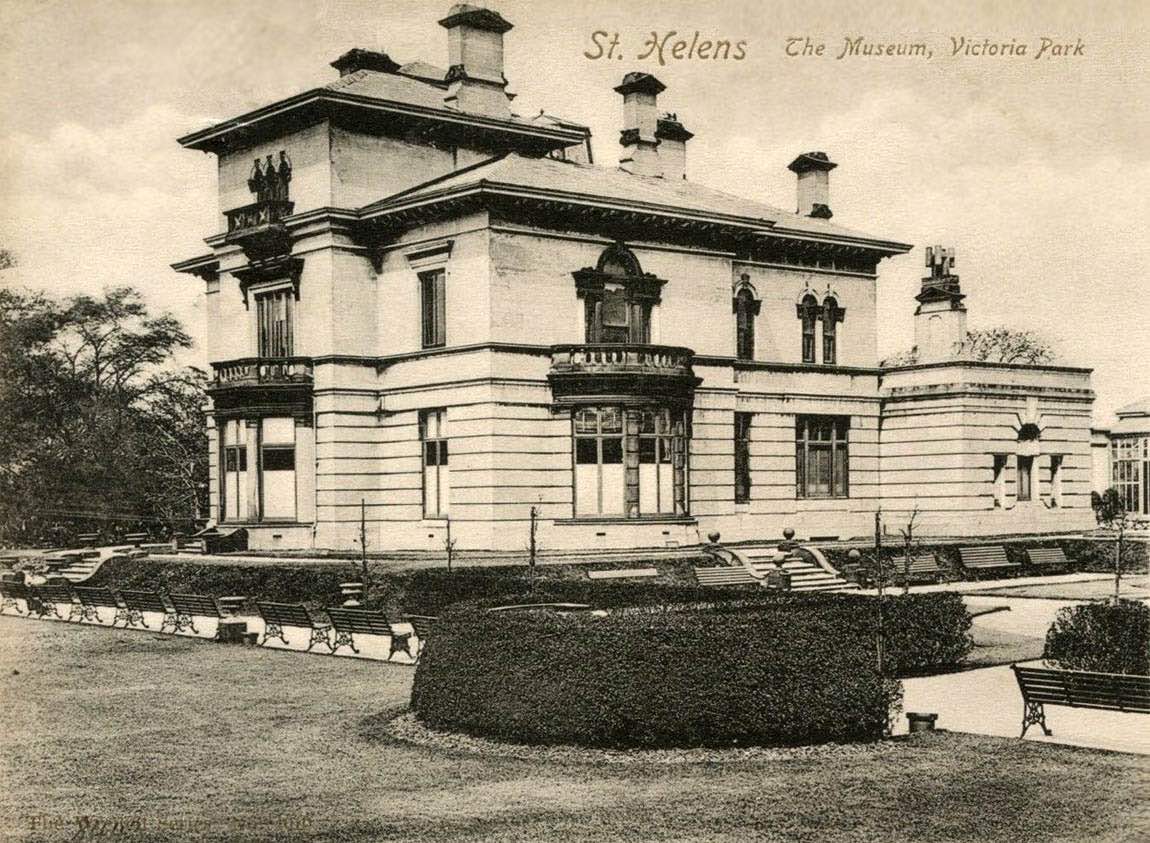 At the St Helens Town Council's meeting on the 7th it was disclosed that the upper portion of the Mansion House in Victoria Park was being converted into two flats. It was part of a renovation of the building in which the lower portion housed the borough museum. It was also revealed this week that 500 striking miners at Clock Face Colliery were being made redundant as they were considered surplus to requirements.
What the Liverpool Evening Express described as "remarkable scenes" were witnessed in St Helens on the 9th when the tenants of 16 cottages in Abbotsfield Road stood outside their homes. The War Department had become the landlord of the houses and they had ordered their tenants to leave on what they claimed to be safety grounds. That was because of the cottages' close proximity to the government's poison gas works, where some of them worked.
A total of 200 persons (100 tenants and 100 curious children) stood in the street outside their cottages. Many flourished the warrants that they had received ordering them to leave their homes by the 15th and saying they would otherwise be ejected on that day and their possessions put out on the street.
Most of the tenants were miners that were ex-servicemen and had large families. Margaret Hollihead said: "I have been in my cottage for 17 years and now I am to be turned out like the rest in the street." She and her husband had eight children and a Mr and Mrs Kingsley had 11.
Alderman Richard Waring told the Express that he was trying to get the notices to quit postponed. He said the council had decided to cancel the arrangements that had been made to let their newly built Corporation houses in Pocket Nook and Gower Street. They would be available in a few weeks and would now be offered to the tenants in Abbotsfield Road instead.
However, the situation was complicated, as the tenants had said they could not afford to pay the rent of 14s 6d for the new homes, which was far higher than what they were currently paying. And then the council could expect those that had been planning to move into the new houses in Pocket Nook and Gower Street to be angry about their cancelled contracts.
Using your own home for purposes of betting was a dangerous game. Fines were far higher than in cases of street betting and once the police had been tipped off about the illegal gambling house, they generally found it straightforward to monitor the comings and goings and gather evidence. The householder could go nowhere, unlike the highly mobile street bookie.
On the 9th Joseph Fairhurst of School Street in Peasley Cross was fined the hefty sum of £30 for using his house for betting. As usual in such cases the police had spent three days watching the back of the house and counting the number of persons who went inside. A total of 136 people had been seen going into Fairhurst's home and when the place was raided, the man was found checking slips. The Bench warned Fairhurst that if he appeared before them again the maximum fine of £100 would be inflicted.
St Helens Reporter courtesy St Helens Archive Service at Eccleston Library
Next Week's stories will include Parr's rag picking scandal, there's a reprieve for the Abbotsfield Road poison gas tenants, the wayward boy in Bold who was disowned by his parents and the plans to extend the St Helens Town Hall.
We begin on the 6th in the Scala Cinema in Ormskirk Street in St Helens when a middle-aged man collapsed and died. The individual had no papers or anything in his possession to identify him and appeals were being made for information. The police took a photograph of the mystery man's face and eventually he was identified as 50-year-old John Anders who lived alone in Warrington Old Road.
On the 7th the seemingly unrelated James Anders from Parr Street bravely saved Wilfred Taylor from drowning in the St Helens Canal. That was after the 7-year-old had fallen into the water at a place where it was 10 to 12 feet deep and 24 feet wide. The Liverpool Shipwreck and Humane Society would later award Anders a bravery certificate.
Blood transfusions were rare in the mid-1920s. There were then issues with storing blood and it wasn't until 1937 that blood banks could be established in Britain. And so in the 1920s giving blood was a one-to-one transfer between the healthy and the sick. The first such reported case that I have come across in St Helens took place in 1924 and the few other accounts of transfusions that I have subsequently read have all had a background story concerning the kind-hearted person who had donated the blood.
That was not a relatively straightforward process like today and the donor would usually have to spend several days in hospital recovering. But Charles Parton from Parr would not, I expect, have minded that. This week he gave three-quarters of a pint of his own blood to his five-year-old son who was very ill in St Helens Hospital suffering from anaemia.
Without any blood bank from which blood of a specific group could easily be drawn, volunteers needed to be found who matched the patient's own group, which, of course, delayed the process. And so a schoolmaster, two miners and a clerk were first tested to see if they would be suitable as donors. But when they were found to possess the wrong blood group, the boy's father was chosen and the lad's condition was subsequently said to have improved considerably.
Although many motorbike accidents take place these days, riders do wear helmets and have a driving test to pass before going on major roads. But in the 1920s anyone could ride a motorcycle and it was rare for them to wear a helmet, unless they were racing in an event like the TT. And so inexperienced riders often had fatal accidents. This week a dreadful motorbike tragedy occurred when two St Helens bikers were killed in a head-on collision.
Nineteen-year-old Harold Dingsdale of Holly Bank Street in Merton Bank and 29-year-old Henry Bellis of Boundary Road had driven into each other on Birkdale Sands. Bellis was killed instantly but as he had no driving licence on him or any other means of identification, his identity was for some time a mystery. Bellis' machine bore the St Helens registration DJ 2238. And so the authorities in Southport attempted to contact the registration office in St Helens to discover the owner of the bike but learnt they had shut for the Bank Holiday.
After eventually finding out Bellis' identity, the men's joint inquest was held on the 7th. Alfred Peachey of Croppers Hill had been riding on Dingsdale's pillion but had escaped with only minor injuries. He told the inquest that they had been going on the sands towards Ainsdale at 20 to 25 miles per hour when suddenly they saw another motorbike coming towards them at a fast pace. Harold Dingsdale turned slightly to his right to avoid the other man but Henry Bellis turned left and both bikes crashed into each other. The place where the accident occurred had not been far from where another motorcyclist had recently been killed through his machine slipping on the sands.
But as corpses were legally required to be present in open coffins at inquests, the hearings took place as soon as possible after death to minimise the smell of the decomposing body and to fit in with the busy coroner's schedule.
Three boys appeared in the St Helens Juvenile Court on the 7th in connection with the stealing of £114 from the office of an unnamed firm. Because of their ages the youths were also unnamed but they had exhibited brainless behaviour in which they were bound to be caught. Particularly stupid was the 15-year-old office boy at the centre of the story who had come across the £114 and decided to help himself to the money.
He, seemingly, did not realise that the cash would be missed and showed it off to several friends. A 17-year-old youth was given £10 to look after and another young man was asked to change a £5 note. However, he conned the boy thief into accepting £4 instead and kept the other pound!
When the 15 year-old's firm called in the police to investigate the theft, the boy quickly admitted what he had done. The magistrates said it was very difficult to deal with youths who took it into their heads to commit serious offences like this. The individual who had taken the money from his office was severely cautioned and bound over for three years, with his father acting as surety. And the other two boys were cautioned and one was bound over.
What the Liverpool Evening Express described as "remarkable scenes" were witnessed in St Helens on the 9th when the tenants of 16 cottages in Abbotsfield Road stood outside their homes. The War Department had become the landlord of the houses and they had ordered their tenants to leave on what they claimed to be safety grounds. That was because of the cottages' close proximity to the government's poison gas works, where some of them worked.
A total of 200 persons (100 tenants and 100 curious children) stood in the street outside their cottages. Many flourished the warrants that they had received ordering them to leave their homes by the 15th and saying they would otherwise be ejected on that day and their possessions put out on the street.
Most of the tenants were miners that were ex-servicemen and had large families. Margaret Hollihead said: "I have been in my cottage for 17 years and now I am to be turned out like the rest in the street." She and her husband had eight children and a Mr and Mrs Kingsley had 11.
Alderman Richard Waring told the Express that he was trying to get the notices to quit postponed. He said the council had decided to cancel the arrangements that had been made to let their newly built Corporation houses in Pocket Nook and Gower Street. They would be available in a few weeks and would now be offered to the tenants in Abbotsfield Road instead.
However, the situation was complicated, as the tenants had said they could not afford to pay the rent of 14s 6d for the new homes, which was far higher than what they were currently paying. And then the council could expect those that had been planning to move into the new houses in Pocket Nook and Gower Street to be angry about their cancelled contracts.
Using your own home for purposes of betting was a dangerous game. Fines were far higher than in cases of street betting and once the police had been tipped off about the illegal gambling house, they generally found it straightforward to monitor the comings and goings and gather evidence. The householder could go nowhere, unlike the highly mobile street bookie.
On the 9th Joseph Fairhurst of School Street in Peasley Cross was fined the hefty sum of £30 for using his house for betting. As usual in such cases the police had spent three days watching the back of the house and counting the number of persons who went inside. A total of 136 people had been seen going into Fairhurst's home and when the place was raided, the man was found checking slips. The Bench warned Fairhurst that if he appeared before them again the maximum fine of £100 would be inflicted.
St Helens Reporter courtesy St Helens Archive Service at Eccleston Library
Next Week's stories will include Parr's rag picking scandal, there's a reprieve for the Abbotsfield Road poison gas tenants, the wayward boy in Bold who was disowned by his parents and the plans to extend the St Helens Town Hall.
This week's many stories include the Parr father's lifesaving blood transfusion, the drowning in Taylor Park lake, the St Helens bikers' motorbike tragedy at Birkdale, the boy's brainless office theft and an update on the planned eviction of the Sutton poison gas cottagers.
We begin on the 6th in the Scala Cinema in Ormskirk Street in St Helens when a middle-aged man collapsed and died.
The individual had no papers or anything in his possession to identify him and appeals were being made for information.
The police took a photograph of the mystery man's face and eventually he was identified as 50-year-old John Anders who lived alone in Warrington Old Road.
On the 7th the seemingly unrelated James Anders from Parr Street bravely saved Wilfred Taylor from drowning in the St Helens Canal.
That was after the 7-year-old had fallen into the water at a place where it was 10 to 12 feet deep and 24 feet wide.
The Liverpool Shipwreck and Humane Society would later award Anders a bravery certificate.
Blood transfusions were rare in the mid-1920s. There were then issues with storing blood and it wasn't until 1937 that blood banks could be established in Britain.
And so in the 1920s giving blood was a one-to-one transfer between the healthy and the sick.
The first such reported case that I have come across in St Helens took place in 1924 and the few other accounts of transfusions that I have subsequently read have all had a background story concerning the kind-hearted person who had donated the blood.
That was not a relatively straightforward process like today and the donor would usually have to spend several days in hospital recovering.
But Charles Parton from Parr would not, I expect, have minded that.
This week he gave three-quarters of a pint of his own blood to his five-year-old son who was very ill in St Helens Hospital suffering from anaemia.
Without any blood bank from which blood of a specific group could easily be drawn, volunteers needed to be found who matched the patient's own group, which, of course, delayed the process.
And so a schoolmaster, two miners and a clerk were first tested to see if they would be suitable as donors.
But when they were found to possess the wrong blood group, the boy's father was chosen and the lad's condition was subsequently said to have improved considerably.
Although many motorbike accidents take place these days, riders do wear helmets and have a driving test to pass before going on major roads.
But in the 1920s anyone could ride a motorcycle and it was rare for them to wear a helmet, unless they were racing in an event like the TT. And so inexperienced riders often had fatal accidents.
This week a dreadful motorbike tragedy occurred when two St Helens bikers were killed in a head-on collision.
Nineteen-year-old Harold Dingsdale of Holly Bank Street in Merton Bank and 29-year-old Henry Bellis of Boundary Road had driven into each other on Birkdale Sands.
Bellis was killed instantly but as he had no driving licence on him or any other means of identification, his identity was for some time a mystery.
Bellis' machine bore the St Helens registration DJ 2238. And so the authorities in Southport attempted to contact the registration office in St Helens to discover the owner of the bike but learnt they had shut for the Bank Holiday.
After eventually finding out Bellis' identity, the men's joint inquest was held on the 7th.
Alfred Peachey of Croppers Hill had been riding on Dingsdale's pillion but had escaped with only minor injuries.
He told the inquest that they had been going on the sands towards Ainsdale at 20 to 25 miles per hour when suddenly they saw another motorbike coming towards them at a fast pace.
Harold Dingsdale turned slightly to his right to avoid the other man but Henry Bellis turned left and both bikes crashed into each other.
The place where the accident occurred had not been far from where another motorcyclist had recently been killed through his machine slipping on the sands.
On the 7th there was another rapidly held inquest in St Helens. John Borrill's body had only been found in the Leg of Mutton Dam near Taylor Park (pictured above) on that same day. But just hours later his inquest was held and the open verdict of "Found Drowned" returned.
But later that same day his inquest was held and the open verdict of "Found Drowned" returned.
Of course, if the police had had more time to investigate the background of the 76-year-old – who had spent 30 years as a chemist – they might have had more knowledge of what had occurred and seemingly driven Mr Borrill to drown himself.
But as corpses were legally required to be present in open coffins at inquests, the hearings took place as soon as possible after death to minimise the smell of the decomposing body and to fit in with the busy coroner's schedule.
Three boys appeared in the St Helens Juvenile Court on the 7th in connection with the stealing of £114 from the office of an unnamed firm.
Because of their ages the youths were also unnamed but they had exhibited brainless behaviour in which they were bound to be caught.
Particularly stupid was the 15-year-old office boy at the centre of the story who had come across the £114 and decided to help himself to the money.
He, seemingly, did not realise that the cash would be missed and showed it off to several friends.
A 17-year-old youth was given £10 to look after and another young man was asked to change a £5 note.
However, he conned the boy thief into accepting £4 instead and kept the other pound!
When the 15 year-old's firm called in the police to investigate the theft, the boy quickly admitted what he had done.
The magistrates said it was very difficult to deal with youths who took it into their heads to commit serious offences like this.
The individual who had taken the money from his office was severely cautioned and bound over for three years, with his father acting as surety.
And the other two boys were cautioned and one was bound over.
At the St Helens Town Council's meeting on the 7th it was disclosed that the upper portion of the Mansion House in Victoria Park (pictured above) was being converted into two flats.
It was part of a renovation of the building in which the lower portion housed the borough museum.
It was also revealed this week that 500 striking miners at Clock Face Colliery were being made redundant as they were considered surplus to requirements.
What the Liverpool Evening Express described as "remarkable scenes" were witnessed in St Helens on the 9th when the tenants of 16 cottages in Abbotsfield Road stood outside their homes.
The War Department had become the landlord of the houses and they had ordered their tenants to leave on what they claimed to be safety grounds.
That was because of the cottages' close proximity to the government's poison gas works, where some of them worked.
A total of 200 persons (100 tenants and 100 curious children) stood in the street outside their cottages.
Many flourished the warrants that they had received ordering them to leave their homes by the 15th and saying they would otherwise be ejected on that day and their possessions put out on the street.
Most of the tenants were miners that were ex-servicemen and had large families. Margaret Hollihead said: "I have been in my cottage for 17 years and now I am to be turned out like the rest in the street."
She and her husband had eight children and a Mr and Mrs Kingsley had 11.
Alderman Richard Waring told the Express that he was trying to get the notices to quit postponed.
He said the council had decided to cancel the arrangements that had been made to let their newly built Corporation houses in Pocket Nook and Gower Street.
They would be available in a few weeks and would now be offered to the tenants in Abbotsfield Road instead.
However, the situation was complicated, as the tenants had said they could not afford to pay the rent of 14s 6d for the new homes, which was far higher than what they were currently paying.
And then the council could expect those that had been planning to move into the new houses in Pocket Nook and Gower Street to be angry about their cancelled contracts.
Using your own home for purposes of betting was a dangerous game.
Fines were far higher than in cases of street betting and once the police had been tipped off about the illegal gambling house, they generally found it straightforward to monitor the comings and goings and gather evidence.
The householder could go nowhere, unlike the highly mobile street bookie.
On the 9th Joseph Fairhurst of School Street in Peasley Cross was fined the hefty sum of £30 for using his house for betting.
As usual in such cases the police had spent three days watching the back of the house and counting the number of persons who went inside.
A total of 136 people had been seen going into Fairhurst's home and when the place was raided, the man was found checking slips.
The Bench warned Fairhurst that if he appeared before them again the maximum fine of £100 would be inflicted.
St Helens Reporter courtesy St Helens Archive Service at Eccleston Library
Next Week's stories will include Parr's rag picking scandal, there's a reprieve for the Abbotsfield Road poison gas tenants, the wayward boy in Bold who was disowned by his parents and the plans to extend the St Helens Town Hall.
We begin on the 6th in the Scala Cinema in Ormskirk Street in St Helens when a middle-aged man collapsed and died.
The individual had no papers or anything in his possession to identify him and appeals were being made for information.
The police took a photograph of the mystery man's face and eventually he was identified as 50-year-old John Anders who lived alone in Warrington Old Road.
On the 7th the seemingly unrelated James Anders from Parr Street bravely saved Wilfred Taylor from drowning in the St Helens Canal.
That was after the 7-year-old had fallen into the water at a place where it was 10 to 12 feet deep and 24 feet wide.
The Liverpool Shipwreck and Humane Society would later award Anders a bravery certificate.
Blood transfusions were rare in the mid-1920s. There were then issues with storing blood and it wasn't until 1937 that blood banks could be established in Britain.
And so in the 1920s giving blood was a one-to-one transfer between the healthy and the sick.
The first such reported case that I have come across in St Helens took place in 1924 and the few other accounts of transfusions that I have subsequently read have all had a background story concerning the kind-hearted person who had donated the blood.
That was not a relatively straightforward process like today and the donor would usually have to spend several days in hospital recovering.
But Charles Parton from Parr would not, I expect, have minded that.
This week he gave three-quarters of a pint of his own blood to his five-year-old son who was very ill in St Helens Hospital suffering from anaemia.
Without any blood bank from which blood of a specific group could easily be drawn, volunteers needed to be found who matched the patient's own group, which, of course, delayed the process.
And so a schoolmaster, two miners and a clerk were first tested to see if they would be suitable as donors.
But when they were found to possess the wrong blood group, the boy's father was chosen and the lad's condition was subsequently said to have improved considerably.
Although many motorbike accidents take place these days, riders do wear helmets and have a driving test to pass before going on major roads.
But in the 1920s anyone could ride a motorcycle and it was rare for them to wear a helmet, unless they were racing in an event like the TT. And so inexperienced riders often had fatal accidents.
This week a dreadful motorbike tragedy occurred when two St Helens bikers were killed in a head-on collision.
Nineteen-year-old Harold Dingsdale of Holly Bank Street in Merton Bank and 29-year-old Henry Bellis of Boundary Road had driven into each other on Birkdale Sands.
Bellis was killed instantly but as he had no driving licence on him or any other means of identification, his identity was for some time a mystery.
Bellis' machine bore the St Helens registration DJ 2238. And so the authorities in Southport attempted to contact the registration office in St Helens to discover the owner of the bike but learnt they had shut for the Bank Holiday.
After eventually finding out Bellis' identity, the men's joint inquest was held on the 7th.
Alfred Peachey of Croppers Hill had been riding on Dingsdale's pillion but had escaped with only minor injuries.
He told the inquest that they had been going on the sands towards Ainsdale at 20 to 25 miles per hour when suddenly they saw another motorbike coming towards them at a fast pace.
Harold Dingsdale turned slightly to his right to avoid the other man but Henry Bellis turned left and both bikes crashed into each other.
The place where the accident occurred had not been far from where another motorcyclist had recently been killed through his machine slipping on the sands.
But later that same day his inquest was held and the open verdict of "Found Drowned" returned.
Of course, if the police had had more time to investigate the background of the 76-year-old – who had spent 30 years as a chemist – they might have had more knowledge of what had occurred and seemingly driven Mr Borrill to drown himself.
But as corpses were legally required to be present in open coffins at inquests, the hearings took place as soon as possible after death to minimise the smell of the decomposing body and to fit in with the busy coroner's schedule.
Three boys appeared in the St Helens Juvenile Court on the 7th in connection with the stealing of £114 from the office of an unnamed firm.
Because of their ages the youths were also unnamed but they had exhibited brainless behaviour in which they were bound to be caught.
Particularly stupid was the 15-year-old office boy at the centre of the story who had come across the £114 and decided to help himself to the money.
He, seemingly, did not realise that the cash would be missed and showed it off to several friends.
A 17-year-old youth was given £10 to look after and another young man was asked to change a £5 note.
However, he conned the boy thief into accepting £4 instead and kept the other pound!
When the 15 year-old's firm called in the police to investigate the theft, the boy quickly admitted what he had done.
The magistrates said it was very difficult to deal with youths who took it into their heads to commit serious offences like this.
The individual who had taken the money from his office was severely cautioned and bound over for three years, with his father acting as surety.
And the other two boys were cautioned and one was bound over.
It was part of a renovation of the building in which the lower portion housed the borough museum.
It was also revealed this week that 500 striking miners at Clock Face Colliery were being made redundant as they were considered surplus to requirements.
What the Liverpool Evening Express described as "remarkable scenes" were witnessed in St Helens on the 9th when the tenants of 16 cottages in Abbotsfield Road stood outside their homes.
The War Department had become the landlord of the houses and they had ordered their tenants to leave on what they claimed to be safety grounds.
That was because of the cottages' close proximity to the government's poison gas works, where some of them worked.
A total of 200 persons (100 tenants and 100 curious children) stood in the street outside their cottages.
Many flourished the warrants that they had received ordering them to leave their homes by the 15th and saying they would otherwise be ejected on that day and their possessions put out on the street.
Most of the tenants were miners that were ex-servicemen and had large families. Margaret Hollihead said: "I have been in my cottage for 17 years and now I am to be turned out like the rest in the street."
She and her husband had eight children and a Mr and Mrs Kingsley had 11.
Alderman Richard Waring told the Express that he was trying to get the notices to quit postponed.
He said the council had decided to cancel the arrangements that had been made to let their newly built Corporation houses in Pocket Nook and Gower Street.
They would be available in a few weeks and would now be offered to the tenants in Abbotsfield Road instead.
However, the situation was complicated, as the tenants had said they could not afford to pay the rent of 14s 6d for the new homes, which was far higher than what they were currently paying.
And then the council could expect those that had been planning to move into the new houses in Pocket Nook and Gower Street to be angry about their cancelled contracts.
Using your own home for purposes of betting was a dangerous game.
Fines were far higher than in cases of street betting and once the police had been tipped off about the illegal gambling house, they generally found it straightforward to monitor the comings and goings and gather evidence.
The householder could go nowhere, unlike the highly mobile street bookie.
On the 9th Joseph Fairhurst of School Street in Peasley Cross was fined the hefty sum of £30 for using his house for betting.
As usual in such cases the police had spent three days watching the back of the house and counting the number of persons who went inside.
A total of 136 people had been seen going into Fairhurst's home and when the place was raided, the man was found checking slips.
The Bench warned Fairhurst that if he appeared before them again the maximum fine of £100 would be inflicted.
St Helens Reporter courtesy St Helens Archive Service at Eccleston Library
Next Week's stories will include Parr's rag picking scandal, there's a reprieve for the Abbotsfield Road poison gas tenants, the wayward boy in Bold who was disowned by his parents and the plans to extend the St Helens Town Hall.