
IOO YEARS AGO THIS WEEK 2 - 8 FEBRUARY 1926
This week's many stories include a call for a first-class hotel to open in St Helens, the woman who went to court because her grandchildren were driving her mad, the concert in aid of Rotary's Wireless For Hospitals Fund, the short-weight bread on sale and there's criticism of the train service between St Helens and Liverpool.
The St Helens County Court in East Street heard many so-called "ejectment" applications from landlords seeking to evict their tenants. The primary reason was non-payment of rent through unemployment but a surprisingly large number of landlords were ordinary folk who owned one or two houses but lived elsewhere.
Of course, that is still common today but 100 years ago the small-time landlord's main reason for wanting their tenant out was not unpaid rent or anti-social behaviour but was instead connected to overcrowding. And Elizabeth Smith of St Anne's Road in St Helens sought the eviction of James Sumner from the house she owned in College Street because her four grandkids that were living with her in St Anne's Road were driving her mad!
"I'm getting old and I can't stand the noise of the children running around the house," Mrs Smith told Judge Dowdall in the County Court on the 3rd. She wanted the College Street house for her married son, his wife and children to reside in but said that as a compromise Mr Sumner could continue to live there too if he wished, saying:
"He is a single man and very deaf and therefore the noise of the children would not trouble him." But Mr Sumner said he had a lathe with which he made valuable models and he was afraid that the children might interfere with it. Judge Dowdall described it as a difficult case and said he would give his decision later.
It was reported this week that at the annual meeting of the St Helens railway staff, criticism had been expressed of delays to the train service between the town and Liverpool. It was claimed that part of the problem was that trains were too long for the station platforms at Prescot, Eccleston Park and Thatto Heath resulting in two stops having to be made and consequent delays.
In their defence a spokesman at Lime Street Station said: "It is one of the results of progress." Railway traffic had grown since the platforms had been built leading to longer trains and it was a slow and expensive business rebuilding the stations. The spokesman did add that the slow trains between St Helens and Liverpool took 35 minutes but they did run four fast trains at peak times every day that only took 20 minutes – presumably missing out a number of intermediate stations.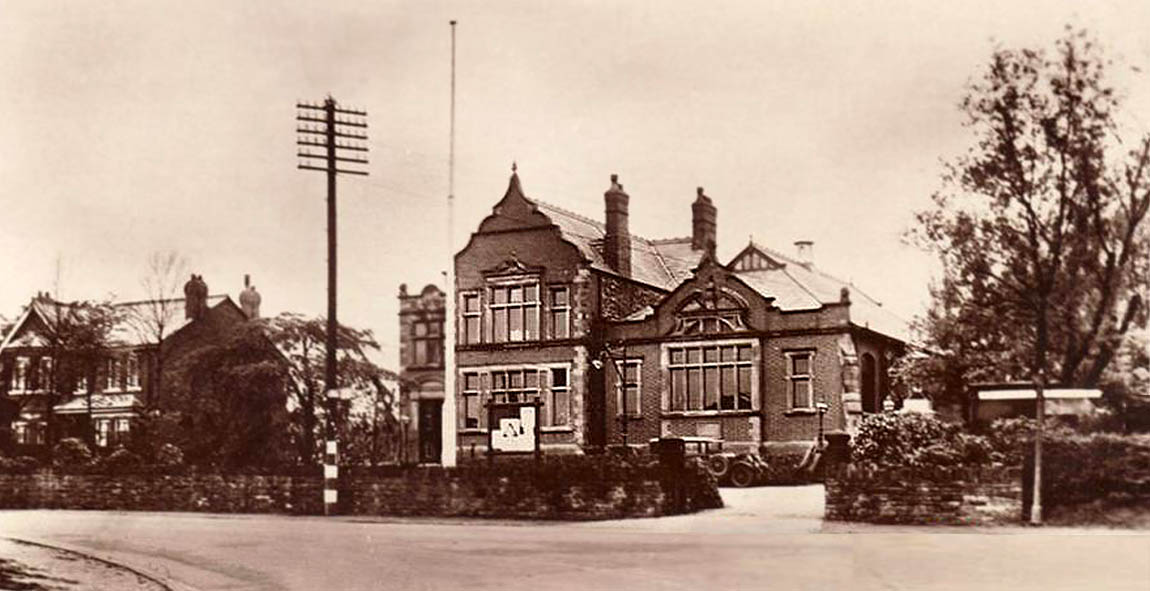 The Ormskirk Advertiser wrote on the 4th that one of the most popular events in the social life of Rainford had taken place. That was the annual whist drive and dance promoted by the Rainford branch of the Ormskirk and District Agricultural Parliamentary Association. The event had taken place in Rainford Village Hall (pictured above) and the paper added that it had been judged an unqualified success: "The hall was gaily decorated and the many dainty dresses of the ladies added to the pretty effect."
A Liverpool man with a fiery temper who gave his occupation as master boatman appeared in St Helens Police Court on the 5th charged with assault. George Johnson was said to have punched railway employee Thomas Jenkinson, as well as the St Helens Stationmaster, after he had intervened when Johnson assaulted his wife. The man was fined £4 plus costs.
Bread delivery vans were legally obliged to keep scales on board their vehicles so that their customers could weigh the loaves. However, I expect that very few people did and, perhaps, the only persons that actually used the scales were inquisitive policemen! Sgt Griffin was one of those nosy boys in blue, who after seeing William Price and Sons delivering bread in St Helens decided to check the weight of some samples.
Out of 43 2lb loaves that he tested, eleven were found to be up to 9¼ ounces light and so on the 5th the firm appeared before St Helens Police Court accused of selling short-weight bread. But William Price was not a local bakery. The firm was Birmingham-based and delivered 2,000 loaves daily to shops in St Helens that did not make their own arrangements for bread. Price's solicitor told the St Helens magistrates that they baked a huge number of loaves every day and they carried out careful checks. But he added that it was impossible for them to weigh every loaf and the firm was fined £5. On the 7th a Grand Concert was held at the St Helens Theatre Royal in aid of the St Helens Rotary Club's Wireless For Hospitals Fund. The St Helens Orchestral Society conducted by George Groves Snr (pictured above) provided the music with many soloists performing. The Liverpool Evening Express described the Theatre Royal as having been "thronged" and said St Helens Hospital and Providence were of a type of hospital "practically unequalled in any other part of the country". The Providence Free Hospital was described as the only hospital in Britain to be run on voluntary subscriptions of a penny.
Every February the St Helens Chief Constable's annual report was released and this week the outspoken Arthur Ellerington published his review of 1925. There were often some critical comments made – particularly as regards the licensing of pubs. But in the Chief Constable's latest report he offered praise. "I do not believe there are any better conducted houses anywhere than St. Helens", was his first surprise comment.
And the second was Ellerington's call for the creation of a first-class hotel in St Helens. "There are 126 fully licensed houses in the borough, but only about three cater for visitors and commercial men", he said. Usually Ellerington was calling for licensed houses to be closed and not wanting another to be opened!
At that time the main hotel in the town was the old Fleece in Church Street, which would not be rebuilt until 1931. The Chief Constable said he felt the accommodation for businessmen and commercial travellers was inadequate and some had to return to St Helens on the following day to complete their business. Arthur Ellerington also detailed 144 cases of drunkenness in 1925, six less than during the previous year.
At the general annual Licensing Sessions for the St Helens Borough, which took place on the 8th, the magistrates objected to the renewal of five licences and put them back until a further hearing was held in March. The pubs under the shadow of possible closure were the Canal Vaults in Canal Street; the Black Horse, Eccleston Street; the Millstone, College Street; the Star Inn, Merton Bank Road and the Red Rat in Ellamsbridge Road in Sutton.
And finally, from the 8th the Hippodrome in Corporation Street had these acts performing: The Flying Hartwells ("In their sensational rope act"); Yat-Sen ("The great celestial prince of mystery – in an entertainment of oriental splendour"); The Welsh Glee Men ("In a novelty song scene"); Will Madely ("Concertinist"); Tom E. Dean ("Comedian"); Rube Peters and his Gaiety Girls ("In a tastefully arranged vocal and dancing scene"); Van De Peear and Leigh ("The unique and inimitable athletes") and J. J. Collins ("That different juggling act – the limit in digital dexterity").
Performances were twice nightly at 6:50 pm and 8:50 pm. The Hippodrome also stated that their prices of admission had been reduced. Sitting in the balcony cost 4d; the pit 8d; the circle 1 shilling 2d and the stalls 1/6. Booking could be made in advance but punters had to pay 6d to 8d more.
St Helens Reporter courtesy St Helens Archive Service at Eccleston Library
Next Week's stories will include the miner's death from a minor injury, the glass stoppers stolen from Nuttall's for use as marbles, the cars on sale in Prescot Road and the Sutton poison gas works evictions are discussed in the Commons.
The St Helens County Court in East Street heard many so-called "ejectment" applications from landlords seeking to evict their tenants. The primary reason was non-payment of rent through unemployment but a surprisingly large number of landlords were ordinary folk who owned one or two houses but lived elsewhere.
Of course, that is still common today but 100 years ago the small-time landlord's main reason for wanting their tenant out was not unpaid rent or anti-social behaviour but was instead connected to overcrowding. And Elizabeth Smith of St Anne's Road in St Helens sought the eviction of James Sumner from the house she owned in College Street because her four grandkids that were living with her in St Anne's Road were driving her mad!
"I'm getting old and I can't stand the noise of the children running around the house," Mrs Smith told Judge Dowdall in the County Court on the 3rd. She wanted the College Street house for her married son, his wife and children to reside in but said that as a compromise Mr Sumner could continue to live there too if he wished, saying:
"He is a single man and very deaf and therefore the noise of the children would not trouble him." But Mr Sumner said he had a lathe with which he made valuable models and he was afraid that the children might interfere with it. Judge Dowdall described it as a difficult case and said he would give his decision later.
It was reported this week that at the annual meeting of the St Helens railway staff, criticism had been expressed of delays to the train service between the town and Liverpool. It was claimed that part of the problem was that trains were too long for the station platforms at Prescot, Eccleston Park and Thatto Heath resulting in two stops having to be made and consequent delays.
In their defence a spokesman at Lime Street Station said: "It is one of the results of progress." Railway traffic had grown since the platforms had been built leading to longer trains and it was a slow and expensive business rebuilding the stations. The spokesman did add that the slow trains between St Helens and Liverpool took 35 minutes but they did run four fast trains at peak times every day that only took 20 minutes – presumably missing out a number of intermediate stations.
A Liverpool man with a fiery temper who gave his occupation as master boatman appeared in St Helens Police Court on the 5th charged with assault. George Johnson was said to have punched railway employee Thomas Jenkinson, as well as the St Helens Stationmaster, after he had intervened when Johnson assaulted his wife. The man was fined £4 plus costs.
Bread delivery vans were legally obliged to keep scales on board their vehicles so that their customers could weigh the loaves. However, I expect that very few people did and, perhaps, the only persons that actually used the scales were inquisitive policemen! Sgt Griffin was one of those nosy boys in blue, who after seeing William Price and Sons delivering bread in St Helens decided to check the weight of some samples.
Out of 43 2lb loaves that he tested, eleven were found to be up to 9¼ ounces light and so on the 5th the firm appeared before St Helens Police Court accused of selling short-weight bread. But William Price was not a local bakery. The firm was Birmingham-based and delivered 2,000 loaves daily to shops in St Helens that did not make their own arrangements for bread. Price's solicitor told the St Helens magistrates that they baked a huge number of loaves every day and they carried out careful checks. But he added that it was impossible for them to weigh every loaf and the firm was fined £5.
Every February the St Helens Chief Constable's annual report was released and this week the outspoken Arthur Ellerington published his review of 1925. There were often some critical comments made – particularly as regards the licensing of pubs. But in the Chief Constable's latest report he offered praise. "I do not believe there are any better conducted houses anywhere than St. Helens", was his first surprise comment.
And the second was Ellerington's call for the creation of a first-class hotel in St Helens. "There are 126 fully licensed houses in the borough, but only about three cater for visitors and commercial men", he said. Usually Ellerington was calling for licensed houses to be closed and not wanting another to be opened!
At that time the main hotel in the town was the old Fleece in Church Street, which would not be rebuilt until 1931. The Chief Constable said he felt the accommodation for businessmen and commercial travellers was inadequate and some had to return to St Helens on the following day to complete their business. Arthur Ellerington also detailed 144 cases of drunkenness in 1925, six less than during the previous year.
At the general annual Licensing Sessions for the St Helens Borough, which took place on the 8th, the magistrates objected to the renewal of five licences and put them back until a further hearing was held in March. The pubs under the shadow of possible closure were the Canal Vaults in Canal Street; the Black Horse, Eccleston Street; the Millstone, College Street; the Star Inn, Merton Bank Road and the Red Rat in Ellamsbridge Road in Sutton.
And finally, from the 8th the Hippodrome in Corporation Street had these acts performing: The Flying Hartwells ("In their sensational rope act"); Yat-Sen ("The great celestial prince of mystery – in an entertainment of oriental splendour"); The Welsh Glee Men ("In a novelty song scene"); Will Madely ("Concertinist"); Tom E. Dean ("Comedian"); Rube Peters and his Gaiety Girls ("In a tastefully arranged vocal and dancing scene"); Van De Peear and Leigh ("The unique and inimitable athletes") and J. J. Collins ("That different juggling act – the limit in digital dexterity").
Performances were twice nightly at 6:50 pm and 8:50 pm. The Hippodrome also stated that their prices of admission had been reduced. Sitting in the balcony cost 4d; the pit 8d; the circle 1 shilling 2d and the stalls 1/6. Booking could be made in advance but punters had to pay 6d to 8d more.
St Helens Reporter courtesy St Helens Archive Service at Eccleston Library
Next Week's stories will include the miner's death from a minor injury, the glass stoppers stolen from Nuttall's for use as marbles, the cars on sale in Prescot Road and the Sutton poison gas works evictions are discussed in the Commons.
This week's many stories include a call for a first-class hotel to open in St Helens, the woman who went to court because her grandchildren were driving her mad, the concert in aid of Rotary's Wireless For Hospitals Fund, the short-weight bread on sale and there's criticism of the train service between St Helens and Liverpool.
The St Helens County Court in East Street heard many so-called "ejectment" applications from landlords seeking to evict their tenants.
The primary reason was non-payment of rent through unemployment but a surprisingly large number of landlords were ordinary folk who owned one or two houses but lived elsewhere.
Of course, that is still common today but 100 years ago the small-time landlord's main reason for wanting their tenant out was not unpaid rent or anti-social behaviour but was instead connected to overcrowding.
And Elizabeth Smith of St Anne's Road in St Helens sought the eviction of James Sumner from the house she owned in College Street because her four grandkids that were living with her in St Anne's Road were driving her mad!
"I'm getting old and I can't stand the noise of the children running around the house," Mrs Smith told Judge Dowdall in the County Court on the 3rd.
She wanted the College Street house for her married son, his wife and children to reside in but said that as a compromise Mr Sumner could continue to live there too if he wished, saying:
"He is a single man and very deaf and therefore the noise of the children would not trouble him."
But Mr Sumner said he had a lathe with which he made valuable models and he was afraid that the children might interfere with it.
Judge Dowdall described it as a difficult case and said he would give his decision later.
It was reported this week that at the annual meeting of the St Helens railway staff, criticism had been expressed of delays to the train service between the town and Liverpool.
It was claimed that part of the problem was that trains were too long for the station platforms at Prescot, Eccleston Park and Thatto Heath resulting in two stops having to be made and consequent delays.
In their defence a spokesman at Lime Street Station said: "It is one of the results of progress."
Railway traffic had grown since the platforms had been built leading to longer trains and it was a slow and expensive business rebuilding the stations.
The spokesman did add that the slow trains between St Helens and Liverpool took 35 minutes but they did run four fast trains at peak times every day that only took 20 minutes – presumably missing out a number of intermediate stations.
The Ormskirk Advertiser wrote on the 4th that one of the most popular events in the social life of Rainford had taken place.
That was the annual whist drive and dance promoted by the Rainford branch of the Ormskirk and District Agricultural Parliamentary Association.
The event had taken place in Rainford Village Hall (pictured above) and the paper added that it had been judged an unqualified success:
"The hall was gaily decorated and the many dainty dresses of the ladies added to the pretty effect."
A Liverpool man with a fiery temper who gave his occupation as master boatman appeared in St Helens Police Court on the 5th charged with assault.
George Johnson was said to have punched railway employee Thomas Jenkinson, as well as the St Helens Stationmaster, after he had intervened when Johnson assaulted his wife. The man was fined £4 plus costs.
Bread delivery vans were legally obliged to keep scales on board their vehicles so that their customers could weigh the loaves.
However, I expect that very few people did and, perhaps, the only persons that actually used the scales were inquisitive policemen!
Sgt Griffin was one of those nosy boys in blue, who after seeing William Price and Sons delivering bread in St Helens decided to check the weight of some samples.
Out of 43 2lb loaves that he tested, eleven were found to be up to 9¼ ounces light and so on the 5th the firm appeared before St Helens Police Court accused of selling short-weight bread.
But William Price was not a local bakery. The firm was Birmingham-based and delivered 2,000 loaves daily to shops in St Helens that did not make their own arrangements for bread.
Price's solicitor told the St Helens magistrates that they baked a huge number of loaves every day and they carried out careful checks.
But he added that it was impossible for them to weigh every loaf and the firm was fined £5.
On the 7th a Grand Concert was held at the St Helens Theatre Royal in aid of the St Helens Rotary Club's Wireless For Hospitals Fund.
The St Helens Orchestral Society conducted by George Groves Snr (pictured above) provided the music with many soloists performing.
The Liverpool Evening Express described the Theatre Royal as having been "thronged" and said St Helens Hospital and Providence were of a type of hospital "practically unequalled in any other part of the country".
The Providence Free Hospital was described as the only hospital in Britain to be run on voluntary subscriptions of a penny.
Every February the St Helens Chief Constable's annual report was released and this week the outspoken Arthur Ellerington published his review of 1925.
There were often some critical comments made – particularly as regards the licensing of pubs. But in the Chief Constable's latest report he offered praise.
"I do not believe there are any better conducted houses anywhere than St. Helens", was his first surprise comment.
And the second was Ellerington's call for the creation of a first-class hotel in St Helens.
"There are 126 fully licensed houses in the borough, but only about three cater for visitors and commercial men", he said.
Usually Ellerington was calling for licensed houses to be closed and not wanting another to be opened!
At that time the main hotel in the town was the old Fleece in Church Street, which would not be rebuilt until 1931.
The Chief Constable said he felt the accommodation for businessmen and commercial travellers was inadequate and some had to return to St Helens on the following day to complete their business.
Arthur Ellerington also detailed 144 cases of drunkenness in 1925, six less than during the previous year.
At the general annual Licensing Sessions for the St Helens Borough, which took place on the 8th, the magistrates objected to the renewal of five licences and put them back until a further hearing was held in March.
The pubs under the shadow of possible closure were the Canal Vaults in Canal Street; the Black Horse, Eccleston Street; the Millstone, College Street; the Star Inn, Merton Bank Road and the Red Rat in Ellamsbridge Road in Sutton.
And finally, from the 8th the Hippodrome in Corporation Street had these acts performing:
The Flying Hartwells ("In their sensational rope act"); Yat-Sen ("The great celestial prince of mystery – in an entertainment of oriental splendour"); The Welsh Glee Men ("In a novelty song scene"); Will Madely ("Concertinist"); Tom E. Dean ("Comedian"); Rube Peters and his Gaiety Girls ("In a tastefully arranged vocal and dancing scene"); Van De Peear and Leigh ("The unique and inimitable athletes") and J. J. Collins ("That different juggling act – the limit in digital dexterity").
Performances were twice nightly at 6:50 pm and 8:50 pm. The Hippodrome also stated that their prices of admission had been reduced. Sitting in the balcony cost 4d; the pit 8d; the circle 1 shilling 2d and the stalls 1/6.
Booking could be made in advance but punters had to pay 6d to 8d more.
St Helens Reporter courtesy St Helens Archive Service at Eccleston Library
Next Week's stories will include the miner's death from a minor injury, the glass stoppers stolen from Nuttall's for use as marbles, the cars on sale in Prescot Road and the Sutton poison gas works evictions are discussed in the Commons.
The St Helens County Court in East Street heard many so-called "ejectment" applications from landlords seeking to evict their tenants.
The primary reason was non-payment of rent through unemployment but a surprisingly large number of landlords were ordinary folk who owned one or two houses but lived elsewhere.
Of course, that is still common today but 100 years ago the small-time landlord's main reason for wanting their tenant out was not unpaid rent or anti-social behaviour but was instead connected to overcrowding.
And Elizabeth Smith of St Anne's Road in St Helens sought the eviction of James Sumner from the house she owned in College Street because her four grandkids that were living with her in St Anne's Road were driving her mad!
"I'm getting old and I can't stand the noise of the children running around the house," Mrs Smith told Judge Dowdall in the County Court on the 3rd.
She wanted the College Street house for her married son, his wife and children to reside in but said that as a compromise Mr Sumner could continue to live there too if he wished, saying:
"He is a single man and very deaf and therefore the noise of the children would not trouble him."
But Mr Sumner said he had a lathe with which he made valuable models and he was afraid that the children might interfere with it.
Judge Dowdall described it as a difficult case and said he would give his decision later.
It was reported this week that at the annual meeting of the St Helens railway staff, criticism had been expressed of delays to the train service between the town and Liverpool.
It was claimed that part of the problem was that trains were too long for the station platforms at Prescot, Eccleston Park and Thatto Heath resulting in two stops having to be made and consequent delays.
In their defence a spokesman at Lime Street Station said: "It is one of the results of progress."
Railway traffic had grown since the platforms had been built leading to longer trains and it was a slow and expensive business rebuilding the stations.
The spokesman did add that the slow trains between St Helens and Liverpool took 35 minutes but they did run four fast trains at peak times every day that only took 20 minutes – presumably missing out a number of intermediate stations.
The Ormskirk Advertiser wrote on the 4th that one of the most popular events in the social life of Rainford had taken place.
That was the annual whist drive and dance promoted by the Rainford branch of the Ormskirk and District Agricultural Parliamentary Association.
"The hall was gaily decorated and the many dainty dresses of the ladies added to the pretty effect."
A Liverpool man with a fiery temper who gave his occupation as master boatman appeared in St Helens Police Court on the 5th charged with assault.
George Johnson was said to have punched railway employee Thomas Jenkinson, as well as the St Helens Stationmaster, after he had intervened when Johnson assaulted his wife. The man was fined £4 plus costs.
Bread delivery vans were legally obliged to keep scales on board their vehicles so that their customers could weigh the loaves.
However, I expect that very few people did and, perhaps, the only persons that actually used the scales were inquisitive policemen!
Sgt Griffin was one of those nosy boys in blue, who after seeing William Price and Sons delivering bread in St Helens decided to check the weight of some samples.
Out of 43 2lb loaves that he tested, eleven were found to be up to 9¼ ounces light and so on the 5th the firm appeared before St Helens Police Court accused of selling short-weight bread.
But William Price was not a local bakery. The firm was Birmingham-based and delivered 2,000 loaves daily to shops in St Helens that did not make their own arrangements for bread.
Price's solicitor told the St Helens magistrates that they baked a huge number of loaves every day and they carried out careful checks.
But he added that it was impossible for them to weigh every loaf and the firm was fined £5.
On the 7th a Grand Concert was held at the St Helens Theatre Royal in aid of the St Helens Rotary Club's Wireless For Hospitals Fund.
The Liverpool Evening Express described the Theatre Royal as having been "thronged" and said St Helens Hospital and Providence were of a type of hospital "practically unequalled in any other part of the country".
The Providence Free Hospital was described as the only hospital in Britain to be run on voluntary subscriptions of a penny.
Every February the St Helens Chief Constable's annual report was released and this week the outspoken Arthur Ellerington published his review of 1925.
There were often some critical comments made – particularly as regards the licensing of pubs. But in the Chief Constable's latest report he offered praise.
"I do not believe there are any better conducted houses anywhere than St. Helens", was his first surprise comment.
And the second was Ellerington's call for the creation of a first-class hotel in St Helens.
"There are 126 fully licensed houses in the borough, but only about three cater for visitors and commercial men", he said.
Usually Ellerington was calling for licensed houses to be closed and not wanting another to be opened!
At that time the main hotel in the town was the old Fleece in Church Street, which would not be rebuilt until 1931.
The Chief Constable said he felt the accommodation for businessmen and commercial travellers was inadequate and some had to return to St Helens on the following day to complete their business.
Arthur Ellerington also detailed 144 cases of drunkenness in 1925, six less than during the previous year.
At the general annual Licensing Sessions for the St Helens Borough, which took place on the 8th, the magistrates objected to the renewal of five licences and put them back until a further hearing was held in March.
The pubs under the shadow of possible closure were the Canal Vaults in Canal Street; the Black Horse, Eccleston Street; the Millstone, College Street; the Star Inn, Merton Bank Road and the Red Rat in Ellamsbridge Road in Sutton.
And finally, from the 8th the Hippodrome in Corporation Street had these acts performing:
The Flying Hartwells ("In their sensational rope act"); Yat-Sen ("The great celestial prince of mystery – in an entertainment of oriental splendour"); The Welsh Glee Men ("In a novelty song scene"); Will Madely ("Concertinist"); Tom E. Dean ("Comedian"); Rube Peters and his Gaiety Girls ("In a tastefully arranged vocal and dancing scene"); Van De Peear and Leigh ("The unique and inimitable athletes") and J. J. Collins ("That different juggling act – the limit in digital dexterity").
Performances were twice nightly at 6:50 pm and 8:50 pm. The Hippodrome also stated that their prices of admission had been reduced. Sitting in the balcony cost 4d; the pit 8d; the circle 1 shilling 2d and the stalls 1/6.
Booking could be made in advance but punters had to pay 6d to 8d more.
St Helens Reporter courtesy St Helens Archive Service at Eccleston Library
Next Week's stories will include the miner's death from a minor injury, the glass stoppers stolen from Nuttall's for use as marbles, the cars on sale in Prescot Road and the Sutton poison gas works evictions are discussed in the Commons.